

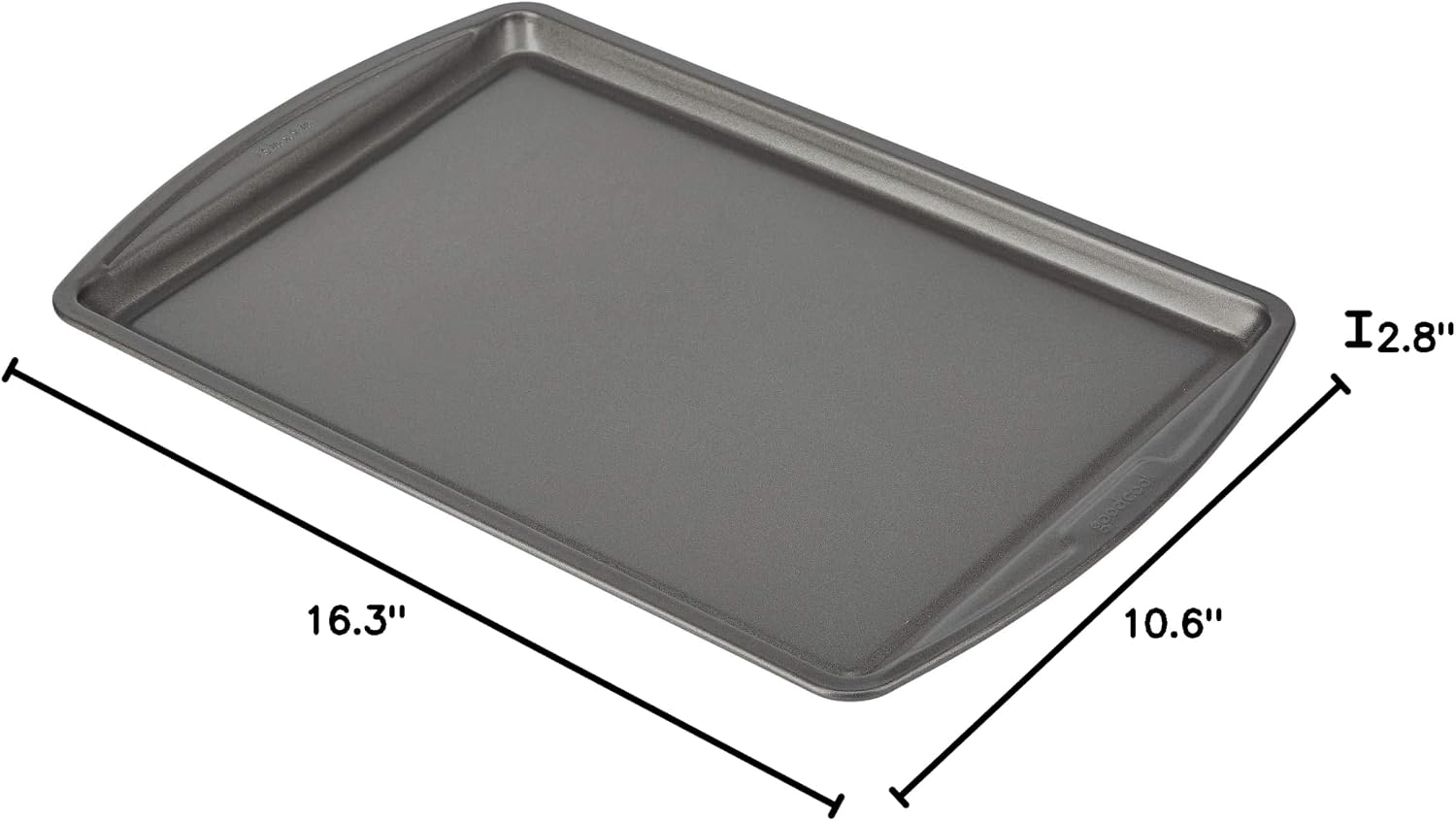
TL;DR — The best KitchenAid baking sheet is a heavy-gauge aluminized-steel half sheet (roughly 13×18 inches) with a rolled, warp-resistant rim and a durable nonstick or bare finish. Look for thick-gauge construction that resists warping in a hot oven, a size that fits a standard oven, and easy cleaning. If your priority is even browning without warping, choose gauge and rim reinforcement over extras. For related bakeware, see best baking sheets and best mixing bowls.
The HomeWhisk editorial team researches kitchen equipment by analyzing manufacturer specifications, material and gauge data, coating types, and aggregated user reviews from Amazon, Reddit baking communities, and long-term home-baker reports. For this guide we compared KitchenAid and KitchenAid-style baking sheets on metal type and thickness, rim reinforcement, coating durability, size, and how each held up to repeated high-heat baking, because a baking sheet’s real job is to brown evenly and stay flat for years.

A baking sheet looks simple, but the differences between a good one and a frustrating one come down to a few unglamorous specs: how thick the metal is, whether the rim is reinforced against warping, and what the surface finish is made of. Our research focused on the sheets that bake cookies evenly, roast vegetables without buckling, and survive the dishwasher or hand-washing without staining or peeling. If you are building out a baking kit, our best baking sheets guide covers the broader category and best mixing bowls and best kitchen scale cover the tools that pair with sheet-pan baking.
KitchenAid
Even-Baking Cookie and Sheet-Pan Meals: KitchenAid Premium Aluminized Steel Baking Sheet, 10x15-Inch
This nonstick 10x15-inch baking sheet handles cookies, bars, roasted vegetables, and meats while aluminized steel promotes even heat distribution. It suits home cooks who want one versatile pan with secure handles and dishwasher-safe cleanup.
Pros and Cons
Pros
- Aluminized steel promotes consistent heat distribution across the pan.
- Extended handles make oven transfers easier and more secure.
- The nonstick surface supports easier food release.
- Dishwasher-safe construction reduces cleanup effort.
Cons
- The fixed 10x15-inch size may not suit compact ovens or limited storage spaces.
- The broad baking surface may be larger than needed for small batches.

GoodCook
Best Nonstick Baking Sheet for Cookies and Sheet Pan Dinners: GoodCook Everyday 9x13-Inch Carbon Steel Cookie Sheet
This GoodCook 9x13-inch carbon steel baking sheet delivers even heat distribution and a scratch-resistant nonstick surface that releases baked goods cleanly without greasing. It suits budget-conscious home bakers who need a reliable, dishwasher-safe sheet pan for daily cookie batches and weeknight dinners.
Pros and Cons
Pros
- Carbon steel construction prevents warping even after repeated high-heat use, unlike thinner aluminum alternatives.
- Nonstick release works well enough to skip parchment paper for most cookie recipes, saving ongoing supply costs.
- Metal-utensil-safe surface means you can cut brownies or slice sheet pan meals directly on the pan without worry.
- At under ten dollars, it delivers durability that competes with mid-range bakeware costing two to three times more.
Cons
- The 9x13-inch surface is too small for large batch baking or full sheet pan recipes designed for half-sheet pans.
- Hand washing is recommended for longest nonstick lifespan, so the dishwasher-safe claim comes with a caveat.

NordicWare
Nordic Ware Naturals Quarter Sheet Pan 2-Pack for Even Baking and Roasting Vegetables
This aluminum quarter sheet pan pair delivers uniform browning and heat distribution with a reinforced steel rim that prevents warping through years of daily use. Home bakers who want commercial-grade results and cooks who roast vegetables multiple times per week will appreciate the durability and consistent performance.
Pros and Cons
Pros
- Pure aluminum heats uniformly across the entire surface, producing evenly browned cookies and crispy roasted vegetables without rotating mid-bake.
- Steel-reinforced rim stays flat through thermal stress and daily handling, unlike thin pans that buckle after a few months.
- Natural finish performs like nonstick without coatings that chip or degrade, and it works seamlessly with parchment paper or silicone mats.
Cons
- Aluminum reacts with acidic foods like tomatoes and vinegar, causing darkening and potential pitting over time when used for acidic roasts.
- Hand washing is required because dishwasher detergents cause cosmetic discoloration that dulls the shiny finish.

NutriChef
3-Piece Nonstick Baking Pan Set with Red Silicone Handles | Carbon Steel Cookie Sheets
The NutriChef 3-piece carbon steel baking set delivers even heat distribution across three sizes with a PTFE/PFOA/PFOS-free nonstick coating that releases food cleanly and survives oven temps up to 446°F. Home bakers who want a stackable, dishwasher-safe set that handles cookies, roasted vegetables, and sheet-pan dinners without warping will get reliable daily use from this set.
Pros and Cons
Pros
- PTFE/PFOA/PFOS-free nonstick coating addresses health concerns some buyers have with traditional nonstick surfaces while still delivering easy food release.
- Three-size set covers small, medium, and large baking tasks, reducing the need to own multiple single-purpose pans.
- Carbon steel base resists warping, which is the most common failure point in budget bakeware after repeated thermal cycling.
- Dishwasher-safe construction and stain-resistant coating make end-of-night cleanup straightforward even after sticky or sugary bakes.
Cons
- With no customer reviews available, real-world durability of the nonstick coating over extended use cannot be independently confirmed.
- Silicone handles are fixed, not removable, which can make these pans awkward to store flat in tighter cabinet spaces.
The Best Deals This Week*
-
Best Nonstick Baking Sheet for Cookies and Sheet
$6.59
($9.40)Save $2.81 -
Nordic Ware Naturals Quarter Sheet Pan 2-Pack
$20.53
($21.99)Save $1.46 -
NutriChef 3-Piece Nonstick Baking Pan Set with Red
$15.99
($19.99)Save $4.00
*Deals are selected by our commerce team
KitchenAid Even-Baking Cookie and Sheet-Pan Meals: KitchenAid Premium Aluminized Steel Baking Sheet, 10x15-Inch
KitchenAid
Even-Baking Cookie and Sheet-Pan Meals: KitchenAid Premium Aluminized Steel Baking Sheet, 10x15-Inch
This nonstick 10x15-inch baking sheet handles cookies, bars, roasted vegetables, and meats while aluminized steel promotes even heat distribution. It suits home cooks who want one versatile pan with secure handles and dishwasher-safe cleanup.
Check price on AmazonThis 10x15-inch nonstick baking sheet gives home cooks one pan for cookies, bars, sheet cakes, vegetables, meats, and other everyday oven meals.
Aluminized steel promotes consistent heat distribution, helping baked goods and roasted foods cook more evenly across the pan.
Extended handles improve control with pot holders, while the nonstick surface and dishwasher-safe design simplify food release and cleanup.
The fixed 10x15-inch size may be awkward for compact ovens or kitchens with limited storage space.
Best for home cooks who want a versatile baking sheet for desserts and one-pan meals.
GoodCook Best Nonstick Baking Sheet for Cookies and Sheet Pan Dinners: GoodCook Everyday 9x13-Inch Carbon Steel Cookie Sheet
GoodCook
Best Nonstick Baking Sheet for Cookies and Sheet Pan Dinners: GoodCook Everyday 9x13-Inch Carbon Steel Cookie Sheet
This GoodCook 9x13-inch carbon steel baking sheet delivers even heat distribution and a scratch-resistant nonstick surface that releases baked goods cleanly without greasing. It suits budget-conscious home bakers who need a reliable, dishwasher-safe sheet pan for daily cookie batches and weeknight dinners.
Check price on AmazonThe GoodCook Everyday Baking Sheet solves uneven browning and stuck-on food that plagues thin, uncoated pans.
Heavy-duty carbon steel distributes heat evenly while the nonstick coating releases baked goods without greasing or parchment.
Built from warp-resistant gauge steel at 9x13 inches, it handles daily oven use without flexing or degrading.
The smaller footprint limits batch size, so high-volume bakers may need two pans or a larger alternative.
Best for everyday home bakers who want a durable, low-maintenance sheet pan at a budget-friendly entry point.
NordicWare Nordic Ware Naturals Quarter Sheet Pan 2-Pack for Even Baking and Roasting Vegetables
NordicWare
Nordic Ware Naturals Quarter Sheet Pan 2-Pack for Even Baking and Roasting Vegetables
This aluminum quarter sheet pan pair delivers uniform browning and heat distribution with a reinforced steel rim that prevents warping through years of daily use. Home bakers who want commercial-grade results and cooks who roast vegetables multiple times per week will appreciate the durability and consistent performance.
Check price on AmazonNordic Ware Naturals Quarter Sheet pans solve the uneven baking problem that ruins cookie batches and leaves vegetables soggy on one end, burnt on the other.
Pure aluminum distributes heat uniformly from edge to center, while the encapsulated steel rim prevents the warping that creates uneven surfaces and pooled liquids during roasting.
Each pan measures 12.9 x 9.6 inches outside and 12.1 x 8.8 inches on the cooking surface with 1.1-inch walls. The hardened aluminum alloy resists scratches from metal spatulas better than standard sheets.
Acidic ingredients like tomato-based marinades will darken and potentially pit the aluminum over time, so reserve these pans for cookies, roasted vegetables with oil, and non-acidic foods.
Best for home bakers who make cookies weekly and cooks who batch-roast vegetables, especially those frustrated by cheap pans that warp after six months.
NutriChef 3-Piece Nonstick Baking Pan Set with Red Silicone Handles | Carbon Steel Cookie Sheets
NutriChef
3-Piece Nonstick Baking Pan Set with Red Silicone Handles | Carbon Steel Cookie Sheets
The NutriChef 3-piece carbon steel baking set delivers even heat distribution across three sizes with a PTFE/PFOA/PFOS-free nonstick coating that releases food cleanly and survives oven temps up to 446°F. Home bakers who want a stackable, dishwasher-safe set that handles cookies, roasted vegetables, and sheet-pan dinners without warping will get reliable daily use from this set.
Check price on AmazonThis set addresses the common problem of owning one pan in the wrong size — it includes small, medium, and large carbon steel sheets so you can match the pan to the batch.
The nonstick coating is certified free of PTFE, PFOA, and PFOS, and the heat-resistant lacquer exterior holds up to 446°F, covering nearly all standard home baking temperatures.
Built from carbon steel, the pans are designed to resist the warping that undermines flat, even baking on cheaper aluminum alternatives over time.
The fixed red silicone handles cannot be detached, which slightly complicates flat stacking in shallow drawers or crowded cabinets.
Best for home bakers who want a dishwasher-safe, toxin-free set that scales from a small tray of brownies to a full-sheet roasted dinner.
Editor’s Picks
| Category | Pick | Why |
|---|---|---|
| Best Overall | Heavy-gauge aluminized-steel half sheet, rolled rim | Even browning, warp resistance, durable finish, fits standard ovens |
| Best Value | Standard nonstick baking sheet, mid gauge | Easy release and cleaning at a lower price, good for everyday baking |
| Best for Bakers | Bare or lightly coated commercial-style sheet | Neutral browning, high durability, pairs with parchment or a liner |
At a Glance: Comparison Table
| Pick Type | Material | Gauge / Build | Finish | Size | Best For |
|---|---|---|---|---|---|
| Best Overall | Aluminized steel | Heavy, rolled steel rim | Bare or light nonstick | Half sheet (~13×18″) | Even browning, roasting, cookies |
| Best Value | Aluminized or carbon steel | Mid gauge | Nonstick | Half sheet | Everyday baking, easy release |
| Best for Bakers | Aluminized steel | Commercial heavy gauge | Bare | Half sheet | Pro-style browning with parchment |
| Compact | Aluminized steel | Mid-heavy | Nonstick or bare | Quarter sheet (~9×13″) | Small ovens, single servings |
| Set / multi-pack | Aluminized or carbon steel | Mid gauge | Nonstick | Mixed sizes | Batch baking, stocking a kitchen |
How We Evaluated These Products
This guide is research-based. we synthesized manufacturer specifications, published gauge and material data, coating information, retailer listings, and recurring patterns in aggregated home-baker reviews to determine which baking sheets brown evenly and last.
We weighted metal type and gauge most heavily, because they drive the two outcomes bakers care about: even heat and resistance to warping. Aluminized steel, a steel core coated in aluminum, is the workhorse material because it combines steel’s strength with aluminum’s conductivity. Thicker gauge sheets absorb and distribute oven heat more evenly and are far less prone to the sudden warping that ruins a batch, which is why we favored heavy-gauge construction.
We also examined rim design and coating durability closely, since they separate sheets that last from sheets that disappoint. A rolled or reinforced rim resists the buckling that plagues thin flat-edged pans in a hot oven. Coating type matters for both release and longevity: aggregated reviews frequently flag nonstick surfaces that stain, scratch, or peel over time, while bare aluminized steel darkens with use but keeps performing. Sheets with large, long-term review samples were prioritized over newer entrants.
What Actually Matters:
Material and Gauge: Why Thickness Wins
The metal a baking sheet is made from, and how thick it is, determines almost everything about how it bakes. Aluminized steel is the preferred material for quality baking sheets because it pairs a rigid steel core with an aluminum coating that conducts heat quickly and evenly. Pure aluminum sheets conduct heat beautifully but are softer and warp more easily; carbon steel is strong but can rust if the coating wears. Aluminized steel splits the difference, which is why it dominates both commercial and quality home baking sheets.
Gauge, the thickness of the metal, is the spec that separates a sheet that lasts from one that buckles. Heavier-gauge sheets have more mass to absorb and distribute oven heat, so they brown food evenly across the surface instead of developing hot spots. They also resist the sudden warping, that loud pop and buckle in a hot oven, that thin sheets are notorious for.
The practical payoff shows up in results. On a heavy aluminized sheet, cookies bake to an even color, roasted vegetables caramelize uniformly, and the pan lies flat through hundreds of cycles. On a thin sheet, the center may over-brown while the edges lag, and a warped base makes oil and juices pool to one side.
Warping Resistance and Rim Design
Warping is the failure that bakers complain about most, and the rim design is the primary defense against it. A rolled rim, where the edge of the sheet is curled around a steel wire or folded back on itself, dramatically stiffens the pan and resists the buckling that happens when metal expands unevenly in a hot oven. Flat, unreinforced edges flex more and are the first to warp. When comparing sheets, a rolled or reinforced rim is one of the clearest signals of a durable, warp-resistant pan.
The physics of warping explains why heavy gauge and a good rim work together. Metal expands when heated, and if one part of a thin sheet heats faster than another, the uneven expansion forces the pan to buckle with a sudden pop. A thick sheet heats more uniformly and has the rigidity to resist that force, and a reinforced rim adds structural stiffness around the perimeter.
Baker habits also affect warping, and the specs interact with technique. Placing a cold sheet into a very hot oven, or running cold water over a hot pan, creates the thermal shock that triggers warping even in decent pans. Letting a sheet come toward room temperature before washing extends its flat life.
Coating, Finish, and Food Release
The surface finish shapes both how food releases and how the sheet holds up over time, and the right choice depends on how you bake. Bare aluminized steel is the commercial standard; it browns food neutrally and predictably, resists the wear that afflicts coatings, and pairs with parchment paper or a silicone liner for easy release. It darkens with use, which is purely cosmetic, and many serious bakers prefer it precisely because there is no coating to degrade.
Nonstick coatings make release and cleaning easier, which is a genuine convenience for everyday baking, but they come with trade-offs. Dark nonstick surfaces absorb more heat and can over-brown the bottoms of cookies and baked goods, so some recipes need a lower temperature or shorter time. More importantly, nonstick coatings wear: aggregated reviews frequently report staining, scratching, and eventual peeling, especially with metal utensils or dishwasher use. A nonstick sheet is fine for a baker who values easy cleanup and treats it gently, but it will not last as long as bare steel.
The middle path many bakers choose is a bare or lightly finished heavy sheet used with parchment paper or a reusable silicone baking mat. This combination gives easy release and simple cleanup while preserving the durability and neutral browning of bare steel. It also sidesteps the coating-wear problem entirely, since the food never touches the metal.
Size, Fit, and Storage
Size is the practical spec that determines whether a baking sheet is usable in your kitchen, and it is worth checking before anything else. The half sheet, roughly 13 by 18 inches, is the standard workhorse size and the one most recipes assume. It holds a full batch of cookies or a generous tray of roasted vegetables and fits most standard home ovens with room for air to circulate. This is the size most bakers should own first, and often in a pair for batch baking.
Oven fit is the constraint that trips up buyers with compact or older ovens. A half sheet needs the oven interior to be wider than 18 inches to allow airflow around the pan, and some smaller ovens, apartment ranges, or countertop ovens cannot accommodate one. For those kitchens, a quarter sheet, around 9 by 13 inches, is the practical choice, and it also suits small-batch baking and single servings. Measuring the oven interior before buying prevents the frustration of a pan that does not fit.
Storage and quantity round out the size decision. Baking sheets nest, so a pair or a small set stores in little more space than one, and having two lets you bake batches back to back without waiting for a pan to cool. For the tools that support sheet-pan baking, our best mixing bowls and best kitchen scale guides cover the essentials, and best cutting board covers prep surfaces.
Frequently Asked Questions
What size baking sheet should I buy?
For most home bakers, a half sheet at roughly 13 by 18 inches is the right size, since it fits standard ovens and matches what most recipes assume. It holds a full batch of cookies or a generous tray of vegetables. If your oven is small, an apartment range, or a countertop model, measure the interior first, since a half sheet needs more than 18 inches of width for airflow. In that case a quarter sheet, around 9 by 13 inches, is the practical choice and also suits small batches.
Why does my baking sheet warp in the oven?
Warping happens when metal expands unevenly under heat, usually because the sheet is thin or subjected to thermal shock. A cold pan dropped into a very hot oven, or a hot pan rinsed under cold water, triggers the sudden buckle and pop. Thin, flat-edged sheets warp most easily. To prevent it, choose a heavy-gauge sheet with a rolled or reinforced rim, avoid extreme temperature swings, and let a pan cool before washing. Heavy aluminized steel with a rolled rim resists warping far better than thin sheets.
Is a nonstick or bare baking sheet better?
It depends on your priorities. Bare aluminized steel browns food neutrally, lasts far longer, and pairs with parchment or a silicone mat for easy release, which is why serious bakers prefer it. Nonstick coatings make release and cleanup easier but can over-brown bottoms because dark surfaces absorb more heat, and the coating wears, stains, or peels over time. For durability and even browning, choose bare steel with a liner. For maximum convenience and gentle use, a nonstick sheet is fine.
Can baking sheets go in the dishwasher?
Bare aluminized steel is best hand-washed, because dishwasher detergent and heat can discolor the aluminum coating and dull the finish over time, though the discoloration is cosmetic. Nonstick sheets should generally be hand-washed too, since the dishwasher accelerates coating wear. For both, a quick wash with warm soapy water and a non-abrasive sponge, then thorough drying to prevent spots or rust at any worn edge, keeps a sheet in good shape. Check the manufacturer’s guidance, but hand-washing extends the life of any quality sheet.
How do I clean stains and baked-on residue?
For stubborn baked-on grease and stains, make a paste of baking soda and a little water, spread it on the affected area, let it sit, then scrub gently with a non-abrasive sponge. A soak in warm soapy water loosens most residue first. For darkened bare aluminized steel, remember that the discoloration is cosmetic and does not affect performance, so there is no need to scour it back to bright. Avoid steel wool and harsh abrasives on nonstick, which damage the coating and shorten its life.
Do I need more than one baking sheet?
Many bakers benefit from owning two half sheets plus a smaller pan. Two sheets let you bake batches of cookies back to back without waiting for one to cool, and sheet-pan dinners often use two pans at once. A quarter sheet adds flexibility for small batches, toasting nuts, or fitting a compact oven. Baking sheets nest, so a pair or small set stores in little extra space. If you bake regularly, a pair of quality half sheets is a worthwhile core; see our best baking sheets guide for full comparisons.
Our Top Pick
After comparing material, gauge, rim design, coating, and size, a heavy-gauge aluminized-steel half sheet with a rolled, reinforced rim is the best baking sheet for the widest range of home bakers. It browns cookies and roasts vegetables evenly thanks to its mass and conductivity, resists the warping that ruins thin pans, fits a standard oven, and lasts for years with basic care. Paired with parchment or a silicone mat, it delivers easy release without relying on a coating that will eventually wear out.
Consider these decision points:
- If you want the most durable, even-baking sheet, choose a heavy-gauge aluminized-steel half sheet with a rolled rim, and use parchment or a liner for release.
- If easy cleanup matters most and you bake gently, a mid-gauge nonstick half sheet is a convenient value pick.
- If your oven is small or you bake in small batches, a quarter sheet fits where a half sheet cannot.
- If you bake often, buy a pair of half sheets so you can run batches back to back, and see our best baking sheets roundup for the full category.
The best KitchenAid baking sheet is the one whose gauge, rim, and finish match how you bake and the oven you own. Buy for heavy, warp-resistant construction first, and the sheet will turn out even, reliable results batch after batch for years.





Write Your Review
No reviews yet. Be the first to share your experience!