

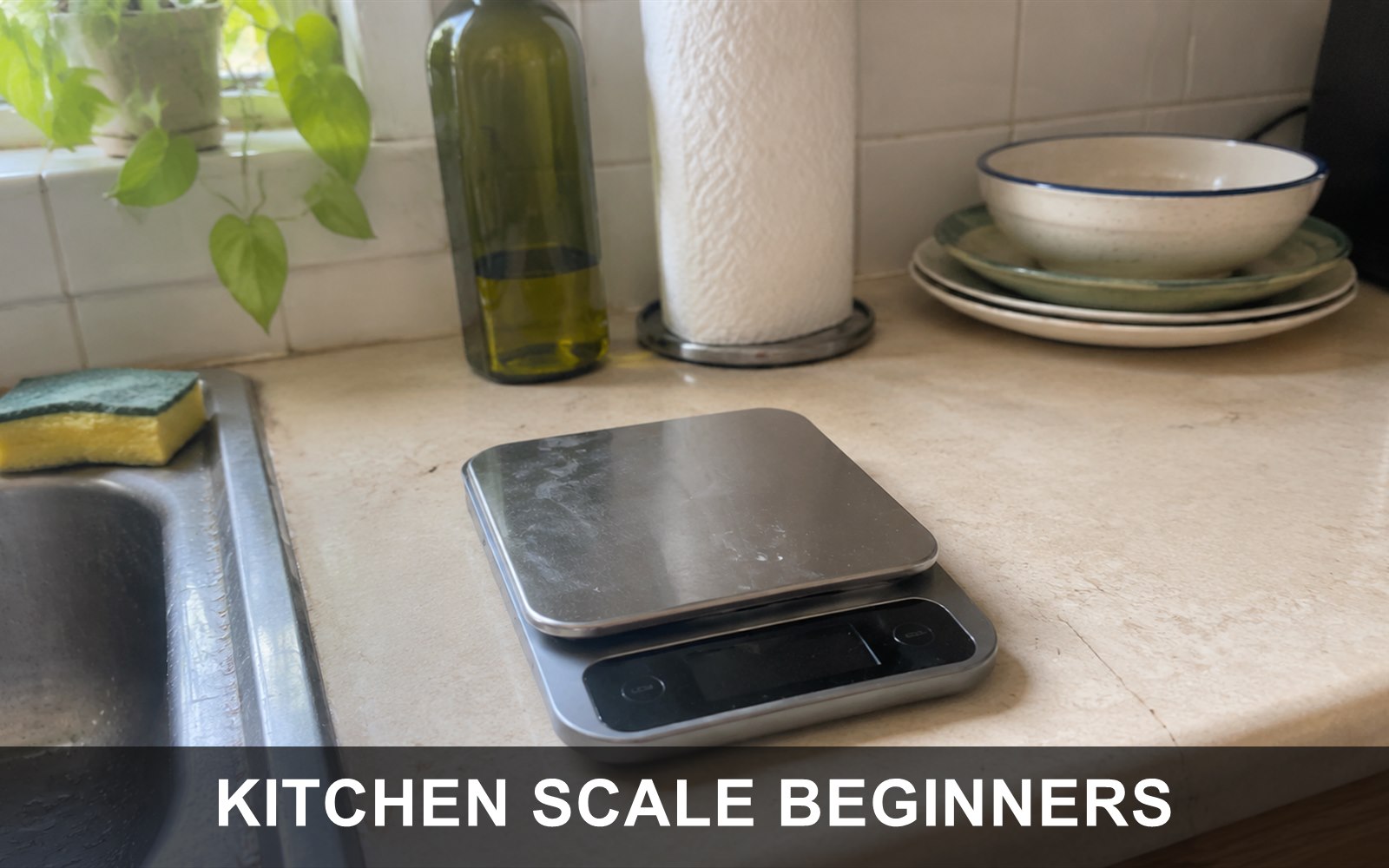
TL;DR — The best kitchen scale for beginners should match how you actually cook, how often you will use it, and how much maintenance you want. Prioritize proven construction, practical usability, easy cleaning, and long-term owner feedback over flashy feature lists. For adjacent picks, compare best kitchen scale, best baking sheets, best mixing bowls.
The HomeWhisk editorial team researches kitchen equipment by analyzing manufacturer specifications, construction details, and aggregated user reviews from major retailers and enthusiast communities. Our recommendations are based on what products actually deliver, not what brands promise.
For this guide, we reviewed kitchen scale options through the lens of material, sizing, durability, cleaning, storage, accuracy, and home-baker feedback. If you are still comparing categories, see best kitchen scale, best baking sheets, best mixing bowls, best cutting board, best food storage containers for related commercial guides.

Editor’s Picks
| Category | Pick | Why |
|---|---|---|
| Best Overall | Top researched option from the list below | Strongest balance of performance, durability, and owner satisfaction |
| Best Value | Value-focused pick | Good daily usability without overpaying for cosmetic extras |
| Best for Beginners | Easiest-maintenance option | Simple to use, clean, store, and maintain |

Pros & Cons
Pros
- Accurate 1g increments give consistent results for baking ratios and macro tracking.
- Ultra-slim profile takes up less drawer space than most kitchen scales on the market.
- Food-safe 304 stainless steel resists stains and odors from repeated daily use.
- Batteries included and universally available, no charging cables or USB ports needed.
Cons
- 11 lb maximum capacity may fall short for large batch cooking or weighing heavy produce hauls.
- No rechargeable battery option means ongoing AAA replacement if used multiple times daily.
Details
A compact digital food scale that eliminates guesswork from portioning, baking, and calorie tracking with consistent gram-level accuracy.
Supports 5 measurement units including mL for milk and water, with a tare function that zeroes out container weight instantly.
Built with a 304 stainless steel weighing surface measuring 7.3 x 5.7 inches, thin enough at 0.6 inches to store flat in any drawer.
The 11 lb capacity handles most kitchen tasks but won’t suit bulk weighing of large roasts or full produce bags.
Best for daily home cooks, bakers, and dieters who want a reliable, low-maintenance scale under fifteen dollars.
How to Use
Place the scale on a flat, hard surface. Press power, wait for the zero reading, then set your bowl or plate on top and press tare to reset to zero before adding ingredients.
Toggle the unit button to switch between grams, ounces, pounds, or milliliters depending on whether you are measuring dry flour or liquid milk for a recipe.
After use, wipe the stainless platform with a damp cloth. Remove batteries if storing for extended periods to prevent corrosion.


Save $8.00
Pros & Cons
Pros
- Slim 0.6 inch profile slides into a drawer or stands upright against a backsplash when not in use.
- Milk volume mode handles dairy by weight to volume, a rare feature on scales at this size.
- Battery and isolation tab arrive preinstalled, so setup takes seconds.
- 11lb capacity handles whole chickens, large mixing bowls, and bulk produce without overload errors.
Cons
- Not water resistant, so it cannot be rinsed under the tap and needs careful wipe-downs after wet ingredients.
- Minimum readable weight sits around 3g to 5g, so very small amounts like a pinch of yeast may not register accurately.
Details
The Ultrean Food Scale is a countertop digital scale that turns vague recipe measurements into exact gram and ounce readings for baking, portioning, and macro tracking.
Four sensors and 1g division give consistent readouts up to 5000g, while the tare button lets you stack ingredients in one bowl without math.
The 7.3 by 5.7 inch 304 stainless platform weighs about 0.6lb, sits flat on a counter, and cleans with a damp cloth between uses.
It is not waterproof, so spills and rinses should be kept off the surface and electronics underneath.
Best for home bakers and meal preppers who want accurate weights in a compact, low-cost tool.
How to Use
Pull the plastic isolation tab from under the battery cover to activate the CR2032, peel the blue film off the platform, and place the scale on a hard, flat surface.
Press the unit button to cycle through g, kg, lb, oz, ml, and milk ml, then set your bowl on the center of the platform and tap tare to zero out the container.
Add ingredients slowly for a steady reading, and let the scale auto-off after 3 minutes to preserve the battery between recipes.

Pros & Cons
Pros
- Accurate down to 2 grams, which matters for yeast, espresso doses, and baking ratios.
- Five unit options cover both US and metric recipes without needing a second tool.
- Two AAA batteries are included so it works straight out of the box.
- Food-safe BPA-free plastic and stainless steel hold up to regular kitchen contact.
Cons
- Battery powered only, with no rechargeable or USB option for long-term use.
- Maximum 11 pound capacity is limiting for weighing large turkeys or oversized stockpots.
Details
A digital countertop scale that solves recipe accuracy, portion control, and ingredient scaling without guesswork.
The tare function and five-unit display let you stack ingredients in one bowl and switch between grams and ounces mid-recipe.
Stainless steel top with BPA-free plastic body, 8.3 by 7 inches, slim 1.3 inch profile that stores easily in a drawer.
Capacity caps at 11 pounds, so very large roasts or bulk batches will exceed its range.
Best for home bakers, coffee brewers, and meal preppers who want reliable measurements on a tight budget.
How to Use
Insert the included AAA batteries, place the scale on a flat dry surface, and press the unit button to choose grams, ounces, pounds, milliliters, or fluid ounces.
Set your bowl or container on the platform, press tare to reset to zero, then add ingredients directly. Repeat tare between each ingredient to weigh items individually in the same bowl.
Wipe the stainless steel platform with a damp cloth after use. Avoid submerging the scale or leaving liquids pooled on the surface to protect the electronics.

Pros & Cons
Pros
- 1g precision across the full range gives bakers reliable flour and sugar measurements for consistent results.
- Dual power options with Type-C and batteries remove the usual dead-scale frustration mid-recipe.
- Stainless steel surface resists stains from oils and acidic ingredients and cleans up with a quick wipe.
- Hanging hook and slim profile make it easy to store in a drawer or on a hook between uses.
Cons
- Maximum 1g resolution is too coarse for espresso dosing or precise spice blends where 0.1g accuracy matters.
- The two-minute auto-off can shut the display down during slow pour-and-mix tasks, requiring a re-tare.
Details
A rechargeable kitchen scale built to handle full meal prep loads, from portioning chicken breasts to weighing bread flour by the gram.
Four high-precision load sensors deliver 1g accuracy up to 33 lbs, and the touch LCD switches between five units for any recipe format.
The 7.5 by 5.5 inch 304 stainless steel platform fits standard mixing bowls, resists corrosion, and sits steady on four no-slip rubber feet.
Resolution stops at 1g, so it is not suited for coffee dosing or measuring small quantities of leavening agents.
Best for home cooks and bakers who want one durable scale for everyday cooking, baking, and weekly meal prep.
How to Use
Charge through the Type-C port before first use, or load batteries as a backup. Place the scale on a flat counter and press the power button to wake the touch display.
Set your bowl on the panel, tap tare to zero out the container weight, then add ingredients. Use the unit button to toggle between grams, kilograms, pounds and ounces, ounces, or milliliters mid-recipe.
Wipe the stainless panel with a damp cloth after use and avoid submerging the scale in water. Hang it by the built-in hook or slide it into a drawer for storage.
At a Glance: Comparison Table
| Factor | Why It Matters | What to Look For |
|---|---|---|
| Build quality | Determines lifespan and reliability | Solid materials, good fit-and-finish, few recurring owner complaints |
| Daily workflow | Determines whether you actually use it | Easy setup, cleanup, storage, and repeatable results |
| Maintenance | Prevents premature replacement | Clear care requirements that match your habits |
| Size and fit | Prevents overbuying | Capacity or dimensions that fit your household and kitchen |
| Value | Keeps the purchase practical | Pay for performance, not just brand name or appearance |
How We Evaluated These Products
This guide is research-based. The HomeWhisk team reviewed product specifications, owner-review patterns, retailer listings, and community feedback to identify which kitchen scale options show the strongest combination of usable performance and long-term satisfaction. We do not claim direct product testing; instead, we synthesize repeated signals across many sources.
We paid special attention to recurring complaints because they reveal what matters after the first week: warping, dulling, weak motors, awkward cleaning, unreliable controls, poor handles, storage problems, and whether a product feels worth the price after repeated use.
What Actually Matters:
Material and durability
Material and construction quality set the ceiling for how a kitchen scale performs and survives. Look at the core material, thickness, and how parts are joined — riveted or welded handles, encapsulated bases, and solid seams outlast glued or thin-gauge builds. A heavier, well-bonded piece usually earns its price through years of stable, predictable use.
Sizing and capacity
Heat behavior and cooking control tell you how forgiving the piece is day to day. Even heating and quick recovery matter more than a flashy finish, because hot spots burn food and slow recovery drags out cooking. Check how the material responds to changes on the burner — responsive control is what lets you actually cook rather than react.
Cleaning and storage
Compatibility with your stove and oven is a spec people skip and regret. Confirm induction support if you need it, the oven-safe temperature, and whether the handles and lids share that limit. A great kitchen scale that cannot go under the broiler or sit on your cooktop is the wrong one, no matter how well it is made.
Accuracy and consistency
Cleaning, maintenance, and storage decide how often the piece actually gets used. Weigh dishwasher tolerance against hand-washing, whether the surface traps residue, and how the piece stacks or hangs without damage. Something that is a struggle to clean or store tends to migrate to the back of the cabinet regardless of how well it cooks.
Price and practical value
Price, warranty, and long-term value come down to cost per year of real use, not the tag. Weigh the warranty, the availability of replacement parts, and whether the upgrade over a cheaper model changes anything you do weekly. For beginners, spend on the fundamentals that show up every time you cook and skip cosmetic extras that fade fast.
Frequently Asked Questions
What is the best kitchen scale for most people?
The best choice is the one that fits your actual use case, maintenance habits, and budget. Start with the options in this guide, then compare related categories like best kitchen scale and best baking sheets.
Is it worth paying more?
It is worth paying more when the upgrade improves durability, usability, or performance you will notice often. It is not worth it for cosmetic features you rarely benefit from.
What should beginners prioritize?
Beginners should prioritize easy cleaning, forgiving materials, simple controls or maintenance, and a size that fits their kitchen.
What should I avoid?
Avoid vague materials, poor owner feedback, oversized products, hard-to-clean designs, and bundles that add pieces you will not use.
How long should it last?
A well-chosen product should last years with normal care, though lifespan depends on material, maintenance, and frequency of use.
What is the buying takeaway?
Choose the product that solves the daily job cleanly and reliably. If you need broader context, compare best kitchen scale, best baking sheets, best mixing bowls, best cutting board before deciding.
Our Top Pick
The best kitchen scale is the one that balances performance, maintenance, and value for your kitchen. Buy for real workflow first: how you cook, how often you use it, how easily it cleans, and whether it fits your storage. For most readers, comparing best kitchen scale, best baking sheets, best mixing bowls is the smartest next step.




Write Your Review
No reviews yet. Be the first to share your experience!