

TL;DR — For a small kitchen, the best espresso machine is a slim, single-boiler or thermoblock machine with a footprint under about 8 inches wide, a front-accessible water tank, and a workflow that does not demand a separate grinder taking up more counter. The HomeWhisk team’s research points to compact semi-automatic and manual machines that deliver real espresso without sprawling across your limited counter. If space is less tight, our best espresso machine under 200 guide covers wider value picks.
In a small kitchen, every square inch of counter is contested, and an espresso machine has to earn its footprint. The challenge is that real espresso requires 9 bars of pressure, a portafilter, and often a steam wand, features that traditionally come in bulky housings. The HomeWhisk team analyzed manufacturer dimensions, tank access, heating systems, and aggregated owner reviews from Amazon and Reddit espresso communities to identify which machines pack genuine espresso capability into a compact footprint for apartments and tight galley kitchens.

Our research compared width and depth measurements, water tank placement and access, boiler type and warm-up behavior, and how much surrounding clearance each machine needs, along with the hidden space cost of the workflow: a machine that requires a large separate grinder or a bulky knock box may occupy more total space than its own dimensions suggest. For readers building a compact coffee station, our best coffee grinder guide covers space-conscious grinding, and those weighing formats may want our best coffee maker with grinder and best coffee and espresso maker combo roundups.
atatix
Home Lattes and Cappuccinos with the atatix 20 Bar Espresso Machine and Milk Frother
The atatix espresso machine prepares espresso, lattes, cappuccinos and macchiatos, with NTC temperature control providing consistent extraction after a 30-second preheat. It suits home or office users who want adjustable shots, textured milk and a removable 44-ounce tank in a compact machine.
Pros and Cons
Pros
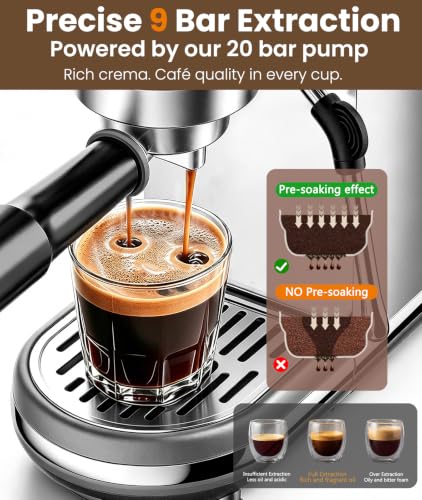
- The 20-bar pump is designed to maintain 9 to 10 bars during extraction for thorough saturation and crema development.
- Automatic and manual extraction settings accommodate both quick standard shots and customized coffee volumes.
- The focused steam wand adds milk-texturing capability without requiring a separate frother.
- The package includes a portafilter, funnel and coffee scoop with tamper, covering the basic tools needed to begin brewing.
Cons
- The housing combines ABS plastic with stainless steel, so buyers seeking an all-metal machine may prefer another model.
- Exact dimensions and weight are not provided, making it difficult to confirm clearance beneath cabinets before purchase.

KEENSTAR
Fast Espresso and Milk Drinks: KEENSTAR 3.5Bar 800W Compact 4-Cup Espresso Machine
The KEENSTAR 3.5Bar espresso machine brews 1 to 4 cups in about 2 minutes, with its biggest advantage being compact espresso and milk-drink capability. Beginners and space-conscious households should buy it for the simple knob control, pause function, and fast steam wand.
Pros and Cons
Pros
- The 800W heating element supports quick brewing and fast steam preparation.
- The compact 4.7-pound body fits smaller kitchens while retaining espresso and frothing functions.
- The pause function gives beginners a way to handle unexpected interruptions during operation.
- BPA-free construction and a clearly marked glass cup support practical daily use.
Cons
- The water tank holds a maximum of 240 ml, and exceeding that amount may cause nozzle leakage.
- The steam wand requires cleaning after every use, and the accessories should not go in the dishwasher.

CASABREWS
3700 20-Bar Espresso Machine with Steam Frother for Home
This semi-automatic espresso maker delivers café-quality shots with 20-bar Italian pressure and a powerful steam wand for microfoam milk in under 40 seconds of warm-up. Buy it if you want barista-level lattes and cappuccinos at home without the learning curve or counter clutter.
Pros and Cons
Pros
- Fast 40-second brew warm-up and quick steam function mean you're drinking espresso in minutes, not waiting 10+ minutes like older machines.
- Customizable single or double shot volume lets you program your exact preferred strength and save it for repeat brews.
- Removable drip tray and detachable water tank make daily cleaning and refilling genuinely quick—no disassembly needed.
Cons
- Single boiler design means you must wait between brewing espresso and steaming milk, limiting back-to-back drink production.
- Requires medium-dark roast pre-ground coffee and proper tamping technique; inconsistent prep will result in weak or over-extracted shots.
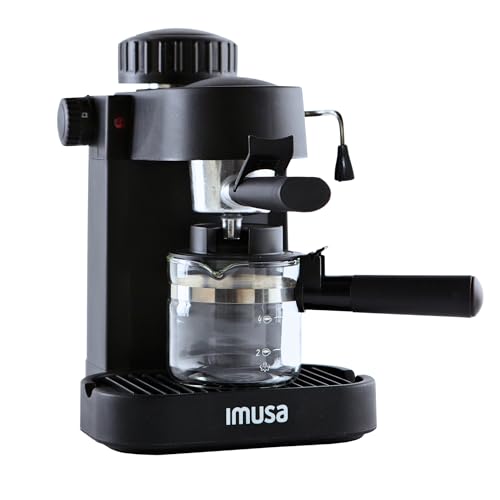
Imusa
Brew 4 Cups of Espresso and Cappuccino at Home | IMUSA Electric Coffee Maker with Milk Frother
The IMUSA brews four cups of espresso per cycle and includes a built-in milk frother that converts regular milk into foam, covering both espresso and cappuccino output from a single machine. Coffee drinkers who want daily café-style beverages at home without a separate frother or a second appliance will find this machine handles both tasks in one compact unit.
Pros and Cons
Pros
- Four-cup capacity means fewer brewing rounds when preparing drinks for multiple people at once.
- Integrated milk frother eliminates the need to purchase a standalone frothing wand.
- Permanent filter basket removes the recurring cost and waste of disposable paper filters.
- Heat-resistant plastic construction reduces surface burn risk during and after brewing.
Cons
- Plastic construction will not retain heat as effectively as stainless steel-bodied espresso machines.
- Four-cup maximum may require multiple brewing cycles for larger households with heavy daily consumption.

Aerkana
20 Bar Espresso Machine with Milk Frother for Home
This 20-bar semi-automatic espresso maker brews café-quality espresso and froths milk with a powerful steam wand, delivering rich crema and silky microfoam in under 30 seconds of preheating. Buy it if you want barista-level coffee at home without the learning curve or if you need a compact machine for a small kitchen or office.
Pros and Cons
Pros
- 20-bar pump with pressure gauge delivers consistent extraction and café-quality espresso with visible crema.
- High-performance steam wand froths milk into velvety microfoam quickly, enabling latte art for beginners.
- Compact stainless steel design fits small kitchens and offices while looking modern on any counter.
Cons
- Machine requires cooldown between milk frothing and espresso brewing, or overheat protection activates.
- Preheating and priming procedures add 2–3 minutes to first-use setup and after storage.
The Best Deals This Week*
-
Home Lattes and Cappuccinos with the atatix 20 Bar
$111.09
($179.21)Save $68.12 -
Fast Espresso and Milk Drinks
$46.72
($54.99)Save $8.27 -
Aerkana 20 Bar Espresso Machine with Milk Frother
$99.99
($159.99)Save $60.00
*Deals are selected by our commerce team
atatix Home Lattes and Cappuccinos with the atatix 20 Bar Espresso Machine and Milk Frother
atatix
Home Lattes and Cappuccinos with the atatix 20 Bar Espresso Machine and Milk Frother
The atatix espresso machine prepares espresso, lattes, cappuccinos and macchiatos, with NTC temperature control providing consistent extraction after a 30-second preheat. It suits home or office users who want adjustable shots, textured milk and a removable 44-ounce tank in a compact machine.
Check price on AmazonThe atatix is a compact manual espresso machine that prepares espresso-based drinks at home or in an office, reducing the need for separate brewing and milk-frothing appliances.
Its 20-bar pump maintains a stated 9 to 10 bars during extraction, while NTC control targets 90 to 96°C and preheats in 30 seconds for more consistent shots.
The machine combines BPA-free ABS and stainless steel, with suction-cup feet for stability and a heated metal top for warming cups. Exact dimensions and weight are not listed.
The partly plastic construction may disappoint buyers who prioritize an all-metal body, and manual milk texturing requires practice.
Best for espresso drinkers who want automatic shots, adjustable extraction and a steam wand without dedicating extensive counter space.
KEENSTAR Fast Espresso and Milk Drinks: KEENSTAR 3.5Bar 800W Compact 4-Cup Espresso Machine
KEENSTAR
Fast Espresso and Milk Drinks: KEENSTAR 3.5Bar 800W Compact 4-Cup Espresso Machine
The KEENSTAR 3.5Bar espresso machine brews 1 to 4 cups in about 2 minutes, with its biggest advantage being compact espresso and milk-drink capability. Beginners and space-conscious households should buy it for the simple knob control, pause function, and fast steam wand.
Check price on AmazonThis compact semi-automatic machine makes 1 to 4 cups of espresso, hot coffee, or iced coffee while solving the problem of limited counter space.
Its 800W heating system brews up to 240 ml in about 2 minutes, while the steam wand reaches frothing temperature in about 40 seconds.
The BPA-free machine measures 13.1 by 7.7 by 10 inches and weighs 4.7 pounds. Its marked glass cup helps portion servings consistently.
Use medium grounds larger than 0.5 mm, fully lock the filter, and clean the steam wand after every use.
Best for beginners and small households needing quick espresso and milk drinks in a compact footprint.
CASABREWS 3700 20-Bar Espresso Machine with Steam Frother for Home
CASABREWS
3700 20-Bar Espresso Machine with Steam Frother for Home
This semi-automatic espresso maker delivers café-quality shots with 20-bar Italian pressure and a powerful steam wand for microfoam milk in under 40 seconds of warm-up. Buy it if you want barista-level lattes and cappuccinos at home without the learning curve or counter clutter.
Check price on AmazonThis is a semi-automatic espresso machine that solves the problem of expensive café visits by delivering barista-quality shots and milk drinks at home in under a minute of warm-up time.
The 20-bar Italian pump provides professional-grade pressure extraction, and the PID temperature control system maintains consistent brewing heat so every shot tastes the same. The steam wand creates true microfoam milk texture for lattes and cappuccinos without the guesswork.
Built from stainless steel with a compact 5.9 x 11.97 x 12.28 inch footprint, it weighs under 10 lbs and fits standard kitchen counters. The 43.9 oz water tank detaches for easy refilling, and the removable drip tray handles taller cups.
The single boiler design means you cannot brew and steam simultaneously—you must wait between tasks, which slows workflow when making multiple drinks back-to-back.
Best for home coffee enthusiasts who want café-quality espresso drinks without leaving the kitchen and are willing to learn basic tamping and milk-frothing technique.
Imusa Brew 4 Cups of Espresso and Cappuccino at Home | IMUSA Electric Coffee Maker with Milk Frother
Imusa
Brew 4 Cups of Espresso and Cappuccino at Home | IMUSA Electric Coffee Maker with Milk Frother
The IMUSA brews four cups of espresso per cycle and includes a built-in milk frother that converts regular milk into foam, covering both espresso and cappuccino output from a single machine. Coffee drinkers who want daily café-style beverages at home without a separate frother or a second appliance will find this machine handles both tasks in one compact unit.
Check price on AmazonThe IMUSA is a countertop electric espresso machine that brews four cups and froths milk in one unit, eliminating the need for both a standalone espresso maker and a separate frother.
The built-in milk frother transforms regular milk into foam on demand, enabling cappuccinos and lattes without a second appliance or manual technique.
Built from heat-resistant plastic with a compact footprint, the machine is lightweight and repositionable; the permanent filter basket and removable drip tray simplify daily maintenance.
The plastic body is functional but will not match the thermal mass or premium feel of stainless steel machines at higher price points.
Best for solo drinkers or small households who want espresso-based drinks daily without the counter space of a full-size café machine.
Aerkana 20 Bar Espresso Machine with Milk Frother for Home
Aerkana
20 Bar Espresso Machine with Milk Frother for Home
This 20-bar semi-automatic espresso maker brews café-quality espresso and froths milk with a powerful steam wand, delivering rich crema and silky microfoam in under 30 seconds of preheating. Buy it if you want barista-level coffee at home without the learning curve or if you need a compact machine for a small kitchen or office.
Check price on AmazonThis is a semi-automatic espresso machine that solves the problem of expensive coffee shop visits and mediocre home espresso from basic drip makers. It brews espresso under 20 bars of pressure while frothing milk simultaneously, letting you make cappuccinos, lattes, and flat whites at home.
The 20-bar pump with visible pressure gauge ensures consistent extraction and balanced flavor. The 1450W heating system reaches brewing temperature in seconds, cutting prep time. The powerful steam wand produces dense microfoam for latte art without requiring barista skill.
Build: Stainless steel body, 34oz removable water tank, detachable drip tray, and cleaning pin included. Footprint is A4-sized (roughly 1×2×3 inches), fitting any kitchen or office. Weight and durability specs not provided in product data.
One limitation: You must cool the machine between frothing milk and brewing espresso, or the overheat protection system activates. This adds a 1–2 minute wait if you want back-to-back drinks.
Best for: Home coffee enthusiasts and office workers who want café-quality espresso and milk drinks without a large footprint or steep learning curve.
Editor’s Picks
| Category | Pick | Why |
|---|---|---|
| Best Overall | Compact semi-automatic espresso machine | Slim footprint with a real portafilter and steam wand, strong aggregated reviews for small spaces |
| Best Value | Budget compact espresso machine | Genuine 15-bar pump espresso in a narrow body at a low price |
| Best for Tiny Counters | Manual or stovetop espresso maker | Minimal footprint, stores in a drawer, no electricity or plumbing needed |
At a Glance: Comparison Table
| Product | Type | Width | Boiler | Tank Access | Best for |
|---|---|---|---|---|---|
| Compact semi-automatic | Semi-automatic, pump | Approx. 6-8 in | Thermoblock | Front or side | Small counters wanting milk drinks |
| Budget compact | Semi-automatic, pump | Approx. 5-6 in | Single boiler | Rear or removable | Value on a tight footprint |
| Slim entry machine | Semi-automatic, pump | Approx. 6 in | Thermoblock | Rear | Beginners, minimal space |
| Manual lever/stovetop | Manual | Minimal | Stovetop/none | N/A | Tiniest kitchens, drawer storage |
| Pod/capsule compact | Automatic pod | Approx. 5 in | Thermoblock | Rear | Fast, low-effort espresso |
How We Evaluated These Products
Our evaluation of the best espresso machine for a small kitchen is grounded in documented specifications and aggregated review analysis rather than claims of personal testing. The HomeWhisk team does not make hands-on brewing claims.
Footprint and Dimension Analysis. We recorded manufacturer width, depth, and height figures, prioritizing width since counter frontage is the scarcest resource in small kitchens. Machines under roughly 8 inches wide were treated as genuinely compact, and we noted depth separately because deep machines can crowd against a backsplash or overhang a narrow counter.
Tank Access and Clearance Documentation. We examined water tank placement, because a rear-mounted tank forces you to pull the machine forward to refill, which is impractical when the machine sits under a cabinet. Front- or side-access tanks earn strong marks in small-kitchen reviews, and we noted the vertical clearance each machine needs to lift the tank or open the top.
Heating System Review. We compared boiler types, single boiler versus thermoblock versus dual boiler, since these affect both size and warm-up time. Thermoblock and compact single-boiler systems dominate the small-machine category because they heat quickly and pack into slim housings.
Aggregated Review Analysis. We analyzed Amazon and Reddit ownership patterns, weighting products with large review counts and tracking recurring complaints about footprint, tank access, and warm-up reliability. We also considered the total space the machine’s workflow demands, including whether it requires a separate grinder and how much room the portafilter needs to swing during use.
What Actually Matters:
Footprint and Counter Frontage
In a small kitchen, the width of an espresso machine matters more than any other single dimension, because counter frontage is the resource you run out of first. A machine that is 6 inches wide leaves room for a grinder or a drying rack beside it; one that is 12 inches wide may claim a third of a short counter run on its own. Machines under roughly 8 inches wide qualify as genuinely compact.
Depth matters nearly as much and is often overlooked. Standard kitchen counters are about 24 inches deep, but usable space shrinks once you account for a backsplash, an outlet, and anything stored against the wall. A deep espresso machine can overhang a narrow counter or press against the backsplash so the tank cannot be lifted. Aggregated reviews frequently mention buyers surprised that a machine technically “fit” but left no room to load the portafilter or set a cup down.
Height is the least constrained dimension in most kitchens, but it becomes relevant under wall cabinets, where you need clearance to lift the water tank or open a bean hopper. Measure the full working envelope, not just the machine’s static footprint: how far the drip tray pulls out, how much room the portafilter needs to swing free, and how much clearance the tank lid requires. For the tightest kitchens, a machine that is both narrow and shallow, with a workflow that operates entirely from the front, preserves the most usable counter.
Water Tank Access and Daily Usability
A small kitchen usually means the espresso machine lives permanently under a cabinet or wedged into a corner, and that makes water tank access a make-or-break daily factor. A rear-mounted tank forces you to slide the whole machine forward to refill it, which is a genuine daily friction when the machine is boxed in. Front- and side-access tanks, or removable tanks that lift straight up with enough overhead clearance, transform the experience.
Manufacturer specifications indicate tank placement and capacity, and both matter in a compact context. A very small tank means frequent refills, which compounds the annoyance if access is awkward. Aggregated reviews from Amazon and Reddit consistently flag rear-tank machines in tight spaces as a top source of daily frustration, while front-fill designs earn praise for letting the machine stay put. Tank access is worth prioritizing over marginal differences in brewing features, along with a front-emptying drip tray that keeps the whole operation contained without dragging the machine around.
Boiler Type and Warm-Up in a Compact Body
Boiler technology directly affects both a machine’s size and how it fits a small-kitchen routine. Three systems dominate: single boilers, thermoblocks, and dual boilers. For compact machines, single boilers and thermoblocks are far more common because they pack into slim housings and heat quickly, while dual boilers are larger and mostly reserved for enthusiast machines that rarely suit tight counters. Thermoblock systems heat water on demand as it passes through a heated metal block, allowing a very fast warm-up, often under a minute, and a small internal footprint that suits a small kitchen where you want espresso quickly without a large machine idling; the tradeoff is that pure thermoblocks can be slightly less thermally stable shot-to-shot, though for most home users pulling one or two drinks the difference is minor.
Single-boiler machines heat a small reservoir of water and switch between brew and steam temperatures. They are compact and capable of real milk steaming, but you wait between pulling a shot and steaming milk while the boiler changes temperature. This is an acceptable rhythm for home users making a drink or two, and single-boiler machines remain a strong small-kitchen choice. For a compact machine, fast warm-up and reliable temperature recovery matter more than raw boiler size, because a small-kitchen machine is often turned on fresh each morning rather than left running.
Workflow, Grinder, and Total Space Cost
The true space cost of an espresso machine in a small kitchen includes everything the workflow requires, not just the machine’s own footprint. A semi-automatic machine that needs a separate burr grinder effectively occupies two footprints, and a bulky grinder can consume as much counter as the espresso machine itself. This hidden cost is why the format decision matters so much in tight spaces. Machines with an integrated grinder consolidate the workflow into one footprint but tend to be wider, pod and capsule machines eliminate the grinder entirely and are among the smallest options, and manual or stovetop makers such as moka pots have the smallest footprint of all and store in a drawer between uses, at the cost of more effort and a different flavor profile than pump espresso.
For a small kitchen committed to real pump espresso, the practical calculus is to pair a narrow semi-automatic machine with the most compact grinder that meets your needs, or to accept a pod machine for the ultimate space saving. Aggregated reviews from Amazon and Reddit suggest that many small-kitchen owners underestimate the grinder’s footprint, so it is worth planning the entire station, including grinder, tamper, and cup storage, before buying, since a machine that fits perfectly on its own can still overwhelm a small counter once the full workflow is assembled.
Frequently Asked Questions
What is the smallest espresso machine that still makes real espresso?
The smallest machines that produce genuine pump espresso are slim semi-automatic models around 5 to 6 inches wide, using a thermoblock or compact single boiler and a real 15-bar pump with a portafilter. Below that, manual lever devices and stovetop moka pots have an even smaller footprint and store in a drawer, though they produce a different style of coffee than pump espresso. Pod machines are also very compact but sacrifice the control and quality of a portafilter workflow. For real espresso in minimal space, a narrow semi-automatic machine is the best balance of size and capability.
How much counter space do I need for an espresso machine in a small kitchen?
Plan for the machine’s own footprint plus a working envelope around it. A compact machine may be 6 to 8 inches wide and roughly 12 inches deep, but you also need room to lock in and swing the portafilter, pull out the drip tray, lift the water tank, and set a cup down. If you use a separate grinder, budget for its footprint too, often as large as the machine itself. Measure your usable counter depth after accounting for the backsplash and any outlets, and confirm you have overhead clearance to refill the tank if it lifts from the top.
Is a thermoblock or boiler machine better for a small kitchen?
For a small kitchen, thermoblock and compact single-boiler machines are usually the better fit because they pack into slim housings and warm up quickly, often in under a minute, which suits a machine that gets switched on fresh each morning. Dual-boiler machines offer superior temperature stability and let you brew and steam at once, but they are larger and generate more idle heat, making them a poor match for tight counters. For most home users pulling one or two drinks, a fast-heating thermoblock or single boiler delivers the espresso quality they want in a footprint that fits.
Can I make espresso without a bulky separate grinder?
Yes, through several approaches. A machine with an integrated grinder consolidates everything into one footprint, though it is usually wider to fit the hopper. Pod and capsule machines skip grinding entirely and are among the most compact options. If you want a separate grinder for freshness and control, choose the most compact burr grinder that meets your needs, since a bulky grinder can occupy as much counter as the espresso machine itself. Some small-kitchen owners also buy pre-ground espresso, though this trades away the freshness that grinding on demand provides.
Where should the water tank be on a small-kitchen espresso machine?
For a machine that lives permanently under a cabinet or in a corner, a front- or side-access tank is far more practical than a rear-mounted one. A rear tank forces you to slide the whole machine forward every time you refill, which becomes a daily annoyance when the machine is boxed in. Removable tanks that lift straight up also work well if you have overhead clearance. Aggregated reviews consistently rank tank access as one of the most important daily-usability factors in tight spaces, so it is worth prioritizing over minor differences in brewing features.
Our Top Pick
After analyzing footprint dimensions, tank access, boiler systems, and aggregated owner experience across Amazon and Reddit, a compact semi-automatic espresso machine, narrow, shallow, with a fast-heating thermoblock or single boiler and front-accessible tank, stands out as the best espresso machine for the broadest range of small kitchens. It delivers genuine portafilter espresso and milk steaming without sprawling across limited counter, and its front-forward workflow means it can stay put instead of being dragged around for every refill.
That said, the right choice depends on your space and priorities. Consider these decision points:
- If you want real espresso and milk drinks in the smallest reasonable footprint, a compact semi-automatic with a thermoblock is the best all-around fit.
- If budget is the priority and you can accept a simpler build, a budget compact machine still delivers genuine pump espresso in a narrow body.
- If your counter is truly tiny or you want to store the maker away between uses, a manual lever or stovetop moka pot occupies almost no permanent space.
- If speed and zero effort matter more than espresso purity, a compact pod machine eliminates the grinder and the learning curve.
The best espresso machine for a small kitchen is the one whose full workflow, machine, grinder, and daily refills, fits your space without friction. Plan the entire station before buying, and pair a narrow machine with a compact option from our best coffee grinder guide to keep your coffee corner both capable and contained.



Write Your Review
No reviews yet. Be the first to share your experience!