

TL;DR — For a professional kitchen, the best chef knife is a full-tang 8- to 10-inch blade in a hard, edge-holding steel (German X50CrMoV15 around 56-58 HRC or Japanese steel near 60-61 HRC) with a comfortable, sanitary handle that survives an all-day service. Prioritize edge retention, easy re-honing, balance, and a seamless handle you can sanitize over looks. If you also outfit a full station, see best chef knife set and best knife sets.
The HomeWhisk editorial team researches kitchen equipment by analyzing manufacturer specifications, steel and hardness data, blade geometry, and aggregated user reviews from Amazon, Reddit communities like r/chefknives and r/KitchenConfidential, and long-term line-cook reports. For this guide we compared chef knives on steel type and Rockwell hardness, blade profile, tang construction, handle material, and how each held up over months of heavy use, because a professional kitchen punishes a knife in ways a home kitchen never does.

A knife for a working line is judged by different criteria than a knife for occasional home cooking. It has to take an edge quickly, hold it through hours of prep, tolerate a steel between tasks, and clean up fast enough to pass a health inspection. Our research separated blades that look impressive in photos from blades that earn their keep across a double shift. If you want to understand where these professional-grade blades sit relative to lighter options, our best japanese chef knife guide covers the harder-steel end of the spectrum and best chef knife under 100 covers value picks that punch above their price.
Victorinox
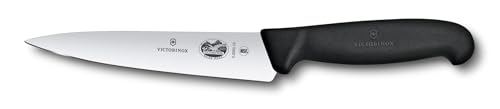
Everyday Kitchen Prep Chef's Knife: Victorinox Fibrox Pro 6 Inch Straight Edge, Black
This Victorinox Fibrox 6 inch chef's knife chops, minces, slices, and dices with a razor-sharp, laser-tested stainless steel edge that stays controlled through big and small tasks. Buy it if you want a lighter, agile blade for smaller hands or tighter prep work, backed by Victorinox's lifetime guarantee against defects.
Pros and Cons
Pros
- The razor-sharp, laser-tested blade handles chopping, mincing, slicing, and dicing across most kitchen jobs.
- The ergonomic TPE handle stays secure and comfortable even in wet, slippery conditions.
- The 6 inch length offers nimble control that larger chef's knives cannot match on small tasks.
- The lifetime defect guarantee reflects trusted Swiss craftsmanship you can rely on daily.
Cons
- The shorter 6 inch blade is less efficient for cutting large produce or carving big roasts.
- Knife sharpeners are sold separately, adding cost to keep the edge in top shape.
The Best Deals This Week*
-
Winco 8" White Hollow Ground Chef's Knife
$13.68
($14.40)Save $0.72 -
HOSHANHO Kitchen Knife in Japanese High Carbon
$35.74
($64.99)Save $29.25 -
Everyday Kitchen Prep Chef's Knife
$28.19
($32.22)Save $4.03
*Deals are selected by our commerce team
Winco 8" White Hollow Ground Chef's Knife

HOSHANHO Kitchen Knife in Japanese High Carbon Steel, Professional High-Class Chef's Knife 8 inch, Non-slip Ultra Sharp Cooking Knives with Ergonomic Handle

HOSHANHO
Kitchen Knife in Japanese High Carbon Steel, Professional High-Class Chef's Knife 8 inch, Non-slip Ultra Sharp Cooking Knives with Ergonomic Handle
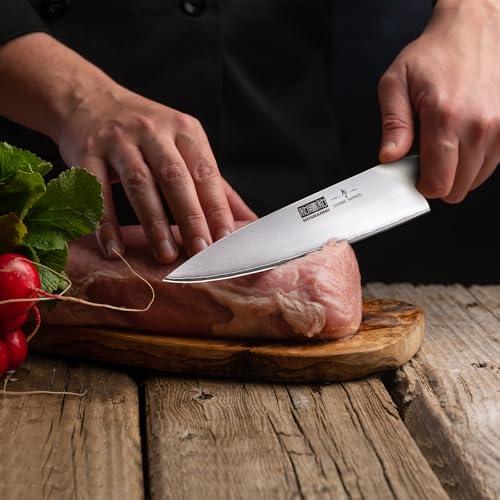
Check price on AmazonThis HOSHANHO 8-inch chef’s knife makes sense if you want one blade for ordinary preparation such as slicing vegetables and portioning boneless meat. The listed sloped bolster is a useful detail for cooks who use a pinch grip. The 8-inch length gives you more working edge than a utility knife while remaining a size many home cooks can use on a regular board.
Compare the handle and balance with the knife you already like. The manufacturer’s steel and edge descriptions do not tell you how comfortable the knife will be for your hand. Follow its care guidance and use an appropriate board. Choose a shorter knife if you prefer more control on small produce or have limited prep space.
Victorinox Everyday Kitchen Prep Chef's Knife: Victorinox Fibrox Pro 6 Inch Straight Edge, Black
Victorinox
Everyday Kitchen Prep Chef's Knife: Victorinox Fibrox Pro 6 Inch Straight Edge, Black
This Victorinox Fibrox 6 inch chef's knife chops, minces, slices, and dices with a razor-sharp, laser-tested stainless steel edge that stays controlled through big and small tasks. Buy it if you want a lighter, agile blade for smaller hands or tighter prep work, backed by Victorinox's lifetime guarantee against defects.
Check price on AmazonThis is the Victorinox Fibrox Pro 6 inch chef's knife, built for everyday chopping, mincing, slicing, and dicing where full control matters more than reach.
The tapered, laser-tested stainless steel edge cuts cleanly and efficiently, making short work of herbs, garlic, and vegetables during daily prep.
The thermoplastic elastomer handle delivers a non-slip grip when wet, and the weighted, balanced body keeps handling steady and comfortable.
The 6 inch blade is shorter than a standard 8 inch chef's knife, so it feels cramped on large produce and big proteins.
Best for cooks with smaller hands or anyone wanting a nimble second knife for detailed cutting.
KEEMAKE 8" Chef Knife, Ultra Sharp Kitchen Knife with Ergonomic Handle

Editor’s Picks
| Category | Pick | Why |
|---|---|---|
| Best Overall | Full-tang 8-inch German-steel workhorse (56-58 HRC) | Tough, easy to re-hone mid-shift, forgiving on hard squash and dense prep, balanced for all-day use |
| Best Value | Forged 8-inch mid-price chef knife | Professional durability and full-tang construction without premium markup, ideal for stocking a station |
| Best for Speed and Precision | Hard Japanese-steel gyuto (60-61 HRC) | Thin, keen edge for high-volume fine prep, holds sharpness longer between honings |
At a Glance: Comparison Table
| Pick Type | Steel | Hardness (HRC) | Handle | Edge | Best For |
|---|---|---|---|---|---|
| Best Overall | German X50CrMoV15 stainless | 56-58 | Riveted synthetic (POM), seamless bolster | ~15-18° per side | All-day line prep, mixed tasks |
| Best Value | High-carbon stainless, forged | 55-58 | Molded polymer, full tang | ~18-20° per side | Stocking multiple stations |
| Speed and Precision | VG-10 / high-carbon Japanese | 60-61 | Contoured wood or micarta | ~12-15° per side | High-volume fine slicing |
| Sanitary / NSF-style | Stamped stainless | 55-56 | One-piece molded, no seams | ~18-20° per side | Health-code compliance, wet stations |
| Nimble / petite grip | German or Japanese stainless | 57-60 | Slim ergonomic handle | ~15° per side | Smaller hands, long shifts |
How We Evaluated These Products
This guide is research-based. we synthesized manufacturer steel documentation, published hardness and geometry specifications, retailer listings, and recurring patterns in aggregated reviews from cooks who use these knives professionally.
We weighted steel and hardness heavily because they govern the two things a professional cares about most: how long an edge lasts and how easily it comes back. Softer German-style steels around 56-58 HRC dull a little faster but respond instantly to a honing steel and forgive abuse, which is why they dominate Western kitchens. Harder Japanese steels near 60-61 HRC hold a keener edge far longer but are more brittle and demand whetstone maintenance rather than a quick steeling.
We also gave real weight to handle construction and sanitation, since a professional knife lives in a wet, high-turnover environment. Seamless handles with no gap between blade and scale, or one-piece molded handles, resist the bacteria traps that fail health inspections. Recurring complaints in aggregated reviews, such as loosening rivets, chipping on hard contact, or handles that grow slippery when wet, told us as much about long-term fitness for a line as any spec sheet.
What Actually Matters:
Steel Type and Hardness: The Core Trade-Off
The single most consequential choice in a professional chef knife is the steel, because it dictates both edge retention and how you maintain the blade. German-style stainless such as X50CrMoV15 is hardened to roughly 56-58 on the Rockwell C scale. That hardness is a deliberate compromise: soft enough to be tough and to take a fresh edge from a honing steel in seconds, hard enough to hold that edge through a reasonable stretch of prep. In a kitchen where a cook cannot stop to whetstone a blade mid-service, this fast recoverability is worth more than raw sharpness.
Japanese gyutos in steels like VG-10 or various high-carbon formulations run harder, commonly 60-61 HRC and sometimes higher. The payoff is a thinner, keener edge that stays sharp far longer between sharpenings, which suits high-volume fine work like slicing fish, herbs, or vegetables all day. The cost is brittleness: a hard edge can chip if it hits a bone, a plate, or a frozen product, and it will not respond to a standard honing steel the way softer steel does. It needs proper whetstone maintenance.
For most professional stations, a German-steel workhorse is the safer default because it tolerates the inevitable abuse of a busy line and recovers instantly. Cooks who own their maintenance routine and do primarily precise cutting often prefer a hard Japanese blade for its endurance and clean cuts. Many working chefs carry both: a tough Western knife for heavy prep and a hard gyuto for delicate work. If you are building toward that dual setup, our best japanese chef knife guide covers the harder-steel options in depth.
Tang, Balance, and All-Day Comfort
A professional knife is held for hours, so tang construction and balance stop being abstractions and become the difference between a comfortable shift and wrist fatigue. Full-tang construction, where the steel runs the entire length of the handle, is the professional standard because it provides durability and a stable, predictable balance point. Forged full-tang knives usually carry a bolster, the thick collar between blade and handle, which adds heft toward the hand and lets a cook pinch-grip the blade safely.
Balance is where personal preference and workload intersect. A blade-heavy knife favors chopping and rock-cutting through dense prep, while a handle-heavy or neutrally balanced knife feels nimbler for detail work and reduces fatigue during long slicing sessions. Manufacturer weight specs help, but the balance point matters more than total mass; a well-balanced 240-gram knife can feel lighter in use than a poorly balanced 200-gram one.
Grip security is the safety dimension of comfort. In a wet kitchen, a handle that turns slick is dangerous. Textured polymer, contoured micarta, and pakkawood resist slipping, and a subtle finger contour helps maintain a pinch grip through repetitive motion. Aggregated reviews from working cooks repeatedly flag handles that cause hot spots or blisters over a long shift, which is a reminder that ergonomics, not appearance, should drive the choice for a professional buyer.
Edge Geometry and Sharpening Routine
Edge geometry determines how a knife cuts and how you keep it cutting, and it should match your maintenance habits, not the other way around. Western knives are typically ground at a wider angle, around 18-20 degrees per side, which produces a sturdier edge that resists rolling and chipping under heavy use. Japanese blades are ground finer, often 12-15 degrees per side, for a keener cut at the cost of fragility. A professional who cannot commit to careful sharpening is better served by the more durable Western grind.
Maintenance cadence is the practical partner to geometry. A honing steel does not sharpen; it realigns a rolled edge, and softer Western steel responds to it well, which is why line cooks steel their knives throughout service. Harder Japanese steel largely ignores a honing steel and instead needs periodic whetstone work at a controlled angle. Choosing a blade whose maintenance matches your routine prevents the common failure of a hard knife going dull because it never sees a stone.
Factory edge quality also varies. Some knives arrive shaving-sharp and ready for the line; others need an initial whetstone session to reach professional keenness. Aggregated reviews are a reliable guide here, since buyers consistently report out-of-box sharpness.
Sanitation, Durability, and Cleaning
In a professional setting, a knife has to pass a health inspection and survive relentless cleaning, which puts handle construction and corrosion resistance front and center. Seamless transitions between blade and handle matter because any gap traps food and moisture, breeding bacteria. Fully riveted handles with flush rivets, or one-piece molded polymer handles with no seams at all, are easiest to sanitize and are why many commercial kitchens favor them.
Corrosion resistance is a genuine spec, not a formality, because professional knives are washed constantly and exposed to acidic foods. Stainless and high-carbon stainless steels resist rust well with basic care. True high-carbon (non-stainless) blades take a phenomenal edge but will stain and rust if left wet, which makes them a poor fit for a busy commercial dish pit despite their cutting performance. For most professional buyers, a stainless or stainless-clad blade is the pragmatic choice.
Dishwasher exposure is the durability killer that aggregated reviews mention most. Even dishwasher-safe knives degrade faster from the heat, harsh detergent, and knocking against other items, which dulls edges and can loosen handles over time. The professional habit of hand-washing and immediately drying a knife extends its life dramatically.
Frequently Asked Questions
What size chef knife is best for a professional kitchen?
An 8-inch blade is the versatile default, but many professionals prefer a 9- or 10-inch chef knife for the extra length that speeds through large-volume prep and long slicing cuts. The longer blade covers more product per stroke and handles big proteins and produce with fewer passes. The trade-off is maneuverability in tight detail work. Many cooks settle on a 9-inch as the balance of reach and control, then keep a shorter knife for precision tasks.
German or Japanese steel for professional use?
Both work; the right answer depends on your maintenance routine and cutting tasks. German steel around 56-58 HRC is tougher, forgiving of abuse, and re-hones in seconds on a steel, which suits chaotic, high-abuse stations. Japanese steel near 60-61 HRC holds a keener edge far longer for fine, high-volume slicing but is more brittle and needs whetstone care. Many professionals carry a German workhorse for heavy prep and a Japanese gyuto for delicate work. See our best japanese chef knife guide for the harder-steel picks.
How often should I sharpen a professional chef knife?
Hone daily, sharpen as needed. A honing steel realigns the edge and should be used frequently, often at the start of each shift and periodically during service, especially on softer Western steel. True sharpening on a whetstone removes metal to create a new edge and is needed less often, typically every few weeks under heavy use or when honing no longer restores keenness. Harder Japanese steel skips the honing steel and relies on whetstone work at a controlled angle.
Is a full-tang knife necessary for professional work?
For heavy professional use, full-tang construction is strongly preferred. Running the steel through the entire handle gives the knife durability, a stable balance point, and resistance to the handle loosening under constant use and washing. Partial-tang knives can be lighter and cheaper but are more prone to failure at the handle over years of abuse. If you are stocking multiple stations, prioritizing full-tang forged knives is a sound long-term investment.
Can I put a professional chef knife in the dishwasher?
You should not, even if the manufacturer labels it dishwasher-safe. The high heat, aggressive detergent, and knocking against other items dull the edge faster and can loosen or discolor the handle over time. Hand-washing and immediately drying is the professional standard and dramatically extends a knife’s working life. It also protects you and coworkers, since a loose knife in a wash rack is a real hazard.
Should professionals buy a knife set or individual knives?
Most working cooks build a kit of individual knives chosen for specific tasks rather than buying a block set, since sets often include pieces a professional rarely uses. A chef knife, a paring knife, and a serrated bread knife cover the majority of tasks, with a boning or slicing knife added as the station demands. That said, a well-chosen set can be an efficient way to outfit a kitchen. Compare options in our best chef knife set and best knife sets guides, and for slicing bread specifically, see best bread knife.
Our Top Pick
After comparing steel and hardness, tang construction, edge geometry, and sanitation across the field, a full-tang 8- to 9-inch German-steel workhorse hardened to roughly 56-58 HRC is the best chef knife for the widest range of professional kitchens. It takes a fast edge, re-hones in seconds on a steel between tasks, tolerates the abuse of a busy line, and cleans up to health-code standards. For cooks whose work is primarily fine, high-volume slicing and who maintain their own whetstones, a hard Japanese gyuto is the sharper, longer-lasting alternative.
Consider these decision points:
- If you want one durable knife that survives a chaotic line and recovers instantly, choose a full-tang German-steel chef knife around 56-58 HRC.
- If your work is precise, high-volume slicing and you maintain whetstones, a hard Japanese gyuto near 60-61 HRC holds its edge far longer.
- If you are outfitting a whole station or kitchen on a budget, a forged mid-price full-tang knife delivers professional durability without the premium; see best chef knife under 100.
- If you want to build a complete kit rather than a single blade, start with our best chef knife set and add a dedicated best bread knife for clean crusts.
The best professional chef knife is the one whose steel, balance, and maintenance match how you actually work the line. Buy for edge recovery, durability, and a sanitary handle first, and the knife will earn its place in your roll shift after shift.



Write Your Review
No reviews yet. Be the first to share your experience!