

HomeWhisk earns commission from qualifying purchases made through links on this page. We research picks from specifications and owner reviews; we do not test products ourselves.
TL;DR — The useful way to compare air fryer versus toaster oven is to look at daily workflow, upkeep, and what each option does better. When this turns into a purchase decision, compare best air fryer, best blender, and best instant pot before narrowing your shortlist.
The HomeWhisk approach is research-first: compare construction, usability, cleaning, and long-term complaints before recommending a direction. For appliance topics, we pay close attention to capacity, controls, cleanup, storage, reliability complaints, and whether the machine saves enough effort to justify the space.


Pros
- Five cooking functions replace multiple appliances, saving counter space in smaller kitchens.
- Large capacity accommodates meal prep and family portions without requiring batch cooking.
- Air fry basket produces crispy results on frozen foods and breaded items with minimal oil.
Cons
- 60-minute timer requires monitoring for longer recipes like roasts or slow-baked dishes.
- Glass door can accumulate grease splatter during air frying, requiring regular wiping between uses.
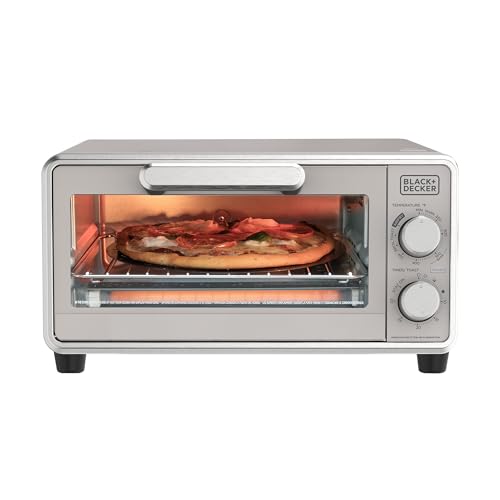
The BLACK+DECKER Crisp 'N Bake solves the problem of wanting crispy fried food without deep frying or heating a full oven.
Air fry technology circulates high-intensity hot air around food, creating a crispy exterior with little to no oil. The convection fan ensures even browning across the entire cooking surface, important for batch cooking fries or chicken wings.
Stainless steel exterior resists fingerprints and kitchen grime. The 6-slice interior capacity means less batch cooking for families. Countertop footprint fits standard kitchen spaces without requiring dedicated cabinet installation.
The 60-minute timer works for most recipes but requires resetting for longer bakes like casseroles or roasts.
Best for households that want healthier frying options and a compact alternative to full-size convection ovens.
For air frying, preheat the unit for 3 minutes, place food in the air fry basket in a single layer, and set temperature between 350-400°F. Shake the basket halfway through cooking for even crisping.
For toasting, use the toast setting dial to select shade level. Position bread directly on the wire rack for best results. Watch through the glass door as darker settings can brown quickly.
Clean the crumb tray after every few uses by sliding it out from the bottom. Wipe the glass door and interior with a damp cloth once cooled. The air fry basket and accessories are hand-wash recommended to preserve nonstick coating.
Pros
- The 20.3-quart interior fits a 13-inch pizza or full sheet pan, making it practical for actual family meals rather than just reheating leftovers.
- All accessories including the air fry basket go in the dishwasher, saving the scrubbing time required by many competitors with hand-wash-only parts.
- The 4.7-star rating across 422 reviews confirms consistent performance in real kitchens, not just manufacturer claims.
Cons
- The unit measures roughly 19 inches wide, which will not fit under standard 18-inch upper cabinets without placing it away from the wall.
- At this price point, the unit does not include a rotisserie function found in some competing models.
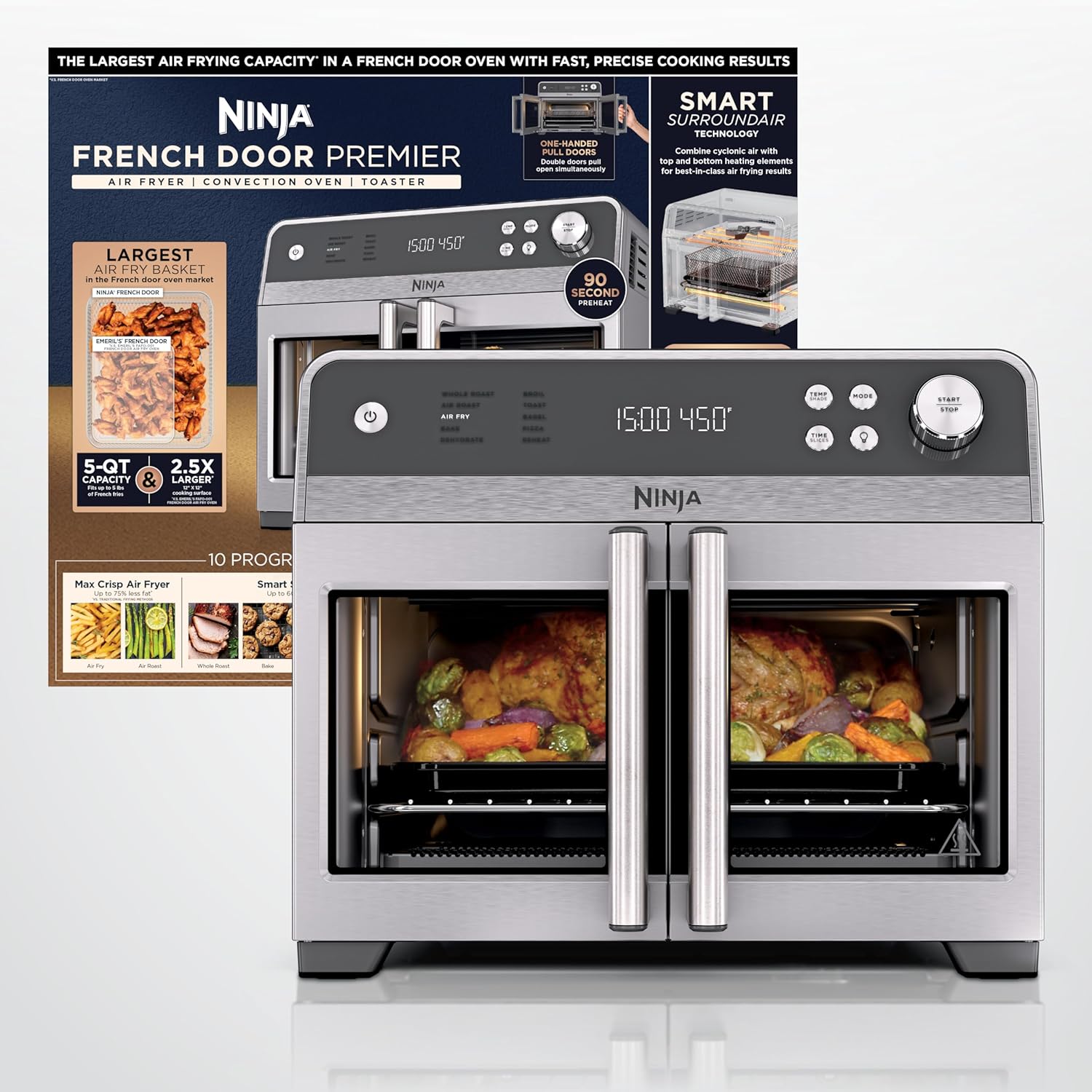
The Ninja French Door Premier is a countertop convection oven with a dedicated 5-quart air fry basket that solves the problem of juggling multiple small appliances for different cooking tasks.
The 450°F cyclonic air system circulates heat fast enough to cut conventional oven cooking time by up to 60%, with a 90-second preheat that makes weeknight dinners feasible when you get home late.
The unit holds a 20.3-quart capacity with French doors that open simultaneously, and the cooking surfaces use no PFAS coatings. The air fry basket, sheet pan, wire rack, and broil rack all go in the dishwasher.
The footprint requires about 19 inches of horizontal counter space, which may not fit in kitchens with limited room or low-hanging cabinets.
Best for families of four or more who cook varied meals daily and want to consolidate countertop appliances without losing cooking flexibility.
Select the cooking mode first, then set temperature and time. For air frying, place food in the 5-quart basket in a single layer for best crisping. For baking or roasting, use the included sheet pan on the wire rack positioned in the center slot.
The oven preheats in 90 seconds, so wait for the ready signal before loading food to ensure even cooking. French doors open with one pull, giving full access to load or check food without awkward maneuvering.
After cooking, remove the crumb tray and place all accessories in the dishwasher. Wipe interior surfaces with a damp cloth while still warm for easiest cleanup.

Pros
- Air Fry, Pizza, Broil, Toast, Bake, Convection Bake, Reheat, and Dehydrate settings cover a wide range of daily cooking tasks.
- Infrared heat and enhanced airflow are designed to deliver consistent browning and all-around crispness.
- The responsive control panel uses clear icons for straightforward function and temperature adjustments.
- French doors open smoothly with one hand, making the cooking chamber easier to access.
Cons
- The 25QT interior accepts pizzas only up to 12 inches, so larger family-size pizzas will not fit.
- At 18.1 inches wide, the oven still requires meaningful horizontal counter space despite its slim profile.
The Midea Flexify Slim combines air frying, toasting, baking, broiling, reheating, dehydrating, pizza cooking, and convection baking to reduce the need for multiple countertop appliances.
Infrared heating adjusts with 5-degree precision for consistent results, while enhanced airflow surrounds food to improve crispness with substantially less oil than deep frying.
The stainless-steel French doors add durability and one-handed access. Its exterior measures 14.1 by 18.1 by 11.4 inches, though the product data does not provide its weight.
The cavity fits a 12-inch pizza or a chicken up to 6 pounds, but shoppers cooking larger pizzas or oversized meals may need a bigger oven.
This model is best for small families and space-conscious cooks seeking broad cooking versatility in one countertop appliance.
Select Air Fry for crisp foods with less oil, Convection Bake for even roasting, Toast for bread, or Reheat for warming leftovers without relying on a full-size oven.
Choose the function, adjust time and temperature on the control panel, then arrange food with enough space for heated air to circulate around each piece.
Use the French doors for one-handed access, and confirm that cookware and food fit within the 25QT cavity before preheating.
Air fryer vs Toaster oven: The Core Difference
Choosing between air fryer and toaster oven is less about one being universally better and more about which one fits how much prep you do. Air fryer is the more focused choice; toaster oven is usually easier to live with day to day. For product picks, compare best air fryer, best blender, and best instant pot.
Head To Head
Best fit: Air fryer makes sense when its specific strengths match the work you do most; toaster oven is better when you want broader everyday use.
Daily effort: compare cleaning, storage, and maintenance before you compare minor feature differences.
Value: paying more only helps if the difference shows up in your normal routine.
Risk: the wrong pick usually becomes annoying later — harder cleanup, awkward handling, or a tool that sits unused.
When Air fryer Wins
Air fryer is the right call if you want the more specialized tool and will use that advantage often. It is the better fit when precision matters more than flexibility. If you are shopping, our best air fryer and best blender guides are the fastest way in.
When Toaster oven Wins
Go with toaster oven if you want the easier everyday choice. It may not feel as specialized, but it is often the one that gets used more.
What Most People Miss
The overlooked factor is not overfilling past the max line. Two appliances can compare evenly on paper, then diverge sharply once daily upkeep enters the picture. Weight it accordingly.
Which Should You Choose
If you are still unsure, start from your actual purchase: who you are (small-kitchen owners), how often you cook, and which trapped residue in seams you most want to avoid. That answers it faster than any spec comparison.
Related Product Guides
If this topic is part of a buying decision, these are the HomeWhisk guides most closely tied to it:
Frequently Asked Questions
Should I choose air fryer or toaster oven?
Neither wins outright — pick air fryer for a more focused job, toaster oven for easier everyday versatility. Compare best air fryer and best blender for real models.
What is the main difference between air fryer and toaster oven?
It comes down to noise level versus convenience and cost. Match the winner to how often you cook and the motors that bog down under load you most want to avoid.
Is a premium appliance worth it?
Only if you use it enough to notice better control, durability, or cleanup regularly. Occasional users are well served by a mid-range pick like those in best instant pot.
What is the bottom line?
Match the appliance to your real habits: buy for durability if it is daily, for value and storage if it is occasional.
Who is this most useful for?
Mainly gadget-minimalists who want one do-it-all unit, and meal-preppers batching food. If that is you, treat capacity and footprint as a requirement rather than a nice-to-have.
The Bottom Line
For most home cooks, the best choice is the one that removes friction without adding maintenance you will ignore. Start with your use case, then cross-check best air fryer, best blender, and best instant pot.


Write Your Review
No reviews yet. Be the first to share your experience!