

TL;DR — Store a toaster oven by first unplugging and fully cooling it, emptying the crumb tray, and wiping it out, then keeping it somewhere with air clearance on all sides if it will still be used, or boxed and dry if it’s going into long-term storage. The best everyday spots are a countertop corner, an appliance garage, a rolling cart, or a deep cabinet or pantry shelf rated for the weight — never sealed away while warm, and never with anything stacked on top blocking the vents. Give at least a few inches of clearance and protect cabinets from heat. For picks, see our best toaster oven and best air fryer guides.
The HomeWhisk editorial team researches kitchen equipment by analyzing manufacturer guidance, kitchen-safety practices, and aggregated user reviews from major retailers and home communities. This guide covers both day-to-day storage between uses and packing a toaster oven away for the long term, with the safety details that actually matter.

Storing a toaster oven sounds trivial, but two things go wrong: people trap heat (fire risk and warping) and people crush controls or shelving by shoving a heavy appliance into a tight spot. Whether you’re clearing counter space or boxing it up for a move, the steps below keep the appliance safe and working.
INFRAOVENS
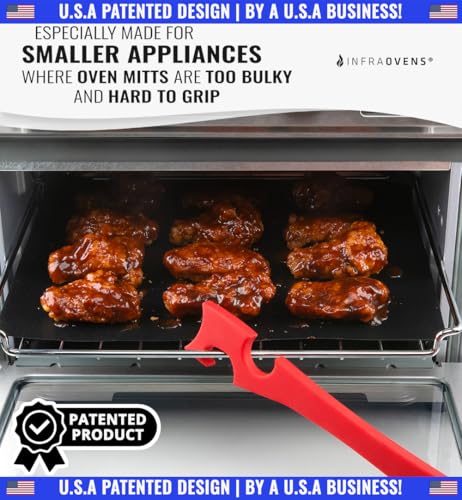
Silicone Oven Rack Push Pull Tool for Air Fryer & Toaster Ovens, INFRAOVENS Shelf Puller with Long Handle
This INFRAOVENS silicone tool pushes and pulls hot racks in and out of small ovens without gloves, keeping your hands well away from the heat. Buy it if you use an air fryer toaster oven, convection oven, or countertop oven where bulky mitts do not fit.
Pros and Cons
Pros
- Fits tight air fryer and countertop oven openings that block standard mitts.
- Long handle reduces burn risk when adjusting hot racks.
- Dishwasher safe silicone stays sturdy and easy to clean.
- Compatible with a wide list of popular oven brands.
Cons
- The 450°F heat limit means it should not linger against hotter surfaces or heating elements.
- It handles racks and trays, not hot food items directly, so you still need separate tongs for plating.
Linda's Essentials
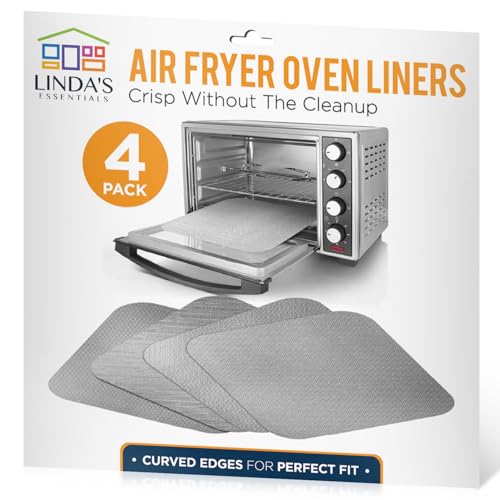
Stop Scrubbing Baked-On Grease: Linda's Essentials Reusable Toaster Oven Liners, 4 Pack 12x12 Non-Stick Mats for Ninja and Cuisinart
These four reusable 12 by 12 inch non-stick liners sit under food in a toaster oven or air fryer oven and absorb the baked-on grease that would otherwise land on the appliance floor. Buy them if you cook pizza, bacon, or reheated leftovers in a Ninja, Cuisinart, or Emeril Lagasse countertop oven and want to stop cutting parchment sheets.
Pros and Cons
Pros
- Heat rated to 480 degrees Fahrenheit, which covers standard toaster oven baking and roasting.
- BPA-free and PFOA-free coating, made for food sitting in direct contact.
- Cut to fit sizing works in nearly any brand of countertop or air fryer oven.
- Four liners per pack lets you wash one while another stays in the oven.
Cons
- The 480 degree ceiling puts broiling and high-heat roasting out of reach.
- Covering too much tray surface blocks airflow, so air fryer crisping suffers unless the liner is trimmed smaller.

bouti1583
11" Non-Stick Toaster Oven Liner by bouti1583: Catch Spills & Skip Scrubbing (2-Pack, PTFE)
This PTFE liner sits on your toaster oven's floor to catch every drip and crumb, turning scrubbing sessions into a quick wipe. Buy it if you bake often and want to stop scraping burnt-on gunk from the oven bottom after every use.
Pros and Cons
Pros
- Non-stick PTFE surface releases baked-on spills with almost no effort.
- Trimmable design fits convection, electric, gas, and microwave ovens alike.
- Reusable and dishwasher safe, replacing disposable foil over the long run.
Cons
- PTFE liners can degrade or release fumes if pushed past the 500-degree limit, so high-broil use needs caution.
- You must measure and cut the sheet yourself before first use, adding a small setup step.
INFRAOVENS Silicone Oven Rack Push Pull Tool for Air Fryer & Toaster Ovens, INFRAOVENS Shelf Puller with Long Handle
INFRAOVENS
Silicone Oven Rack Push Pull Tool for Air Fryer & Toaster Ovens, INFRAOVENS Shelf Puller with Long Handle
This INFRAOVENS silicone tool pushes and pulls hot racks in and out of small ovens without gloves, keeping your hands well away from the heat. Buy it if you use an air fryer toaster oven, convection oven, or countertop oven where bulky mitts do not fit.
$9.99 at AmazonEditors' Favorite
Color: Red Size: 11 x 2 Dimensions: 2 x 0.25 x 11 inches Weight: 0.14991433816 pounds Product Group: Kitchen Binding: Kitchen
Shop NowLinda's Essentials Stop Scrubbing Baked-On Grease: Linda's Essentials Reusable Toaster Oven Liners, 4 Pack 12x12 Non-Stick Mats for Ninja and Cuisinart
Linda's Essentials
Stop Scrubbing Baked-On Grease: Linda's Essentials Reusable Toaster Oven Liners, 4 Pack 12x12 Non-Stick Mats for Ninja and Cuisinart
These four reusable 12 by 12 inch non-stick liners sit under food in a toaster oven or air fryer oven and absorb the baked-on grease that would otherwise land on the appliance floor. Buy them if you cook pizza, bacon, or reheated leftovers in a Ninja, Cuisinart, or Emeril Lagasse countertop oven and want to stop cutting parchment sheets.
$8.99 at AmazonGreat Value
Color: Silver Size: 4 Pack Dimensions: 12 x 12 x 0.09842519675 inches Product Group: Kitchen
Shop Nowbouti1583 11" Non-Stick Toaster Oven Liner by bouti1583: Catch Spills & Skip Scrubbing (2-Pack, PTFE)
bouti1583
11" Non-Stick Toaster Oven Liner by bouti1583: Catch Spills & Skip Scrubbing (2-Pack, PTFE)
This PTFE liner sits on your toaster oven's floor to catch every drip and crumb, turning scrubbing sessions into a quick wipe. Buy it if you bake often and want to stop scraping burnt-on gunk from the oven bottom after every use.
$6.99 at AmazonColor: Black Size: 11 x 9 inches Dimensions: 11 x 9 x 0.09842519675 inches Weight: 0.11 pounds Product Group: Kitchen Binding: Kitchen
Shop NowStep-by-Step: Storing a Toaster Oven Between Uses
1. Unplug it and let it fully cool. A toaster oven’s exterior and interior stay hot well after the timer ends. Never move, cover, or enclose a warm unit — give it at least 30 minutes to cool completely. 2. Empty and clean the crumb tray. Slide out the crumb tray, dump it, and wipe it. Trapped crumbs are the leading cause of smoking and small fires, and they attract pests in storage. 3. Wipe the interior and racks. Remove grease and food residue with a damp cloth and mild dish soap, then dry thoroughly. Moisture left inside can cause rust and odors. 4. Coil the cord loosely. Wrap the power cord around the back or tuck it into the built-in cord storage if the model has one. Don’t kink it tightly against the plug — repeated sharp bending damages the wire over time. 5. Choose a spot with clearance. Wherever it lives, leave air space around it — typically a few inches on the sides and top and behind — so residual heat dissipates and the next use has proper ventilation. Manufacturers specify minimum clearances; a common guideline is 2 to 4 inches around a unit in use. 6. Keep it level and stable. Set it on a flat, heat-tolerant surface. If it’s going into a cabinet, make sure the shelf is rated for the weight (many toaster ovens run 10 to 20 pounds).
Where to Store It: Countertop and Cabinet Options
Countertop corner. The simplest option for a frequently used oven. Push it into a back corner with clearance from the wall and any backsplash, and keep flammables (paper towels, dish cloths, oil bottles) away from the vents. Placing it on a cutting board or heat-resistant mat protects the counter and makes it easy to slide out.
Appliance garage. A cabinet with a roll-up or tambour door that hides countertop appliances. Great for a clean look, but only pull the door down once the oven is cool, and confirm the garage has ventilation — an enclosed cubby that traps heat during use is a fire hazard.
Deep cabinet or lower shelf. Good for occasional-use ovens. Store it toward the front so you’re not lifting a heavy unit over your head, and make sure the shelf can hold the weight. Protect adjacent cabinet walls from heat if the oven is used nearby.
Pantry shelf. A pantry keeps the oven out of sight and dust-free. Slide it out to use it (never run it inside an enclosed pantry), and leave the surrounding shelf clear.
Rolling cart or utility shelf. A dedicated rolling cart is one of the most practical solutions — you gain counter space, keep the oven at a safe working height, and can roll it to an open area to run it. Carts also suit other bulky appliances, so you can pair the toaster oven with an air fryer or slow cooker; our best air fryer and best instant pot guides cover appliances that share a cart well.
Protecting Cabinets and Surfaces from Heat
Heat is the real hazard in toaster-oven storage. A toaster oven’s exterior and especially its top and vents get hot in use, and running it too close to cabinetry can scorch, discolor, or warp wood and laminate over time.
- Keep clearance above and behind — the top and rear vents exhaust the most heat.
- Never run it inside a closed cabinet, appliance garage, or under a low shelf. Pull it out to open air first.
- Use a heat shield or mat if the oven sits near a cabinet wall — a stainless or tempered-glass heat guard reflects heat away.
- Give the front room to open — the door drops down and gets hot, so leave space to open it fully without hitting anything.
Long-Term Storage (Moving or Seasonal)
If the oven is going away for months:
1. Clean it thoroughly (crumbs and grease will smell and attract pests). 2. Make sure it’s bone dry inside to prevent rust. 3. Repack it in its original box if you kept it; otherwise wrap it in a towel or bubble wrap and box it, cushioning the glass door. 4. Store it in a cool, dry place — avoid damp basements and hot attics, which promote rust and can degrade electronics and door seals. 5. Keep it upright so racks and the door don’t shift or bend.
Frequently Asked Questions
Can I store a toaster oven in a closed cabinet?
You can store it in a closed cabinet when it’s cool and not in use, provided the shelf holds the weight and the interior is dry. What you must never do is run the oven inside an enclosed cabinet or appliance garage — the trapped heat is a genuine fire hazard and can scorch the surrounding wood. Always slide it out into open air with clearance before turning it on, then return it once it has fully cooled.
How much clearance does a toaster oven need?
Check the manual, but a common guideline is 2 to 4 inches of clearance on the sides, back, and top while the oven is in use, so heat from the vents can dissipate. The front needs enough room to open the door fully, since the door drops down and gets hot. For storage between uses when the unit is off and cool, tight spacing is fine — the clearance rule applies to operation, not idle storage.
Where should I put a toaster oven in a small kitchen?
A back countertop corner, a rolling cart, or a deep lower shelf are the best small-kitchen options. A rolling cart is especially effective because it adds a dedicated surface, keeps the oven at a safe height, and lets you roll it to open space to run it. Whatever you choose, keep flammables away from the vents, protect nearby cabinets from heat, and make sure you can pull the oven into the open before using it.
How do I protect my cabinets from toaster oven heat?
Keep clearance above and behind the unit where the vents exhaust heat, never operate it inside an enclosed cabinet or under a low shelf, and add a stainless or tempered-glass heat shield between the oven and any cabinet wall it sits near. A heat-resistant mat under the oven protects the counter, and leaving room for the door to open fully prevents heat from a lowered door reaching cabinet fronts. Sustained close-range heat is what discolors and warps wood over time.
Should I clean a toaster oven before storing it?
Yes, always. Empty and wipe the crumb tray, clean grease and food residue from the interior and racks, and dry everything completely. Crumbs and grease left inside cause smoking and small fires on the next use, produce odors, and attract pests during storage. Moisture left behind can rust metal parts. A quick clean before putting it away is the single most important storage step for both safety and longevity.
Can I stack things on top of a stored toaster oven?
Only when it’s fully cool and off, and even then it’s better not to. Stacking items on top can block the vents (a hazard if you forget and turn it on), press on the exterior, and scratch the finish. For long-term storage, keep the top clear or place the oven where nothing rests on it. Never stack anything on a warm unit or one that might be switched on with the load still in place.
The Bottom Line
Storing a toaster oven comes down to two rules: never trap heat, and never crush the unit. Unplug and cool it fully, clean out crumbs and grease, and keep it somewhere with proper clearance — a countertop corner, appliance garage, rolling cart, deep cabinet, or pantry shelf — always pulling it into open air before you run it. For long-term storage, clean and dry it, box it upright, and keep it cool and dry. For picks and material details, compare our best toaster oven, best air fryer, best blender, best instant pot, and best stand mixer guides.




Write Your Review
No reviews yet. Be the first to share your experience!