

TL;DR — Yes, and it’s one of the cheapest high-value tools in a kitchen. A rimmed half sheet pan is not just for cookies — it’s the workhorse for roasting vegetables, sheet-pan dinners, toasting nuts, catching drips, and baking anything flat. A good uncoated aluminum half sheet costs little, heats evenly, and lasts decades. The upgrade over a warped, flimsy, or dark nonstick pan is immediate and obvious. It’s worth it for anyone who uses an oven at all. For picks, see our best baking sheets guide.
The HomeWhisk editorial team researches kitchen equipment by analyzing manufacturer specifications, materials, heat behavior, and aggregated user reviews from major retailers and home-baking communities. Our conclusions reflect what the pans actually deliver, not marketing claims.
“Is a baking sheet worth it?” is usually asked by someone who already owns a couple of thin, warped trays and wonders if a better one changes anything. It does — but the bigger point is that most people underestimate how much a good half sheet does beyond baking. Below is what makes a baking sheet worth owning, which material and size to get, and how the good ones differ from the bad. For picks, see our best baking sheets guide.
NordicWare
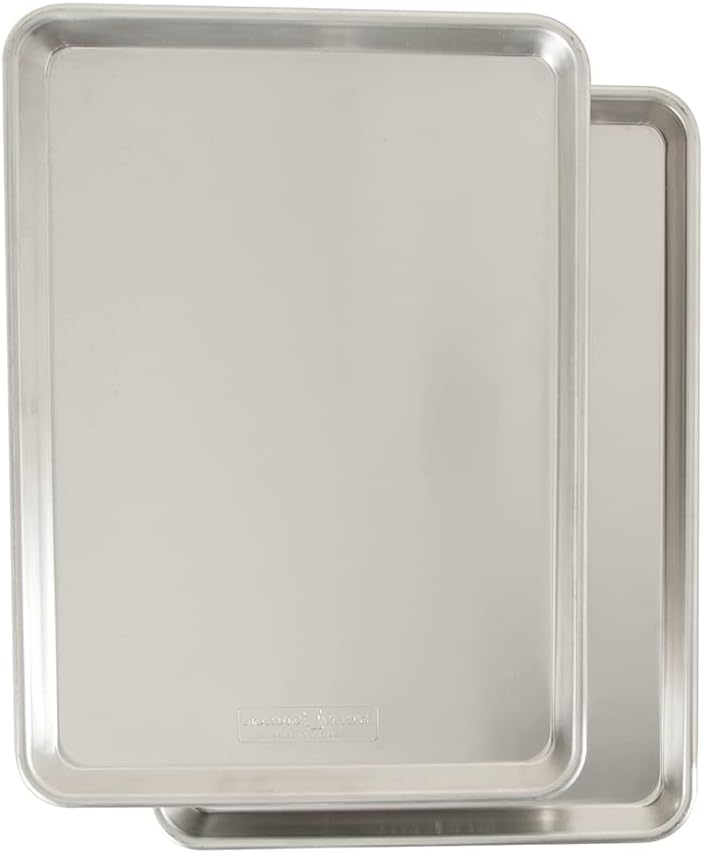
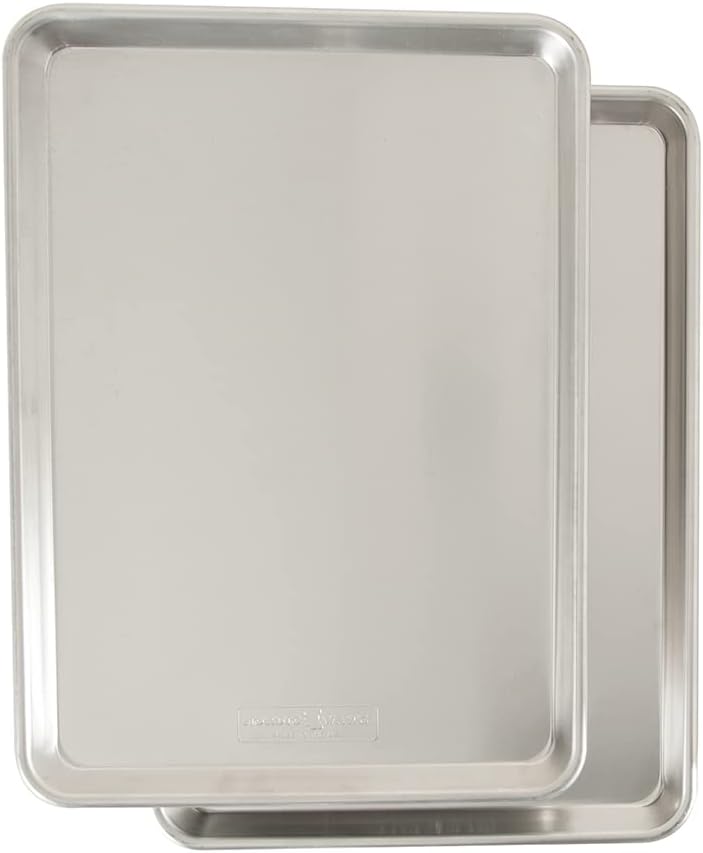
Half Sheet Baking Pans for Even Browning - Nordic Ware Naturals 2-Pack, Commercial Grade Aluminum
This 2-pack of commercial-grade aluminum half sheet pans delivers even heat distribution and consistent browning across cookies, vegetables, and sheet pan dinners. Home bakers who want restaurant-quality results and pans that won't warp after years of high-heat use should buy these.
Pros and Cons
Pros
- Superior heat conductivity produces evenly browned cookies, roasted vegetables, and baked goods without rotating pans mid-cycle.
- Reinforced steel rim prevents warping even after years of high-temperature roasting and repeated thermal shock.
- Light aluminum color prevents overbrowning on delicate items like shortbread cookies and pastries that burn easily on dark pans.
Cons
- Aluminum reacts with acidic foods like tomatoes and vinegar, causing darkening and pitting that affects appearance but not performance.
- Hand wash only since dishwasher detergent causes permanent cosmetic discoloration on natural aluminum.
NordicWare Half Sheet Baking Pans for Even Browning - Nordic Ware Naturals 2-Pack, Commercial Grade Aluminum
NordicWare
Half Sheet Baking Pans for Even Browning - Nordic Ware Naturals 2-Pack, Commercial Grade Aluminum
This 2-pack of commercial-grade aluminum half sheet pans delivers even heat distribution and consistent browning across cookies, vegetables, and sheet pan dinners. Home bakers who want restaurant-quality results and pans that won't warp after years of high-heat use should buy these.
Check price on AmazonThese are commercial-grade half sheet pans designed to solve the home baker's most common frustration: uneven browning and warped pans that rock on the oven rack.
Pure aluminum construction conducts heat uniformly across the 17.9 x 12.9 inch surface, eliminating hot spots. The encapsulated galvanized steel rim adds structural support that prevents warping even when you move pans straight from a 450°F oven to a cold counter.
Each pan measures 17.9 x 12.9 x 1 inches exterior with a 17.1 x 12.1 inch interior cooking surface. Natural uncoated aluminum weighs less than heavy ceramic or cast iron but provides professional-level heat distribution. The raised rim gives you a secure grip with oven mitts.
Aluminum reacts with acidic ingredients like tomatoes and vinegar, causing cosmetic darkening over time. Hand washing is required since dishwasher detergent discolors the natural finish, though this does not affect baking performance.
Best for home bakers and cooks who want commercial durability and even heating without paying for individual professional-grade pans that cost $30 each.
USA Pan Bakeware Nonstick Half Sheet Pan, Baking Sheet, Aluminized Steel

The products above are actual metal half-sheet pans. Parchment is an optional liner and does not replace a baking pan. Check dimensions, coating, care instructions and the oven rating for the selected model.
Why a Baking Sheet Is More Than a Cookie Tray
The name undersells it. A rimmed baking sheet — properly a “half sheet pan” — is the most-used pan in many kitchens.
The flat surface plus a shallow rim is what makes it versatile. The flat bottom gives food maximum contact for browning; the roughly one-inch rim contains juices, oil, and small items so nothing slides off. That combination handles far more than cookies: roasting a tray of vegetables, sheet-pan chicken dinners, toasting nuts and breadcrumbs, drying herbs, catching drips under a pie, reheating leftovers, freezing berries flat before bagging, and serving as a landing zone for prep. Research and aggregated reviews consistently rank a good half sheet among the highest-use, lowest-cost tools in a kitchen.
Because it does so much, it pairs with other core gear rather than competing with it. A best cutting board for prep, best mixing bowls for batter, and a half sheet for the oven form a simple, complete setup. Our best baking sheets guide focuses on the sheet itself.
Material and Gauge: Why the Good Ones Bake Better
Not all baking sheets are equal, and the difference is mostly material and thickness.
Aluminum is the standard for good reason. It conducts heat quickly and evenly, so food browns uniformly instead of scorching in hot spots. Bare (uncoated) aluminum is what most professional kitchens and testing outlets favor — it’s light-colored, so it doesn’t over-brown the bottoms of baked goods the way dark surfaces do, and it’s essentially indestructible. Nordic Ware’s aluminum half sheets are the repeated benchmark in aggregated reviews for exactly this reason.
Gauge (thickness) matters as much as material. Thin, cheap pans warp and buckle with a loud “pop” when they hit oven heat, and they conduct unevenly. A heavier-gauge pan (lower gauge number = thicker metal) stays flat, heats evenly, and lasts decades. This is the single biggest difference between a frustrating pan and a great one.
Two other material notes: dark nonstick and coated pans brown bottoms faster and can over-bake delicate items, plus the coating eventually wears out; and aluminized steel (steel coated in aluminum, as in some USA Pan sheets) adds rigidity and warp resistance but can run heavier and pricier. For most people, a heavy uncoated aluminum half sheet is the sweet spot. Our best baking sheets guide notes material and gauge for each pick.
Sizes: Half, Quarter, and Full
Baking sheets come in standard sizes derived from commercial “full sheet” pans, and knowing them prevents a common mistake.
- Half sheet (about 18 x 13 inches): The home standard. It fits a standard home oven with room for air to circulate and is the right default for nearly everyone. Buy two.
- Quarter sheet (about 13 x 9 inches): Handy for small jobs, toaster ovens, or single servings.
- Full sheet (about 26 x 18 inches): Commercial size — it does not fit most home ovens. Buyers occasionally order one by mistake; confirm your oven’s interior width first.
- Jelly roll pan (about 15 x 10 inches): Slightly smaller than a half sheet, sized for rolled sponge cakes.
For a home kitchen, a pair of half sheets covers the overwhelming majority of tasks, with a quarter sheet as a useful small-batch extra.
“Non-Toxic” and Safety: What’s Real
Searches for “non-toxic baking sheets” reflect real concern, so here’s the straight answer.
Bare aluminum is safe for baking — the tiny amount of aluminum that migrates into food from a baking sheet is negligible and not a health concern under normal use. The safety worries people have usually center on nonstick coatings (older PTFE/PFOA chemistry). Modern nonstick is PFOA-free, but coatings still degrade over time and are the part most people want to avoid for peace of mind. If “non-toxic” is your priority, an uncoated aluminum or stainless half sheet is the simplest answer: no coating to wear off, nothing to flake, and you can use parchment or a silicone mat as a natural release layer. This is another reason uncoated aluminum is the default recommendation. Our best baking sheets guide flags uncoated and coating-free options.
Care: Making a Good Sheet Last
A quality baking sheet lasts decades if you skip a few mistakes. Hand wash rather than dishwashing — dishwasher detergent oxidizes and darkens aluminum (harmless but ugly). Avoid warping by not putting a hot pan under cold water; let it cool first. The brown, sticky patina that builds up over time is baked-on oil (polymerized fat), not dirt — it’s harmless and even improves release, though it can be scrubbed with baking soda if you prefer a clean look. Use parchment paper or a silicone mat for sticky bakes to protect the surface and cut cleanup, and for repeatable results in bread baking, weigh flour and dough on a best kitchen scale rather than measuring by volume — accurate ratios are what lets a hot, even sheet do its best work. Store baked goods and leftover roasts in best food storage containers to keep them fresh. For bread specifically, a best dutch oven for bread baking traps steam for a crackling crust, with the sheet reserved for flat loaves and rolls.
Frequently Asked Questions
Is a baking sheet worth it if I don’t bake much?
Yes, because a rimmed half sheet is mostly not a baking tool. It’s the go-to for roasting vegetables, sheet-pan dinners, toasting nuts, reheating, catching oven drips, and freezing food flat — tasks that come up constantly even for people who never bake cookies. Given how little a good uncoated aluminum half sheet costs and how long it lasts, it’s one of the highest-value pans you can own regardless of how much you bake. See our best baking sheets guide for durable picks.
What’s the best baking sheet material?
Uncoated (bare) aluminum is the standard and the top recommendation. It conducts heat fast and evenly for uniform browning, its light color prevents over-baked bottoms, and it’s essentially indestructible with no coating to wear out. Aluminized steel adds warp resistance but runs heavier and pricier; dark nonstick browns faster and eventually degrades. Just as important as material is gauge — a heavier, thicker pan resists warping and heats more evenly than a thin one. Our best baking sheets guide compares materials and thickness.
What baking sheet sizes are there, and which should I buy?
The main sizes are quarter (about 13 x 9 inches), half (about 18 x 13 inches), and full (about 26 x 18 inches, a commercial size that doesn’t fit most home ovens). The half sheet is the home standard and the right default — buy two so you can roast and bake in batches. A quarter sheet is useful for small jobs and toaster ovens. Avoid ordering a full sheet by mistake; measure your oven’s interior width first.
Are non-toxic baking sheets necessary?
Bare aluminum and stainless steel are safe for baking; the minute aluminum that migrates into food is not a health concern in normal use. The “non-toxic” worry usually targets nonstick coatings. Modern nonstick is PFOA-free, but if you want to avoid coatings entirely, an uncoated aluminum or stainless half sheet is the simplest choice — no coating to flake or wear out. Use parchment paper or a silicone mat for a natural, coating-free nonstick layer. See our best baking sheets guide.
Which Nordic Ware baking sheet is best?
Nordic Ware’s aluminum Naturals half sheets are the repeated benchmark in aggregated reviews for even browning, flat warp-resistant construction, and long-term durability. For most home kitchens the standard aluminum half sheet, bought as a pair, is the sweet spot; the same line offers quarter sheets for small jobs. Uncoated versions are favored over the darker nonstick variants because they brown more evenly and have no coating to wear out. Compare picks in our best baking sheets guide.
Do I need parchment paper or a silicone mat with a baking sheet?
Not strictly, but both help. On uncoated aluminum, sticky foods like cookies and roasted vegetables release more cleanly with parchment or a reusable silicone mat, and cleanup is faster. Parchment is disposable and great for high-heat roasting; silicone mats are reusable and ideal for baking but shouldn’t be used at very high broiler temperatures. Either one also protects the pan surface and reduces baked-on residue. Pair a good sheet with a best cutting board and best mixing bowls for a complete prep-to-oven setup.
The Bottom Line
Is a baking sheet worth it? Absolutely — a rimmed half sheet pan is among the cheapest, most-used, and longest-lasting tools in any kitchen, and it earns its keep for roasting, sheet-pan meals, toasting, and catching drips far more than for cookies alone. The version that’s worth it is a heavy-gauge, uncoated aluminum half sheet: it heats evenly, resists warping, browns without scorching, and has no coating to wear out or worry about. Buy two half sheets, hand wash them, and use parchment or a silicone mat for sticky jobs. It’s worth it for anyone who owns an oven. For picks, see our best baking sheets, best mixing bowls, and best cutting board guides.


Write Your Review
No reviews yet. Be the first to share your experience!