

HomeWhisk earns commission from qualifying purchases made through links on this page. We research picks from specifications and owner reviews; we do not test products ourselves.
TL;DR — For an enameled Dutch oven, let it cool, wash with warm soapy water and a non-abrasive sponge, and simmer water with baking soda to lift stuck-on food or stains; for bare cast iron, avoid soaking, scrub with hot water (mild soap is fine), dry immediately, and re-oil. The HomeWhisk team compiled this from manufacturer care guidance and aggregated owner feedback. The rules differ by type — enameled is more forgiving but the enamel can be damaged by harsh scrubbing, while bare cast iron must be dried and oiled to prevent rust. Here’s how to clean both correctly.
The HomeWhisk editorial team researches kitchen equipment by analyzing manufacturer specifications, care guidance, and aggregated user reviews from major retailers and cooking communities. This guide reflects common manufacturer cleaning instructions, not personal testing.

A Dutch oven is a long-term investment, and cleaning it correctly keeps it working for decades. The catch: enameled and bare cast iron need different care. Here’s how to clean each, remove stuck-on food and stains, and avoid the mistakes that damage them. For choosing one, see our best dutch oven for bread baking guide.
Deeper Dive: Our Top Picks
Our Top Picks

SEFONE
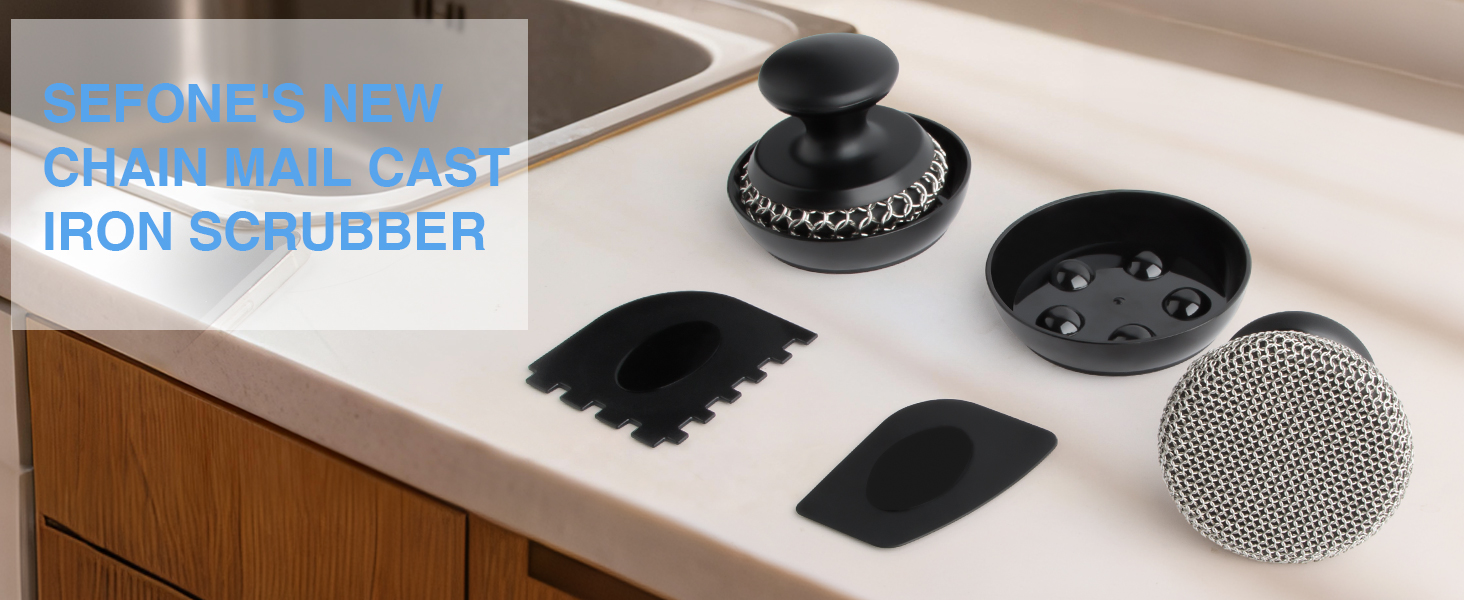
Cast Iron Chainmail Scrubber with Ergonomic Handle - SEFONE 316 Stainless Steel Cleaning Kit for Skillets and Dutch Ovens
This chainmail scrubber uses 316 stainless steel mesh to remove baked-on residue from cast iron without damaging the seasoning, and includes an ergonomic handle plus draining pan for comfortable scrubbing. Buy it if you cook frequently with cast iron and want faster cleanup that preserves your cookware's surface.
Pros and Cons
Pros
- The 316-grade stainless steel holds up to aggressive scrubbing without falling apart or leaving metal fragments.
- Handle provides leverage for removing burnt-on residue that would otherwise require soaking overnight.
- Bonus scrapers work on all cookware types, expanding usefulness beyond just cast iron maintenance.
Cons
- The thin mesh may require more passes than heavier chainmail on extremely stubborn buildup.
- Draining pan is polycarbonate rather than stainless, which may stain over time with repeated use.

VALENTISE
Cast Iron Skillet Cleanup Without Stripping Seasoning: VALENTISE Copper Bristle Bamboo Scrubber, 2 Pack
This two pack of copper bristle bamboo scrubbers strips burnt-on food, grease, and surface rust from cast iron, and its main advantage is doing that without tearing down the seasoning the way steel wool does. Buy it if you cook on cast iron skillets, Dutch ovens, or a tabletop grill and want a soap-free cleanup tool that handles rust rescue as well as everyday residue.
Pros and Cons
Pros
- Copper bristles cut burnt residue without the deep scoring that steel wool leaves on cast iron.
- Handles rust removal on stored or neglected pans while preserving most of the existing seasoning.
- Two pack allows separate scrubbers for cookware and greasy grill grates.
- Natural bamboo handle stays light in hand and rinses off under the tap.
Cons
- Copper is soft by design, so thick carbon buildup may need a second pass or a scraper first.
- No handle dimensions or bristle length are listed, making fit inside narrow saucepans hard to judge.

Culina
Cast Iron Cleaning & Seasoning Kit: Culina Kosher-Certified Soap + Conditioning Oil Bundle (2x8oz)
The Culina Cast-Iron Cleaning Kit pairs a sulfate-free, plant-based soap with a solvent-less conditioning oil to remove rust, burnt food, and odors while building a lasting seasoning layer. Home cooks and campers who want a natural, USA-made maintenance system for their cast iron will get reliable results without the harsh chemicals that strip seasoning.
Pros and Cons
Pros
- The plant-based soap formula is free of sulfates and petrochemicals, so it cleans cast iron without stripping the seasoning layer.
- The conditioning oil uses a solvent-less base with long-chain fatty acids removed, which prevents the rancid smell common with standard cooking oils used for seasoning.
- Kosher-certified and made in the USA, which signals consistent manufacturing standards and ingredient transparency.
- The bundled soap-and-oil system covers the full clean-and-condition cycle in one purchase, removing the guesswork of sourcing compatible products separately.
Cons
- With zero verified reviews available, there is no real-world performance data to confirm how well the seasoning oil holds up under high-heat cooking conditions.
- The 8oz size may run out quickly for households that cook with cast iron daily across multiple pieces.
Editors' Picks
SEFONE Cast Iron Chainmail Scrubber with Ergonomic Handle - SEFONE 316 Stainless Steel Cleaning Kit for Skillets and Dutch Ovens
SEFONE
Cast Iron Chainmail Scrubber with Ergonomic Handle - SEFONE 316 Stainless Steel Cleaning Kit for Skillets and Dutch Ovens
This chainmail scrubber uses 316 stainless steel mesh to remove baked-on residue from cast iron without damaging the seasoning, and includes an ergonomic handle plus draining pan for comfortable scrubbing. Buy it if you cook frequently with cast iron and want faster cleanup that preserves your cookware's surface.
$13.87 at AmazonEditors' Favorite
Package Dimensions : 4.06 x 4.02 x 3.62 inches; 7.83 ounces Date First Available : August 27, 2025 Manufacturer : SEFONE ASIN : B0FNVVRYCW Best Sellers Rank: #41,265 in Health & Household (See Top 100 in Health & Household) #40 in Dish Scouring Pads
Shop NowVALENTISE Cast Iron Skillet Cleanup Without Stripping Seasoning: VALENTISE Copper Bristle Bamboo Scrubber, 2 Pack
VALENTISE
Cast Iron Skillet Cleanup Without Stripping Seasoning: VALENTISE Copper Bristle Bamboo Scrubber, 2 Pack
This two pack of copper bristle bamboo scrubbers strips burnt-on food, grease, and surface rust from cast iron, and its main advantage is doing that without tearing down the seasoning the way steel wool does. Buy it if you cook on cast iron skillets, Dutch ovens, or a tabletop grill and want a soap-free cleanup tool that handles rust rescue as well as everyday residue.
$9.99 at AmazonGreat Value
Color: Bamboo Size: 4.7inch*2.4inch*3inch Dimensions: 4.72 x 2.36 x 2.95 Inches Weight: 0.378 Pounds Product Group: Home
Shop NowCulina Cast Iron Cleaning & Seasoning Kit: Culina Kosher-Certified Soap + Conditioning Oil Bundle (2x8oz)
Culina
Cast Iron Cleaning & Seasoning Kit: Culina Kosher-Certified Soap + Conditioning Oil Bundle (2x8oz)
The Culina Cast-Iron Cleaning Kit pairs a sulfate-free, plant-based soap with a solvent-less conditioning oil to remove rust, burnt food, and odors while building a lasting seasoning layer. Home cooks and campers who want a natural, USA-made maintenance system for their cast iron will get reliable results without the harsh chemicals that strip seasoning.
$17.99 at AmazonProduct Group: Kitchen Binding: Kitchen
Shop NowFirst: Which Type Do You Have?
The cleaning method depends entirely on whether your Dutch oven is enameled or bare cast iron, so identify it first.
Enameled cast iron has a smooth, glossy, usually colorful coating (porcelain enamel) inside and out — brands like Le Creuset, Staub, and many others. The cooking surface is glass-like, not raw metal. It doesn’t need seasoning and won’t rust, but the enamel can chip, crack, or stain, and harsh abrasives can dull it.
Bare cast iron has a dark, matte, raw-iron cooking surface (seasoned with oil, like a cast iron skillet). It’s not coated. It needs seasoning maintenance, can rust if left wet, and reacts with acidic foods — but it’s nearly indestructible and takes rougher cleaning.
Why it matters: the two require nearly opposite care. Enameled tolerates soap and soaking but not harsh abrasives or thermal shock; bare cast iron tolerates scrubbing but not soaking or air-drying (it rusts) and needs re-oiling. Using the wrong method — soaking bare cast iron, or scouring enamel with steel wool — damages the pot. Confirm your type, then follow the matching section below. (For the full comparison of the two, see our guide on enameled versus bare cast iron.)
Cleaning an Enameled Dutch Oven
Enameled cast iron is the more forgiving of the two, but the enamel needs gentle care. Here’s the routine.
Everyday cleaning: 1. Let it cool before washing. Never plunge a hot enameled pot into cold water — the sudden temperature change (thermal shock) can crack or craze the enamel. Let it come down to warm first. 2. Wash with warm, soapy water and a soft sponge or dishcloth. Soap is completely fine on enamel (unlike bare cast iron). Most food comes off easily. 3. Dry it. It won’t rust, but drying prevents water spots.
For stuck-on food: don’t scrape hard with metal. Instead, fill the pot with warm water and a squirt of dish soap (or a tablespoon of baking soda) and simmer it on the stove for 5-10 minutes — this loosens stuck-on food, which then wipes away. Let it cool, then wash normally. A soak in warm soapy water also works.
For stains and discoloration (the interior enamel can develop brown/gray stains over time): make a paste of baking soda and water, apply it, let it sit, and gently scrub with a non-abrasive sponge. For stubborn stains, simmer a solution of water and baking soda in the pot. Barkeeper’s Friend (used gently and sparingly, per manufacturer guidance) also removes stains — but check your brand’s advice, as some discourage it.
What to avoid: steel wool, metal scourers, and harsh abrasive powders (they scratch and dull the enamel); metal utensils that chip it; and thermal shock (hot pot into cold water). Gentle is the rule — the enamel is glass. Many enameled Dutch ovens are technically dishwasher-safe, but hand-washing preserves the finish and exterior color far longer.
Cleaning a Bare Cast Iron Dutch Oven
Bare cast iron needs the opposite approach — no soaking, prompt drying, and re-oiling. Here’s the routine.
Everyday cleaning: 1. Clean while still warm (not scalding), which makes food release easier. Don’t let it sit dirty and don’t soak it in the sink — standing water causes rust. 2. Scrub with hot water and a brush, non-scratch sponge, or a chainmail scrubber for stuck bits. Mild dish soap is fine on a well-seasoned pot (the old “never use soap” rule is outdated — a little soap won’t strip good seasoning), but avoid harsh degreasers and long soaks. 3. For stuck-on food: scrub with coarse salt as a gentle abrasive, or simmer a little water in the pot for a few minutes to loosen residue, then scrub. Avoid metal scrapers that gouge the seasoning. 4. Dry immediately and thoroughly — this is critical. Towel-dry, then set it on low heat on the stove for a minute or two to evaporate all moisture. Any left-behind water causes rust. 5. Re-oil: rub a very thin layer of neutral oil over the cooking surface while it’s still warm, then wipe off the excess. This maintains the seasoning and protects against rust.
If it rusts: scrub off the rust (steel wool is okay on bare cast iron), wash, dry, and re-season. Bare cast iron is very recoverable — see our related guides on removing rust and seasoning.
What to avoid: long soaking, air-drying, the dishwasher (all cause rust), and harsh degreasers that strip seasoning. Unlike enameled, bare cast iron can take a metal scrubber and steel wool when needed. The cardinal rules: don’t soak, dry immediately, re-oil.
General Tips and Mistakes to Avoid
A few principles apply to both types and prevent the most common damage.
Always let it cool before washing (both types) — thermal shock cracks enamel and warps metal. Patience here prevents expensive damage.
Match the method to the type — the biggest mistake is treating them the same. Soaking bare cast iron rusts it; scouring enamel with steel wool ruins the finish. Know which you have.
Use the right tools:
- Enameled: soft sponge, nylon brush, baking soda for stains — never steel wool.
- Bare cast iron: brush, non-scratch or chainmail scrubber, coarse salt, steel wool only for rust.
For burnt-on food (both types): the simmer-water method (heat water in the pot to loosen residue) works for both and is gentler than aggressive scraping. Add baking soda for enameled, plain water or salt for bare iron.
Avoid metal utensils during cooking on enameled (they chip it); bare cast iron tolerates them better.
Don’t use the dishwasher for bare cast iron (rust) and preferably not for enameled either (dulls the finish over time, even if labeled safe).
Store dry — both types should be fully dry before storing. For bare cast iron especially, any trapped moisture means rust. Store enameled with the lid off or a paper towel between lid and rim to let air circulate.
Cared for correctly, both types of Dutch oven last for decades. Our best dutch oven for bread baking guide covers durable options.
Frequently Asked Questions
How do you clean an enameled Dutch oven?
Let it cool, then wash with warm soapy water and a soft sponge — soap is fine on enamel. For stuck-on food, simmer water with a little dish soap or baking soda in the pot for 5-10 minutes to loosen it, then wipe clean. For stains, use a baking soda paste and gently scrub with a non-abrasive sponge. Avoid steel wool, harsh abrasives, and thermal shock (never put a hot pot in cold water, which cracks enamel). Hand-wash rather than using the dishwasher to preserve the finish.
Can you use soap on a cast iron Dutch oven?
Yes, a little mild dish soap is fine on both enameled and well-seasoned bare cast iron — the old “never use soap on cast iron” rule is outdated, as a small amount won’t strip good seasoning. On enameled, soap is completely fine. On bare cast iron, use mild soap and hot water, but avoid harsh degreasers and long soaks, and always dry immediately and re-oil afterward to prevent rust. Harsh degreasing is what strips seasoning, not a normal amount of dish soap.
How do you get burnt food off a Dutch oven?
Use the simmer-water method for both types: fill the pot with enough water to cover the burnt area, add baking soda (for enameled) or a little salt (for bare cast iron), and simmer on the stove for 5-10 minutes to loosen the residue. Let it cool, then wipe or gently scrub away the softened food. This is far gentler and more effective than aggressive scraping, which can damage enamel or gouge cast iron seasoning. Repeat if needed for stubborn spots.
How do you remove stains from enameled cast iron?
Make a paste of baking soda and water, apply it to the stained interior, let it sit, and gently scrub with a non-abrasive sponge. For stubborn brown or gray stains, simmer a water-and-baking-soda solution in the pot. Barkeeper’s Friend, used gently and sparingly, also removes discoloration — but check your brand’s care guidance, as some discourage it. Interior staining is cosmetic and normal over time; avoid steel wool, which permanently dulls and scratches the enamel.
Why does my bare cast iron Dutch oven rust, and how do I fix it?
Bare cast iron rusts when left wet, soaked, air-dried, or put in the dishwasher — moisture is the enemy. To fix rust, scrub it off (steel wool is okay on bare cast iron), wash, dry thoroughly, and re-season by applying a thin oil layer and heating. To prevent it, always dry immediately after washing (towel plus a minute on low heat), then rub on a thin layer of oil. Never soak bare cast iron or leave it wet. Rust is common but fully recoverable.
Can you put a Dutch oven in the dishwasher?
Bare cast iron: never — the dishwasher strips seasoning and causes rust. Enameled cast iron: many are technically dishwasher-safe, but hand-washing is strongly recommended to preserve the enamel finish and exterior color, which the dishwasher’s harsh detergent and heat dull over time. For both types, hand-washing is the better choice. Bare cast iron must be hand-washed, dried immediately, and re-oiled; enameled lasts longer looking new if hand-washed even though the dishwasher won’t ruin it outright.
Related buying guides: best baking sheets, best kitchen scale and best mixing bowls.
The Bottom Line
Cleaning a Dutch oven correctly depends on its type. Enameled cast iron is forgiving — cool it, wash with warm soapy water and a soft sponge, and simmer water with baking soda to lift stuck-on food or stains — but never use steel wool or shock it with cold water. Bare cast iron needs the opposite care — scrub with hot water (mild soap is fine), never soak it, dry immediately, and re-oil to prevent rust. The biggest mistake is treating them the same. Cared for properly, both last decades. See our best dutch oven for bread baking and best cast iron skillet for beginners guides.




Write Your Review
No reviews yet. Be the first to share your experience!