

I have watched too many friends spend forty dollars on a fancy pour-over kit and then fill it with beans that were roasted during a previous presidential administration. The gear is not your problem. The beans are. Most of the disappointment people feel about home coffee comes down to a handful of buying mistakes that repeat themselves in kitchen after kitchen, and every one of them is fixable once you know what to look for. So before I tell you what to buy, let me tell you what people get wrong, because seeing the mistake is usually what finally makes the fix stick.
The five mistakes that ruin your cup before you brew
Mistake one: buying pre-ground coffee. The moment coffee is ground, its surface area explodes and the aromatic oils start burning off into the air. Within fifteen minutes you have already lost a chunk of what made those beans interesting. That vacuum-sealed brick of grounds felt convenient, but it was stale before it ever reached the shelf. Mistake two: ignoring the roast date, or worse, accepting a bag that only shows a “best by” date a year out. Best-by dates are a marketing shrug; the roast date is the only number that tells you anything real. Mistake three: assuming dark roast equals strong coffee. Mistake four: grabbing whatever national brand is stacked in an endcap at the supermarket. Mistake five: buying a roast and grind that fight your brewing method instead of flattering it. Hold those five in your head. The rest of this guide is just me correcting them one at a time.
Whole bean, always, and read the roast date first
Fixing mistakes one and two takes about ten seconds at the point of sale. Buy whole beans and grind them right before you brew. A modest burr grinder is the single best upgrade most home brewers can make, and it matters more than the machine you pour water through. Whole beans hold their aromatics for weeks; ground coffee holds them for hours. This is not coffee-snob theater, it is just chemistry you can taste side by side.
Then flip the bag over and hunt for a printed roast date. You want beans that were roasted within the last two to four weeks. Coffee actually needs a few days of rest after roasting to let carbon dioxide escape, so a bag roasted yesterday can taste gassy and sour. The sweet spot lands somewhere between five days and three weeks off roast for most styles. If a bag hides the roast date entirely, that tells you the seller does not expect it to sell quickly, and you should treat it the same way you would treat produce with no sell-by sticker. Put it back.
Dark roast is not “stronger,” it is just more roasted
Here is mistake three, and it is the one that surprises people most. Roast level describes how long and how hot the beans were cooked, not how much caffeine or punch they carry. A light roast keeps more of the bean’s original character: bright acidity, floral and fruity notes, sometimes a tea-like delicacy. A medium roast balances that origin flavor against the sweetness that develops as sugars caramelize, which is why so many people find it the most crowd-pleasing. A dark roast pushes the beans until roast flavor itself dominates: smoky, bittersweet, chocolatey, with the origin character mostly cooked away.
None of those is objectively better, but darker does not mean bolder in the way the word suggests. In fact, by weight, lighter roasts often carry marginally more caffeine because they spent less time in the roaster. If someone hands you an inky dark roast and calls it their strongest, what they usually mean is that it tastes intense and bitter, not that it will wake you up harder. Buy the roast level whose flavor you actually enjoy, not the one you think you are supposed to tough out.
Arabica, Robusta, single-origin, and blends
This is where mistake four gets corrected. Most of the coffee worth drinking at home is Arabica, the species prized for its sweetness, acidity, and range of flavors. Robusta is the other major species, higher in caffeine and much more bitter, with a rubbery, grain-like edge. Robusta earns its keep in some espresso blends because it produces a thick crema and a heavier body, but a bag that leans hard on it, which cheap supermarket cans often do, will taste flat and harsh. Quality Vietnamese and Italian roasters can use Robusta with intention; a bargain-bin blend uses it to cut costs.
Then there is the single-origin versus blend question. A single-origin bag comes from one country, region, or even one farm, and it tastes like a specific place: an Ethiopian might burst with blueberry and jasmine, a Colombian might lean caramel and red apple, a Sumatran might go earthy and syrupy. Blends mix beans from several origins to hit a consistent, repeatable profile that holds up year-round, which is exactly what you want in a daily espresso. My honest advice: keep a reliable blend for your everyday brew and buy single-origin bags when you want to taste something and pay attention. The supermarket endcap gives you neither; a real roaster, local or online, gives you both, with the origin and roast date printed right there.
Match the roast and grind to how you brew
Mistake five is the subtle one. The same bag of beans can taste wonderful in one brewer and muddy in another, because each method extracts differently. Espresso uses pressure and a very fine grind over a short time, so it rewards medium to medium-dark roasts that stay sweet and forgiving under that intensity; a screaming light roast pulled as espresso often turns sour and thin unless you really know what you are doing. Drip and pour-over sit in the middle, using a medium grind and a moderate contact time, which lets a medium or light-medium roast show off its clarity and brightness. This is where a nice single-origin light roast sings.
French press is the opposite end: a coarse grind, full immersion, several minutes of steeping, and a metal filter that lets oils through into the cup. It gives you body and richness, and it pairs beautifully with medium and dark roasts whose bittersweet, chocolatey notes fill out that heavier texture. If you grind too fine for a French press you get sludge and over-extracted bitterness; too coarse for espresso and the water rushes through into a weak, sour shot. So before you buy, ask how you actually brew most mornings, and let that answer steer both the roast level and the grind setting.
Store them right so you do not undo everything
You can do all of the above and still sabotage yourself in the last mile. Coffee’s four enemies are air, moisture, heat, and light. Keep your beans in an airtight, opaque container, ideally one with a one-way valve or a good seal, and park it in a cool, dark cupboard away from the stove. Skip the clear glass jar on the counter that looks so charming in photos; sunlight and warmth stale beans fast. And please do not stash coffee in the freezer for daily use. Repeated thawing pulls condensation into the beans, and coffee readily absorbs odors from whatever else is in there. Buy beans in quantities you will finish in two or three weeks, and you will rarely need to worry about long-term storage at all.
How long do coffee beans actually stay fresh after roasting?
Whole beans hit their best window from roughly five days to three weeks after the roast date, and they stay perfectly enjoyable for about a month if stored well. After that they slowly fade, losing aroma and turning flat rather than becoming unsafe. Ground coffee is a different story entirely; it starts declining within minutes and is noticeably dull within a day or two. This is the whole argument for buying whole beans in amounts you can drink within a few weeks and grinding each batch just before you brew.
Is single-origin coffee worth the higher price?
It depends on what you want from the cup. Single-origin bags cost more because they are traceable, often seasonal, and roasted in smaller batches to highlight a specific flavor, so they are worth it when you plan to slow down and actually taste the fruit, floral, or caramel notes a particular region offers. For a fast morning espresso where consistency matters more than exploration, a well-made blend delivers better value and a steadier result day to day. Most serious home brewers I know keep one of each on the shelf.
Does dark roast have more caffeine than light roast?
No, and this trips up almost everyone. Dark roasts taste more intense and bitter, which reads as “strong,” but the longer roasting process does not add caffeine and can even burn off a trace of it. Measured by weight of beans, light and dark roasts are close enough that the difference barely matters, and light can edge ahead slightly. What really drives the caffeine in your cup is how much coffee you use and how you brew it, not how dark the beans look. Choose your roast for flavor, and adjust your dose if you want more of a lift.
The Best Deals This Week*
-
Lavazza Super Crema Whole Bean Coffee for Espresso
$18.99
($27.99)Save $9.00 -
Best Espresso Whole Bean Coffee for Home Baristas
$14.49
($21.60)Save $7.11 -
Colombian Whole Bean Coffee Medium Roast for Daily
$15.44
($18.37)Save $2.93 -
Lavazza Super Crema Whole Bean Espresso Coffee
$12.99
($16.68)Save $3.69 -
Stumptown Holler Mountain Organic Whole Bean
$14.24
($18.99)Save $4.75
*Deals are selected by our commerce team
Deeper Dive: Our Top Picks
Our Top Picks
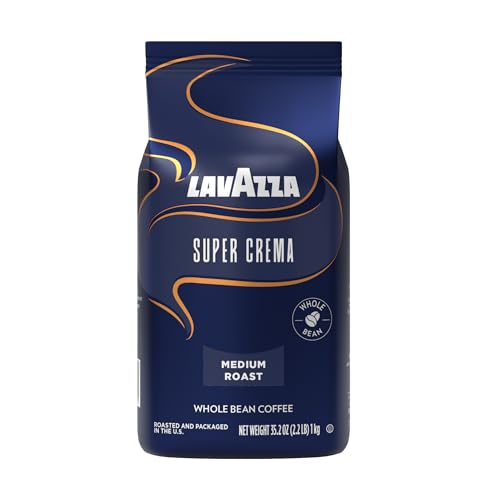
Lavazza
Super Crema Whole Bean Coffee for Espresso — 2.2 lb Arabica Robusta Blend
Lavazza Super Crema delivers a bold, creamy espresso using a globally sourced blend of Arabica and Robusta beans roasted to a full-bodied medium profile. Home baristas who pull daily espresso shots and want consistent crema without single-origin price premiums will get the most value from this 2.2 lb bag.
Pros and Cons
Pros
- The Arabica and Robusta combination reliably builds crema that survives steamed milk, a common failure point with all-Arabica blends.
- At 2.2 lbs, the bag offers a meaningful supply for households pulling one or two espresso shots per day.
- Medium roast flexibility means it works in both traditional espresso machines and manual methods like Moka pots without tasting burnt.
- Lavazza publishes a specific brew guide ratio, removing guesswork for home baristas calibrating a new grinder or machine.
Cons
- Robusta content raises caffeine levels noticeably, which may be a drawback for buyers trying to moderate their intake.
- Whole bean format requires a burr grinder for espresso-fine grounds; buyers without one will need additional equipment before use.

Lavazza
Best Espresso Whole Bean Coffee for Home Baristas: Lavazza Barista Gran Crema 2.2 LB Blend
Lavazza Barista Gran Crema delivers a full-bodied espresso with honey and roasted coffee notes from a balanced Arabica-Robusta blend, optimized for home espresso machines. Dedicated espresso drinkers who want an Italian café-quality shot at home without grinding pre-ground coffee will find this 2.2 LB bag a reliable daily driver.
Pros and Cons
Pros
- The Arabica-Robusta combination builds a fuller body and richer crema than all-Arabica blends, which benefits espresso machine users specifically.
- A medium-dark roast at intensity 7 balances bitterness and sweetness, making it approachable without sacrificing espresso character.
- Whole bean format gives you control over grind size, which directly affects extraction quality and flavor consistency shot to shot.
- The 2.2 LB bag size offers strong value for daily espresso drinkers compared to smaller specialty coffee packages.
Cons
- Requires a burr grinder capable of a fine espresso grind — buyers without one will not get the intended extraction from this bean.
- The Robusta content adds caffeine and body but can introduce slight bitterness if the espresso machine temperature or grind is not dialed in correctly.
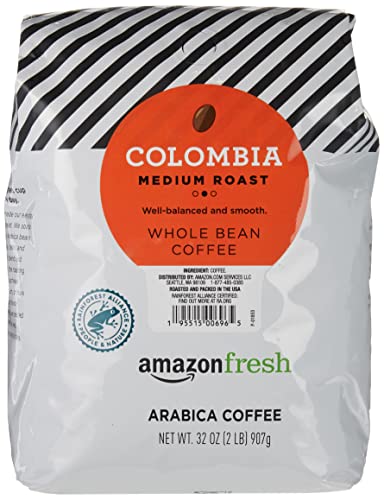
Amazon Fresh
Colombian Whole Bean Coffee Medium Roast for Daily Brewing – Amazon Fresh 32 Oz Bag
This 32-ounce bag of 100% Colombian Arabica whole beans delivers a balanced, full-bodied medium roast with a smooth finish suited for drip, pour-over, or French press brewing. Home coffee drinkers who grind fresh and want consistent, approachable flavor without specialty pricing will get reliable daily value here.
Pros and Cons
Pros
- Single-origin Colombian Arabica provides a cleaner, more consistent flavor profile than commodity blends at a similar price point.
- The 32-ounce size offers enough volume for regular drinkers without requiring bulk storage space.
- Medium roast versatility means it works across multiple brew methods without needing to stock multiple coffee varieties.
- U.S. roasting and packing reduces transit time from roaster to consumer compared to internationally finished products.
Cons
- No roast date is printed on the bag, so freshness at the time of delivery cannot be verified by the buyer.
- With zero published reviews, there is no real-world feedback yet to confirm how the flavor holds up across different grinders or brew ratios.
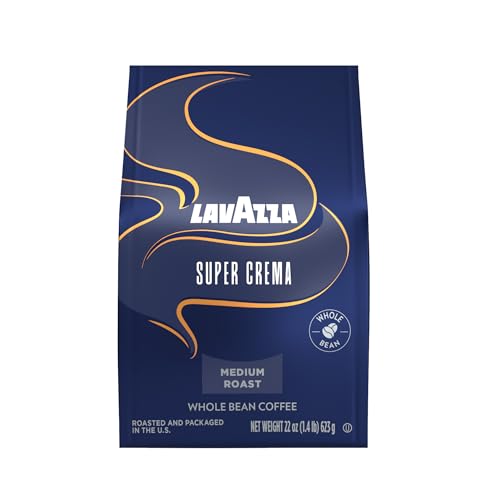
Lavazza
Super Crema Whole Bean Espresso Coffee – 22 oz Medium Roast Arabica Robusta Blend
Lavazza Super Crema delivers a full-bodied, creamy espresso shot using a globally sourced Arabica and Robusta blend roasted to a medium profile that balances boldness with smooth finish. Home baristas who pull daily espresso shots and want a consistent, café-quality result without single-origin price tags will find this 22 oz bag practical and reliable.
Pros and Cons
Pros
- The Arabica and Robusta combination delivers the crema density that pure Arabica blends often lack, which matters for espresso aesthetics and mouthfeel.
- A medium roast hits a versatile middle ground, working well in both straight espresso and milk-forward drinks without requiring separate beans.
- The 22 oz whole bean format stays fresher longer than pre-ground and gives you control over grind size for different espresso machines.
- Lavazza's multi-country sourcing model stabilizes flavor consistency across harvests, reducing the batch-to-batch variation common in single-origin roasts.
Cons
- Robusta content raises caffeine levels and adds a slight earthy bitterness that drinkers accustomed to pure Arabica blends may need time to adjust to.
- Whole bean format requires a burr grinder capable of a fine espresso grind; without one, this bag offers no advantage over pre-ground options.

Stumptown Coffee Roasters
Stumptown Holler Mountain Organic Whole Bean Coffee – Versatile Medium Roast for Espresso, Drip & Cold Brew
Stumptown Holler Mountain is an 18-ounce organic whole bean medium roast delivering citrus zest, berry jam, and caramel notes that hold up across espresso, drip, pour over, and cold brew methods. Coffee drinkers who want one bag that works for every brewing setup without sacrificing complexity will find it earns its place on the counter.
Pros and Cons
Pros
- The medium roast profile bridges espresso and filter brewing, so one bag handles every method in the kitchen.
- Citrus and caramel flavor notes are distinct and consistent, not vague marketing descriptors.
- Direct Trade sourcing ties price premiums directly to producer quality, supporting longer-term bean consistency.
- Whole bean format preserves aromatics until grinding, giving you more control over freshness and grind size.
Cons
- Whole bean only means you need a grinder on hand — no pre-ground option exists for this SKU.
- The citrus-forward profile suits those who prefer bright, lighter-bodied cups; buyers wanting deep, smoky roast character should look elsewhere.
Editors' Picks
Lavazza Super Crema Whole Bean Coffee for Espresso — 2.2 lb Arabica Robusta Blend
Lavazza
Super Crema Whole Bean Coffee for Espresso — 2.2 lb Arabica Robusta Blend
Lavazza Super Crema delivers a bold, creamy espresso using a globally sourced blend of Arabica and Robusta beans roasted to a full-bodied medium profile. Home baristas who pull daily espresso shots and want consistent crema without single-origin price premiums will get the most value from this 2.2 lb bag.
$18.99 at AmazonEditors' Favorite
Color: Multi Size: 35.2 Ounce (Pack of 1) Dimensions: 5.51 x 3.15 x 14.96 inches Weight: 2.2 pounds Product Group: Grocery Binding: Kitchen
Shop NowLavazza Best Espresso Whole Bean Coffee for Home Baristas: Lavazza Barista Gran Crema 2.2 LB Blend
Lavazza
Best Espresso Whole Bean Coffee for Home Baristas: Lavazza Barista Gran Crema 2.2 LB Blend
Lavazza Barista Gran Crema delivers a full-bodied espresso with honey and roasted coffee notes from a balanced Arabica-Robusta blend, optimized for home espresso machines. Dedicated espresso drinkers who want an Italian café-quality shot at home without grinding pre-ground coffee will find this 2.2 LB bag a reliable daily driver.
$14.49 at AmazonGreat Value
Color: Black Size: 35.2 Ounce (Pack of 1) Dimensions: 5.7086614115 x 3.149606296 x 10.236220462 inches Weight: 2.2 pounds Product Group: Grocery Binding: Grocery
Shop NowAmazon Fresh Colombian Whole Bean Coffee Medium Roast for Daily Brewing – Amazon Fresh 32 Oz Bag
Amazon Fresh
Colombian Whole Bean Coffee Medium Roast for Daily Brewing – Amazon Fresh 32 Oz Bag
This 32-ounce bag of 100% Colombian Arabica whole beans delivers a balanced, full-bodied medium roast with a smooth finish suited for drip, pour-over, or French press brewing. Home coffee drinkers who grind fresh and want consistent, approachable flavor without specialty pricing will get reliable daily value here.
$15.44 at AmazonSize: 32 Ounce (Pack of 1) Dimensions: 5.5 x 3.5 x 8.5 inches Weight: 2 pounds Product Group: Grocery Binding: Grocery
Shop NowLavazza Super Crema Whole Bean Espresso Coffee – 22 oz Medium Roast Arabica Robusta Blend
Lavazza
Super Crema Whole Bean Espresso Coffee – 22 oz Medium Roast Arabica Robusta Blend
Lavazza Super Crema delivers a full-bodied, creamy espresso shot using a globally sourced Arabica and Robusta blend roasted to a medium profile that balances boldness with smooth finish. Home baristas who pull daily espresso shots and want a consistent, café-quality result without single-origin price tags will find this 22 oz bag practical and reliable.
$12.99 at AmazonSize: 22 Ounce (Pack of 1) Dimensions: 5.511811023622 x 3.3464566929134 x 7.4803149606299 inches Weight: 1.3889122506 pounds Product Group: Grocery Binding: Grocery
Shop NowStumptown Coffee Roasters Stumptown Holler Mountain Organic Whole Bean Coffee – Versatile Medium Roast for Espresso, Drip & Cold Brew
Stumptown Coffee Roasters
Stumptown Holler Mountain Organic Whole Bean Coffee – Versatile Medium Roast for Espresso, Drip & Cold Brew
Stumptown Holler Mountain is an 18-ounce organic whole bean medium roast delivering citrus zest, berry jam, and caramel notes that hold up across espresso, drip, pour over, and cold brew methods. Coffee drinkers who want one bag that works for every brewing setup without sacrificing complexity will find it earns its place on the counter.
$14.24 at AmazonColor: Holler Mountain Size: 18 Ounce (Pack of 1) Dimensions: 3 x 4.5 x 6.5 inches Weight: 1.1243562 pounds Product Group: Grocery Binding: Grocery
Shop Now

Write Your Review
No reviews yet. Be the first to share your experience!