

TL;DR — This is less “bench scraper or cutting board” and more “how they work together”: one does the task, the other supports it. For product picks, the closest next steps are best cutting board, best baking sheets, and best kitchen scale.
Our view is based on product specs, material trade-offs, and repeated owner feedback — not one-off kitchen anecdotes or brand claims. For baking tools, sizing, material, accuracy, cleaning, and storage usually decide whether a tool stays useful or gets replaced.

Pros & Cons
Pros
- Three functions in one compact tool: dough cutter, bowl scraper, and flat chopper.
- Nylon edge is safe on nonstick bowls and coated surfaces that a metal bench knife would scratch.
- Dishwasher safe, so there is no hand-washing step after a messy dough session.
- Silicone handle stays comfortable during repeated portioning.
Cons
- At 4.75 inches, the edge is short for gathering and turning large batches of dough on a wide work surface.
- Nylon will not scrape dried, stuck-on flour paste off a wooden bench as cleanly as a steel bench knife.
Details
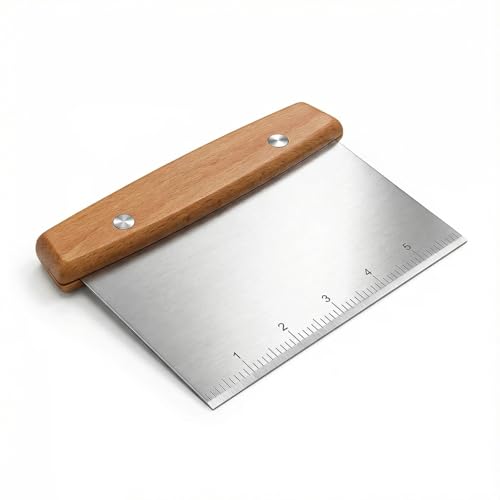
A 4.75-inch flat edge scraper that handles two jobs bakers usually need two tools for: portioning dough on the counter and clearing batter out of mixing bowls.
The flexible edge tracks the curve of a bowl to lift out frosting and batter, while the same edge is rigid enough to divide bread dough and cut biscuits.
Built from nylon with a silicone handle, it is light enough for one-handed use and sized for small hands and tight drawers. Dishwasher safe.
The short edge limits how much dough you can gather in one pass, so large-batch bakers may want a wider bench knife alongside it.
Best for home bakers doing regular loaves, cookies, and pastry who want one tool for scraping and portioning.
Best Uses
Dividing bread dough: press straight down through the mass rather than sawing, and portion by weight for even loaves and rolls.
Bowl clearing: run the flat edge around the inside wall in one continuous sweep to move batter or frosting to the center, then lift it out.
Counter work: use it to cut biscuits, portion cookie dough, and move chopped ingredients from board to pan without scratching coated surfaces.
Bench scraper and Cutting board: Do You Need Both?
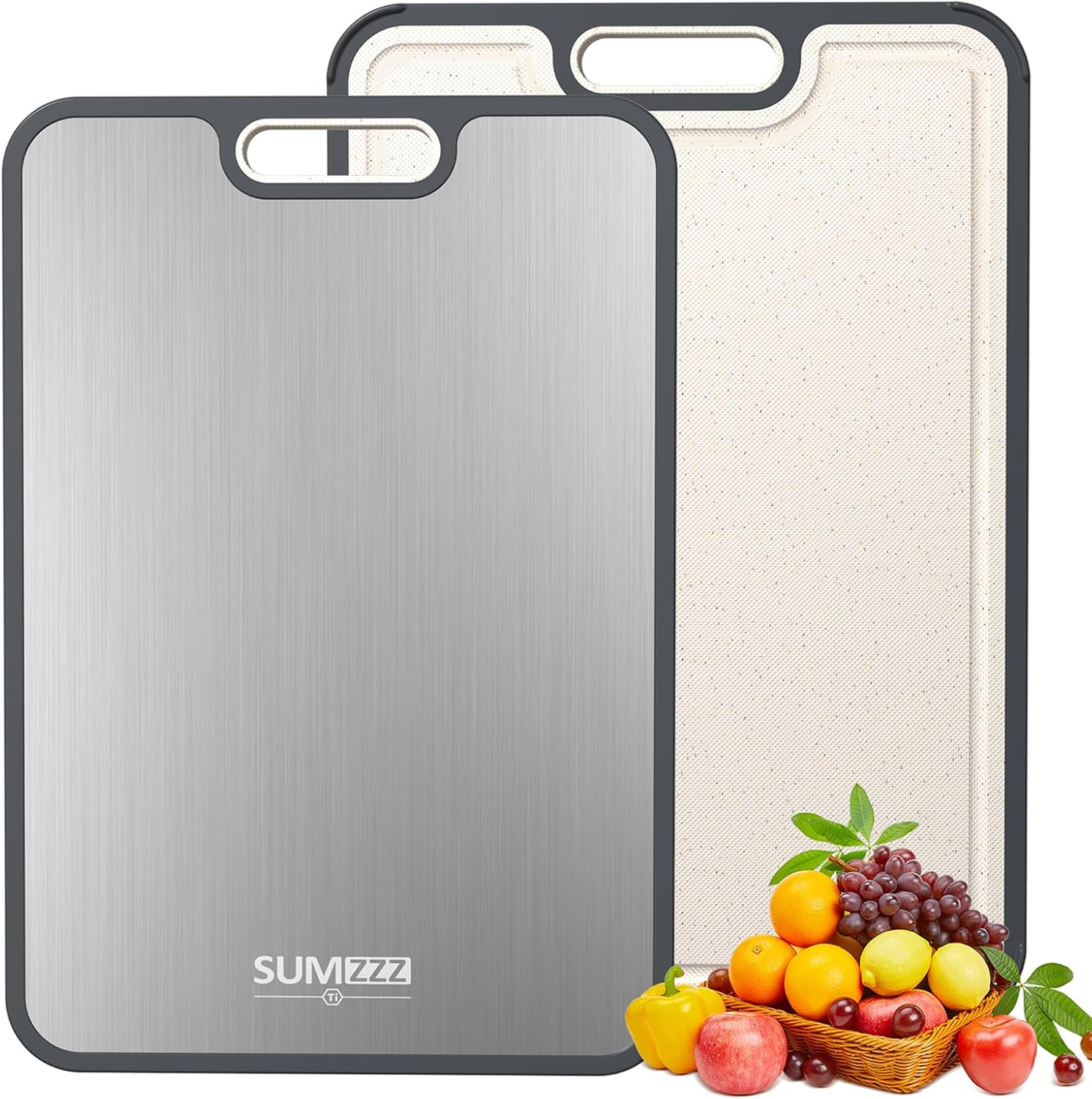
This is not really a versus question. A bench scraper and a cutting board do different jobs — the bench scraper does the actual work, while the cutting board supports it. Most cooks who care about results end up using both rather than choosing one. For product picks, compare best cutting board, best baking sheets, and best kitchen scale.
How They Work Together
Think of the cutting board as part of keeping the bench scraper performing the way it should. Used together, they make the whole task easier and more consistent; skipping the cutting board usually means the bench scraper underperforms or wears faster. The two are complements, not competitors.
When You Actually Need the Cutting board
You do not always need the cutting board on day one, but the more often you use the bench scraper, the more it pays off. If you use the bench scraper regularly, adding the cutting board is a small cost for a real improvement in nesting or storage shape. If you are shopping, our best cutting board and best baking sheets guides are the fastest way in.
Bottom Line
If your budget forces a choice, start with the bench scraper — it is the tool that does the job. Add the cutting board soon after; together they beat either one alone.
Related Product Guides
If this topic is part of a buying decision, these are the HomeWhisk guides most closely tied to it:
- best cutting board
- best baking sheets
- best kitchen scale
- best dutch oven for bread baking
- best mixing bowls
- best food storage containers
Frequently Asked Questions
Do I need both a bench scraper and a cutting board?
They serve different purposes, so most cooks use both. The bench scraper does the work; the cutting board supports it. If budget forces a choice, start with the bench scraper. See best cutting board and best baking sheets for options.
Can a cutting board replace a bench scraper?
No — they are complements, not substitutes. A cutting board does not do the bench scraper’s job; it makes the bench scraper work better or last longer.
Who is this most useful for?
Mainly beginners baking their first loaves, and high-volume holiday bakers. If that is you, treat material and gauge as a requirement rather than a nice-to-have.
What gear pairs well with it?
Start with a reliable core piece, then add as needs appear. Compare best cutting board, best baking sheets, and best kitchen scale for related choices.
What is the bottom line?
Match the baking tool to your real habits: buy for durability if it is daily, for value and storage if it is occasional.
The Bottom Line
The simplest takeaway: buy for your real routine, not the most impressive feature list. Match the cutting board to your cooking frequency, cleanup habits, and storage, then use best cutting board, best baking sheets, and best kitchen scale to compare actual products.




Write Your Review
No reviews yet. Be the first to share your experience!