

TL;DR — A good flour sifter buying decision starts with how you cook, how much space you have, and which trade-offs you will actually notice. When this turns into a purchase decision, compare best baking sheets, best kitchen scale, and best dutch oven for bread baking before narrowing your shortlist.
The HomeWhisk approach is research-first: compare construction, usability, cleaning, and long-term complaints before recommending a direction. For baking tools, sizing, material, accuracy, cleaning, and storage usually decide whether a tool stays useful or gets replaced.

Pros & Cons
Pros
- Food grade stainless steel body stays rigid under pressure instead of bowing when you press dense flour through.
- One screen rather than two layers keeps flour from packing into a hidden middle mesh, cutting wash time.
- The three piece set covers sifting, dusting, and finishing work without buying separate tools.
- Fine mesh breaks lumps in almond and powdered sugar before they reach the bowl, which smooths batters and glazes.
Cons
- The three cup bowl limits batch size, so multi layer cakes and bread doughs need two or three refills.
- A single mesh layer produces a slightly coarser result than double screen sifters when processing very dense powdered sugar.
Details
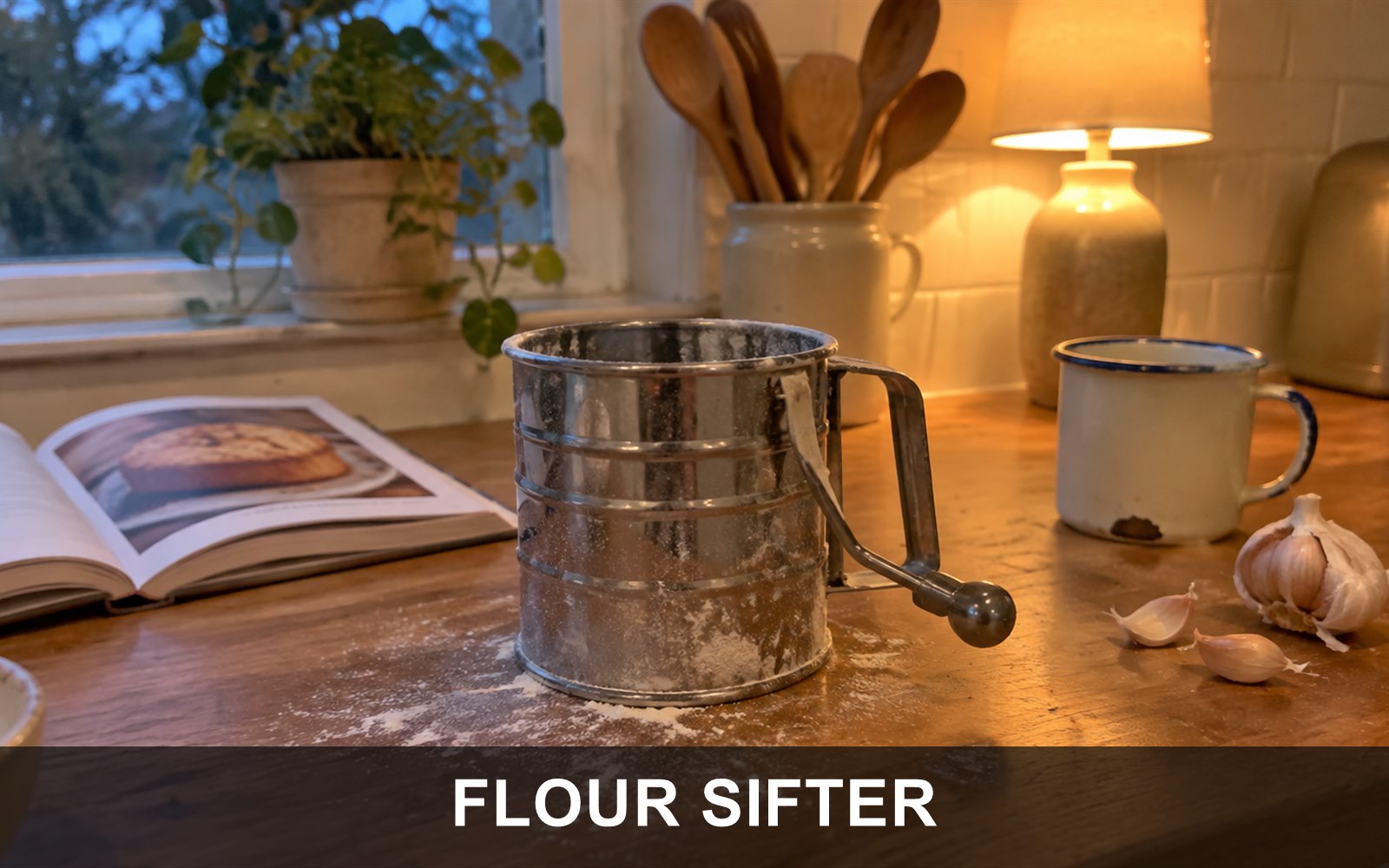
A 3 cup stainless steel sifter set that solves lumpy, compacted flour, the cause of dense spots and streaks in finished cakes and pastries.
The fine mesh screen aerates flour as it passes through, so batters mix smoother with less stirring. The duster piece handles cocoa and powdered sugar over plated desserts.
Built from food grade stainless steel with a single screen layer, it holds three cups, resists rust, and stays light enough for one hand operation over a mixing bowl.
Capacity is the tradeoff. Three cups covers most cookie and cupcake batches, but bread and layer cake recipes require refilling partway through.
Best for home bakers making small to medium batches who want sifting and dessert dusting handled by one durable tool.
Best Uses
Sift all purpose, chestnut, or almond flour straight into your mixing bowl before creaming butter and sugar. Three cups covers standard cookie, cupcake, and pie crust batches in one load.
Use the duster to finish brownies with cocoa, top lemon bars with powdered sugar, or flour a work surface evenly before rolling pastry dough.
Rinse and dry the screen right after use. Dried batter and damp flour set into mesh and take far longer to clear later.

Pros & Cons
Pros
- Crank mechanism is easier to operate than squeeze-handle sifters, especially over long sifting runs.
- Mirror-polished stainless construction wipes clean and looks presentable for front-of-house dusting work.
- Large 8-cup drum reduces batch splitting when scaling up cake, bread, or pastry recipes.
- Handles fine powders like confectioners' sugar for finishing funnel cakes, doughnuts, and layer cakes.
Cons
- Stainless steel mesh sifters typically need thorough hand drying, since trapped moisture in the screen can cake leftover flour.
- The 8-cup body is bulky for sifting a half cup of cocoa, so small tasks may still call for a hand strainer.
Details
A hand-cranked rotary sifter that breaks up compacted flour, cocoa, and powdered sugar so batters mix smoothly and bake evenly.
Four wire agitators rotate against the mesh screen as you turn the side crank, keeping the screen clear so flour keeps moving instead of packing.
Built from stainless steel throughout, including the polished body, handle, and screen, with an 8-cup drum sized for full-recipe batches.
The mesh screen and agitator assembly are not easily accessible, so cleaning takes more care than a simple strainer.
Best for home bakers and small bakery kitchens sifting in volume rather than occasional cup-at-a-time users.
Best Uses
Sift flour before measuring for cakes, biscuits, and pastry, where compacted flour throws off volume and leaves dense pockets in the crumb.
Pre-blend flour with cocoa powder, baking soda, or spices in the drum so leaveners disperse evenly before wet ingredients are added.
Dust powdered sugar over funnel cakes, doughnuts, and finished layer cakes using slow crank turns for a light, even coat.

Save $0.51
Pros & Cons
Pros
- Stainless steel body holds up better than plastic dusters that crack at the handle joint.
- Dual scoop-and-sift design replaces two separate tools during decorating.
- Handles multiple ingredients including flour, powdered sugar, cocoa, and ground spices.
- Compact enough to keep in a drawer with everyday baking utensils.
Cons
- Small capacity means refilling several times when dusting a large sheet cake or multiple loaves.
- Fixed perforation size limits it to fine powders, so it will not sift coarse or lumpy ingredients well.
Details
A handheld baking wand that solves uneven dusting, replacing the shake-from-a-spoon method that dumps powdered sugar in patches across a finished cake.
The perforated face controls flow rate as you sweep, while the solid opposite side scoops directly from the sugar bag or flour canister.
Built from 304 stainless steel with a slim, drawer-friendly profile and light enough for extended one-handed decorating sessions.
Capacity is limited, so large-batch work means frequent refills and it only suits fine powders, not coarse grains.
Best for home bakers and decorators who finish cakes, doughnuts, and pastries by hand.
Best Uses
Finishing dusts: a light cocoa or powdered sugar coat over brownies, tortes, doughnuts, and French toast right before serving.
Dough work: flouring a rolling pin, work surface, or banneton without over-flouring and drying out pastry.
Spice and topping control: cinnamon on lattes, paprika on deviled eggs, or matcha over cheesecake in a controlled sweep.
What Actually Matters
The smart way to shop for a flour sifter is to start from your routine and work back to features. Weigh it by the things you will notice every week: control, cleanup, fit, and durability. For product picks, compare best baking sheets, best kitchen scale, and best dutch oven for bread baking.
Budget Tiers
Entry baking tools cover the basics; mid-range usually improves materials, control, and durability; premium buys refinement you only notice with heavy use. Decide which tier your cooking frequency justifies before you compare specific flour sifter models.
How To Avoid The Wrong Pick
Brand is a weak signal for a flour sifter; the same label covers great and forgettable lines alike. Watch for repeated complaints in reviews, then match size, material, and care needs to your actual habits. We cover specific models in best baking sheets, best kitchen scale, and best dutch oven for bread baking.
Features Worth Paying For
Spend where it counts on a flour sifter — better release performance, and nesting or storage shape, and easier hand-washing to protect the finish. Be skeptical of bundled extras that solve no real problem. For most buyers the sweet spot sits in the middle of the market. If you are shopping, our best baking sheets and best kitchen scale guides are the fastest way in.
Care And Longevity
The best-value flour sifter is one you maintain. Plan for skipping abrasive scrubbers, storing flat to prevent bending, and drying fully before storage from day one, and you avoid the finishes that scratch off that sends cheaper gear to landfill early.
Sizing And Fit
Size the flour sifter to your kitchen and your batches before anything else. Oversized gear that stores badly is a false economy, and undersized gear forces extra batches. Consider the way it fits your real kitchen, not an ideal one.
Related Product Guides
If this topic is part of a buying decision, these are the HomeWhisk guides most closely tied to it:
- best baking sheets
- best kitchen scale
- best dutch oven for bread baking
- best mixing bowls
- best cutting board
- best food storage containers
Frequently Asked Questions
What is the bottom line?
Match the baking tool to your real habits: buy for durability if it is daily, for value and storage if it is occasional.
Who is this most useful for?
Mainly high-volume holiday bakers, and cooks short on cabinet space. If that is you, treat nonstick or bare finish as a requirement rather than a nice-to-have.
How do I keep it in good shape?
Build storing flat to prevent bending, and skipping abrasive scrubbers into normal cleanup. Light, consistent care prevents warping in a hot oven far better than occasional deep effort.
What gear pairs well with it?
Start with a reliable core piece, then add as needs appear. Compare best baking sheets, best kitchen scale, and best dutch oven for bread baking for related choices.
What matters most for flour sifter?
Focus on warp resistance, rim and edge design, and measurement accuracy first. Those decide real performance; the rest is secondary. Compare best baking sheets and best kitchen scale for options that get the basics right.
The Bottom Line
For most home cooks, the best choice is the one that removes friction without adding maintenance you will ignore. Start with your use case, then cross-check best baking sheets, best kitchen scale, and best dutch oven for bread baking.




Write Your Review
No reviews yet. Be the first to share your experience!