

TL;DR — A good answer to are dough whisk safe starts with real kitchen habits, not a perfect spec sheet. Most readers need a clear way to avoid the wrong tool, not another list of features. Use this as the practical background, then check best baking sheets, best kitchen scale, and best dutch oven for bread baking for specific product options.
We treated this as an editor’s note for home cooks: what matters, what is optional, and which related product guides are worth checking before you buy. For baking tools, sizing, material, accuracy, cleaning, and storage usually decide whether a tool stays useful or gets replaced.

Pros & Cons
Pros
- Seamless stainless steel construction is sturdy and designed for long-term use.
- The thick, shorter handle provides a comfortable and controlled grip for stiff dough.
- The spiral design wipes clean more easily than traditional looped whisks.
- It handles a broad range of doughs, batters, pastries, and savory mixtures.
Cons
- The 10-inch length and shorter handle may provide less reach in deep mixing bowls.
- The product data does not specify its weight, so handling balance cannot be assessed before purchase.
Details
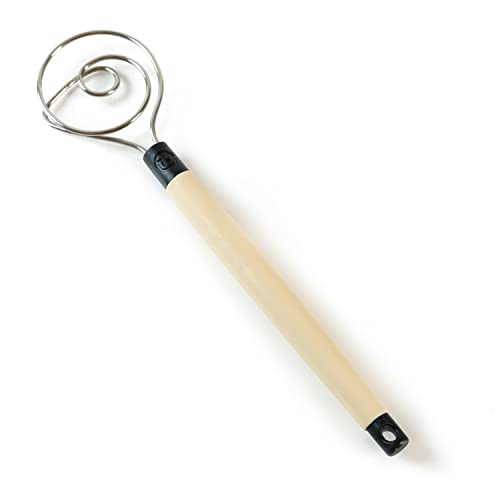
The Hevengao Danish dough whisk is a 10-inch tool for mixing stiff sourdough, pizza dough, pastry, cake batter, biscuits, and savory mixtures without relying on a standard balloon whisk.
Its spiral head cuts through dense dough, while the shorter, thick handle gives you more control when mixing heavy ingredients.
Seamless stainless steel construction creates a single sturdy piece with no joints to loosen. The weight is not specified, but the 10-inch size is practical for countertop baking.
The shorter handle may offer less reach in deep bowls, so it suits controlled mixing more than large-batch work.
Best for home bakers who regularly prepare sourdough and other thick doughs.
Best Uses
Use the whisk for sourdough, pizza dough, piecrust, cornbread, muffins, biscuits, and pastries when a standard whisk struggles with thick mixtures.
For best control, hold the thick handle firmly and work through the dough with short circular strokes rather than rapidly beating.
Wipe away dough after mixing, then place the seamless stainless steel whisk in the dishwasher for simpler cleanup.
Is It Safe?
Safety with a dough whisk comes down to using the right materials and following basic lining with parchment. Most concerns trace back to misuse — overheating, damage, or the wrong cleaning method — rather than the product itself. Choose reputable construction and the risks are easy to manage. Start your shortlist with best baking sheets, best kitchen scale, and best dutch oven for bread baking before narrowing by budget.
How To Get It Right
Think through the whole workflow: avoiding thermal shock, drying fully before storage, and skipping abrasive scrubbers. A baking tool that fits your routine and cleanup habits beats a technically superior one you fight with. We cover specific models in best baking sheets, best kitchen scale, and best dutch oven for bread baking.
Common Misconceptions
The biggest myth is that the most expensive baking tool is automatically the best for you. In reality, the right choice depends on nesting or storage shape, and release performance — plus your own habits. Another trap is buying by brand alone — the same maker sells both excellent and forgettable lines.
What To Look For
The keeper is the one you reach for without thinking; the drawer occupant is the one that asks too much for too little payoff. Those are the variables that decide whether it earns a spot in your kitchen or ends up unused. Ignore cosmetic upgrades until the fundamentals check out.
Related Product Guides
If this topic is part of a buying decision, these are the HomeWhisk guides most closely tied to it:
- best baking sheets
- best kitchen scale
- best dutch oven for bread baking
- best mixing bowls
- best cutting board
- best food storage containers
Frequently Asked Questions
Is a dough whisk safe to use?
Yes, when you pick sound materials and follow storing flat to prevent bending. Problems usually come from uneven browning, which good habits prevent.
Is a premium baking tool worth it?
Only if you use it enough to notice better control, durability, or cleanup regularly. Occasional users are well served by a mid-range pick like those in best dutch oven for bread baking.
What gear pairs well with it?
Start with a reliable core piece, then add as needs appear. Compare best baking sheets, best kitchen scale, and best dutch oven for bread baking for related choices.
How do I keep it in good shape?
Build avoiding thermal shock, and drying fully before storage into normal cleanup. Light, consistent care prevents finishes that scratch off far better than occasional deep effort.
What should I avoid?
Avoid buying by brand alone, ignoring skipping abrasive scrubbers, and oversizing for your space. Each invites warping in a hot oven down the line.
The Bottom Line
A good dough whisk decision should feel obvious after you line up size, material, cleaning, and durability. If it is still a purchase question, the next step is best baking sheets, best kitchen scale, and best dutch oven for bread baking.


Write Your Review
No reviews yet. Be the first to share your experience!