

TL;DR — How long do mixing bowls last is one of those kitchen questions where the useful answer is usually more practical than complicated. The right move depends on how you cook, what you already own, and how much maintenance you are willing to do. Use this as the practical background, then check best mixing bowls, best baking sheets, and best kitchen scale for specific product options.
We treated this as an editor’s note for home cooks: what matters, what is optional, and which related product guides are worth checking before you buy. For baking tools, sizing, material, accuracy, cleaning, and storage usually decide whether a tool stays useful or gets replaced.
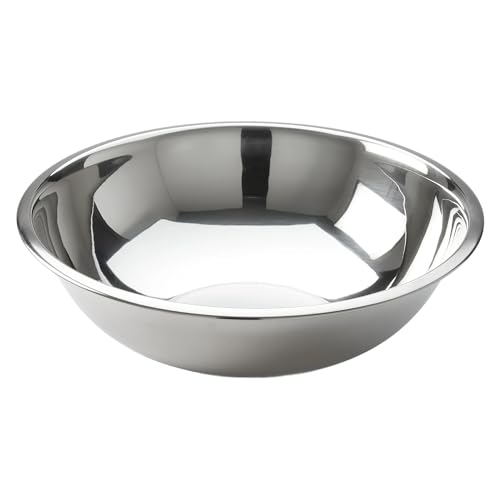
Pros & Cons
Pros
- Genuinely oversized at 16 inches across, which few home-kitchen bowls match.
- Dishwasher safe, so cleanup after a big cooking session takes no extra effort.
- Rust-resistant stainless holds up to commercial-level use.
- Doubles as a serving or storage vessel for leftovers, not just a prep bowl.
Cons
- At 16 inches wide, it takes up significant cabinet or shelf space and won't fit in most standard sinks for hand washing.
- No non-slip base or rubber ring, so it can slide on a countertop when you're mixing stiff dough one-handed.
Details
A 16-inch, 13-quart stainless steel mixing bowl built for cooks who run out of room in standard 5-quart bowls when doubling recipes or prepping for a crowd.
The wide diameter lets a whisk or hand mixer travel freely, so egg whites and cream aerate faster with less splatter over the rim.
Stainless steel construction resists rust and won’t absorb odors or stain from acidic ingredients, making it usable for marinades one day and bread dough the next.
The trade-off is footprint: it needs real storage space and is too wide for many kitchen sinks, though it is dishwasher safe.
Best for bulk bakers, meal preppers, and anyone regularly cooking for large groups.
Cooking Tips
Chill the bowl in the freezer for ten minutes before whipping cream. Steel drops to temperature quickly and holds it, so the cream stiffens faster.
Set it over a pot of simmering water as an improvised double boiler for melting chocolate or making hollandaise, since the wide rim rests securely on most stockpots.
Place a damp towel under the base while kneading or beating stiff batter to stop the bowl from sliding across the counter.

Pros & Cons
Pros
- The grater-in-lid design keeps shredded cheese and vegetables contained, which means less counter cleanup after every salad.
- Deep bowl walls limit splashing when whisking or tossing, and the mirror finish wipes clean with minimal scrubbing.
- Three sizes cover most kitchen jobs, from washing produce in the 4.6-quart to holding prepped garlic in the 1.5-quart.
- Bowls and grater attachments are dishwasher safe, so only the lids need hand washing.
Cons
- The lids are not dishwasher safe and must be washed by hand, which adds a step when you use the storage function often.
- Only the largest 4.6-quart lid accepts the grater attachments, so the two smaller bowls have no grating function.
Details
A six-piece prep set: three nesting stainless steel bowls with airtight lids and three grater inserts. It replaces the separate bowl, box grater, and storage container shuffle that clutters counters during salad and dough prep.
The grater attachments seat in the largest lid so shreds drop into the bowl below. A detachable lid port lets you whip cream or beat eggs with the cover on, containing splatter.
Bowls are pure stainless steel with mirror-finished surfaces, rolled wide rims for grip and pouring, and flat bottoms for stability. Capacities are 4.6, 3, and 1.5 quarts, nesting into one stack.
The plastic lids cannot go in the dishwasher, and grater attachments fit only the largest lid.
Best for home cooks who make salads and shredded-vegetable dishes weekly and want prep and fridge storage in one set.
Best Uses
Salad and slaw prep: fit a grater to the 4.6-quart lid, shred carrots or cabbage directly into the bowl, then swap to the solid lid and refrigerate until serving.
Baking: knead dough in the 4.6-quart bowl, hold flour or sugar in the 3-quart, and keep measured spices or eggs in the 1.5-quart.
Whipping and storage: use the detachable lid port to beat eggs or cream with less splatter, then seal the airtight lid for fridge storage or transport to a picnic.

Save $15.01
Pros & Cons
Pros
- Heavier gauge steel resists bending at the rim and flexing under a hand mixer while staying light enough to pour one-handed.
- The silicone base steadies the bowl during heavy mixing and keeps steel from sliding or scratching countertops.
- Measurements are etched into the steel rather than printed, so they stay readable through repeated washes.
- Nesting bowls and stacking lids store compactly, and the bowls are top-rack dishwasher safe.
Cons
- The lids are hand wash only, so the set is not fully dishwasher safe.
- Stainless steel is opaque and cannot go in the microwave, so you cannot see contents or reheat stored food in the bowl.
Details
A five-piece nesting set of stainless steel mixing bowls with sealing lids in 1.5, 2, 3, 4 and 5 quart sizes. It consolidates prep bowls, measuring cups and storage tubs into one stackable system.
Etched interior quart lines mean you can measure buttermilk and flour in the same bowl you mix in. The silicone base keeps the 5 quart bowl planted while you whip by hand.
The steel is thicker than industry standard, so rims resist bending and sides do not flex under a hand mixer. Bowls stay light enough to pour one-handed and go on the dishwasher top rack.
Lids are hand wash only, and steel blocks the microwave, so cold storage works well but reheating means transferring food to another dish.
Best for home bakers and meal preppers who want prep bowls that seal and stack instead of a separate container collection.
Cooking Tips
Chill the 3 quart bowl in the freezer for ten minutes before whipping cream or beating egg whites. Steel drops to temperature faster than glass and holds the cold while you work.
Set the 2 quart bowl over a pan of simmering water as a double boiler for melting chocolate or making hollandaise. Lift it with a towel, since the rim heats up.
Fill to the etched line instead of guessing when doubling a recipe, and let dough rise under a sealed lid rather than plastic wrap.
Common Misconceptions
The biggest myth is that the most expensive baking tool is automatically the best for you. In reality, the right choice depends on nonstick or bare finish, and measurement accuracy — plus your own habits. Another trap is buying by brand alone — the same maker sells both excellent and forgettable lines.
Why It Matters
The variables that decide the outcome — rim and edge design, nonstick or bare finish, and sizing and volume — are the ones buyers most often overlook. That is why two baking tools that look alike can feel completely different in use — one saves time, the other quietly adds friction to every task. If you are shopping, our best mixing bowls and best baking sheets guides are the fastest way in.
How To Get It Right
Think through the whole workflow: storing flat to prevent bending, lining with parchment, and skipping abrasive scrubbers. A baking tool that fits your routine and cleanup habits beats a technically superior one you fight with. We cover specific models in best mixing bowls, best baking sheets, and best kitchen scale.
Who Benefits Most
This matters most for weekend bakers, and anyone scaling recipes by weight. If that is you, treat nesting or storage shape, and material and gauge as non-negotiable. Casual users can relax the requirements and prioritize price and storage instead.
Related Product Guides
If this topic is part of a buying decision, these are the HomeWhisk guides most closely tied to it:
- best mixing bowls
- best baking sheets
- best kitchen scale
- best dutch oven for bread baking
- best cutting board
- best food storage containers
Frequently Asked Questions
What is the bottom line?
Match the baking tool to your real habits: buy for durability if it is daily, for value and storage if it is occasional.
How do I keep it in good shape?
Build drying fully before storage, and hand-washing to protect the finish into normal cleanup. Light, consistent care prevents batter that sticks far better than occasional deep effort.
Who is this most useful for?
Mainly high-volume holiday bakers, and cooks short on cabinet space. If that is you, treat sizing and volume as a requirement rather than a nice-to-have.
What should I avoid?
Avoid buying by brand alone, ignoring skipping abrasive scrubbers, and oversizing for your space. Each invites warping in a hot oven down the line.
Is a premium baking tool worth it?
Only if you use it enough to notice better control, durability, or cleanup regularly. Occasional users are well served by a mid-range pick like those in best kitchen scale.
The Bottom Line
A good how long do mixing bowls last decision should feel obvious after you line up size, material, cleaning, and durability. If it is still a purchase question, the next step is best mixing bowls, best baking sheets, and best kitchen scale.



Write Your Review
No reviews yet. Be the first to share your experience!