

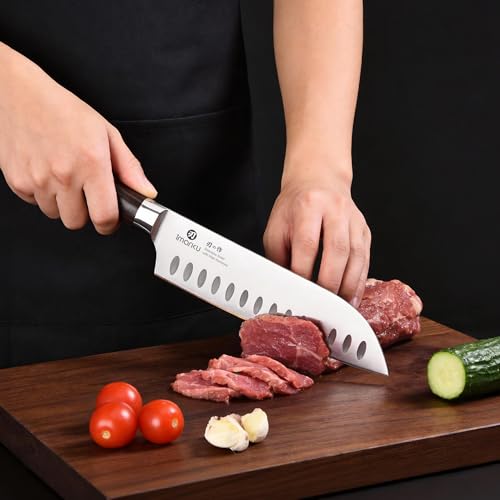
TL;DR — A santoku knife that “isn’t working” almost always has a dull or damaged edge, not a defect. The most common causes are a rolled or bent edge (fixable by honing), a truly dull edge full of micro-chips (needs sharpening on a whetstone), a burr left on from bad sharpening, or a technique mismatch — a santoku is built for straight up-and-down push cuts, not the rock-chopping a curved chef’s knife allows. Diagnose the edge first, then hone, sharpen, and deburr. For upgrade picks, see our best santoku knife guide.
The HomeWhisk editorial team researches kitchen equipment by analyzing blade geometry, steel metallurgy, sharpening methods, and aggregated user reviews from knife communities like Reddit r/chefknives. This guide walks through why a santoku stops cutting well and how to bring it back.
When people say their santoku “isn’t working,” they usually mean it’s crushing tomatoes instead of slicing them, sticking in dense vegetables, or feeling awkward compared to a chef’s knife. Those are three different problems — a dull edge, blade geometry, and technique — and each has a specific fix. Here’s how to tell them apart.
First, Diagnose the Edge
Before you assume the knife is bad, test the edge. The classic checks: a sharp knife will catch and bite into paper when you draw it across a sheet held in the air, or slice cleanly through a ripe tomato skin under the blade’s own weight. A dull knife slides, tears, or crushes.
Run a fingertip gently and perpendicularly across (never along) the edge. A sharp edge feels like it wants to grab your skin; a dull one feels smooth and rounded. If you look at the edge under good light and see a thin bright line reflecting back, that’s a flattened, rounded edge catching light — a dull knife has no true apex, just a rounded-over shoulder.
Understanding the mechanism helps: a knife edge is a fine apex where two bevels meet. With use, that apex either rolls to one side (the metal bends microscopically) or wears and micro-chips away. A rolled edge feels dull but the steel is still there — it just needs realigning. A worn or chipped edge has actually lost steel and needs to be re-formed by removing metal. Telling these apart determines whether you hone or sharpen. If you’re comparing your knife to better options, our best santoku knife and best chef knife guides cover edge retention across steels.
Honing vs. Sharpening: They Are Not the Same
This is the single most common source of confusion, and getting it wrong is why many “dull” knives never improve.
Honing (using a honing rod or “steel”) does not remove metal or create a new edge. It realigns a rolled edge back to center. A knife that felt sharp last week and dull today, with no chips, usually just needs honing — a few light passes per side at a consistent angle. Do this frequently, even every use, and the edge stays keen far longer.
Sharpening removes metal to grind a fresh apex. You sharpen when honing no longer restores the bite — when the steel is worn, micro-chipped, or the edge is genuinely rounded. This is done on whetstones (water stones), with a pull-through sharpener, or by a professional. Honing between sharpenings is maintenance; sharpening is the periodic reset. A knife honed regularly might only need sharpening a few times a year; a neglected one needs it much sooner. Note that a pull-through sharpener not working is a common complaint — many cheap ones grind an inconsistent angle and can even chew up a good edge, which is why enthusiasts prefer whetstones.
The Burr: Why a Freshly Sharpened Knife Can Still Feel Wrong
Here’s a subtle problem that trips people up: you sharpen the knife, it seems sharp on paper, but it feels rough, snags, or dulls again almost immediately. The culprit is usually a burr left on the edge.
When you grind one side of the edge on a stone, metal deforms and folds over to the opposite side, forming a thin wire of steel called a burr (or wire edge). Feeling a burr along the whole edge is actually how you know you’ve sharpened all the way to the apex. But if you stop there, that flimsy wire is what’s doing the “cutting,” and it breaks off fast, leaving a dull edge.
The fix is deburring: after raising a burr on both sides, make light, alternating, edge-trailing passes at the sharpening angle to minimize it, then strop the knife — draw it edge-trailing across leather, a strop, or even the back of a leather belt or denim. Stropping removes the residual burr and polishes the apex, leaving a clean, durable, genuinely sharp edge. Skipping the strop is why many home-sharpened knives feel sharp for a day and then quit. This applies to every knife you own — see our best knife sets and best chef knife guides.
It Might Be Technique, Not the Knife
Sometimes the santoku is perfectly sharp and still feels wrong, because it’s being used like the wrong knife.
A santoku has a flatter blade with less belly (curve) than a Western chef’s knife, and often a sheepsfoot tip that drops the point down. It’s designed for a straight up-and-down push cut or a downward chop — lift the whole blade and press straight down, or push forward and down. It is not built for the rock-chopping motion where you keep the tip on the board and rock the curved belly through, which is a chef’s-knife technique. Try to rock-chop a santoku and it feels clumsy and ineffective because its flat profile doesn’t roll.
Many santokus also have a Granton edge (the row of oval dimples along the blade). Those hollows create air pockets that reduce suction, helping thin, sticky slices (potato, cucumber, cheese) release instead of clinging to the blade. If food is sticking, the knife may be fine — the dimples help, but a very thin, sharp edge helps more. If you mostly rock-chop and want that motion, a chef’s knife suits you better; a santoku rewards the push-cut style. Our best santoku knife and best chef knife guides explain which profile fits which cook, and for specialty tasks see our best bread knife, best boning knife, and best fillet knife guides.
How to Bring a Santoku Back to Sharp
The full sequence, in order:
1. Hone first. If there are no chips, realign the edge on a honing rod — a dozen light passes per side at a steady angle. This alone revives many “dull” santokus. 2. If honing doesn’t do it, sharpen. On a whetstone, establish the bevel angle (most Japanese-style santokus are ground to a fairly acute angle, often around 12–15° per side; many Western-Japanese hybrids around 15°). Work one side until you feel a burr along the full length, then the other side. 3. Deburr and strop. Alternate light edge-trailing passes, then strop on leather to remove the wire edge. 4. Test. Slice paper or a tomato. A properly finished edge glides through both. 5. Maintain. Hone regularly, hand-wash and dry the knife (never the dishwasher, which dulls and corrodes edges), and store it on a magnetic strip or in a guard, not loose in a drawer where the edge bangs against other tools.
Frequently Asked Questions
How do I know if my santoku just needs honing or full sharpening?
Check for chips and how recently it cut well. If the knife was sharp lately, has no visible chips, and just lost its bite, the edge has likely rolled and only needs honing on a rod to realign it. If honing doesn’t restore the cut, or you see or feel micro-chips and a rounded edge, the steel is worn and needs sharpening on a whetstone to grind a fresh apex. Rule of thumb: hone often as maintenance, sharpen only when honing stops working. See our best santoku knife guide for low-maintenance steels.
What does a burr on a knife look like and why does it matter?
A burr is a thin wire of deformed steel folded over to one side of the edge during sharpening. You detect it more by feel than sight — drag a fingertip gently away from (never along) the edge and you’ll feel a slight catch or roughness on the opposite side from where you were grinding. Raising a burr along the whole edge confirms you’ve sharpened to the apex. But you must remove it afterward by deburring and stropping, because a burr breaks off quickly and leaves the knife dull again almost immediately.
How do I strop a santoku knife?
Stropping removes the residual burr and polishes the apex after sharpening. Use a leather strop (loaded with polishing compound for best results), or improvise with the smooth back of a leather belt or firm denim. Lay the blade at roughly the sharpening angle and draw it edge-trailing — spine leading, edge dragging behind — across the surface, alternating sides with light pressure for several passes each. Never push the edge into the strop, which would cut it. Stropping is what turns a burr-laden “sharp on paper” edge into a clean, durable one.
Why does my pull-through sharpener not work well?
Pull-through sharpeners grind a fixed angle set by their slots, and cheaper ones use coarse carbide that removes a lot of metal at an angle that may not match your santoku’s finer edge geometry. They can leave a rough, weak edge or even chip a hard Japanese blade. They’re convenient for quick touch-ups on soft Western knives but poor for maintaining a santoku’s acute edge. For real results, a whetstone lets you match the blade’s angle and finish with a strop. If you sharpen by pull-through only, that’s often why the knife still “isn’t working.”
Can a santoku be rock-chopped like a chef’s knife?
Not well. A santoku has a flatter profile with little belly, designed for straight push cuts and downward chops, not the rocking motion where you keep the tip planted and roll the curved edge. Rock-chopping a santoku feels awkward and inefficient because the flat edge can’t roll smoothly through the cut. If you love the rocking technique, a chef’s knife suits you better. If you adapt to lifting the blade and pushing straight down, the santoku shines at fast, precise slicing. Compare profiles in our best chef knife guide.
Why does food stick to my santoku even when it’s sharp?
Sticking is usually about suction between the flat blade face and moist food, not sharpness. Many santokus add a Granton edge — the oval dimples along the blade — precisely to break that suction with air pockets so thin slices release. A very thin, well-finished edge also helps food part cleanly. If your knife lacks dimples and food clings, that’s normal for the profile; wiping the blade, using a smooth pull-slicing motion, and keeping the edge truly sharp all reduce it. A dull edge makes sticking dramatically worse.
The Bottom Line
A santoku that “isn’t working” is rarely broken — it’s usually dull, badly sharpened, or being used with the wrong technique. Start by diagnosing the edge: a rolled edge just needs honing, while a worn or chipped one needs sharpening on a whetstone followed by deburring and stropping to remove the wire edge that fools people into thinking the job is done. If the edge is genuinely sharp but the knife still feels clumsy, the issue is likely technique — a santoku wants straight push cuts, not the rock-chopping a curved chef’s knife allows. Keep it honed, hand-washed, dried, and stored safely, and a good santoku stays a joy to use. If yours is low-quality steel that won’t hold an edge, it may be time to upgrade — start with our best santoku knife, best chef knife, and best knife sets guides.
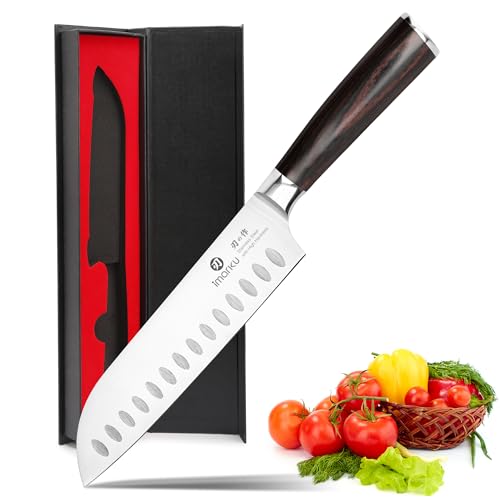
imarku
7-Inch Santoku Knife for Precision Slicing, Dicing & Mincing – High Carbon Japanese Steel with Pakkawood Handle
The imarku 7-inch Santoku knife combines a hollow scalloped edge and 15-18 degree hand-polished bevel to reduce drag and prevent food from sticking during high-volume prep work. Home cooks and apartment dwellers who want a restaurant-capable knife without the steep price will find it covers meat, vegetables, and bread with a single blade.
Pros and Cons
Pros
- The 2.5mm blade thickness paired with the hollow edge design handles both delicate julienne cuts and heavier chopping without flexing or wedging.
- Pakkawood handle construction offers a more sanitary and dimensionally stable grip than standard composite or natural wood handles.
- The 15-18 degree edge angle matches professional Japanese knife geometry, giving it a noticeably sharper out-of-box performance than German-style knives at this price.
- Versatile enough for meat, vegetables, fruit, and bread, making it a practical single-knife solution for small kitchens with limited storage.
Cons
- With zero verified reviews available, long-term edge retention and handle durability under daily use remain unconfirmed by real buyers.
- The 3-month refund window is shorter than the lifetime guarantees offered by competing brands at the same price point.

Zwilling
Henckels Santoku Knife 7-inch Hollow Edge German Stainless Steel
This 7-inch Santoku excels at mincing, slicing, and dicing with its hollow-edge blade that prevents food sticking during prep. Buy it if you want a durable, balanced Japanese-style knife that handles everyday vegetable work without the premium price tag.
Pros and Cons
Pros
- Hollow-edge grantons genuinely prevent cucumber and tomato slices from sticking to the blade mid-cut.
- German stainless steel holds its edge through repeated use on harder vegetables like carrots and beets.
- Fully forged construction creates noticeable weight and balance that makes repetitive dicing feel controlled and effortless.
Cons
- At 7 inches, it's smaller than Western chef's knives, requiring more frequent repositioning on larger vegetables.
- Dishwasher safe, but hand washing extends blade life and prevents potential handle loosening over time.

HOSHANHO
7-Inch Japanese Santoku Chef Knife | HOSHANHO High Carbon Stainless Steel
This 7-inch santoku slices vegetables, meat, and fish with a 15-degree blade angle that delivers thinner, more precise cuts than standard chef knives. Home cooks and professional chefs alike benefit from the triple-layer laminated steel construction that stays sharp longer and resists corrosion.
Pros and Cons
Pros
- The triple-layer laminated steel with 10Cr15CoMoV Japanese steel reaches 62HRC hardness, delivering edge retention that outlasts standard stainless blades.
- Ergonomic pakkawood handle provides secure grip and control without hand fatigue during extended prep sessions.
- 15-degree blade angle and hand-sharpened edge produce cleaner cuts through delicate vegetables and proteins compared to wider blade angles.
Cons
- Hand-washing required; dishwasher use will degrade the blade edge and handle finish over time.
- Requires regular honing to maintain the 15-degree angle; the initial sharpness will gradually diminish with normal kitchen use.

MercerCulinary
Mercer Genesis 7-Inch Santoku Knife: Professional Slicing & Mincing
This fully forged German steel santoku delivers razor-sharp precision for slicing vegetables and mincing herbs with its Granton edge that releases food cleanly. Buy it if you prep vegetables daily and want a professional-grade knife that won't require constant sharpening.
Pros and Cons
Pros
- Granton edge prevents food from sticking to the blade, making thin slicing of cucumbers, tomatoes, and fish noticeably faster than standard chef's knives.
- Ergonomic handle with substantial bolster reduces wrist strain during extended prep sessions and feels secure even when wet.
- Professional-grade construction at under $50 delivers the same German steel and forging process used in culinary schools.
Cons
- Requires hand-washing only; dishwasher use will damage the blade and handle, adding a maintenance step most busy cooks dislike.
- Santoku's shorter blade length and rectangular shape take practice if you're accustomed to Western chef's knives, requiring a learning curve.

Henckels Forged Accent 2-Piece Santoku Knife Set | German Stainless Steel
This 2-piece santoku set delivers razor-sharp German engineering for mincing, slicing, and dicing with effortless precision and lasting edge retention. Buy it if you prep vegetables daily and want knives that stay sharp without constant maintenance.
Pros and Cons
Pros
- Forged bolster transitions seamlessly from blade to handle, eliminating weak points that cause blade wobble during cutting.
- Satin-finished blade holds its edge noticeably longer than stamped knives, reducing the need for frequent sharpening.
- Two-knife set covers both precision work and larger prep tasks without requiring a full block of specialty knives.
Cons
- Santoku blade shape has a steeper learning curve than traditional chef's knives if you're accustomed to rocking motions.
- German stainless steel requires hand-washing to maintain edge longevity, despite being dishwasher-safe.
imarku 7-Inch Santoku Knife for Precision Slicing, Dicing & Mincing – High Carbon Japanese Steel with Pakkawood Handle
imarku
7-Inch Santoku Knife for Precision Slicing, Dicing & Mincing – High Carbon Japanese Steel with Pakkawood Handle
The imarku 7-inch Santoku knife combines a hollow scalloped edge and 15-18 degree hand-polished bevel to reduce drag and prevent food from sticking during high-volume prep work. Home cooks and apartment dwellers who want a restaurant-capable knife without the steep price will find it covers meat, vegetables, and bread with a single blade.
$39.99 at AmazonEditors' Favorite
Color: Brown and Silver Size: 7" Dimensions: 12 x 3 x 1 inches Weight: 0.43 pounds Product Group: Kitchen Binding: Kitchen
Shop NowZwilling Henckels Santoku Knife 7-inch Hollow Edge German Stainless Steel
Zwilling
Henckels Santoku Knife 7-inch Hollow Edge German Stainless Steel
This 7-inch Santoku excels at mincing, slicing, and dicing with its hollow-edge blade that prevents food sticking during prep. Buy it if you want a durable, balanced Japanese-style knife that handles everyday vegetable work without the premium price tag.
$79.95 at AmazonGreat Value
Brand Name: ZWILLING J.A. Henckels Manufacturer: ZWILLING UPC: 035886185930 Global Trade Identification Number: 00035886185930 Model Number: 31170-181 Manufacturer Part Number: 31170-181 -OPEN BOX Manufacturer Warranty Description: Lifetime Warranty Against Manufacturer'S Defects Item Type Name: Hollow Edge Santoku Knife Unit Count: 1.0 Count Included Components: Hollow Edge Santoku Knife Best Sellers Rank: #92,282 in Kitchen & Dining (See Top 100 in Kitchen & Dining) #244 in Bread Knives ASIN: B00068J2A0 Customer Reviews: 4.6 4.6 out of 5 stars (1,418) 4.6 out of 5 stars Blade Material Type: Stainless Steel Handle Material: Stainless Steel,Steel Is the item dishwasher safe?: No Material Type: ZWILLING Carbon No Stain Steel BladeLength: 7 Inches Item Weight: 6.4 ounces Item Length: 16 Inches Size: 7" Color: Stainless Steel Blade Color: Silver Blade Edge: Hollow Ground Construction Type: Forged Blade Material: Stainless Steel Brand: ZWILLING J.A. Henckels
Shop NowHOSHANHO 7-Inch Japanese Santoku Chef Knife | HOSHANHO High Carbon Stainless Steel
HOSHANHO
7-Inch Japanese Santoku Chef Knife | HOSHANHO High Carbon Stainless Steel
This 7-inch santoku slices vegetables, meat, and fish with a 15-degree blade angle that delivers thinner, more precise cuts than standard chef knives. Home cooks and professional chefs alike benefit from the triple-layer laminated steel construction that stays sharp longer and resists corrosion.
$52.99 at AmazonBrand Name: HOSHANHO Manufacturer: HOSHANHO UPC: 714757571477 Model Number: 7 inch Santoku Knife Manufacturer Part Number: HSHES-2022-002 Item Type Name: 7 inch Santoku Chef Knife Unit Count: 1.0 Count Included Components: 7 inch Santoku Knife Best Sellers Rank: #13,746 in Kitchen & Dining (See Top 100 in Kitchen & Dining) #29 in Chef's Knives ASIN: B0C1BQTQKL Customer Reviews: 4.7 4.7 out of 5 stars (1,742) 4.7 out of 5 stars Blade Edge: Plain Construction Type: Forged Blade Material Type: High Carbon Stainless Steel Handle Material: Pakkawood Is the item dishwasher safe?: No Material Type: High Carbon Stainless Steel BladeLength: 7 Inches Item Weight: 11.2 ounces Item Length: 7 Inches Size: 7" Color: Silver Blade Color: Silver Blade Material: High Carbon Stainless Steel Brand: HOSHANHO
Shop NowMercerCulinary Mercer Genesis 7-Inch Santoku Knife: Professional Slicing & Mincing
MercerCulinary
Mercer Genesis 7-Inch Santoku Knife: Professional Slicing & Mincing
This fully forged German steel santoku delivers razor-sharp precision for slicing vegetables and mincing herbs with its Granton edge that releases food cleanly. Buy it if you prep vegetables daily and want a professional-grade knife that won't require constant sharpening.
$39.95 at AmazonBrand Name: Mercer Culinary Manufacturer: Mercer Tool Corp. UPC: 749628445519 765301903244 Global Trade Identification Number: 00765301903244 Model Number: M20707 Manufacturer Part Number: M20707 Manufacturer Warranty Description: Lifetime limited manufacturer's warranty Item Type Name: Genesis Unit Count: 1.0 Count Included Components: Mercer Culinary Genesis 7-Inch Forged Santoku Knife Best Sellers Rank: #3,706 in Kitchen & Dining (See Top 100 in Kitchen & Dining) #15 in Santoku Knives ASIN: B000IBVD4I Customer Reviews: 4.8 4.8 out of 5 stars (1,577) 4.8 out of 5 stars Blade Material Type: High Carbon Steel Handle Material: Santoprene Is the item dishwasher safe?: No Material Type: Stainless steel and manmade BladeLength: 7 Inches Item Weight: 2.99 ounces Item Length: 14.05 Inches Size: 7" Color: Black Blade Color: Silver Blade Edge: Plain Construction Type: Forged Blade Material: High Carbon Steel Brand: Mercer Culinary
Shop NowHenckels Forged Accent 2-Piece Santoku Knife Set | German Stainless Steel
Henckels Forged Accent 2-Piece Santoku Knife Set | German Stainless Steel
This 2-piece santoku set delivers razor-sharp German engineering for mincing, slicing, and dicing with effortless precision and lasting edge retention. Buy it if you prep vegetables daily and want knives that stay sharp without constant maintenance.
$49.95 at AmazonBrand Name: HENCKELS Manufacturer: Henckels UPC: 035886649906 Model Number: 1021241 Manufacturer Part Number: 1021241 Item Type Name: Asian Knife Set Unit Count: 2.0 Count Included Components: 5" HE Santoku, 7" HE Santoku Best Sellers Rank: #41,522 in Kitchen & Dining (See Top 100 in Kitchen & Dining) #14 in Santoku Knives ASIN: B09RTDZ14W Customer Reviews: 4.6 4.6 out of 5 stars (284) 4.6 out of 5 stars Blade Edge: Plain Construction Type: Forged Blade Material Type: Stainless Steel Handle Material: Stainless Steel Is the item dishwasher safe?: Yes Material Type: Stainless Steel BladeLength: 5 Inches Item Weight: 9.07 g Item Length: 5 Inches Size: 2-pc Color: Black Blade Color: Silver Blade Material: Stainless Steel Brand: HENCKELS
Shop Now


Write Your Review
No reviews yet. Be the first to share your experience!