

If you’re asking “why is my chef knife too dry,” the short answer is that hot water, dishwasher cycles and harsh soap have stripped the natural oils from the handle and the thin protective film from the blade. A dry wooden handle turns pale, rough and starts to crack. A dry carbon steel blade loses its barrier against moisture, so it spots, dulls and rusts faster. The fix is simple: wash by hand, dry right away, and oil the knife on a regular schedule.
This guide explains what “too dry” really looks like on a chef knife, why it happens, how to bring the handle and blade back, and what to look for in a knife if you’d rather spend less time on upkeep. Plain steps. No guesswork.
What a “Too Dry” Chef Knife Looks Like
Dryness shows up in two places, and they need different care. On the handle, wood that’s lost its oil looks chalky or gray instead of rich and dark. It may feel fuzzy, because the grain has lifted, and you might see hairline cracks near the bolster or around the rivets. Composite and plastic handles don’t dry out the same way, but the gap where the handle meets the tang can still collect water and grime.
On the blade, dryness means the surface has no protective layer at all. That’s fine for most stainless knives, but on high-carbon steel it leaves bare metal open to air and moisture. You’ll see orange freckles, a dull gray haze, or dark patches that don’t wipe off. Food can also start to drag and stick more than it used to, since a rough, oxidized surface has more grip than a clean, smooth one.
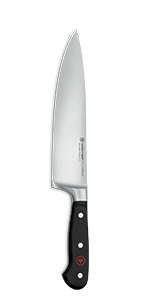
A good everyday knife made from a common stainless alloy is easier to live with here. The Babish 8-inch chef knife uses high-carbon 1.4116 German steel, a stainless grade that resists rust better than plain carbon steel, with a full-tang build. It still benefits from hand washing and drying, but it’s more forgiving if you miss a day.

Babish
8-Inch Chef Knife for Chopping, Slicing and Daily Prep: Babish High-Carbon German Steel Full-Tang Blade
This 8-inch Babish chef knife handles chopping, slicing, and dicing with a 13-degree edge ground into high-carbon 1.4116 German steel, so it bites into produce and proteins without sawing. It suits home cooks who want one all-purpose blade with a full-tang build and stainless handle rather than a full knife block.
Pros and Cons
Pros
- 1.4116 German steel at HRC 55 balances edge retention with easy resharpening, so you can restore the blade at home instead of sending it out.
- The thin 13-degree edge angle delivers cleaner cuts on soft produce than the blunter angles typical of budget chef knives.
- Full-tang build gives the knife the heft and balance needed for confident rock-chopping.
- The one-piece stainless handle wipes clean in seconds and will not loosen or absorb odors the way riveted wood scales can.
Cons
- A smooth stainless steel handle offers less friction than textured or contoured grips and can feel slippery with wet or oily hands.
- At HRC 55, the steel is softer than harder Japanese blades, so the thin 13-degree edge will need honing more often to stay at its best.
Babish 8-Inch Chef Knife for Chopping, Slicing and Daily Prep: Babish High-Carbon German Steel Full-Tang Blade
Babish
8-Inch Chef Knife for Chopping, Slicing and Daily Prep: Babish High-Carbon German Steel Full-Tang Blade
This 8-inch Babish chef knife handles chopping, slicing, and dicing with a 13-degree edge ground into high-carbon 1.4116 German steel, so it bites into produce and proteins without sawing. It suits home cooks who want one all-purpose blade with a full-tang build and stainless handle rather than a full knife block.
$24.99 at AmazonEditors' Favorite
Color: Stainless Blade & Handle Size: Chef's Knife (8") Product Group: BISS Binding: Kitchen
Shop NowWhy Chef Knives Dry Out
Almost every case traces back to how the knife is washed and stored. Wood is porous, and steel reacts to its surroundings. Put the two together with daily kitchen use and they lose their oils faster than most cooks expect.
The dishwasher
This is the biggest cause by far. A dishwasher cycle runs long, hot and wet, then ends with high-heat drying. Wood swells during the wash and shrinks during the dry, which is exactly how handles split. Detergent is also alkaline and abrasive, so it strips oil from the wood and can etch the edge. Most knife makers tell you to keep their knives out of the dishwasher for this reason.
Hot water and strong soap
Even hand washing can dry a knife if you soak it or scrub with very hot water and a heavy degreaser. Soap is designed to remove oil. It doesn’t know the difference between bacon grease and the mineral oil protecting your handle. A quick wash with warm water and a small drop of mild dish soap is all a knife needs.
Air drying and dry storage
Leaving a knife wet in a rack lets water sit in the joints and on the steel. Then the opposite problem hits. A knife stored for weeks in a dry, heated room, or right next to the stove, slowly loses moisture from the wood. Low winter humidity makes this worse. If you live somewhere dry, expect to oil a wooden handle more often.
Acidic foods
Tomatoes, citrus and onions leave acid on the blade. On carbon steel, that acid speeds up reactions that eat through any oil film you’ve applied. Wiping the blade between tasks keeps the surface from getting stripped mid-prep.
How to Fix a Dry Handle and Blade
You don’t need special products. Food-safe mineral oil, a soft cloth and a little patience will handle most cases. If you prefer, a board cream made of mineral oil and beeswax works well on wood, since the wax adds a light seal on top.
Reviving a dry wooden handle
Start with a clean, completely dry knife. If the grain feels fuzzy, rub the handle lightly with very fine sandpaper, around 320 to 400 grit, just enough to smooth it. Wipe off the dust. Apply a thin coat of mineral oil, let it soak in for 15 to 30 minutes, then wipe off whatever’s left on the surface. Badly dried wood may need two or three coats spread over a day. Don’t use olive or vegetable oil. They can turn rancid and get sticky over time.
Protecting a dry carbon steel blade
If there’s light rust, a paste of baking soda and water, or a cork dipped in a mild abrasive, will usually lift it. Rinse, dry fully, then wipe on a few drops of food-safe oil and buff it nearly off. You want a thin film, not a greasy coat. Many cooks also let a patina form on carbon steel. That gray-blue layer is a stable oxide that actually helps slow rust.
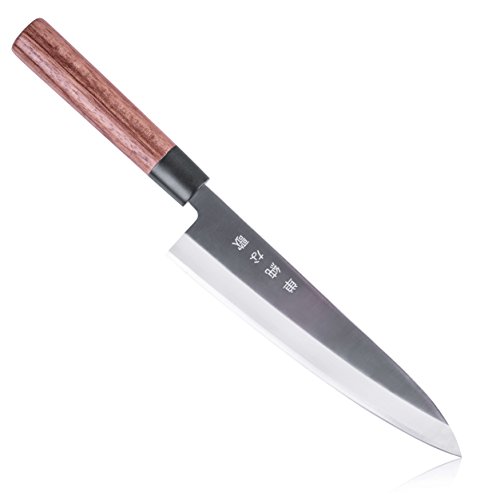
Traditional Japanese-style blades get extra attention here, because many lean toward harder, high-carbon steel. The Simple Song gyuto is an 8-inch knife in high-carbon stainless steel, listed with high corrosion resistance and a single-bevel chisel edge grind. A single-bevel edge is sharpened on one side only, so it’s worth wiping and drying that fine edge carefully after every use. If you’re curious about the style, our guide to the best Japanese chef knife covers the main differences.
Simple Song
Single Bevel Slicing for Sashimi and Vegetables: Simple Song 8-Inch Japanese Gyuto Chef Knife in 420HC Stainless Steel
This 8-inch gyuto covers the full range of chef knife work, from long sashimi strokes to breaking down pork belly, using a 15 degree single bevel edge that bites cleaner than the 30 degree compound edges on standard Western knives. It suits right-handed cooks who want traditional Japanese blade geometry and a full-tang rosewood handle in a corrosion-resistant stainless steel rather than reactive carbon.
Pros and Cons
Pros
- Single bevel geometry produces a sharper working edge than the double-ground edges on most Western chef knives.
- The 420HC steel takes a razor edge quickly on a whetstone, so owners can maintain it at home without professional service.
- Full-tang rosewood handle adds weight toward the hand and keeps the knife from feeling tip heavy in long strokes.
- A 30 day return covers refunds and free replacement of blades that arrive with defects.
Cons
- The bevel is ground on the right side only, so left-handed cooks will fight the blade's natural steer away from a straight cut.
- 420HC is softer than the high carbon steels used in traditional Japanese knives, so it needs honing more often to stay crisp.
Simple Song Single Bevel Slicing for Sashimi and Vegetables: Simple Song 8-Inch Japanese Gyuto Chef Knife in 420HC Stainless Steel
Simple Song
Single Bevel Slicing for Sashimi and Vegetables: Simple Song 8-Inch Japanese Gyuto Chef Knife in 420HC Stainless Steel
This 8-inch gyuto covers the full range of chef knife work, from long sashimi strokes to breaking down pork belly, using a 15 degree single bevel edge that bites cleaner than the 30 degree compound edges on standard Western knives. It suits right-handed cooks who want traditional Japanese blade geometry and a full-tang rosewood handle in a corrosion-resistant stainless steel rather than reactive carbon.
$43.89 at AmazonEditors' Favorite
Color: Stainless Steel Size: 8" Weight: 0.77125 Pounds Product Group: Kitchen Binding: Kitchen
Shop NowA Simple Routine That Keeps Knives From Drying Out
Prevention takes about a minute a day. That’s it. The goal is to keep water off the knife for as short a time as possible and to replace oils before the wood or steel runs out.
Wash the knife by hand right after you use it, with warm water and a small amount of mild soap. Never leave it soaking in the sink. Dry it with a towel straight away, paying attention to the spine, the bolster and the seam where blade meets handle. Then store it on a magnetic strip, in a block, or in a blade guard. Avoid a drawer where it can knock against other tools.
For oiling, a good rule is once a month for a wooden handle in normal use, and every week or two in a dry climate or a busy kitchen. Carbon steel blades that will sit unused for more than a few days should get a light oil film before storage. Stainless blades usually just need to be kept clean and dry.
Sharpening ties into this too. A knife that’s honed and kept keen needs less force, so you’re less likely to scrape and scrub at stuck food. If you’re shopping on a budget and want something easy to maintain, our picks for the best chef knife under $50 are a useful starting point.
Common Mistakes When Treating a Dry Knife
The most common mistake is using cooking oil. Olive, canola and vegetable oils feel like a quick fix, but they oxidize, smell stale and leave a tacky film. Stick to food-grade mineral oil or a mineral oil and beeswax blend.
The second is over-oiling. A dripping handle won’t absorb more than it can hold, and the excess just collects dust and lint. Apply a thin coat, wait, and wipe. More coats over time beat one heavy soak.
Third, people often sand too hard. You only want to knock down raised grain, not reshape the handle. Coarse sandpaper can also leave scratches that trap grime.
Finally, many cooks treat the handle and forget the blade, or the reverse. A knife with a freshly oiled handle and a rusty, unoiled carbon blade still has a problem. Check both every time you do maintenance. And don’t use steel wool on a stainless blade unless you’re ready to polish out the scratches it leaves.
When to Replace or Upgrade Your Chef Knife
Most dry knives can be saved. But some damage goes past what oil can fix. If the handle has a deep crack that runs through to the tang, a loose rivet, or a gap where water gets in, the knife can harbor bacteria and may feel unstable in the hand. Heavy pitting on the blade, chips you can’t sharpen out, or a bent tip are also signs it’s time to move on.
When you replace a knife, think about how much upkeep you’re willing to do. Stainless and high-carbon stainless alloys strike a middle ground, since they hold a good edge and shrug off small lapses in drying. If you’d like a Japanese-made option in that category, the Kimura chef knife is made in Japan, with an 8-inch blade in high-carbon molybdenum stainless steel and an ergonomic handle. Molybdenum is added to stainless steels to help with corrosion resistance, which suits cooks who want a sharp gyuto without the care routine of plain carbon steel.

Kimura
8-Inch Japanese Gyuto for Everyday Chopping and Dicing: Kimura Chef Knife, Seki-Made High Carbon Steel
This 8-inch gyuto handles meat, fruit, and vegetable prep with a high carbon chrome molybdenum blade hand sharpened to 15 degrees, so it bites into produce with less downward pressure than a standard Western chef knife. It suits home cooks who want a Seki-made Japanese blade with a grippy POM handle and a lifetime warranty behind it.
Pros and Cons
Pros
- Forged in Seki, Japan, a knife-making region with a long production history.
- Single-piece steel construction with a full tang resists loosening at the handle over time.
- Ergonomic handle and full bolster accommodate regular, pointed-finger, and pinch grips.
- Arrives in a Kanji-design gift box, so it needs no extra wrapping when given as a present.
Cons
- High carbon stainless steel at 57 HRC chips more easily than softer Western steel if used on bone or frozen food.
- The 8-inch gyuto is the only size in this listing, which is limiting if you prefer a shorter blade for small hands or tight boards.
Kimura 8-Inch Japanese Gyuto for Everyday Chopping and Dicing: Kimura Chef Knife, Seki-Made High Carbon Steel
Kimura
8-Inch Japanese Gyuto for Everyday Chopping and Dicing: Kimura Chef Knife, Seki-Made High Carbon Steel
This 8-inch gyuto handles meat, fruit, and vegetable prep with a high carbon chrome molybdenum blade hand sharpened to 15 degrees, so it bites into produce with less downward pressure than a standard Western chef knife. It suits home cooks who want a Seki-made Japanese blade with a grippy POM handle and a lifetime warranty behind it.
$39.99 at AmazonEditors' Favorite
Color: High Carbon Molybdenum Stainless Steel Size: 8.3" Weight: 0.3858089585 pounds Product Group: Kitchen Binding: Kitchen
Shop NowIf you want to compare more options before you buy, see our roundups of the best chef knife overall, the best German chef knife for heavier, sturdier blades, and the best beginner chef knife if you’re setting up your first kitchen kit.
FAQ
How often should I oil my chef knife handle?
About once a month for a wooden handle in a typical home kitchen. In a dry climate, during winter heating season, or if you wash the knife several times a day, every one to two weeks is better. If the wood looks pale or feels rough, it’s due.
Can I use olive oil on a dry knife handle?
It’s not a good idea. Olive oil and other cooking oils can go rancid, smell off and leave a sticky surface. Food-safe mineral oil or a mineral oil and beeswax cream is the standard choice because it stays stable.
Why does my knife blade look dull and gray?
On carbon steel, a gray or blue-gray tone is often patina, a stable oxide layer that’s normal and even helpful. Orange or brown spots are rust, which you should remove and then protect with a thin oil film. On stainless steel, a hazy look usually comes from mineral deposits or detergent residue.
Is it bad to put a chef knife in the dishwasher?
Yes, for most chef knives. The long hot cycle, harsh detergent and high-heat drying strip oils, crack wooden handles and can dull or chip the edge. Hand washing and drying takes about a minute and keeps the knife in far better shape.
Can a cracked wooden handle be repaired?
Small surface checks can often be smoothed and sealed with oil or board cream. Deep cracks that reach the tang, or a handle that’s come loose, are harder to fix at home and may let water and bacteria in. In those cases, a rehandle by a knife shop or a replacement is the safer path.




Write Your Review
No reviews yet. Be the first to share your experience!