

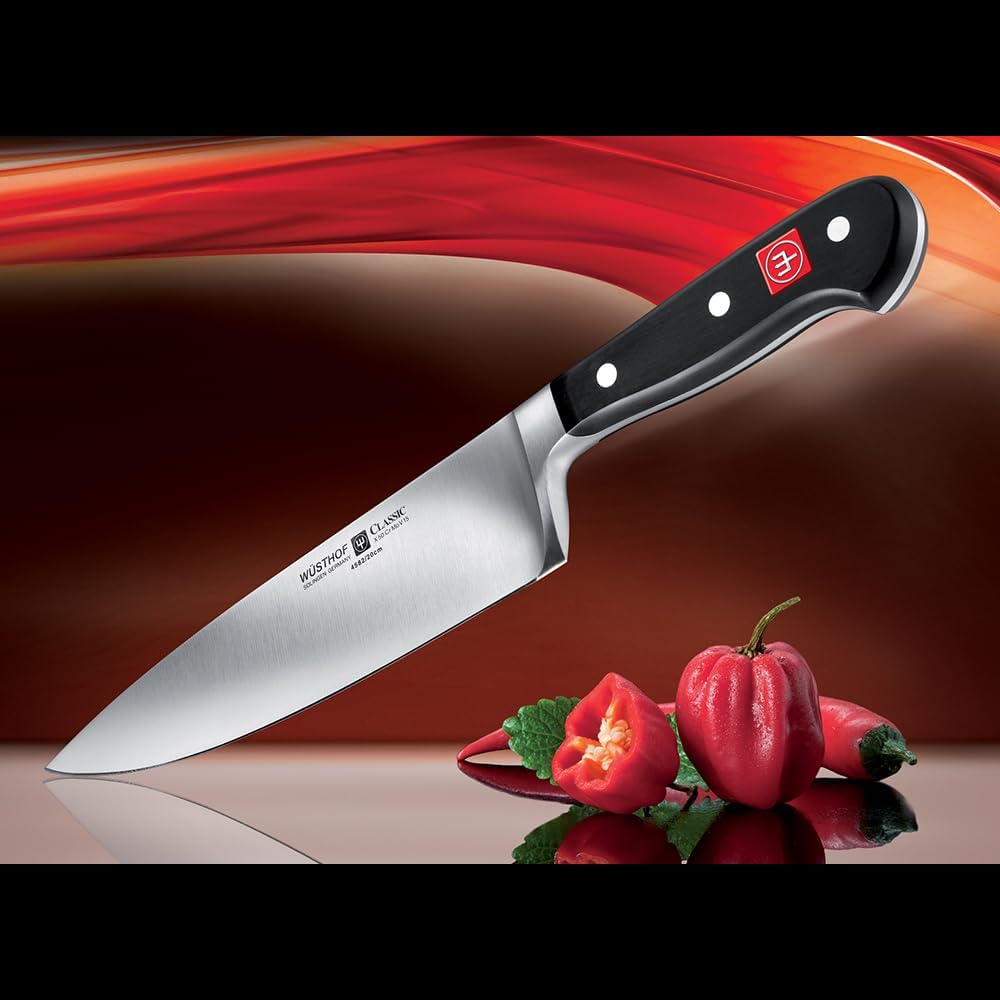
If you’re wondering why is my chef knife sticking, the short answer is suction and friction. A flat, smooth blade face presses against wet food like potato, cucumber or apple, the thin film of moisture between them creates a seal, and the slice clings to the steel instead of falling away. A dull edge, a thick blade spine, starchy residue and the wrong cutting motion all make it worse.
This guide walks through each cause, how to tell which one you’re dealing with, and the simple fixes that actually help. You’ll also learn when sticking is a sign your knife has reached the end of its useful life, and what to look for in a replacement so the problem doesn’t come right back.
Cause 1: Surface tension and suction on the blade face
Most sticking has nothing to do with a bad knife. It’s physics. When you cut a high-moisture food, juice spreads across the side of the blade in a thin layer. Water molecules pull on each other, and that pull holds the slice tight against the flat steel. The larger and flatter the contact area, the stronger the hold. That’s why a wide slice of potato grips harder than a thin coin of carrot, and why long, broad chef knives seem to collect food more than small paring knives.
Starch adds glue to the mix. Cut a russet potato and look at the blade: you’ll see a cloudy film that dries tacky within a minute or two. Each new slice lands on that film and sticks even harder. Onions, apples, zucchini, eggplant and cheese behave the same way, each for slightly different reasons. Cheese is fat and protein, which smear across the steel. Apples and cucumbers are mostly water. Potatoes are water plus starch, the worst combination.
So what helps? Breaking the seal. A blade that’s polished mirror-smooth tends to grip more than one with some texture, and a blade that’s thin behind the edge pushes the food apart with less force, so slices separate before suction can build. Many cooks who are tired of fighting their knife move to a thinner Japanese-style profile. One option in the site’s catalog is the Jingseiho Japanese Chef Knife, an 8-inch blade in high carbon VG-10 steel. VG-10 is a common Japanese knife steel known for holding a fine edge, and an 8-inch length gives you enough blade to slice through a whole potato in one stroke instead of sawing, which also cuts down on drag. It won’t defeat surface tension on its own, since no knife can, but a keen, thin edge paired with the techniques below makes a real difference.

Jingseiho
8-Inch VG-10 Japanese Chef Knife for Everyday Slicing and Dicing - Jingseiho High Carbon Steel Gyuto
This 8-inch gyuto uses a triple-layer VG-10 core hardened to HRC 62, letting a thin, hand-finished edge glide through proteins and produce with minimal downward pressure. It suits home cooks and line cooks who want long edge retention and are willing to hand wash, avoid bones, and maintain the blade on a whetstone.
Pros and Cons
Pros
- VG-10 core at HRC 60-62 delivers harder steel and better edge retention than typical stainless kitchen knives.
- Lab sharpness testing and an included report card give a measurable baseline rather than a marketing claim.
- Pakkawood scales resist moisture better than untreated wood and keep their grip during wet prep.
- Double-bevel geometry makes it usable as a single all-purpose knife for any cook in the household.
Cons
- The thin, hard edge chips if used on bones, frozen food, or shellfish, and it must stay off glass and stone boards.
- Maintenance is demanding: hand wash and dry immediately, skip the dishwasher, and resharpen on a whetstone since honing rods are not recommended.
Jingseiho 8-Inch VG-10 Japanese Chef Knife for Everyday Slicing and Dicing - Jingseiho High Carbon Steel Gyuto
Jingseiho
8-Inch VG-10 Japanese Chef Knife for Everyday Slicing and Dicing - Jingseiho High Carbon Steel Gyuto
This 8-inch gyuto uses a triple-layer VG-10 core hardened to HRC 62, letting a thin, hand-finished edge glide through proteins and produce with minimal downward pressure. It suits home cooks and line cooks who want long edge retention and are willing to hand wash, avoid bones, and maintain the blade on a whetstone.
$49.99 at AmazonEditors' Favorite
Size: 8" Product Group: BISS
Shop NowCause 2: A dull or rolled edge
A dull knife doesn’t slice. It wedges. Instead of the edge parting fibers cleanly, the blade crushes its way down, pushing food outward against both faces of the steel. That sideways pressure squeezes juice onto the blade and jams the slice against it. If your knife sticks halfway through a sweet potato or a butternut squash and you have to rock it free, dullness is the likely culprit.
How to check your edge
Try the paper slice. Hold a sheet of printer paper by one corner and draw the knife down through it. A sharp edge glides through with a clean, quiet cut. A dull one snags, tears or folds the paper. You can also look straight down at the edge under a bright light. Shiny spots or glints along the edge mean those sections have rounded off or rolled over and are reflecting light instead of cutting.
Honing versus sharpening
These aren’t the same job. Honing on a steel or ceramic rod pushes a rolled edge back into line. It takes about 30 seconds and should happen often, every few uses for a softer German-style blade. Sharpening on a whetstone or a pull-through sharpener actually removes metal to create a new edge. Most home cooks need that every 2 to 4 months, depending on how much they cook and what board they use. If honing no longer brings back the bite, it’s time to sharpen.
Board choice matters here too. Glass, marble and stone boards dull an edge in a handful of strokes. Wood and softer plastic boards are far gentler and help an edge last weeks longer.
Cause 3: Blade geometry and shape
Even a razor-sharp knife can stick if its geometry fights the food. Two things matter most: how thick the blade is just behind the edge, and the profile of the blade itself.
Thick blades act like a splitting maul. Many heavy Western chef knives are built thick at the spine and stay thick well down toward the edge. That makes them durable and great for hacking through squash or chicken joints, but in dense vegetables the wide wedge forces the food apart and both halves clamp onto the steel. A thinner blade slips through with less resistance. The tradeoff is that thin edges are more delicate and shouldn’t be used on bones or frozen food.
Profile matters as well. A santoku has a flatter edge and a shorter, taller blade than a typical chef knife, which suits straight up-and-down chopping and push cuts. That motion tends to drop slices more readily than heavy rocking, because the blade moves forward and down rather than pressing in place. If you mostly chop vegetables, the Simple Song Traditional Japanese Santoku is worth a look. It’s a 7-inch high carbon stainless steel blade with a double bevel edge, so it’s sharpened on both sides and works for right- and left-handed cooks. The listing also points to high corrosion resistance, which helps if you cut a lot of acidic foods like tomatoes and citrus that can leave carbon steel spotted.

Simple Song
7-Inch Santoku for Everyday Chopping and Slicing: Simple Song 420HC Steel Chef Knife with Rosewood Handle
This 7-inch santoku handles cutting, slicing, and chopping with a 15-degree double bevel edge on each side that stays sharp through daily vegetable and meat prep. It suits home cooks who want one versatile knife instead of a full block, especially those who value a full-tang build with a weighted rosewood handle.
Pros and Cons
Pros
- Double bevel design makes it usable with either hand, unlike traditional single-bevel Japanese santoku knives.
- Rosewood handle stays polished and resists wear better than softer wood or plastic alternatives.
- The 7-inch length is short enough for control on small boards but long enough for cabbage and squash.
Cons
- 420HC is a mid-range steel that holds an edge less time than higher-carbon Japanese blade steels, so expect regular honing.
- The rosewood handle rules out dishwasher cleaning and requires occasional oiling to prevent drying and cracking.
Simple Song 7-Inch Santoku for Everyday Chopping and Slicing: Simple Song 420HC Steel Chef Knife with Rosewood Handle
Simple Song
7-Inch Santoku for Everyday Chopping and Slicing: Simple Song 420HC Steel Chef Knife with Rosewood Handle
This 7-inch santoku handles cutting, slicing, and chopping with a 15-degree double bevel edge on each side that stays sharp through daily vegetable and meat prep. It suits home cooks who want one versatile knife instead of a full block, especially those who value a full-tang build with a weighted rosewood handle.
$43.89 at AmazonEditors' Favorite
Color: Rosewood Size: 7" Weight: 0.78925489796 pounds Product Group: Kitchen
Shop NowCause 4: Technique that invites sticking
How you cut can matter as much as what you cut with. A few habits make sticking far more likely.
Pressing straight down
Pushing the blade straight down without any forward or backward motion maximizes contact time and pressure. Add a little slide. A forward push cut, or a backward pull through softer foods, lets the edge do the work and gives slices a chance to fall away.
Cutting with the blade too low on the board
Keep your guiding hand in a claw grip and let the slices fall to the side of the blade rather than piling up against it. If slices are stacking on the steel, tilt the knife a few degrees away from the food on the upstroke. That small angle breaks the seal and the slice drops off on its own.
Letting residue build up
Wipe the blade every handful of cuts when you’re working with potatoes or cheese. A damp towel takes 2 seconds and removes the starchy or fatty film that makes the next slice cling. Some cooks keep a folded towel right next to the board for this reason. Simple, and it works.
Cutting food that’s too wet or too cold
Freshly rinsed vegetables carry extra surface water that boosts suction. Pat them dry first. Cheese is another case: cold, hard cheese cuts cleaner, while room-temperature soft cheese smears across the blade. Chill soft cheese for 15 to 20 minutes before slicing.
Cause 5: A sticky handle or blade, not sticking food
Sometimes “sticking” means something else entirely. If the knife itself feels tacky in your hand, or it sticks in the knife block, look at these possibilities.
A tacky handle usually comes from grease, dried food or soap residue. Wood handles can also turn sticky if they were oiled with a cooking oil that went rancid. Scrub with warm water and a little dish soap, dry right away, and treat wood handles with food-safe mineral oil, not olive or vegetable oil.
A blade that sticks in the block or on a magnetic strip often has dried residue along the spine or near the bolster. Rust can also roughen the surface. Carbon steel knives, in particular, will spot and pit if they’re left wet. Clean, dry thoroughly and store the knife fully dry. If a block slot is gummy inside, it can harbor moisture and grime, so clean it out or switch to a strip or sheath.
Common mistakes that make sticking worse
Putting a good knife in the dishwasher is the big one. The heat, harsh detergent and rattling against other utensils dull edges quickly and can loosen handles, which leads straight back to the wedging problem. Hand wash, dry and put it away.
Oiling the blade is another trap. Some people rub cooking oil on the steel thinking it’ll help food slide off. It may work for a few cuts, but it collects grime and turns gummy. A dry, clean blade is better.
Skipping honing is a third. A rolled edge sticks more than a straight one, and many cooks don’t realize their knife has lost its alignment until it’s crushing tomatoes. A quick honing routine keeps the edge cutting and reduces drag in dense food.
Last, using the wrong knife for the job. A heavy, thick chef knife is fine for breaking down a chicken, but it’ll stick in potatoes all day. A lighter, thinner blade does the slicing better. Matching the knife to the task beats fighting it.
When to replace or upgrade your chef knife
If you’ve sharpened, cleaned and adjusted your technique and the knife still wedges in everything, the blade may be too thick or too worn to fix. Years of aggressive sharpening can shift the edge up into thicker steel, so the knife never feels keen again. Chips, a bent tip or a loose handle are other signs it’s time.
When you shop, look at blade thickness behind the edge, steel type and length. An 8-inch chef knife covers most home prep. A 7-inch santoku suits cooks with smaller hands or smaller boards. Japanese-style blades tend to be thinner and harder, while German-style knives are thicker and tougher. Our roundup of the best chef knife options covers both styles, and the best Japanese chef knife guide focuses on the thin, sharp blades that handle sticky foods well. Prefer a heavier Western blade? See the best German chef knife picks.
Budget matters too. Plenty of solid knives sit at the lower end of the price range, and our list of the best chef knife under $50 is a good place to start. If you’re new to sharpening and knife care, the best beginner chef knife guide points to forgiving options, and the best cheap chef knife list helps if you just need something sharp for a second kitchen.
FAQ
Why does potato stick to my knife more than other vegetables?
Potatoes are high in both water and starch. The water creates suction against the flat blade, and the starch dries into a tacky film that holds each new slice. Wiping the blade often and using a thin, sharp knife helps most.
Do dimples or hollow-ground edges stop food from sticking?
They can reduce it. The small hollows create air pockets that break the suction between the blade and the food. They don’t eliminate sticking completely, though, and technique and sharpness still matter more.
Is my knife sticking because it’s dull?
Often, yes. A dull edge crushes food instead of slicing it, which pushes the food against the blade sides and jams it there. Try the paper slice check, and if the knife snags, hone or sharpen it.
Should I put oil on my knife to stop sticking?
It’s not a good long-term fix. Cooking oil may help for a few cuts, but it builds up, collects grime and can turn gummy on the blade and handle. Keep the blade clean and dry instead, and only use food-safe mineral oil on wooden handles.
Why does my knife handle feel sticky?
Usually it’s grease, soap residue or rancid cooking oil on a wood handle. Wash it with warm soapy water, dry it right away and condition wood with food-safe mineral oil. If the handle is cracked or the finish is breaking down, the knife may need replacing.





Write Your Review
No reviews yet. Be the first to share your experience!