

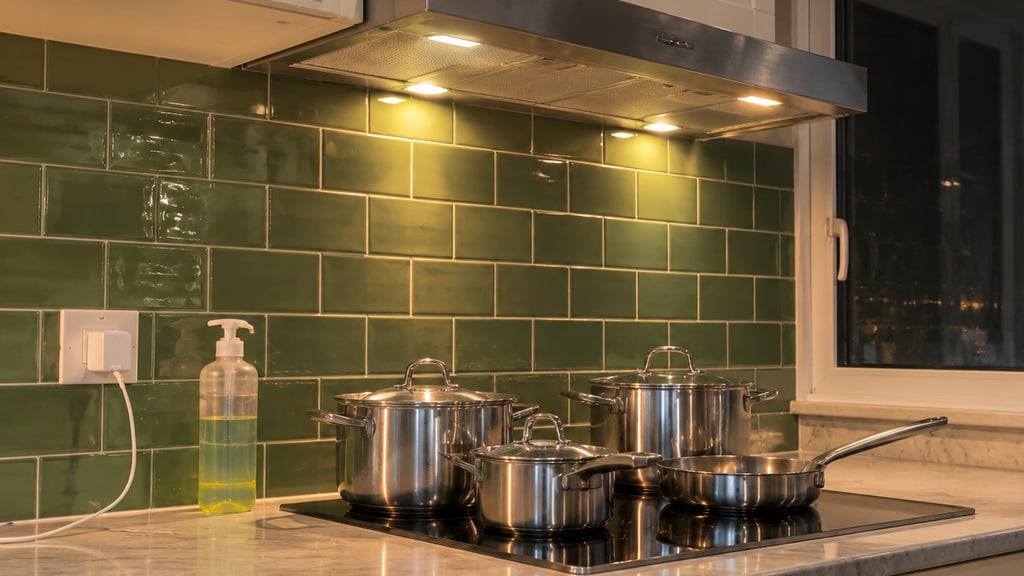
TL;DR — Most home cooks are well served by an 8-to-10-piece cookware set built around three workhorses: a 10-inch or 12-inch frying pan, a 2-to-3-quart saucepan, and a 5-to-6-quart stockpot or Dutch oven. Solo cooks and small kitchens can drop to a 5-to-7-piece set, while families who batch-cook want a 12-piece set with a large stockpot and a wide sauté pan. Piece count matters less than owning the right sizes, since a “12-piece” count is often padded with lids. Match the pieces to how you actually cook. For picks, see our best cookware sets guide.
The HomeWhisk editorial team researches kitchen equipment by analyzing manufacturer specifications, material behavior, and aggregated user reviews from major retailers and cooking communities like Reddit’s r/Cooking and r/AskCulinary. This guide focuses on sizing: which pots and pans you genuinely need and how big they should be.
Cookware sets are sold by piece count, which is a misleading way to shop. A “14-piece set” sounds generous until you realize lids, and sometimes utensils, count as pieces. What actually matters is whether the set contains the right vessels in the right sizes for the food you cook. The good news is that a surprisingly short list of sizes covers nearly everything a home kitchen does. If you want to compare complete sets while you read, start with our best cookware sets guide.
The Core Pieces Every Kitchen Needs
Before sizing, it helps to know what each vessel does, because a “set” is really a bundle of these.
- Frying pan / skillet: a shallow pan with sloped sides for eggs, searing, sautéing, and anything you flip or toss. The most-used pan in most kitchens.
- Saucepan: a deep, straight-sided pot for sauces, grains, oatmeal, blanching, and reheating. Comes with a lid.
- Sauté pan: wider and deeper than a skillet with straight sides and a lid, ideal for braising, shallow-frying, and one-pan dishes with liquid.
- Stockpot / Dutch oven: a tall, large-capacity pot for soups, stews, pasta water, and stock.
A functional kitchen has at least one of each, and the sizing question is really about how big each should be and how many of the small ones you want. Nonstick versions of the skillet and saucepan are popular for eggs and delicate cooking; our best nonstick cookware guide covers those specifically.
Frying Pan Sizes and When to Use Them
Skillets are sold by top diameter, and the number is larger than the usable cooking surface because of the sloped sides.
- Small (8 to 9 inches): perfect for one or two eggs, toasting spices, melting butter, or a single portion. The usable base is small, so it is a supporting pan, not a main one.
- Medium (10 to 11 inches): the everyday default. It cooks two to three portions, browns a couple of chicken breasts, and handles most weeknight sautéing without crowding.
- Large (12 to 13 inches): the workhorse for families and for searing. The extra surface prevents overcrowding, which is what causes food to steam instead of brown. The trade-off is weight and the fact that it can overhang a small burner, heating unevenly.
If you buy just one skillet, a 10-inch suits singles and pairs while a 12-inch suits families. Many cooks eventually own both: a 10-inch for eggs and a 12-inch for dinner.
Pot and Saucepan Sizes and What They Are Best For
Pots are measured by volume in quarts, which maps directly to how much food they hold.
- Small saucepans (1.5 to 2 quarts): for melting, single servings of grains, warming milk, or a small sauce. Handy but limited.
- Medium saucepans (3 to 4 quarts): the most useful saucepan size, good for rice for a family, pasta sauce, soups for two, and blanching vegetables.
- Large pots and Dutch ovens (5 to 7 quarts): the boil-pasta, make-stock, braise-a-roast tier. A 6-quart is the sweet spot for most households, big enough for a batch of chili or a pound of pasta without being unwieldy.
- Stockpots (8 quarts and up): for stock, big-batch soup, canning, or cooking for a crowd. Useful but occasional, so it does not need to be in your primary daily set.
A single medium saucepan and one 5-to-6-quart pot cover the large majority of home cooking. A pressure cooker or multicooker can also stand in for the large pot on stews and beans; see our best instant pot guide if you want that flexibility.
What Size Set Do You Actually Need?
Now the direct answer, matched to household and habits.
Solo cook or small kitchen (5-to-7-piece set): an 8-inch and 10-inch skillet, a 2-quart and 3-quart saucepan with lids, and a small stockpot. This covers everything one or two people cook without crowding limited storage. Adding a single quality best moka pot or kettle rounds out the drink side without bulk.
Couple or average household (8-to-10-piece set): add a 12-inch skillet and a 5-to-6-quart Dutch oven or stockpot. This is the mainstream recommendation and what most well-designed best cookware sets are built around.
Family or batch cooker (10-to-12-piece set): step up to an 8-quart stockpot, a wide sauté pan for one-pan meals, and often a second skillet so two things cook at once. The larger sizes matter more here than extra small pieces.
Remember to read the piece list, not just the count. Two lids and a set of nylon utensils can inflate a “12-piece” set that really contains four cooking vessels. Judge a set by its actual pots and pans and the range of sizes they cover. Specialty materials like a best copper cookware piece or a rugged best camping cookware set are add-ons to this core, not replacements for it.
How Pan Size Affects Cooking Performance
Sizing is not only about capacity; it changes results and safety.
Overcrowding is the most common sizing mistake. When food packs a too-small pan, it releases moisture faster than the pan can evaporate it, so the temperature drops and food steams and turns gray instead of browning. Using a pan one size up fixes limp, pale searing instantly. This is why a 12-inch skillet is worth owning even if a 10-inch is your default.
Burner match matters too. A large pan on a small burner heats unevenly, with a hot center and cool edges, while a small pan on a big burner wastes energy and can scorch the sides. Match the pan base roughly to the burner, and prefer flat, heavy-bottomed pans that spread heat well. On the safety side, an oversized full pot with a small handle is harder to control, and an overhanging pan can heat its own handle, so size the vessel to both the food and your stove.
Frequently Asked Questions
What pan sizes are most useful?
For most kitchens, two skillets cover nearly everything: a 10-inch for everyday cooking, eggs, and one-to-two portions, plus a 12-inch for family-size meals and proper searing without crowding. If you cook mostly for one, an 8-inch and a 10-inch are enough. The 12-inch matters because overcrowding a smaller pan makes food steam instead of brown, so the extra surface directly improves results whenever you cook for more than two people.
What size pots do I need?
Two pots handle the majority of home cooking: a 3-to-4-quart saucepan for rice, sauces, and small soups, and a 5-to-6-quart Dutch oven or stockpot for pasta, stews, and stock. Add an 8-quart stockpot only if you regularly cook for a crowd, can, or make large batches of soup. A small 1.5-to-2-quart saucepan is a nice extra for melting and single servings but is not essential to start.
Do I need a large 12-inch pan?
If you cook for a family or sear meat often, yes. The 12-inch skillet’s larger surface prevents the overcrowding that makes food steam and stay pale, so it browns better and cooks more food at once. If you mostly cook for one or two and storage is tight, a 10-inch is a better everyday choice and a 12-inch becomes optional. Many cooks own both and reach for the size that matches the meal.
Is a 12-inch pan too big for everyday cooking?
For a solo cook it can be, mainly because of weight and because it overhangs a standard burner, which heats it unevenly and wastes energy on small portions. For families it is ideal for daily use. If you find a 12-inch pan clumsy for a quick single serving, keep a 10-inch or 8-inch on hand for small jobs and save the 12-inch for bigger meals. The best everyday size depends on how much food you typically cook at once.
How many pieces should a cookware set have?
Count the cooking vessels, not the total pieces. A genuinely useful set has around four to six actual pots and pans: two skillets, one or two saucepans, and a large pot or Dutch ovenwith lids. Marketing counts inflate numbers by including every lid and utensil, so a “12-piece” set may contain only four vessels. An 8-to-10-piece set with the right sizes serves most households better than a higher-count set padded with extras.
Should I buy a set or individual pieces?
A set is usually cheaper per piece and guarantees matching, stackable cookware, which is why most people start with one. The downside is that sets often include sizes you rarely use. A strong middle path is to buy a quality core set for the sizes you use daily, then add individual specialty pieces over time, such as a larger stockpot, a best copper cookware pan for precise heat, or a best camping cookware set for the outdoors. Buy the set for the essentials and fill gaps individually.
The Bottom Line
The right cookware set size comes down to your household and cooking style, not the piece count on the box. For most people, an 8-to-10-piece set built around a 12-inch skillet, a 10-inch skillet, a 3-quart saucepan, and a 5-to-6-quart Dutch oven covers nearly everything, with solo cooks scaling down to 5-to-7 pieces and families scaling up to 12 with a bigger stockpot and a sauté pan. Judge any set by its actual vessels and their sizes, size pans to avoid overcrowding, and match the base to your burner. Start with a solid core, then add specialty pieces as your cooking grows. To compare complete options and materials, see our best cookware sets, best nonstick cookware, and best instant pot guides.

Umite Chef
All-in-One Family Cooking and Baking: Umite Chef 31-Piece Induction Cookware Set
This 31-piece Umite Chef set covers everyday cooking and baking with PFOA-free nonstick surfaces, induction compatibility, and included utensils and bakeware. It suits families, new homeowners, and home chefs who want one coordinated set instead of buying cookware and baking essentials separately.
Pros and Cons
Pros
- Works on gas, induction, electric, and ceramic stovetops.
- Includes cookware, a seven-piece bakeware set, utensils, trivets, and pan protectors.
- PFOA-, PFOS-, and cadmium-free nonstick coating supports lower-stick cooking and easier cleanup.
- Pre-assembled Bakelite handles are designed to stay cool and provide a secure grip.
Cons
- Handwashing is recommended, and metal utensils, abrasive cleaners, and the dishwasher should be avoided.
- The cookware set includes several pieces, but the product data does not specify total set weight.

GreenLife
Everyday Meal Prep with GreenLife 16-Piece Ceramic Nonstick Cookware Set
This GreenLife 16-piece set handles frying, simmering, steaming, sautéing, and stockpot cooking, with toxin-free ceramic nonstick as its biggest advantage. It suits new cooks, small households, and kitchen upgraders who want a coordinated, easy-clean set for non-induction stovetops.
Pros and Cons
Pros
- The 16-piece assortment covers frying, sautéing, boiling, steaming, and stockpot cooking in one coordinated set.
- The ceramic nonstick coating is free of PFAS, PFOA, lead, and cadmium.
- Dishwasher-safe construction and rivetless interiors simplify cleanup, although hand washing can better preserve the finish.
- The cookware is oven safe to 350°F and works on most conventional stovetops.
Cons
- The cookware is not compatible with induction stovetops.
- The 350°F oven limit is too low for high-temperature roasting, broiling, or many stovetop-to-oven recipes.
The Best Deals This Week*
-
All-in-One Family Cooking and Baking
$109.98
($149.99)Save $40.01 -
Everyday Meal Prep with GreenLife 16-Piece Ceramic
$79.99
($99.99)Save $20.00
*Deals are selected by our commerce team
Umite Chef All-in-One Family Cooking and Baking: Umite Chef 31-Piece Induction Cookware Set
Umite Chef
All-in-One Family Cooking and Baking: Umite Chef 31-Piece Induction Cookware Set
This 31-piece Umite Chef set covers everyday cooking and baking with PFOA-free nonstick surfaces, induction compatibility, and included utensils and bakeware. It suits families, new homeowners, and home chefs who want one coordinated set instead of buying cookware and baking essentials separately.
$109.98 at AmazonEditors' Favorite
Color: Black Size: Fully Assembled Weight: 26.19973521608 Pounds Product Group: Kitchen Binding: Kitchen
Shop NowUmite Chef Pots and Pans Set Nonstick, Umite Chef Kitchen Non Stick Induction Cookware & Bakeware Set - 31 PCS Cooking Pans Set with Frying Pans & Utensil, Sturdy & Easy to Clean & PFOA Free (Navy Blue)

Umite Chef
Pots and Pans Set Nonstick, Umite Chef Kitchen Non Stick Induction Cookware & Bakeware Set - 31 PCS Cooking Pans Set with Frying Pans & Utensil, Sturdy & Easy to Clean & PFOA Free (Navy Blue)
$149.99 at AmazonGreat Value
Color: Navy Blue Size: Extra Large Product Group: Kitchen Binding: Kitchen
Shop NowAnymark 16PCS Pots and Pans Set Non Stick Cookware (black, 16pieces)

Color: Black Size: 16pieces Product Group: Kitchen
Shop NowUmite Chef Pots and Pans Set Nonstick, Umite Chef 31-Piece Induction Cookware & Bakeware Set with Frying Pans, Saucepans, Casserole, Steamer, Baking Set & Utensils, PFAS-Free Kitchen Starter Set (Purple)

Umite Chef
Pots and Pans Set Nonstick, Umite Chef 31-Piece Induction Cookware & Bakeware Set with Frying Pans, Saucepans, Casserole, Steamer, Baking Set & Utensils, PFAS-Free Kitchen Starter Set (Purple)
$145.99 at AmazonColor: Purple Size: Extra Large Product Group: Kitchen Binding: Kitchen
Shop NowGreenLife Everyday Meal Prep with GreenLife 16-Piece Ceramic Nonstick Cookware Set
GreenLife
Everyday Meal Prep with GreenLife 16-Piece Ceramic Nonstick Cookware Set
This GreenLife 16-piece set handles frying, simmering, steaming, sautéing, and stockpot cooking, with toxin-free ceramic nonstick as its biggest advantage. It suits new cooks, small households, and kitchen upgraders who want a coordinated, easy-clean set for non-induction stovetops.
$79.99 at AmazonColor: Black Size: 16 Piece Cookware Set Dimensions: 12.99 x 21.26 x 10.24 Inches Weight: 14.7 pounds Product Group: Kitchen Binding: Kitchen
Shop Now


Write Your Review
No reviews yet. Be the first to share your experience!