

TL;DR — An enameled cookware set is cast iron (or sometimes carbon steel) coated with a baked-on glass-porcelain enamel, giving you the heat retention and searing power of bare iron with a smooth, non-reactive, easy-to-clean surface that needs no seasoning. The classic example is enameled cast iron Dutch ovens from Le Creuset and Staub, but sets also include skillets, braisers, and saucepans. Enameled pieces are great for braises, stews, soups, and baking, and the light interior lets you monitor fond. The trade-offs: weight, cost, and a coating that can chip or crack if abused. For comparing full sets, see our best cookware sets guide.
The HomeWhisk editorial team researches cookware by analyzing manufacturer specifications, materials and construction, and owner reviews from major retailers and cooking communities. This guide explains what an enameled cookware set is, how it differs from bare and nonstick cookware, and whether it fits your kitchen.
What Enameled Cookware Actually Is
Enameled cookware starts as a metal body — almost always cast iron, occasionally carbon or heavier-gauge steel — coated with a vitreous enamel: a thin layer of glass fused to the metal at very high temperature (around 1,400–1,500°F) during manufacturing.
The result is a hybrid. The iron provides excellent heat retention and even radiant heat, while the enamel surface is smooth and non-reactive. Unlike bare cast iron, you can cook tomato sauces, wine reductions, and other acidic foods without a metallic taste or the seasoning breaking down.
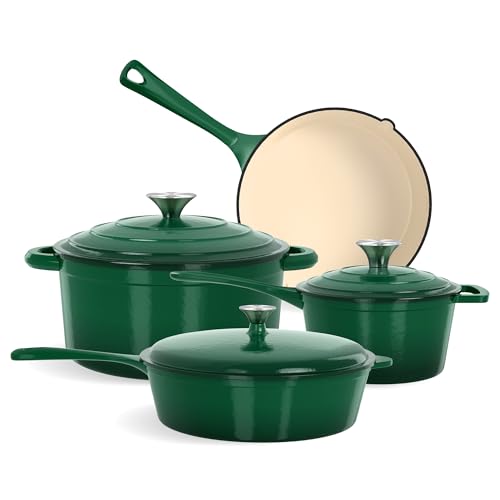
Most sets pair a bright, light-colored interior (cream, white, or sand) with a colored exterior (the famous French blues, reds, oranges, and blacks). The light interior is not just aesthetic — it lets you see browning and fond develop, which matters for braises and pan sauces.
The most common pieces are Dutch ovens, braisers, skillets, grill pans, and smaller saucepans. A heavy enameled Dutch oven is the centerpiece for most owners, which is why our best cookware sets guide treats it as a separate priority from lightweight everyday pans.
How Enameled Compares to Bare Cast Iron and Nonstick
Understanding the trade-offs helps you decide whether enamel is worth it.
Enameled vs. bare cast iron. Bare iron must be seasoned and maintained to stay rust-free and nonstick. It handles higher dry heat and is nearly indestructible. Enameled iron needs no seasoning, tolerates acidic foods, and is easier to clean, but the enamel can chip if struck, and most makers warn against high-heat dry preheating of empty pans. For searing, a best nonstick cookware set is the wrong tool — bare or enameled iron is better.
Enameled vs. nonstick. Nonstick (PTFE) pans are unbeatable for eggs, delicate fish, and easy release, but they cannot sear at high heat, wear out over a few years, and are not oven-safe at high temperatures. Enamel sears and braises beautifully, goes stovetop to oven, and lasts decades, but it is heavier and food can stick until you learn to use enough fat and preheat properly.
Enameled vs. stainless. Stainless clad pans are lighter, respond to temperature faster, and are the default for precise sautéing and pan sauces. Enamel is slower to heat and much heavier, but it holds heat for long braises and looks striking on the table.
Enameled vs. copper. Copper reacts to heat changes fastest of all and is prized for control, but traditional tin-lined copper is delicate and stainless-lined copper is costly. Enameled iron holds heat longer but is far less responsive. See our best copper cookware guide if temperature control is your priority.
What Enameled Cookware Does Best
Enameled cookware shines at low-and-slow, wet, and oven-to-table cooking.
- Braises and stews. The heavy iron holds heat steadily through hours of simmering, and heavy domed lids trap moisture. French braises, pot roasts, and short ribs are the signature use.
- Soups and stocks. Even heat across the bottom prevents scorching, and the light interior shows when a stock is reducing.
- Breads and baking. A preheated enameled Dutch oven mimics a steam-injected oven for crusty no-knead bread — trapped moisture gelatinizes the crust.
- Deep frying. The heat retention keeps oil temperature stable when food goes in.
- One-pot meals and serving. Enamel looks good enough to bring to the table, so it doubles as serveware.
Where enamel is less ideal: high-heat stir-frying (too heavy, too slow to adjust), delicate egg work, and backpacking. For outdoor and lightweight cooking, best camping cookware is the right category, not enameled iron.
What to Look for in an Enameled Cookware Set
Quality differences are real and affect both performance and longevity.
Interior enamel color. Light (cream/white) interiors are best for searing and braising because they let you read browning and fond. Dark interiors hide stains but make color harder to judge. Some brands use matte black enamel inside skillets for better searing.
Enamel quality and thickness. Premium brands (Le Creuset, Staub) apply multiple layers and finish the edges carefully, which resists chipping. Budget pieces often have thinner coatings that chip sooner, especially at the rim.
Lid fit. A heavy lid that seats tightly is essential for braising — it traps steam and prevents evaporation. A loose lid loses moisture and heat over a long cook. Staub’s lids have self-basting spikes underneath; Le Creuset’s are smooth and domed.
Knob material. Stainless knobs handle higher oven temperatures than phenolic (plastic) knobs, which typically max out around 375–400°F. If you bake bread at 450°F+, check the rating or buy a replacement stainless knob.
Handles and weight. Enameled iron is heavy — a 5.5-quart Dutch oven can weigh 10–12 pounds empty. Large loop handles you can grip with a mitt matter when the pot is full and hot.
Induction compatibility. Cast iron is magnetic, so enameled iron works on induction, gas, electric, and ceramic. Check that the base is flat for good contact on smoothtops.
The Downsides You Should Know
Enameled cookware is excellent, but the trade-offs matter before you commit.
Weight. These are the heaviest pans in most kitchens. Moving a full large Dutch oven from stove to oven is a two-handed operation. For anyone with grip or strength issues, lighter clad stainless may be more practical.
Cost. Premium sets are an investment, and a single flagship Dutch oven can cost several hundred dollars. Budget alternatives perform well for most home cooks but may chip sooner. The common “enamel cookware disadvantages” search usually points to cost and weight.
Chipping and cracking. Enamel is glass. Striking it with a metal spoon, dropping the lid, or slamming a hot pan into a cold sink can chip it, and sudden temperature shock can craze or crack the coating. Treat it more like glassware than bare iron.
Staining and cooking spray. Aerosol sprays leave a sticky residue that bakes onto enamel and is hard to remove. High heat with oils past their smoke point can leave brown discoloration inside light enamel. It is cosmetic and often cleanable, but it bothers some owners.
Not for high-heat dry preheating. Empty enameled pans should be preheated on medium, not high. For ripping-hot searing, bare cast iron or carbon steel is better.
On the health questions that come up in searches: enameled cookware is generally considered safe; the enamel is inert and non-reactive, and reputable brands test for heavy metals. Chipped interior enamel is the one case where owners typically stop using the pan for food. Compare options in best cookware sets if you want a multi-material set rather than all-enameled.
How to Care for Enameled Cookware
Good care keeps enamel looking new and extends its life.
- Preheat at medium, not high. Let the pan warm gradually with oil or food.
- Use wooden, silicone, or nylon tools. Metal utensils scratch enamel over time, especially on light interiors.
- Avoid temperature shock. Do not move a hot pan into cold water. Let it cool before washing.
- Clean gently. Dish soap, warm water, and a soft sponge handle most messes; for stuck food, soak or use a baking-soda paste. Avoid steel wool and abrasive powders.
- Most pieces are dishwasher-safe, but hand-washing is gentler. Harsh detergent dulls enamel over time.
- Store with care. Put a cloth between nested pieces so rims don’t chip.
A well-cared-for enameled Dutch oven genuinely lasts decades, which is why many owners treat it as a one-time purchase. For pressure cooking alongside enameled braising, a best instant pot handles the fast weeknight side of slow-cook recipes.
Frequently Asked Questions
What is an enameled cookware set made of?
An enameled cookware set is made of cast iron (most commonly) or sometimes carbon/steel, coated with a vitreous enamel — a thin layer of glass fused to the metal at very high temperature. The iron provides heat retention and even radiant heat, while the enamel creates a smooth, non-reactive surface that needs no seasoning and tolerates acidic foods like tomatoes and wine. Most sets include a Dutch oven plus skillets, braisers, or saucepans. Compare options in our best cookware sets guide.
Is enameled cast iron safe to cook with?
Enameled cast iron is generally considered safe. The enamel is an inert, non-reactive glass surface that does not leach into food the way unseasoned bare iron can, and reputable brands test their enamel for heavy metals including cadmium and lead. The main consideration is chipping: if the interior enamel chips, owners typically stop using that piece for food. Avoid abrasive scouring that could damage the coating.
What are the disadvantages of enameled cookware?
The main disadvantages are weight, cost, and the fragility of the coating. Enameled cast iron is among the heaviest cookware you can buy, which makes full pots hard to move, and premium sets are expensive. The enamel is essentially glass, so it can chip if dropped, struck with metal, or subjected to sudden temperature shock. It also should not be preheated dry at high heat, so it is less suited to ripping-hot searing than bare cast iron.
Can you use metal utensils on enameled cookware?
It is best to avoid metal utensils. While the enamel is hard, repeated contact with metal spoons, whisks, and spatulas can scratch the glossy surface over time, especially on light interiors where scratches show. Wooden, silicone, and heatproof nylon tools protect the coating and extend the pan’s life. Metal is particularly risky around the rims and lid edges, where enamel is most vulnerable to chipping.
How do you clean and care for enameled cookware?
Clean with warm soapy water and a soft sponge; for stuck food, soak the pan or use a baking-soda paste rather than steel wool. Avoid temperature shock by letting a hot pan cool before washing, preheat at medium rather than high on empty pans, and skip aerosol sprays that leave sticky residue. Most pieces are dishwasher-safe, but hand-washing is gentler. Store with cloth between nested pieces to prevent rim chipping.
Is enameled cookware worth the cost?
For cooks who braise, stew, bake bread, or make soups regularly, it is usually worth it because a well-made piece lasts decades and replaces several cheaper pans over its life. If you mostly do quick sautés, stir-fries, or delicate eggs, lighter stainless or nonstick may suit you better and cost less. For a broad comparison, see our best cookware sets and best nonstick cookware guides.
Does enameled cookware work on induction?
Yes. Because the core is cast iron, which is magnetic, enameled cookware works on induction as well as gas, electric radiant, and ceramic. For best performance on smoothtops, check that the base is flat and clean for full contact. Heavy enameled iron performs well on induction because the field heats the iron directly and the mass holds that heat steadily through long cooks.
The Bottom Line
An enameled cookware set is cast iron (or occasionally steel) coated with a baked-on glass enamel, combining iron’s heat retention with a smooth, non-reactive, easy-to-clean surface that needs no seasoning. It is outstanding for braises, stews, soups, bread baking, and oven-to-table serving, and a good enameled Dutch oven can last decades. The trade-offs are weight, cost, and a coating that chips if abused or shocked by sudden temperature changes. Buy it if you cook low-and-slow or bake; choose lighter nonstick or stainless if your cooking is fast and delicate. To compare specific sets, start with our best cookware sets guide, and consider best copper cookware for responsiveness or best instant pot for the weeknight speed side of slow-cook recipes.
The Best Deals This Week*
-
QuliMetal 5-Piece Navy Blue Enameled Cast Iron
$159.79
($169.99)Save $10.20 -
Kitchen Academy 7Pcs Enameled Cast Iron Cookware
$159.99
($199.99)Save $40.00 -
QuliMetal 5-Piece Navy Blue Enameled Cast Iron
$169.19
($179.99)Save $10.80 -
QuliMetal 5-Piece Red Enameled Cast Iron Cookware
$169.19
($179.99)Save $10.80 -
Nonstick Enameled Cast Iron Cookware Set
$169.19
($179.99)Save $10.80
*Deals are selected by our commerce team
QuliMetal 5-Piece Navy Blue Enameled Cast Iron Cookware Set

Editors' Favorite
Color: Navy Blue B Size: Navy Blue 5PC-B Product Group: Kitchen Binding: Kitchen
Shop NowKitchen Academy 7Pcs Enameled Cast Iron Cookware Sets, Emerd
Great Value
Color: Emerd Size: 7 Pcs - Emerd Product Group: Kitchen Binding: Unknown Binding
Shop NowQuliMetal 5-Piece Navy Blue Enameled Cast Iron Cookware Set

Color: Navy Blue A Size: Navy Blue 5PC-A Dimensions: 13.86 x 8.9 x 25.12 Inches Product Group: Kitchen Binding: Kitchen
Shop NowQuliMetal 5-Piece Red Enameled Cast Iron Cookware Set

Color: Red D Size: Red 5PC-F Dimensions: 12.9133858136 x 12.9133858136 x 19.5669291139 inches Product Group: Kitchen Binding: Kitchen
Shop NowQuliMetal Nonstick Enameled Cast Iron Cookware Set - 8 Piece Pots and Pans with Lid, Frying Pan, Skillet, Dutch Oven Set for All Stovetops, Ideal for Sourdough Bread Baking, Cream White

QuliMetal
Nonstick Enameled Cast Iron Cookware Set - 8 Piece Pots and Pans with Lid, Frying Pan, Skillet, Dutch Oven Set for All Stovetops, Ideal for Sourdough Bread Baking, Cream White
$169.19 at AmazonColor: White F Size: 8-Piece-Cream White Weight: 17.168 Pounds Product Group: Kitchen Binding: Kitchen
Shop Now



Write Your Review
No reviews yet. Be the first to share your experience!