

TL;DR — A frying pan (also called a frypan or, in American kitchens, a skillet) is a flat-bottomed cooking vessel with low, outward-sloping sides and a long handle, built for frying, searing, and sautéing over direct stovetop heat. The flared walls let steam escape so food browns instead of stewing, and let you flip or slide food out easily. Frying pans are made from stainless steel, cast iron, carbon steel, aluminum, nonstick-coated metal, or copper — each with real trade-offs in heat response, durability, weight, and stickiness. For picks by material, see our best nonstick cookware and best cookware sets guides.
The HomeWhisk editorial team researches cookware by studying manufacturer specifications, metallurgy, and aggregated owner reviews from retailers and cooking communities like Reddit’s r/Cooking and r/castiron. “What is a frying pan” sounds like a beginner question, but the answer clears up a surprising amount of confusion — why a frying pan differs from a sauté pan, why the material changes how you cook, and why one 10-inch pan handles most of what a home kitchen needs. Here is the full picture.
What a Frying Pan Actually Is
A frying pan is defined by its shape more than anything else. It has a wide, flat cooking surface, low sides that flare outward (typically 1.5 to 2 inches tall), and usually one long handle. That geometry is not decorative — it is the whole point.
The sloped, low walls do two jobs. First, they give moisture an easy escape route. When you cook meat or vegetables, they release water; in a pan with tall straight sides, that vapor lingers and steams the food, keeping it pale and soft. The open, flared shape of a frying pan lets steam roll off the edge so food develops a browned, flavorful crust instead. Second, the slope lets you slide a spatula flat against the wall and flip an egg or a pancake in one motion, or tip the pan to pour food straight onto a plate.
The wide base maximizes contact with the burner, so a large surface area is exposed to heat for fast frying. Diameter is measured straight across the top rim, which is why a “12-inch” pan has a smaller flat cooking floor than the number implies.
Frying Pan vs Skillet, Sauté Pan, and Wok
One of the most common questions is what a frying pan is called and how it compares to similar pans. The names overlap, but the pans are genuinely different.
- Frying pan vs skillet: In practice these are the same thing. “Skillet” is the more common American term, often attached to cast iron (“cast iron skillet”), while “frying pan” is standard in British and Commonwealth English. There is no strict engineering line between them.
- Frying pan vs sauté pan: This is a real distinction. A sauté pan has tall, straight, vertical sides and usually a lid and a helper handle. The vertical walls hold far more liquid, which makes a sauté pan better for braising, shallow-poaching, deglazing into a sauce, or anything with volume. A frying pan’s flared walls hold less but brown better and are easier to flip in.
- Frying pan vs wok: A wok has high, curved sides and a small hot spot at the bottom, designed for fast, high-heat stir-frying where you constantly toss food up the sides. A flat frying pan can approximate a stir-fry but never matches a wok’s motion.
If you want liquid capacity and a lid, reach for a sauté pan; for browning, eggs, and everyday frying, the frying pan wins.
What a Frying Pan Is Made Of
Material is where frying pans diverge the most, because the metal decides how the pan heats, how much food sticks, and how long it lasts.
- Stainless steel (usually clad with an aluminum or copper core between steel layers) is durable, non-reactive with acidic food, dishwasher- and oven-safe, and excellent for building fond — the browned bits that make pan sauces. Its drawback is that food sticks more readily than on nonstick unless you preheat properly and use enough fat.
- Cast iron retains heat exceptionally well, making it ideal for high-heat searing and holding temperature when cold food hits the pan. It must be seasoned (baked-on layers of polymerized oil) to stay rust-free and release food, it reacts with very acidic dishes, and it is heavy.
- Carbon steel behaves like a lighter, faster-heating cousin of cast iron. It seasons the same way, is a restaurant standard, and balances searing power with maneuverability.
- Aluminum conducts heat beautifully and is cheap and light, but bare aluminum is reactive and warps easily; hard-anodized or clad versions solve most of that.
- Nonstick (a PTFE/Teflon or ceramic coating over aluminum) releases food with almost no fat and cleans up instantly, which is why it is the go-to for eggs and delicate fish. The coating wears out over years, tolerates only moderate heat (PTFE degrades above roughly 500°F), and should not meet metal utensils. Our best nonstick cookware guide covers durable options.
- Copper offers the fastest, most responsive heat control of any material and is prized for precision cooking, but it is expensive, needs a tin or stainless lining, and demands upkeep. See our best copper cookware guide if that appeals.
What You Actually Use a Frying Pan For
A frying pan is the most-reached-for pan in most kitchens because its jobs are the everyday ones:
- Frying eggs, pancakes, and French toast, where a nonstick or well-seasoned surface shines.
- Searing steaks, chops, and chicken, where cast iron, carbon steel, or clad stainless build a deep crust.
- Sautéing vegetables, onions, and garlic over medium-high heat, tossing them in the flared walls.
- Shallow frying cutlets, fritters, and hash in a thin layer of oil.
- Building pan sauces, by deglazing the browned fond left after searing.
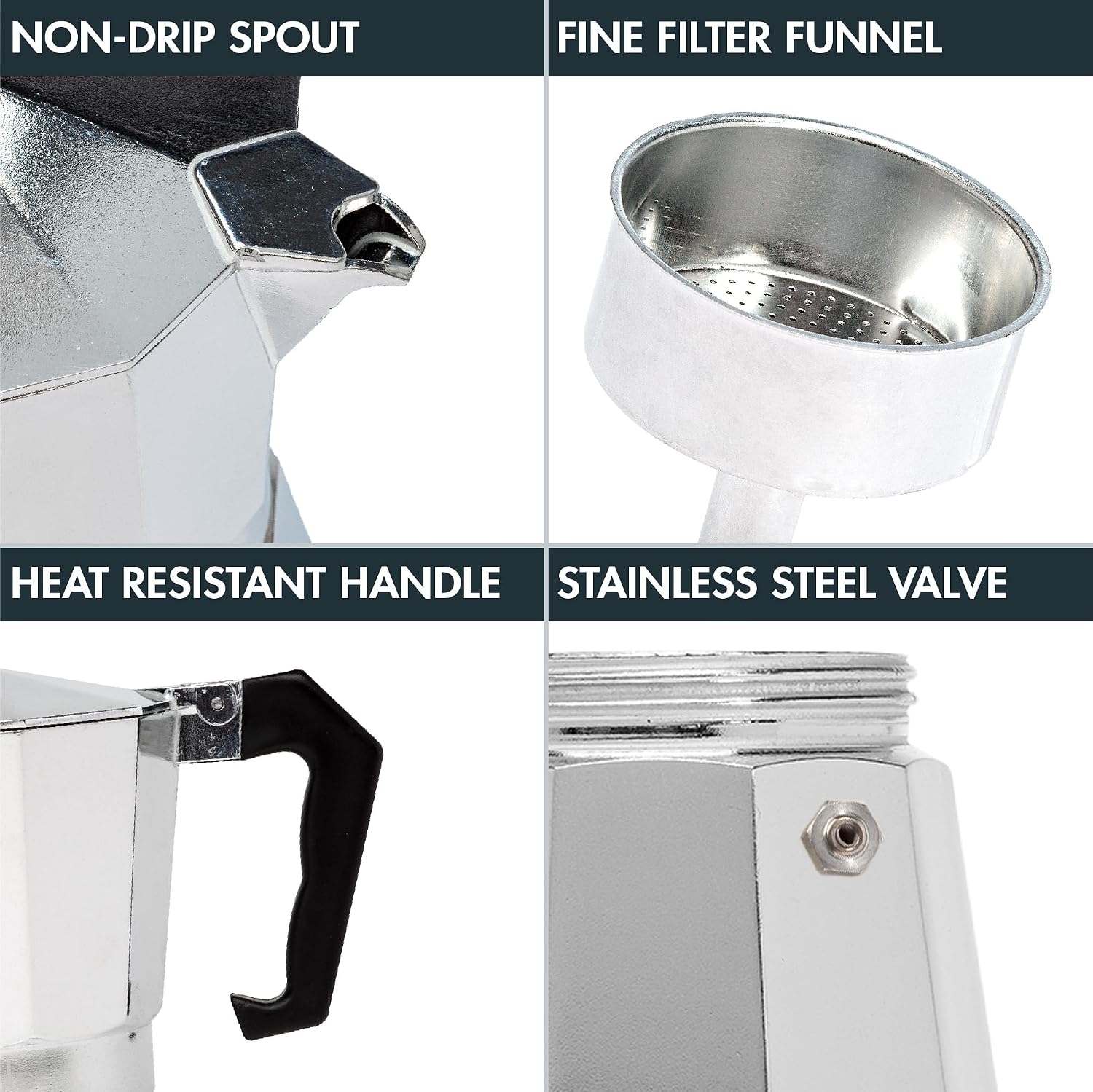
Because a single 10- or 12-inch pan covers so many of these, it is often the first serious piece of cookware people buy. A frying pan is only one piece of a full kitchen, though — a multicooker like an best instant pot handles hands-off stews and beans, and a stovetop best moka pot makes strong espresso-style coffee that a frying pan never will.
Sizes, Lids, and Choosing One
Frying pans commonly come in 8-inch, 10-inch, and 12-inch diameters. An 8-inch is a personal egg-and-omelet pan; a 10-inch is the versatile everyday size for one or two servings; a 12-inch handles a full meal, multiple chicken breasts, or a big vegetable sauté. Many cooks own a small nonstick for eggs and a larger stainless or cast iron for searing.
Some frying pans ship with a lid, which is genuinely useful — it lets you trap heat to melt cheese, gently finish thick cuts, or briefly steam vegetables, even though a frying pan is not primarily a lidded pan. If you are outfitting a whole kitchen at once, a matched multi-piece set is usually cheaper per pan than buying individually; see our best cookware sets guide. For travel, RV, or backpacking, lightweight nesting frying pans exist in dedicated ranges — our best camping cookware guide covers those.
Frying Pan Relatives: Electric, Grill, and Specialty Pans
Several pans are variations on the frying-pan theme:
- Electric frying pans (electric skillets) have a self-contained heating element and a thermostat in the base, so they cook without a stove — handy in dorms, offices, or for keeping food warm at the table.
- Grill pans are frying pans with raised ridges that sear grill-style marks and let fat drain away from the food.
- Sauteuse and everyday pans blur the line between a frying pan and a sauté pan, with gently curved sides that split the difference.
- Nonstick vs uncoated versions of the same shape simply change the surface, not the pan’s identity.
All of these share the frying pan’s core purpose: a wide, open surface for cooking food in a thin layer of fat over direct heat.
Frequently Asked Questions
What is a frying pan used for in cooking?
A frying pan is used for cooking food in a thin layer of fat over direct stovetop heat — frying eggs and pancakes, searing meat and fish, sautéing vegetables, shallow-frying cutlets, browning, and building pan sauces from the fond left behind. Its low, flared sides let steam escape so food browns rather than stews, and let you flip or slide food out easily. Because it handles so many everyday tasks, it is usually the most frequently used pan in a home kitchen.
What is the difference between a frying pan and a pan?
“Pan” is a general term for any shallow open cooking vessel, while a frying pan is a specific type with low, sloping sides and a long handle made for frying and searing. Other pans include the sauté pan (tall straight sides and a lid for liquids), the saucepan (deep, for simmering and sauces), and the stockpot (very deep, for soups). So every frying pan is a pan, but not every pan is a frying pan.
What is a frying pan called in other places?
It is called a frying pan or frypan in British, Australian, and most Commonwealth English, and a skillet in much of the United States, where “skillet” often implies cast iron. All three words describe the same shallow, flared, long-handled pan. Regional cooks may also say “fry pan” as two words. The differences are purely linguistic, not structural.
What is the best material for a frying pan?
There is no single best material — it depends on the job. Nonstick is best for eggs and delicate foods and easy cleanup; cast iron and carbon steel are best for high-heat searing and heat retention; clad stainless steel is the most versatile all-rounder and the best for pan sauces; and copper offers the most precise heat control at a premium price. Many kitchens keep at least one nonstick pan and one stainless or cast iron pan to cover both extremes.
Can you put a frying pan in the oven?
It depends on the material and handle. Cast iron, carbon steel, and fully clad stainless steel pans with metal handles are typically oven-safe to high temperatures, which is why searing on the stovetop and finishing in the oven is common. Nonstick pans are limited by their coating and any plastic handle parts, so check the manufacturer’s rating — many top out around 400 to 500°F. Pans with silicone or plastic handles should stay out of a hot oven unless explicitly rated for it.
The Bottom Line
A frying pan is the flat-bottomed, low-sided, long-handled workhorse of the stovetop, purpose-built for frying, searing, and sautéing where browning matters. Its flared walls set it apart from a sauté pan’s straight sides, and its material — stainless, cast iron, carbon steel, aluminum, nonstick, or copper — decides how it cooks and lasts. For most home cooks, a nonstick pan for eggs plus a stainless or cast iron pan for searing covers nearly everything, and a 10- or 12-inch size does the most work. Choose the material for the cooking you actually do, and one good frying pan will earn its place daily. For picks, see our best nonstick cookware, best cookware sets, and best copper cookware guides.

CAROTE
12-Inch Nonstick Granite Frying Pan for Eggs and Omelets - CAROTE Induction Compatible Skillet
This 12-inch granite-coated nonstick skillet heats evenly on all cooktops including induction and requires minimal oil for eggs and omelets. Buy it if you want a PFOA-free pan that cleans with a quick wipe and reduces smoke during cooking.
Pros and Cons
Pros
- Heats evenly across the 12-inch surface, preventing burnt edges when cooking larger portions.
- Nonstick coating releases food cleanly without scraping or soaking afterward.
- Works on all stove types including induction, making it compatible with most kitchens.
Cons
- Zero customer reviews available yet, so long-term durability and nonstick performance are unproven.
- Granite coating may wear faster than ceramic or hard-anodized finishes with metal utensil use.
CAROTE
8-Inch Nonstick Granite Frying Pan for Eggs and Omelets, PFOA Free, Induction Compatible
This 8-inch granite nonstick skillet uses minimal oil for eggs and omelets, cleans with a quick wipe, and works on all cooktops including induction. Best for anyone cooking small portions who wants fast cleanup without scrubbing.
Pros and Cons
Pros
- Truly nonstick surface releases eggs and delicate foods without sticking or tearing.
- Works on induction cooktops, which many budget nonstick pans skip.
- Lightweight and easy to maneuver when flipping or transferring food.
Cons
- Small 8-inch size limits you to one or two servings per cook.
- No reviews available yet to confirm long-term durability of the nonstick coating.
The Best Deals This Week*
-
12-Inch Nonstick Granite Frying Pan for Eggs
$25.99
($28.99)Save $3.00 -
CAROTE 8-Inch Nonstick Granite Frying Pan for Eggs
$14.99
($21.99)Save $7.00 -
SENSARTE Ceramic Nonstick Frying Pan Skillet
$43.99
($59.99)Save $16.00 -
CAROTE 8 Inch Non Stick Frying Pan
$17.99
($22.99)Save $5.00 -
CAROTE Non Stick Frying Pan
$32.99
($37.99)Save $5.00
*Deals are selected by our commerce team
CAROTE 12-Inch Nonstick Granite Frying Pan for Eggs and Omelets - CAROTE Induction Compatible Skillet
CAROTE
12-Inch Nonstick Granite Frying Pan for Eggs and Omelets - CAROTE Induction Compatible Skillet
This 12-inch granite-coated nonstick skillet heats evenly on all cooktops including induction and requires minimal oil for eggs and omelets. Buy it if you want a PFOA-free pan that cleans with a quick wipe and reduces smoke during cooking.
$25.99 at AmazonEditors' Favorite
Color: Black Size: 12" Dimensions: 1 x 1 x 1 inches Product Group: Kitchen
Shop NowCAROTE 8-Inch Nonstick Granite Frying Pan for Eggs and Omelets, PFOA Free, Induction Compatible
CAROTE
8-Inch Nonstick Granite Frying Pan for Eggs and Omelets, PFOA Free, Induction Compatible
This 8-inch granite nonstick skillet uses minimal oil for eggs and omelets, cleans with a quick wipe, and works on all cooktops including induction. Best for anyone cooking small portions who wants fast cleanup without scrubbing.
$14.99 at AmazonGreat Value
Color: Black Size: 8" Dimensions: 16 x 8 x 4 inches Weight: 1.3007273458 pounds Product Group: Kitchen Binding: Kitchen
Shop NowSENSARTE Ceramic Nonstick Frying Pan Skillet with Lid, 12 Inch Large Deep Frying Pan, 5 QT Saute Pan, Induction Pan, Healthy Non Toxic Cooking Pan with Helper Handle, PFOA PFAS PTFE Free

SENSARTE
Ceramic Nonstick Frying Pan Skillet with Lid, 12 Inch Large Deep Frying Pan, 5 QT Saute Pan, Induction Pan, Healthy Non Toxic Cooking Pan with Helper Handle, PFOA PFAS PTFE Free
$43.99 at AmazonColor: Ceramic White Size: 5QT / 12IN Product Group: Kitchen Binding: Kitchen
Shop NowCAROTE 8 Inch Non Stick Frying Pan, Cream White Granite Skillet

Color: Cream White Size: 8" Dimensions: 6.7 x 8 x 1.8 inches Weight: 1.653466965 Pounds Product Group: Kitchen
Shop NowCAROTE Non Stick Frying Pan, 12 Inch Classic Granite Skillet with Glass Lid

Color: Black Size: 12" Dimensions: 7.87401574 x 3.149606296 x 11.023622036 inches Weight: 4.40924524 Pounds Product Group: Kitchen Binding: Kitchen
Shop Now



Write Your Review
No reviews yet. Be the first to share your experience!