

TL;DR — A frying pan (also called a skillet) is a shallow, flat-bottomed pan with low, flared sides and a long handle, built to cook food quickly over direct heat with maximum surface contact. Its low walls let moisture escape and give you room to flip and toss, which makes it the go-to for searing, sautéing, frying, scrambling eggs, making pan sauces, and — with an oven-safe build — finishing dishes under heat. The material (stainless steel, cast iron, carbon steel, or nonstick) determines what it does best. For full cookware sets that include one, see our best cookware sets guide.
The HomeWhisk editorial team researches kitchen equipment by analyzing manufacturer specifications, material behavior, heat performance, and aggregated user reviews from major retailers and communities like Reddit r/cookware and r/castiron. “What is a frying pan used for” sounds basic, but the honest answer is that a frying pan is the most-used pan in most kitchens precisely because its simple shape suits so many techniques. Below we cover what defines a frying pan, the specific jobs it does, how the material changes its strengths, and how it differs from other pans.
What a Frying Pan Is (and Its Defining Shape)
A frying pan is defined by its geometry, and that geometry dictates its uses:
- A flat, wide bottom that maximizes contact with the burner, so more food touches the hot surface at once — essential for browning.
- Low, sloped (flared) sides, usually 2–3 inches high, that let steam escape quickly and let you slide a spatula in at a shallow angle to flip food.
- A single long handle for lifting, tossing, and maneuvering.
- No lid in the classic design (though many come with one), reflecting its purpose as an open, high-evaporation cooking surface.
Those low, flared walls are the key difference from a saucepan or sauté pan. They promote evaporation — moisture leaves fast, so food browns instead of steams — and they make flipping and tossing easy. That single design choice is why the frying pan is the default tool for high-heat, dry-ish cooking. A good one anchors any best cookware sets purchase.
The Core Jobs: Searing, Sautéing, and Frying
Three techniques define the frying pan’s daily work, and each relies on that flat, hot, open surface.
Searing means cooking the surface of meat or fish over high heat to build a browned crust through the Maillard reaction — the chemical browning of proteins and sugars that creates deep, savory flavor. The wide flat bottom gives full contact, and the open sides let surface moisture evaporate so the food browns instead of steaming. Steaks, chops, chicken, and fish fillets all start in a frying pan.
Sautéing (from the French for “to jump”) means cooking small or sliced pieces quickly over medium-high heat while stirring or tossing. The low walls make tossing possible and let moisture escape so vegetables brown rather than sweat. Onions, mushrooms, greens, and diced vegetables are classic sauté jobs.
Frying — both shallow frying and pan-frying — uses a layer of hot oil to crisp and cook food: fried eggs, breaded cutlets, potatoes, pancakes. The pan’s wide surface holds several pieces at once and its shape makes them easy to turn.
More Uses: Sauces, Eggs, and Oven Finishing
Beyond the big three, a frying pan quietly handles several other jobs.
Pan sauces are made by deglazing — after searing meat, browned bits (called fond) stick to the pan; adding wine, stock, or water dissolves that flavor into a quick sauce. Stainless steel and other uncoated pans excel here because they develop the most fond; nonstick develops little.
Eggs in every form — scrambled, fried, omelets, frittatas — are a frying-pan staple, and a nonstick or well-seasoned cast-iron/carbon-steel pan makes them release cleanly. Our best nonstick cookware guide covers pans built specifically for delicate, low-fat egg cooking.
Oven finishing turns the frying pan into a stovetop-to-oven tool: sear a thick steak or chicken on the burner, then slide the whole pan into the oven to cook through. This requires an oven-safe pan — cast iron, carbon steel, or all-metal stainless — not one with a plastic handle or a low-heat nonstick coating. A cast-iron skillet can even bake cornbread, a Dutch baby, or a deep-dish pizza.
How the Material Changes What It’s Good For
The word “frying pan” says nothing about material, but material determines performance. The four common types each have a clear lane:
- Stainless steel — durable, non-reactive, oven- and dishwasher-safe, and the best for building fond and pan sauces. It doesn’t brown food quite as evenly unless it has an aluminum or copper core, and food sticks more than on other types until you master heat control. The backbone of most best cookware sets.
- Cast iron — superb heat retention, so it holds temperature when food hits it, making it excellent for searing and oven work. Heavy, slow to heat, needs seasoning and careful drying to avoid rust, and reacts with very acidic foods.
- Carbon steel — the professional favorite that splits the difference: lighter and more responsive than cast iron, develops a natural nonstick seasoning, and takes high heat, but like cast iron it needs seasoning and must be kept dry.
- Nonstick (PTFE or ceramic) — the easiest release and cleanup, ideal for eggs and low-fat cooking, but the coating wears out, can’t take very high heat or metal utensils, and doesn’t sear or build fond well.
For fast, even conductivity some cooks prize copper, though it needs a lining and more upkeep; see our best copper cookware guide. For the outdoors, lightweight and rugged builds matter more — our best camping cookware guide covers pans made to travel.
Frying Pan vs. Skillet vs. Sauté Pan
These terms cause endless confusion, so here’s the plain version.
“Frying pan” and “skillet” are the same thing — two names for the shallow, flared-side pan described here. “Skillet” is more common in American usage and often (but not always) implies cast iron, while “frying pan” is the more general term. There is no meaningful design difference.
A sauté pan is different despite the name. It has straight, vertical sides and a larger flat bottom, usually with a lid and often a helper handle. The tall straight walls hold more liquid and prevent splashing, so despite being named for sautéing, it’s actually better for braising, shallow poaching, and dishes with sauce — jobs where you want to contain liquid. Use a frying pan when you want evaporation and easy tossing; use a sauté pan when you want capacity and containment.
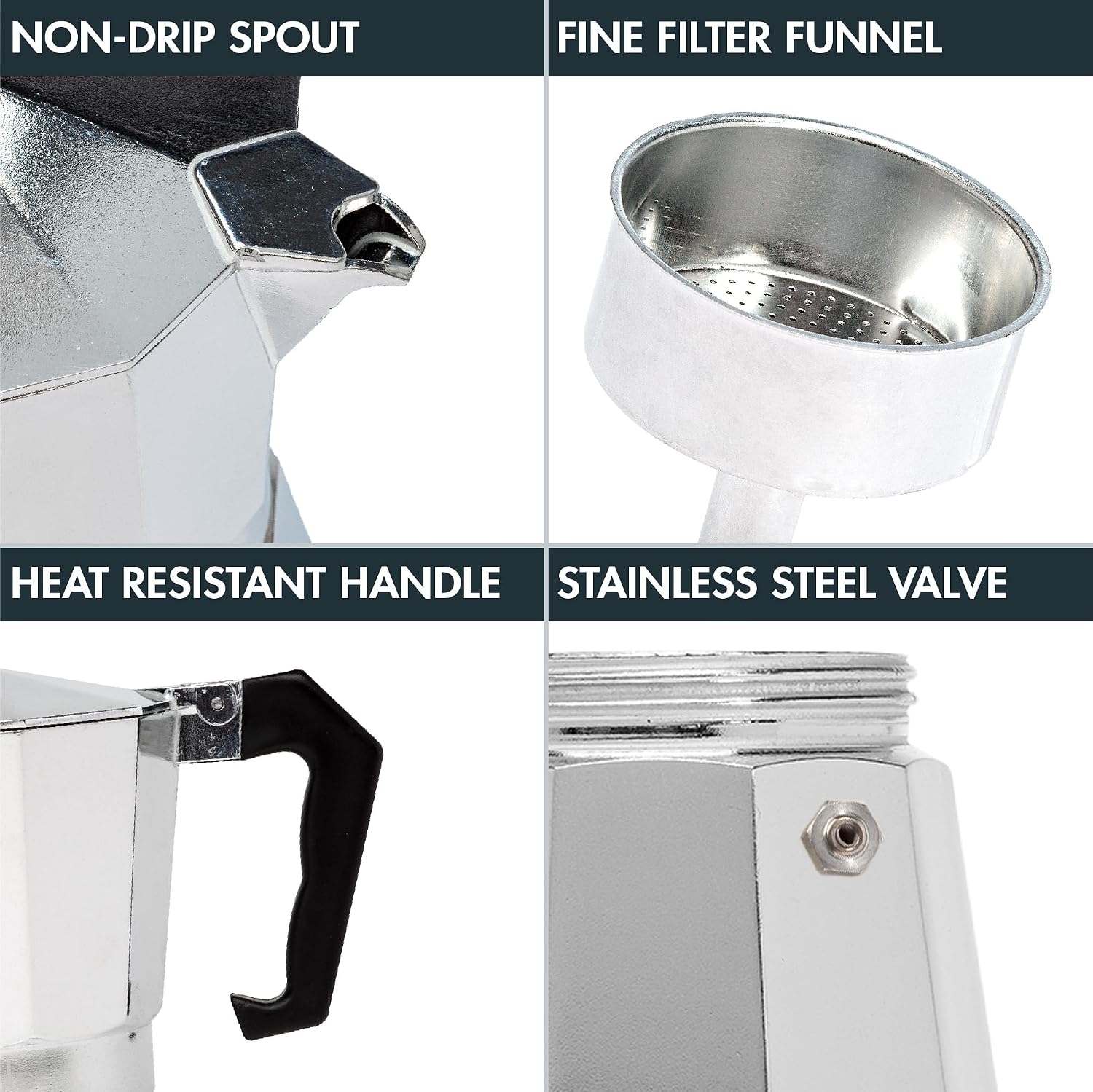
Other pans serve narrower roles: a saucepan for boiling and simmering liquids, a best moka pot for stovetop espresso, and a multicooker like an best instant pot for pressure cooking and braising. The frying pan remains the everyday workhorse for anything you want to brown.
Frequently Asked Questions
What is the difference between a frying pan and a skillet?
There is essentially none — “frying pan” and “skillet” refer to the same pan: shallow, flat-bottomed, with low flared sides and a long handle. The difference is mostly regional and connotative. “Skillet” is more common in American English and is often associated with cast iron, while “frying pan” is the broader, more general term used for pans of any material. If a recipe calls for one, you can use the other; they describe identical cookware.
Is a frying pan made of the same material as other cookware?
Frying pans come in the same core materials as other cookware: stainless steel, cast iron, carbon steel, and nonstick-coated aluminum, plus copper for high-end pans. The word “frying pan” describes the shape, not the material. Each material behaves differently — stainless builds fond for sauces, cast iron retains heat for searing, carbon steel is a lighter seasoned option, and nonstick releases delicate foods easily. Choose the material based on what you cook most, not the pan’s name.
Can a frying pan go in the oven?
Only if it’s built for it. Cast iron, carbon steel, and fully metal stainless-steel pans are oven-safe, often to 500°F or more, which lets you sear on the stovetop and finish in the oven. Pans with plastic or wooden handles, or many nonstick coatings, are limited to lower temperatures or not oven-safe at all — check the manufacturer’s rating. Oven-safe frying pans expand your options greatly, from finishing thick steaks to baking cornbread or a frittata.
What can you cook in a frying pan?
A huge range: seared steaks, chops, chicken, and fish; sautéed vegetables; fried and scrambled eggs and omelets; pancakes and grilled sandwiches; breaded cutlets and shallow-fried potatoes; and pan sauces made by deglazing the browned bits. With an oven-safe pan you can also finish dishes in the oven or bake cornbread and frittatas. Its flat, hot, open surface makes it ideal for anything you want to brown or crisp quickly, which is why it’s the most-used pan in most kitchens.
Why does food stick to my frying pan?
Usually a heat-and-timing issue rather than a bad pan. On stainless steel and cast iron, food sticks when the pan is too cool or the food is added too soon — proteins bond to the metal, then release naturally once a crust forms, so letting food sear undisturbed helps. Not using enough fat, overcrowding (which drops the temperature and causes steaming), and a dirty or unseasoned surface also cause sticking. Preheating properly, using adequate oil, and giving food time to release solve most cases.
Do I need more than one frying pan?
Many cooks are well served by two: a stainless-steel or cast-iron pan for searing, browning, and pan sauces, and a nonstick pan for eggs and delicate, low-fat foods. That combination covers nearly every technique, since no single material does everything well. If you buy a full best cookware sets collection, it typically includes at least one frying pan; adding a dedicated nonstick or a cast-iron skillet rounds out the range for high-heat and easy-release cooking respectively.
The Bottom Line
A frying pan — the same thing as a skillet — is the shallow, flat-bottomed, flared-side pan that most of your cooking runs through, because its shape maximizes browning surface and evaporation while making it easy to flip and toss. It sears, sautés, fries, scrambles eggs, builds pan sauces, and, when oven-safe, finishes dishes under heat. What it does best depends on the material: stainless for sauces, cast iron for searing and heat retention, carbon steel as a lighter seasoned option, and nonstick for eggs and easy cleanup. Most kitchens want one uncoated pan and one nonstick. For full sets and specialty options, see our best cookware sets, best nonstick cookware, and best copper cookware guides.

CAROTE
8-Inch Nonstick Granite Frying Pan for Eggs and Omelets, PFOA Free, Induction Compatible
This 8-inch granite nonstick skillet uses minimal oil for eggs and omelets, cleans with a quick wipe, and works on all cooktops including induction. Best for anyone cooking small portions who wants fast cleanup without scrubbing.
Pros and Cons
Pros
- Truly nonstick surface releases eggs and delicate foods without sticking or tearing.
- Works on induction cooktops, which many budget nonstick pans skip.
- Lightweight and easy to maneuver when flipping or transferring food.
Cons
- Small 8-inch size limits you to one or two servings per cook.
- No reviews available yet to confirm long-term durability of the nonstick coating.
CAROTE
12-Inch Nonstick Granite Frying Pan for Eggs and Omelets - CAROTE Induction Compatible Skillet
This 12-inch granite-coated nonstick skillet heats evenly on all cooktops including induction and requires minimal oil for eggs and omelets. Buy it if you want a PFOA-free pan that cleans with a quick wipe and reduces smoke during cooking.
Pros and Cons
Pros
- Heats evenly across the 12-inch surface, preventing burnt edges when cooking larger portions.
- Nonstick coating releases food cleanly without scraping or soaking afterward.
- Works on all stove types including induction, making it compatible with most kitchens.
Cons
- Zero customer reviews available yet, so long-term durability and nonstick performance are unproven.
- Granite coating may wear faster than ceramic or hard-anodized finishes with metal utensil use.

Tramontina
Professional 10-Inch Non-Stick Frying Pan for Fast, Even Cooking | Tramontina Heavy-Gauge Aluminum Skillet
This heavy-gauge aluminum skillet heats quickly and evenly with a reinforced non-stick surface that releases food without oil and cleans up in seconds. Buy it if you want restaurant-grade durability and performance without induction compatibility, backed by a lifetime warranty.
Pros and Cons
Pros
- Heavy-gauge aluminum heats faster and more evenly than thin pans, reducing cooking time and preventing burned spots.
- Reinforced non-stick coating holds up to daily use better than standard non-stick finishes, extending the pan's usable life.
- Removable handle sleeve and 400°F oven rating add versatility for finishing dishes under the broiler or baking frittatas.
Cons
- Not compatible with induction cooktops, limiting use in kitchens with induction ranges.
- 10-inch size may be too small for cooking large batches or family-sized portions in one go.
SENSARTE
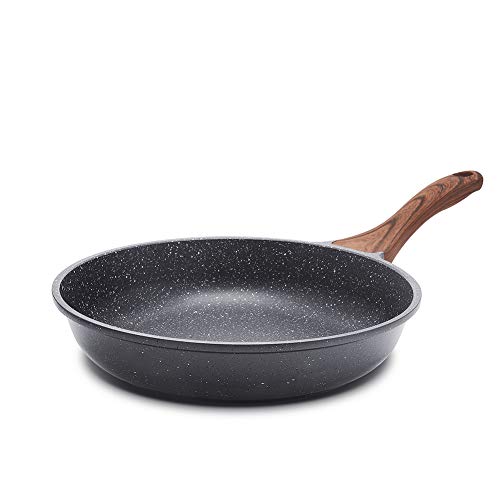
8-Inch Nonstick Omelette & Frying Pan with Swiss Granite Coating - SENSARTE PFOA-Free Skillet
This SENSARTE 8-inch skillet cooks eggs and omelettes on a Swiss ILAG nonstick granite coating that wipes clean with a paper towel and needs little to no oil. Buy it if you cook for one or two and want a lightweight, induction-ready pan that stays easy to clean and PFOA-free.
Pros and Cons
Pros
- PFOA-free Swiss coating gives reliable food release with little added fat.
- Compatible with all stovetops including induction thanks to the magnetic stainless base.
- Cool-touch bakelite handle and light cast aluminum body make it easy to maneuver.
- Cleanup is fast whether you wipe it out or use the dishwasher.
Cons
- The handle is oven safe only to 302°F, limiting oven-to-table finishing.
- At 8 inches it suits one or two servings, not larger family meals.
The Best Deals This Week*
-
CAROTE 8-Inch Nonstick Granite Frying Pan for Eggs
$14.99
($21.99)Save $7.00 -
12-Inch Nonstick Granite Frying Pan for Eggs
$25.99
($28.99)Save $3.00 -
CAROTE 8 Inch Non Stick Frying Pan
$17.99
($22.99)Save $5.00 -
8-Inch Nonstick Omelette & Frying Pan with Swiss
$19.89
($21.99)Save $2.10
*Deals are selected by our commerce team
CAROTE 8-Inch Nonstick Granite Frying Pan for Eggs and Omelets, PFOA Free, Induction Compatible
CAROTE
8-Inch Nonstick Granite Frying Pan for Eggs and Omelets, PFOA Free, Induction Compatible
This 8-inch granite nonstick skillet uses minimal oil for eggs and omelets, cleans with a quick wipe, and works on all cooktops including induction. Best for anyone cooking small portions who wants fast cleanup without scrubbing.
$14.99 at AmazonEditors' Favorite
Color: Black Size: 8" Dimensions: 16 x 8 x 4 inches Weight: 1.3007273458 pounds Product Group: Kitchen Binding: Kitchen
Shop NowCAROTE 12-Inch Nonstick Granite Frying Pan for Eggs and Omelets - CAROTE Induction Compatible Skillet
CAROTE
12-Inch Nonstick Granite Frying Pan for Eggs and Omelets - CAROTE Induction Compatible Skillet
This 12-inch granite-coated nonstick skillet heats evenly on all cooktops including induction and requires minimal oil for eggs and omelets. Buy it if you want a PFOA-free pan that cleans with a quick wipe and reduces smoke during cooking.
$25.99 at AmazonGreat Value
Color: Black Size: 12" Dimensions: 1 x 1 x 1 inches Product Group: Kitchen
Shop NowTramontina Professional 10-Inch Non-Stick Frying Pan for Fast, Even Cooking | Tramontina Heavy-Gauge Aluminum Skillet
Tramontina
Professional 10-Inch Non-Stick Frying Pan for Fast, Even Cooking | Tramontina Heavy-Gauge Aluminum Skillet
This heavy-gauge aluminum skillet heats quickly and evenly with a reinforced non-stick surface that releases food without oil and cleans up in seconds. Buy it if you want restaurant-grade durability and performance without induction compatibility, backed by a lifetime warranty.
$34.95 at AmazonColor: Red Size: 10 Inch Dimensions: 18.54 x 10.43 x 4.25 Inches Weight: 2.0502990366 Pounds Product Group: Kitchen Binding: Kitchen
Shop NowCAROTE 8 Inch Non Stick Frying Pan, Cream White Granite Skillet

Color: Cream White Size: 8" Dimensions: 6.7 x 8 x 1.8 inches Weight: 1.653466965 Pounds Product Group: Kitchen
Shop NowSENSARTE 8-Inch Nonstick Omelette & Frying Pan with Swiss Granite Coating - SENSARTE PFOA-Free Skillet
SENSARTE
8-Inch Nonstick Omelette & Frying Pan with Swiss Granite Coating - SENSARTE PFOA-Free Skillet
This SENSARTE 8-inch skillet cooks eggs and omelettes on a Swiss ILAG nonstick granite coating that wipes clean with a paper towel and needs little to no oil. Buy it if you cook for one or two and want a lightweight, induction-ready pan that stays easy to clean and PFOA-free.
$19.89 at AmazonColor: Gray Size: 8 Inch Dimensions: 15.1 x 8 x 2.2 inches Weight: 1.36 Pounds Product Group: Kitchen Binding: Kitchen
Shop Now




Write Your Review
No reviews yet. Be the first to share your experience!