

TL;DR — A boning knife is a thin, narrow, flexible-to-stiff blade (5-7 inches) used to separate meat from bone: deboning chicken, filleting fish, trimming fat and silver skin, and breaking down cuts of meat and poultry. Its narrow point and flexible spine let it work close around bones and joints where a chef’s knife is too wide. The HomeWhisk team compared its design and use against aggregated cook feedback. If you break down whole chickens or large cuts, it’s a genuine time-saver. For picks, see our best butcher knife guide.
The HomeWhisk editorial team researches kitchen equipment by analyzing manufacturer specifications, blade geometry, and aggregated user reviews from major retailers and cooking communities. Our recommendations are based on what the products actually deliver, not what brands promise.
The boning knife is a specialist most home cooks skip — until they start breaking down whole chickens or trimming their own roasts. Here’s what it does, how flexibility changes its use, and whether you need one.
What a Boning Knife Is
The boning knife’s abilities come from a very specific blade shape, so start with the design.
A boning knife has a thin, narrow blade, usually 5-7 inches long, that tapers to a sharp point. It’s much narrower than a chef’s knife, which is the whole point: the slim profile lets it slip between meat and bone, work around joints, and make precise cuts in tight spaces where a broad blade can’t fit.
The defining variable is flexibility:
- Flexible boning knives bend along the blade, letting them follow the contours of bones and fish skeletons closely — ideal for filleting fish and deboning poultry.
- Stiff boning knives don’t flex, giving more control and power for breaking down larger cuts of red meat (beef, pork) and cutting through tougher connective tissue.
- Semi-flexible sits in between, a versatile compromise many home cooks prefer.
The blade is pointed and often has a slight curve, and the edge is sharp for clean separation. It’s built for one broad job — separating meat from bone and trimming — not for chopping vegetables or general prep. Our best butcher knife guide covers heavier meat-breakdown blades that complement it.
What It’s Used For
The boning knife handles a specific set of meat-and-fish tasks better than any other blade. Here’s what it does.
Deboning poultry: removing bones from chicken thighs, breaking down a whole chicken, or boning a turkey. The narrow point works around the joints and rib cage, and a flexible blade follows the bones closely to waste little meat.
Filleting fish: a flexible boning knife (or dedicated fillet knife) glides along the fish’s spine and rib bones to lift clean fillets — the flex lets it hug the skeleton.
Trimming meat: removing fat, silver skin, and connective tissue from roasts, steaks, and tenderloins. The precise point cleans up cuts neatly without gouging the meat.
Breaking down large cuts: separating a pork shoulder, breaking down primal cuts, or removing bones from a leg of lamb. A stiffer blade gives control here.
Portioning: cutting boneless meat into precise portions after deboning.
Where it’s NOT used: chopping vegetables (too narrow), slicing bread (not serrated), carving cooked roasts (a carving knife is better), or cutting through bone itself (that’s a cleaver or butcher knife’s job — the boning knife works around bones, not through them). It’s a meat-and-fish separation specialist.
If you buy whole chickens, fish, or large cuts and break them down yourself, a boning knife saves money and gives you control. See our best butcher knife guide for the heavier companion blade.
Boning Knife vs Fillet Knife vs Chef’s Knife
Understanding how it compares to nearby knives clarifies whether you need a dedicated boning knife.
Boning vs fillet knife: they overlap heavily. A fillet knife is essentially a thin, very flexible boning knife optimized specifically for fish — longer, more flexible, for gliding along fish bones. A boning knife is a bit broader in purpose (poultry, meat, and fish) and comes in flexible-to-stiff versions. If you mostly fillet fish, a dedicated fillet knife (see our best utility knife guide for slim blades) is ideal; for general deboning across meats, a boning knife is more versatile.
Boning vs chef’s knife: completely different tools. The chef’s knife is broad and versatile for chopping, slicing, and dicing on a cutting board; the boning knife is narrow and specialized for separating meat from bone. A chef’s knife can rough-break-down meat in a pinch, but it’s clumsy around bones and joints, and the boning knife’s narrow flexible blade does that job far better and cleaner. They complement each other — chef’s knife for prep, boning knife for butchery.
The practical takeaway: a boning knife is a specialist that joins a chef’s knife, not replaces it. Most home cooks get a chef’s knife, paring knife, and bread knife first; a boning knife comes when you start doing your own meat and fish breakdown.
Do You Need a Boning Knife?
Whether to buy one comes down to how much raw meat and fish you break down yourself.
A boning knife is worth it if you regularly buy whole chickens and break them down (much cheaper than pre-cut pieces), fillet your own fish, trim your own roasts and steaks, break down large cuts of meat, or do any home butchery. For these cooks, it saves money (whole cuts cost less per pound) and gives control over how meat is portioned and trimmed. It’s a genuinely useful specialist.
A boning knife is probably not necessary if you mostly buy pre-cut, boneless meat and fillets, rarely break down whole birds or large cuts, or are building a basic knife kit. In those cases, a chef’s knife handles the occasional trimming, and the money is better spent elsewhere first.
Choosing flexibility: for mostly poultry and fish, choose a flexible or semi-flexible blade; for mostly red meat and larger cuts, choose stiff or semi-flexible. A semi-flexible blade is the best all-rounder if you’ll do a mix. Length of 6 inches suits most home use.
Care: like all quality knives, cut on wood or soft plastic, hand-wash and dry immediately (never dishwasher), hone regularly, and store safely — see our knife-care and storage guides. Keep it sharp, since a sharp boning knife is safer and cleaner around bones than a dull one that slips.
For home cooks who break down their own proteins, a boning knife pays for itself in savings and results. Our best butcher knife and best chef knife guides cover the companion blades.
Frequently Asked Questions
What is a boning knife used for?
A boning knife is used to separate meat from bone: deboning chicken and poultry, filleting fish, trimming fat and silver skin from roasts and steaks, and breaking down large cuts of meat. Its thin, narrow blade with a sharp point works around bones and joints where a broad chef’s knife can’t fit, wasting little meat. It works around bones, not through them — cutting through bone is a cleaver’s job. It’s a specialist for home butchery and meat prep.
What’s the difference between a flexible and stiff boning knife?
Flexibility determines the best use. A flexible boning knife bends to follow the contours of bones and fish skeletons closely — ideal for filleting fish and deboning poultry. A stiff boning knife doesn’t flex, giving more control and power for breaking down larger red-meat cuts and cutting tougher connective tissue. Semi-flexible sits between the two and is the most versatile all-rounder. Choose flexible for poultry and fish, stiff for red meat, or semi-flexible if you do a mix.
Is a boning knife the same as a fillet knife?
They’re closely related but not identical. A fillet knife is essentially a long, very flexible boning knife optimized specifically for filleting fish — its extra flex glides along fish bones. A boning knife is broader in purpose (poultry, red meat, and fish) and comes in flexible-to-stiff versions. If you mostly fillet fish, a dedicated fillet knife is ideal; for general deboning across different meats, a more versatile boning knife serves better. There’s real overlap for fish work.
Can I use a chef’s knife instead of a boning knife?
For occasional light trimming, yes; for real deboning and breaking down, poorly. A chef’s knife is broad and can’t work closely around bones, joints, and the contours a boning knife’s narrow, sometimes-flexible blade follows easily. You’ll waste more meat and struggle with precision. If you regularly break down whole chickens, fillet fish, or trim large cuts, a boning knife does the job far better and cleaner. For occasional boneless prep, a chef’s knife manages.
Do I need a boning knife at home?
Only if you break down your own proteins. It’s worth it if you buy whole chickens (cheaper than pre-cut), fillet your own fish, trim your own roasts and steaks, or do home butchery — it saves money and gives control over portioning. If you mostly buy pre-cut boneless meat and fillets, or are building a basic knife kit, you don’t need one; a chef’s knife handles occasional trimming. It’s a specialist for hands-on meat and fish preparation.
What size boning knife should I buy?
A 6-inch blade suits most home use — long enough to break down poultry and trim large cuts, short enough for control. Smaller (5-inch) blades give more precision for delicate work like deboning chicken thighs; longer (7-inch) blades help with bigger cuts of red meat. Pair the length with the right flexibility for your main use (flexible for poultry/fish, stiffer for red meat). For a single versatile home boning knife, a 6-inch semi-flexible blade is a strong all-around choice.
Related buying guides: best knife sets and best bread knife.
The Bottom Line
A boning knife is a thin, narrow, pointed blade built to separate meat from bone — deboning poultry, filleting fish, trimming fat and silver skin, and breaking down large cuts. Its flexibility (flexible for poultry and fish, stiff for red meat, semi-flexible as an all-rounder) tailors it to the job, and its slim profile works around bones and joints where a chef’s knife can’t. It’s a specialist that complements a chef’s knife rather than replacing it, worth owning if you break down your own proteins to save money and gain control. See our best butcher knife and best chef knife guides.
The Best Deals This Week*
-
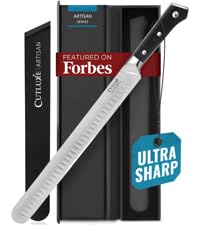
Cutluxe 10" Cimeter Butcher Knife
$44.99
($56.99)Save $12.00 -
Cutluxe Butcher Knife Set
$102.99
($137.99)Save $35.00 -
imarku 8 Inch Japanese Chef Knife
$39.99
($61.99)Save $22.00 -
Victorinox 8-Inch Curved Breaking Knife
$36.47
($39.72)Save $3.25
*Deals are selected by our commerce team
Deeper Dive: Our Top Picks
Our Top Picks

Cutluxe
10" Cimeter Butcher Knife – German Steel Meat Breaking Knife
This 10-inch cimeter knife breaks down large cuts of meat with a razor-sharp granton edge that stays sharp through hundreds of uses, thanks to its hand-honed 14-16 degree blade angle and 56+ Rockwell hardness German steel. Buy it if you butcher whole animals, process bulk meat for meal prep, or grill frequently and want a professional-grade knife that handles heavy trimming without slipping.
Pros and Cons
Pros
- Hand-sharpened blade arrives ready to use and cuts through raw meat with minimal pressure, unlike dull knives that require aggressive force.
- Full tang ergonomic design with triple-riveted handle provides rock-solid stability when breaking down large cuts or trimming fat.
- German steel composition resists rust and staining, critical for a knife that contacts raw meat multiple times per week.
Cons
- Curved cimeter blade excels at breaking down large cuts but is less precise than a straight blade for detailed boning work.
- Requires hand washing and immediate drying to maintain rust resistance; dishwasher use will degrade the blade and handle over time.

Cutluxe
Butcher Knife Set – 3-Piece German Steel BBQ Meat Carving Knives
This three-knife set delivers precision meat cutting with a 12-inch brisket knife, 10-inch breaking knife, and 6-inch boning knife, all forged from high-carbon German steel for rust resistance and edge retention. Buy it if you smoke brisket, break down primals, or need dedicated tools for each meat-cutting task.
Pros and Cons
Pros
- Three specialized blades eliminate guesswork—the brisket knife slices cleanly, the breaking knife handles primals, and the boning knife reaches tight spots.
- High-carbon German steel resists rust and maintains sharpness through hundreds of cuts, even with frequent use and proper honing.
- Full-tang construction and Pakkawood handles provide a stable, non-slip grip that feels secure during aggressive cutting motions.
Cons
- Requires regular honing (included rod recommended separately) to maintain edge; German steel dulls faster than stainless if left unhoned.
- Hand-wash only; dishwasher use will damage the blade edge and handle finish, adding maintenance steps for busy cooks.

Topfeel
Hand Forged Butcher Knife Set: Serbian Chef + Meat Cleaver + Viking
This 3-piece hand-forged set delivers restaurant-grade blade sharpness for breaking down meat, cleaving bone, and precise vegetable work without dulling quickly. Buy it if you butcher whole animals, prep large quantities of meat regularly, or want professional-grade cutlery that outlasts stamped alternatives.
Pros and Cons
Pros
- Craftsman-forged construction with 50+ years of expertise produces blades that hold edges far longer than stamped mass-market alternatives.
- The 7-inch meat cleaver's weight and geometry make breaking down large cuts and cleaving through joints effortless compared to chef's knives alone.
- Rosewood handles with large finger holes provide secure grip control during repetitive cutting, reducing wrist strain in high-volume prep work.
Cons
- High-carbon steel requires hand-washing and immediate drying to prevent rust; not dishwasher-safe and demands more maintenance than stainless alternatives.
- Heavier blade weight takes adjustment if you're accustomed to lighter German or Japanese knives, though this aids cleaving power.
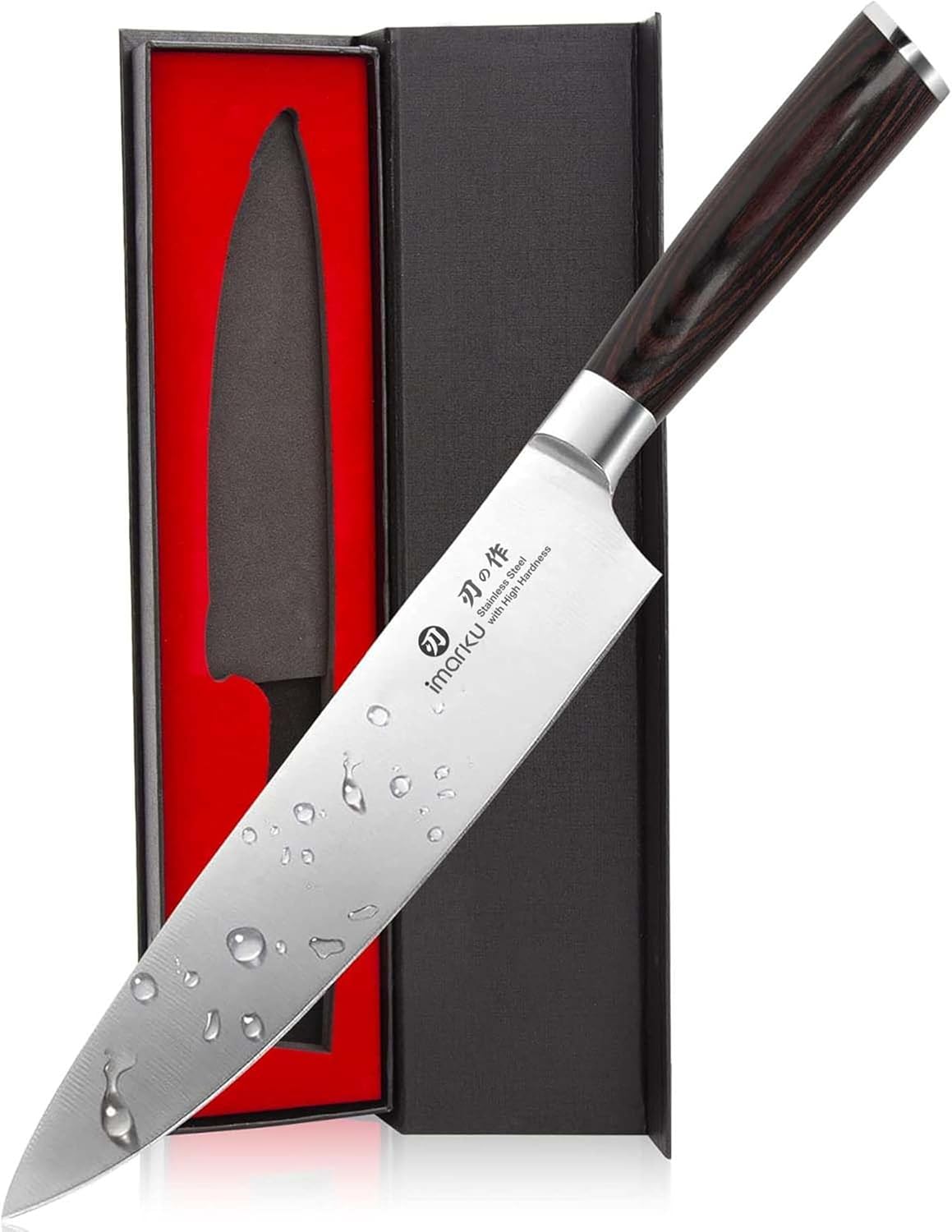
imarku
8 Inch Japanese Chef Knife | High-Carbon Stainless Steel Gyutou
This 8-inch gyutou knife delivers professional-grade sharpness for slicing, dicing, and chopping with a high-carbon stainless steel blade that stays sharp through tough kitchen tasks. Buy it if you prep vegetables and proteins regularly and want a durable, ergonomic knife that won't require constant sharpening.
Pros and Cons
Pros
- 32,768-layer blade construction from 108 traditional forging steps delivers exceptional durability and edge retention compared to mass-produced knives.
- At 8 inches, the blade length balances control for detail work with enough surface area for efficient slicing of larger cuts.
- FSC-certified African Pakka wood handle provides comfortable grip without slipping, even when wet or during repetitive cutting motions.
Cons
- Requires hand-washing and immediate drying to prevent water spots and maintain the stainless steel finish; dishwasher use will damage the blade.
- The high-carbon content means the blade can chip if used on hard surfaces like bone or frozen foods without proper technique.

Victorinox 8-Inch Curved Breaking Knife | Swiss Butcher Knife for Meat Breakdown
This Swiss-made breaking knife features a curved blade and weighted design that slices through tough cuts of meat without tearing, making uniform portions faster and cleaner than standard chef's knives. Buy it if you butcher meat regularly, break down roasts at home, or want a professional-grade knife that won't slip during wet prep work.
Pros and Cons
Pros
- The weighted, curved blade cuts through meat with minimal pressure, making it faster and more precise than a standard chef's knife for butchering tasks.
- Non-slip handle grips securely in wet conditions, which is essential when working with raw meat and frequent rinsing.
- Holds its edge through heavy use on tough cuts, reducing how often you need to sharpen compared to cheaper stainless alternatives.
Cons
- The curved blade design is specialized for meat; it's less versatile than a straight-edge chef's knife for general vegetable prep.
- Requires occasional sharpening maintenance to maintain the high-carbon edge, and Victorinox sharpeners are sold separately.
Editors' Picks
Cutluxe 10" Cimeter Butcher Knife – German Steel Meat Breaking Knife
Cutluxe
10" Cimeter Butcher Knife – German Steel Meat Breaking Knife
This 10-inch cimeter knife breaks down large cuts of meat with a razor-sharp granton edge that stays sharp through hundreds of uses, thanks to its hand-honed 14-16 degree blade angle and 56+ Rockwell hardness German steel. Buy it if you butcher whole animals, process bulk meat for meal prep, or grill frequently and want a professional-grade knife that handles heavy trimming without slipping.
$44.99 at AmazonEditors' Favorite
Brand Name: Cutluxe Manufacturer: Cutluxe UPC: 855532008426 Model Number: ART-SCI-10-1 Manufacturer Part Number: ART-SCI-10-1 Item Type Name: carving knife Unit Count: 1.0 Count Best Sellers Rank: #6,663 in Kitchen & Dining (See Top 100 in Kitchen & Dining) #4 in Carving Knives ASIN: B098JLNRBH Customer Reviews: 4.8 4.8 out of 5 stars (2,746) 4.8 out of 5 stars Blade Edge: Hollow Construction Type: Forged Blade Material Type: High Carbon Stainless Steel Handle Material: Pakkawood Is the item dishwasher safe?: No Material Type: High Carbon Stainless Steel Blade, Pakkawood Handle BladeLength: 10 Inches Item Weight: 1.39 Pounds Item Length: 10 Inches Size: Cimeter Butcher Knife Color: Back Blade Color: Silver Blade Material: High Carbon Stainless Steel Brand: Cutluxe
Shop NowCutluxe Butcher Knife Set – 3-Piece German Steel BBQ Meat Carving Knives
Cutluxe
Butcher Knife Set – 3-Piece German Steel BBQ Meat Carving Knives
This three-knife set delivers precision meat cutting with a 12-inch brisket knife, 10-inch breaking knife, and 6-inch boning knife, all forged from high-carbon German steel for rust resistance and edge retention. Buy it if you smoke brisket, break down primals, or need dedicated tools for each meat-cutting task.
$102.99 at AmazonGreat Value
Brand Name: Cutluxe Manufacturer: Cutluxe UPC: 855532008846 Unit Count: 3.0 Count Best Sellers Rank: #2,320 in Kitchen & Dining (See Top 100 in Kitchen & Dining) #1 in Carving Knives ASIN: B0DDPYQTXR Customer Reviews: 4.8 4.8 out of 5 stars (7,237) 4.8 out of 5 stars Blade Edge: Plain Construction Type: Forged, Wooden Handle Blade Material Type: High Carbon Stainless Steel Handle Material: Pakkawood Is the item dishwasher safe?: No BladeLength: 12 Inches Item Length: 12 Inches Size: 3 Pcs Brisket Knife Set Color: Gray Blade Color: Silver Blade Material: High Carbon Stainless Steel Brand: Cutluxe
Shop NowTopfeel Hand Forged Butcher Knife Set: Serbian Chef + Meat Cleaver + Viking
Topfeel
Hand Forged Butcher Knife Set: Serbian Chef + Meat Cleaver + Viking
This 3-piece hand-forged set delivers restaurant-grade blade sharpness for breaking down meat, cleaving bone, and precise vegetable work without dulling quickly. Buy it if you butcher whole animals, prep large quantities of meat regularly, or want professional-grade cutlery that outlasts stamped alternatives.
$59.99 at AmazonBrand Name: Topfeel Set Name: 3PCS Butcher Knife Set UPC: 767700200672 Model Number: DK03P Manufacturer Part Number: DK03P Item Type Name: chef knife, kitchen knife, japanese knife, chef knife set ,butcher knife ,meat cleaver Unit Count: 3.0 Count Best Sellers Rank: #10,060 in Kitchen & Dining (See Top 100 in Kitchen & Dining) #20 in Chef's Knives ASIN: B0CF183C4S Customer Reviews: 4.7 4.7 out of 5 stars (1,365) 4.7 out of 5 stars Blade Edge: Plain Construction Type: Forged Blade Material Type: High Carbon Stainless Steel Handle Material: Rosewood Is the item dishwasher safe?: No Material Type: High Carbon Stainless Steel BladeLength: 6 Inches Item Weight: 3.22 Pounds Item Length: 13 Inches Size: 6 inches Color: Brown Blade Color: silver Blade Material: High Carbon Stainless Steel Brand: Topfeel
Shop Nowimarku 8 Inch Japanese Chef Knife | High-Carbon Stainless Steel Gyutou
imarku
8 Inch Japanese Chef Knife | High-Carbon Stainless Steel Gyutou
This 8-inch gyutou knife delivers professional-grade sharpness for slicing, dicing, and chopping with a high-carbon stainless steel blade that stays sharp through tough kitchen tasks. Buy it if you prep vegetables and proteins regularly and want a durable, ergonomic knife that won't require constant sharpening.
$39.99 at AmazonBrand Name: imarku Manufacturer: imarku UPC: 667673934065 604753870875 652129610679 Global Trade Identification Number: 00667673934065 Model Number: 8-inch chef knife Manufacturer Part Number: SC10-01 9inch Item Type Name: Ergonomic Equipment Unit Count: 1.0 Count Included Components: 1 pc chef knife Best Sellers Rank: #963 in Kitchen & Dining (See Top 100 in Kitchen & Dining) #1 in Gyutou Knives ASIN: B01DDBJF12 Customer Reviews: 4.6 4.6 out of 5 stars (10,340) 4.6 out of 5 stars Blade Material Type: High Carbon Stainless Steel Handle Material: Pakkawood Is the item dishwasher safe?: No Material Type: stainless steel BladeLength: 8 Inches Item Weight: 0.41 Pounds Item Length: 13 Inches Size: 8" Color: brown and silver Blade Color: Silver Blade Edge: Plain Construction Type: Forged Blade Material: High Carbon Stainless Steel Brand: imarku
Shop NowVictorinox 8-Inch Curved Breaking Knife | Swiss Butcher Knife for Meat Breakdown
Victorinox 8-Inch Curved Breaking Knife | Swiss Butcher Knife for Meat Breakdown
This Swiss-made breaking knife features a curved blade and weighted design that slices through tough cuts of meat without tearing, making uniform portions faster and cleaner than standard chef's knives. Buy it if you butcher meat regularly, break down roasts at home, or want a professional-grade knife that won't slip during wet prep work.
$36.47 at AmazonBrand Name: Victorinox Manufacturer: Victorinox Model Number: 5.7203.20BK Manufacturer Part Number: 5.7203.20BK Item Type Name: Breaking Knife Unit Count: 1.0 Count Included Components: Breaking Knife Best Sellers Rank: #8,394 in Kitchen & Dining (See Top 100 in Kitchen & Dining) #13 in Chef's Knives ASIN: B0019WXEO2 Customer Reviews: 4.8 4.8 out of 5 stars (3,980) 4.8 out of 5 stars Blade Edge: Curved Construction Type: Stamped Blade Material Type: High Carbon Stainless Steel Handle Material: Fibrox Pro Is the item dishwasher safe?: Yes Material Type: Stainless Steel BladeLength: 8 Inches Item Weight: 4.16 ounces Item Length: 8 Inches Size: 8" Color: Black Blade Color: Silver Blade Material: High Carbon Stainless Steel Brand: Victorinox
Shop NowAbout These Recommendations
The technique above is the point of this guide; the products are here because they help. We have not tested them ourselves — we did not buy or use this gear. The recommendations come from comparing specifications and materials against the patterns in verified owner reviews, so treat them as a shortlist worth researching rather than a verdict from our own kitchen.
Availability and prices change often, so check the current listing before buying. We earn a commission on purchases made through links on this page, which never affects what we recommend.

Write Your Review
No reviews yet. Be the first to share your experience!