

TL;DR — No, you don’t strictly need a vacuum sealer for sous vide. Zip-top bags with the water-displacement method work well for most home sous vide, especially short cooks. A vacuum sealer is a worthwhile upgrade for long cooks, batch prep, and best air removal, but it’s not required to start. Zip-top bags are fine to begin; vacuum sealers add convenience for frequent or long cooking. The HomeWhisk team compared the methods against aggregated feedback. For picks, see our best sous vide guide.
The HomeWhisk editorial team researches kitchen equipment by analyzing manufacturer specifications, sous vide methods, and aggregated user reviews from major retailers and cooking communities. Our recommendations are based on what the products actually deliver, not what brands promise.

A common question for sous vide beginners is whether they must buy a vacuum sealer too. The good news: you can start without one. Here’s the honest answer. For choosing a sous vide device, see our best sous vide guide.
Anova Culinary
Sous Vide Vacuum Sealer for Meal Prep & Long-Term Storage | Anova Culinary Slim Compact
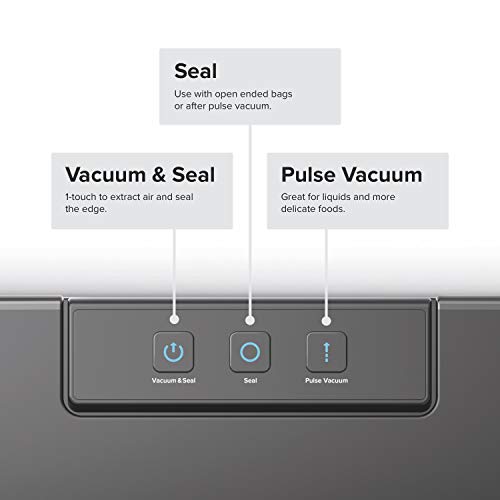
The Anova Culinary Vacuum Sealer removes air from bags in a single button press, keeping sous vide food fully submerged and extending freezer storage life significantly. Home cooks who already use or plan to use a sous vide circulator will get the most value, thanks to its slim footprint, simple one-button operation, and included pre-cut bags.
Pros and Cons
Pros
- Single-button operation makes it accessible for cooks who want speed over complexity.
- BPA-free bag construction is a meaningful safety detail for anyone sealing food that goes directly into a hot water bath.
- Compact size fits easily in a kitchen drawer, unlike bulkier chamber sealers that require dedicated counter space.
- Dual wet and dry sealing modes make it usable beyond sous vide, covering everyday freezer meal prep as well.
Cons
- Requires proprietary or compatible roll bags for custom sizing, which adds an ongoing supply cost beyond the included pre-cut bags.
- At 110V only, it is not compatible with international voltage standards, limiting use for travelers or those outside North America.

Bonsenkitchen
Vacuum Sealer for Meal Prep and Sous Vide: Bonsenkitchen 5-in-1 Heavy Duty Food Sealer
The Bonsenkitchen 5-in-1 uses 135W and four vacuum pumps to seal up to 50 bags in 20 minutes, with a 3.3mm heating strip that holds on moist foods. Buy it if you batch-process meat, seafood, or sous vide portions and need a machine that keeps pace through a full session.
Pros and Cons
Pros
- Five modes cover dry goods, wet foods, resealing, and jar or canister accessories from one unit.
- Digital countdown display shows exactly where the cycle stands instead of leaving you guessing.
- Ships ready to use with an 11in by 20ft roll, ten 8in by 12in pre-cut bags, and the external accessory hose.
- Backed by a 3-year warranty with ongoing technical support.
Cons
- Juicy foods still require switching to pulse and extended seal manually, so the fully automatic cycle is not reliable for soups or heavily marinated cuts.
- The countertop footprint needed for the roll storage slot and cutter is larger than a basic strip sealer.

KOSBON
Sous Vide Bag Sealing Kit for Anova and Joule: KOSBON 42 Piece Rechargeable Vacuum Sealer Set with 30 Reusable Bags
This 42 piece kit pairs a rechargeable handheld vacuum pump with 30 reusable PA+PE bags and pot clips, sealing a bag in roughly ten seconds so batch sous vide prep moves fast. Buy it if you already run an Anova or Joule circulator and want repeatable bag sealing without giving counter space to a full size vacuum machine.
Pros and Cons
Pros
- Single button operation with a short cycle keeps large batch prep moving without a learning curve.
- Food grade PA+PE bags handle meat, seafood, vegetables, fruit and dry snacks, covering both cooking and pantry storage.
- Clips and bags are sized for standard immersion circulator setups including Anova and Joule.
- The water chamber has a maximum fill line, so you know when to empty it before the pump is at risk.
Cons
- The handheld pump works through the valves on the included bags, so standard vacuum rolls and grocery bags are not an option.
- Reusable bags need hand washing and full drying after raw protein, which adds a step compared with disposable rolls.

Fiyxlop
Handheld Food Vacuum Sealer for Fridge and Freezer Storage: Fiyxlop Premium Cordless Sealer with 35 Reusable Bags
This cordless handheld sealer pulls 75 kPa of suction to vacuum-seal meat, produce, coffee beans, and leftovers in about five seconds, with automatic stop and pressure release once the bag is sealed. It suits home cooks who batch-cook or buy in bulk and want freezer storage without giving up counter space to a full-size sealer machine.
Pros and Cons
Pros
- Strong 75 kPa suction handles dense items like coffee beans and portioned proteins, not just dry snacks.
- The 45-piece set arrives complete with water tank, 35 bags, 6 sealing clamps, and charging cable, so nothing else is needed on day one.
- Lightly waterproof, oil-resistant housing survives wipe-downs on a working kitchen counter.
- Backed by a 2-year quality assurance period.
Cons
- It only works with the brand's valve-equipped reusable bags, so you cannot seal generic bag rolls or oversized cuts.
- As a new listing with almost no customer feedback, long-term motor and battery reliability are still unproven.
The Best Deals This Week*
-
Sous Vide Vacuum Sealer for Meal Prep & Long-Term
$69
($89.99)Save $20.99 -
Vacuum Sealer for Meal Prep and Sous Vide
$99.99
($109.99)Save $10.00 -
Sous Vide Bag Sealing Kit for Anova and Joule
$19.99
($25.99)Save $6.00
*Deals are selected by our commerce team
Anova Culinary Sous Vide Vacuum Sealer for Meal Prep & Long-Term Storage | Anova Culinary Slim Compact
Anova Culinary
Sous Vide Vacuum Sealer for Meal Prep & Long-Term Storage | Anova Culinary Slim Compact
The Anova Culinary Vacuum Sealer removes air from bags in a single button press, keeping sous vide food fully submerged and extending freezer storage life significantly. Home cooks who already use or plan to use a sous vide circulator will get the most value, thanks to its slim footprint, simple one-button operation, and included pre-cut bags.
$69.00 at AmazonEditors' Favorite
Color: Black Size: Includes 10 Precut Bags Dimensions: 16.73 x 4.8 x 3.14 inches Weight: 2.31 pounds Product Group: Kitchen Binding: Kitchen
Shop NowBonsenkitchen Vacuum Sealer for Meal Prep and Sous Vide: Bonsenkitchen 5-in-1 Heavy Duty Food Sealer
Bonsenkitchen
Vacuum Sealer for Meal Prep and Sous Vide: Bonsenkitchen 5-in-1 Heavy Duty Food Sealer
The Bonsenkitchen 5-in-1 uses 135W and four vacuum pumps to seal up to 50 bags in 20 minutes, with a 3.3mm heating strip that holds on moist foods. Buy it if you batch-process meat, seafood, or sous vide portions and need a machine that keeps pace through a full session.
$99.99 at AmazonGreat Value
Color: Silver Size: Large Dimensions: 15.98 x 8.7 x 4.76 inches Weight: 5.82 pounds Product Group: Kitchen
Shop NowKOSBON Sous Vide Bag Sealing Kit for Anova and Joule: KOSBON 42 Piece Rechargeable Vacuum Sealer Set with 30 Reusable Bags
KOSBON
Sous Vide Bag Sealing Kit for Anova and Joule: KOSBON 42 Piece Rechargeable Vacuum Sealer Set with 30 Reusable Bags
This 42 piece kit pairs a rechargeable handheld vacuum pump with 30 reusable PA+PE bags and pot clips, sealing a bag in roughly ten seconds so batch sous vide prep moves fast. Buy it if you already run an Anova or Joule circulator and want repeatable bag sealing without giving counter space to a full size vacuum machine.
$19.99 at AmazonColor: White Dimensions: 2 x 2.7 x 8.5 Inches Weight: 1.79566512399 pounds Product Group: Kitchen Binding: Kitchen
Shop NowFiyxlop Handheld Food Vacuum Sealer for Fridge and Freezer Storage: Fiyxlop Premium Cordless Sealer with 35 Reusable Bags
Fiyxlop
Handheld Food Vacuum Sealer for Fridge and Freezer Storage: Fiyxlop Premium Cordless Sealer with 35 Reusable Bags
This cordless handheld sealer pulls 75 kPa of suction to vacuum-seal meat, produce, coffee beans, and leftovers in about five seconds, with automatic stop and pressure release once the bag is sealed. It suits home cooks who batch-cook or buy in bulk and want freezer storage without giving up counter space to a full-size sealer machine.
$39.96 at AmazonColor: White Size: Vacuum Sealer + 35 Bags Dimensions: 1.8 x 1.8 x 8.2 inches Weight: 0.52 pounds Product Group: Kitchen
Shop NowWhy Air Removal Matters (Not the Vacuum Sealer Itself)
Understanding what the bag actually needs to do clarifies why you don’t strictly need a vacuum sealer.
Sous vide cooks food sealed in a bag, submerged in temperature-controlled water. What matters is removing the air from the bag, for two reasons: 1. The food must sink and stay submerged — air in the bag makes it float, lifting food out of the water where it won’t cook evenly. 2. Air insulates — trapped air pockets slow and unevenly transfer heat to the food.
So the real requirement is getting the air out and keeping the food submerged in good contact with the water — not specifically using a vacuum sealer. A vacuum sealer is one way to remove air (a very good one), but it’s the air removal that matters, not the machine. This is the key insight: any method that removes the air and keeps food submerged works for sous vide. A vacuum sealer does it best, but simpler methods also achieve it. See our what-is-sous-vide-cooking and how-to-use-a-sous-vide guides. Our best vacuum sealer guide covers sealers.
The Zip-Top Bag Method (No Vacuum Sealer Needed)
The most common no-vacuum-sealer approach is the water-displacement method with zip-top bags, and it works well for most home sous vide.
The water-displacement method: 1. Put your seasoned food in a sturdy zip-top bag (freezer-grade, food-safe). 2. Seal the bag almost all the way, leaving a small corner open. 3. Slowly lower the bag into the water (the sous vide bath or a separate container). The water pressure pushes the air up and out through the open corner as the bag descends. 4. Once the air is out (food is snug in the bag, no air pockets) and just before the opening reaches the water, seal the corner completely. 5. Submerge and clip the bag as usual.
This uses water pressure to remove the air — no machine needed. It works well and is how many home sous vide cooks operate, especially for shorter cooks.
Pros of the zip-top method:
- No extra equipment or cost — just zip-top bags you likely have.
- Quick and easy for everyday sous vide.
- Fine for most home cooking and short-to-medium cooks.
Cons/limitations:
- Not a perfect vacuum — a little air may remain, and bags can occasionally leak or float on very long cooks.
- Less ideal for very long cooks (many hours/overnight) where a true vacuum seal is more reliable and prevents floating/water intrusion.
- Zip-top bags should be freezer-grade and food-safe (not flimsy ones), and rated for the temperatures used.
For beginners and typical home sous vide, the zip-top water-displacement method is genuinely sufficient — you don’t need to buy a vacuum sealer to start. Our best sous vide guide covers the devices.
When a Vacuum Sealer Is Worth It
While not required, a vacuum sealer has real advantages for certain sous vide use. Here’s when it’s worth buying.
A vacuum sealer is worth it for sous vide if you:
- Do long cooks (many hours or overnight, like tough cuts or brisket) — a true vacuum seal removes air completely and prevents floating and water intrusion over long periods, more reliably than zip-top bags.
- Sous vide frequently — a vacuum sealer speeds up and simplifies bagging when you do it often.
- Batch-prep and freeze — vacuum sealing is excellent for prepping multiple portions and freezing them (great for sous vide meal prep, and it prevents freezer burn — see our is-a-vacuum-sealer-worth-it guide).
- Want the best, most consistent results — complete air removal ensures the best heat transfer and no floating.
- Also want a vacuum sealer for food storage (extending fridge/freezer life) — then it does double duty.
A vacuum sealer’s benefits for sous vide:
- Complete air removal — best heat contact, no floating.
- Reliable seal for long cooks (no leaks/water intrusion).
- Great for batch prep and freezing sous vide portions.
When you can skip it:
- You’re just starting sous vide and want to try it without extra cost.
- You do short-to-medium cooks where zip-top bags work fine.
- You don’t sous vide often or batch-prep.
- Budget or storage space is limited.
The honest verdict: you don’t need a vacuum sealer to do sous vide — start with zip-top bags and the water-displacement method, which works well for most home cooking. Add a vacuum sealer later if you find yourself doing long cooks, sous-viding frequently, batch-prepping/freezing, or wanting the best results and food-storage benefits. Many people start with zip-top bags and upgrade to a vacuum sealer once they’re hooked and want the convenience. Our best sous vide and best vacuum sealer guides cover both.
Frequently Asked Questions
Do you need a vacuum sealer for sous vide?
No, not strictly. You can do sous vide with zip-top bags using the water-displacement method: seal all but a corner, lower the bag into water so the pressure pushes the air out, then seal the corner. This removes enough air and keeps food submerged for most home sous vide, especially short-to-medium cooks. A vacuum sealer removes air more completely and is better for long cooks, frequent use, and batch prep, but it’s not required to start. Many people begin with zip-top bags and add a vacuum sealer later if they want the convenience.
How do you sous vide without a vacuum sealer?
Use the water-displacement method with a sturdy freezer-grade zip-top bag: put the seasoned food in, seal the bag almost all the way (leaving a small corner open), then slowly lower it into water. The water pressure pushes the air up and out through the open corner. Just before the opening reaches the water, seal the corner completely, then submerge the bag. This removes the air and keeps food submerged without any machine. It works well for most home sous vide, particularly shorter cooks. See our how-to-use-a-sous-vide guide.
Why does air need to be removed from sous vide bags?
For two reasons: air makes the bag float, lifting food out of the water where it won’t cook evenly, and trapped air insulates the food, slowing and unevenly transferring the water’s heat. So removing air ensures the food sinks, stays submerged, and cooks evenly with good water contact. This is why either a vacuum sealer or the water-displacement zip-top method is used — both remove air so the food cooks properly. It’s the air removal that matters, not specifically the vacuum sealer.
Is a vacuum sealer better than zip-top bags for sous vide?
For long cooks and best results, yes; for most home cooking, zip-top bags are fine. A vacuum sealer removes air completely, giving the best heat contact and preventing floating or water intrusion over long cooks (many hours/overnight), and it’s great for batch prep and freezing. Zip-top bags with water displacement remove enough air for short-to-medium cooks and cost nothing extra, but may leave a little air and are less reliable for very long cooks. Start with zip-top bags; upgrade to a vacuum sealer for long cooks, frequent use, or batch prep.
When should I buy a vacuum sealer for sous vide?
Buy one if you do long cooks (many hours or overnight, where complete air removal prevents floating and water intrusion), sous vide frequently (it speeds up bagging), batch-prep and freeze portions (vacuum sealing is excellent for this and prevents freezer burn), or want the most consistent results. Also worth it if you’d use a vacuum sealer for general food storage too. If you’re just starting, do short cooks, or don’t sous vide often, zip-top bags work fine and you can skip it. Many people upgrade to a vacuum sealer once they sous vide regularly.
Can you use regular zip-top bags for sous vide?
Yes, but use sturdy freezer-grade, food-safe zip-top bags rated for the temperatures involved — not flimsy sandwich bags. Freezer bags are thicker and hold up to the warm water and long cook times better. Use the water-displacement method to remove the air, and check that the bag stays submerged and sealed during cooking. For most home sous vide (short-to-medium cooks), quality freezer zip-top bags work well. For very long cooks, a vacuum sealer with proper bags is more reliable. Always use food-grade bags appropriate for cooking.
Related buying guides: best meat thermometer, best instant pot and best chef knives on a budget.
The Bottom Line
You don’t need a vacuum sealer for sous vide. What matters is removing the air from the bag so food sinks and cooks evenly — and the water-displacement method with sturdy zip-top bags achieves this well for most home sous vide, especially short-to-medium cooks, at no extra cost. A vacuum sealer removes air more completely and is worth it for long cooks (preventing floating and water intrusion), frequent use, batch prep and freezing, and best results — plus it doubles as a food-storage tool. Start with zip-top bags, and add a vacuum sealer later if you sous vide often or do long cooks. See our best sous vide and best vacuum sealer guides.





Write Your Review
No reviews yet. Be the first to share your experience!