

Kitchen mat packaging throws the word soft around so freely that it has lost nearly all meaning. The label sits equally on twenty-dollar puzzle tiles, eighty-dollar professional mats, and hundred-and-fifty-dollar designer pieces, three products that share almost nothing beneath the surface. Softness, it turns out, is a material behavior rather than a feature, and material behavior tracks closely with price. This guide sorts the market into three tiers and explains what each jump in spending changes about the way a mat feels on day one, on day four hundred, and everywhere in between.
Why the Softest Mat Is Rarely the Most Comfortable
The natural instinct when shopping for comfort is to buy maximum squish, yet feet do their best work on surfaces that push back a little. Stand on a mattress-thick foam pad for an hour and your ankles will make hundreds of tiny corrections simply to keep you upright, invisible labor that shows up later as fatigue. Hard flooring fails in the opposite direction, sending every impact up through the knees until even short stints at the counter feel punishing. Mats worth owning sit between these poles and return energy instead of absorbing it. When you lean across the counter to grab a colander or lift a heavy pot off a back burner, your base has to stay steady underneath you. A surface with some structure lets the small stabilizing muscles rest between tasks instead of firing without pause. The goal is being held up quietly, not swallowed.
Tier One, Roughly $15 to $30: Plush Today, Flat Within a Year
Two materials dominate this bracket. Interlocking EVA foam tiles, the puzzle-piece kind sold in multipacks, deliver an almost pillowy first impression, and for light-duty corners such as a laundry room, mudroom, or potting bench they remain a sensible buy. Daily dish duty tells a different story. EVA cells collapse permanently under repeated load, so six to twelve months of regular cooking leaves a ghost outline of wherever you happened to stand most. Basic PVC sponge mats survive somewhat longer before surrendering to the same fate. As the material fatigues, expect the edges to curl upward, which converts a comfort product into a stubbed-toe hazard that fights the vacuum cleaner. The seams between tiles earn their own warning, because crumbs, grease flecks, and spilled coffee grounds settle into them and shrug off casual wiping. None of this makes tier one a poor purchase; it makes tier one honestly disposable. Spend here for spaces where standing time is counted in minutes, not seasons.
Tier Two, Roughly $40 to $80: Where Real Engineering Begins
This is the range where manufacturers stop selling cushion and start selling rebound. A polyurethane core behaves differently from foam because its cell structure springs back after each step instead of staying flattened; quality mats here publish compression-set figures under five percent, meaning they surrender less than a twentieth of their thickness across thousands of standing cycles. The sealed vinyl skin bonded over the core matters just as much, since it keeps water, oil, and wine from ever reaching the sensitive material inside.
Shore ratings confuse more shoppers than any other number on the box, so here is the plain-language version. Shore C measures the force required to press into a material, and higher values mean firmer. Kitchen mats cluster between the low thirties and mid fifties on that scale. Below roughly 35 lies the marshmallow zone that quietly exhausts your ankles; above roughly 55 the mat begins impersonating your subfloor. Around 45 sits the sweet spot for nightly dish duty, offering enough yield to relieve pressure during long static stretches and enough backbone to keep you planted while reaching for the colander on the high shelf. Cooks who log serious weekly hours consistently describe steadier legs on medium-firm surfaces than on plush ones, and that single finding is the reason this tier exists.
Tier Three, $90 to $180: Sorting Physics From Marketing
GelPro and brands built to similar standards own this tier, and candor requires admitting that part of the premium buys physics while another part buys artwork. The engineering side is substantial. Gel-layer construction places a fluid-filled stratum beneath the walking surface, spreading pressure across the whole foot instead of concentrating it at the heel and ball, and recovery stays instant no matter how long you stand rooted in front of the sink. Wear warranties stretch to ten or even twenty years, versus the five-year norms one tier down, and those figures carry credibility because the construction underneath supports them. Welded seams fuse the cover into one unbroken piece so liquids cannot wick inward. Beveled edges are engineered specifically against curling, tapering thin enough that a toe or a robot vacuum glides over cleanly.
Then there is the branding half of the receipt. Licensed prints, designer collaborations, and seasonal colorways add meaningful dollars without altering how the surface treats a single stride. Paying for a pattern you love is a legitimate choice; paying while believing it changes the feel is not. Judge this tier on its gel, seams, edge geometry, and warranty terms, and treat the graphics as decoration priced separately in spirit.
Cleaning Routines That Match Each Material
Neglect punishes every tier differently, so care should follow the chemistry. Open-cell EVA foam quietly drinks whatever lands on it, which means grease splattered from a nearby skillet soaks in and slowly turns rancid rather than resting on top; prompt wiping counts for far more than an occasional deep scrub. Sealed PU skins demand almost nothing, shedding oil, tomato sauce, and turmeric stains with warm water, a drop of soap, and a microfiber cloth. Whichever tier lives in your kitchen, retire the steam mop near it. Repeated steam cycles soften the adhesives that laminate covers onto cores and can delaminate an otherwise healthy mat from the inside out. Solvents bleach printed surfaces, and scouring pads leave permanent cloudy scratches in vinyl. One gentle routine handles nearly every spill a real kitchen produces.
Backings, Floors, and Sensitivities Worth Checking First
What touches the floor causes trouble more often than what touches your feet. Natural rubber backing grips beautifully yet reacts chemically with certain vinyl and linoleum floors, leaving amber discoloration that no cleaner reverses; the risk climbs on newer flooring and in sunlit kitchens. PVC-based non-slip backings sidestep that reaction but may mark waxed hardwood after months of uninterrupted contact. Latex allergies add one more consideration, since some budget mats cure with latex compounds capable of bothering sensitive households, and latex-free labeling becomes common from tier two upward. Lift any long-stationary mat every few months and inspect the surface beneath, particularly over sheet vinyl, where problems hide longest.
How long will each tier of kitchen mat actually stay soft?
Budget EVA foam tends to flatten noticeably within six to twelve months of daily use, sometimes sooner beside a range where heat speeds the breakdown along. Polyurethane cores at the middle tier hold their rebound for three to five years of regular cooking before compression becomes visible. Gel-layer and premium PU mats from the top tier routinely pass the decade mark, which is precisely what those long wear warranties are pricing in. Heat, direct sunlight, and repeated steam cleaning shorten any mat’s lifespan regardless of tier. Rotating the mat now and then, so the same footprint is never compressed day after day, stretches the comfortable life of all three categories.
Why do my ankles feel more tired on a very plush mat?
Extremely soft surfaces let your feet sink and tilt, so the small stabilizing muscles around each ankle fire constantly to keep you balanced. That low-grade effort accumulates across an hour of cooking even though you never notice a single moment of strain. Firmer mats give the foot a stable platform, allowing those muscles to relax between movements. The difference is subtle at first, which is why many people blame their shoes instead of the mat. If a plush surface leaves you more worn out than bare tile did, it is likely working against you rather than for you.
Is the jump to a hundred-dollar mat worth the money?
For someone who cooks most days, usually yes, because the extra cost funds measurable things such as gel layers, welded seams, and warranties running ten to twenty years. Those features translate into a surface that feels the same in year eight as it did in week one. Occasional cooks, renters planning a move, and secondary stations like laundry rooms get most of the same comfort from the middle tier at a third of the price. Decorative prints at the top tier add expense without changing the feel, so fund them only when the look genuinely matters to you. Match the tier to your hours spent standing, not to the upper limit of your budget.
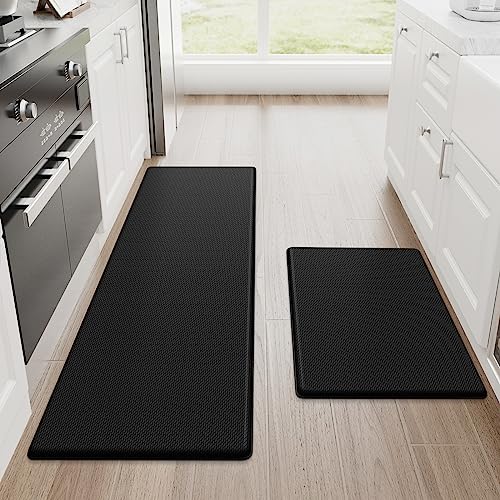
StepRite
Anti-Fatigue Kitchen Mat Set for Comfortable Standing, StepRite 2-Piece Black Kitchen Rugs
StepRite's 0.4-inch kitchen mats cushion your feet and joints during food preparation, with stain-resistant surfaces for easier spill cleanup. They suit cooks who stand for long periods and need a versatile two-piece mat set for the kitchen or other work areas.
Pros and Cons
Pros
- Supportive 0.4-inch cushioning improves comfort during extended kitchen tasks.
- Stain-resistant construction simplifies cleanup after common spills.
- Non-slip backing works across several common hard flooring types.
- The two-piece set offers flexible placement around multiple kitchen work areas.
Cons
- The backing is intended for dry, flat surfaces, so it may be less suitable for uneven or damp floors.
- The product data does not specify mat dimensions or weight, making it harder to confirm the fit for a particular kitchen.
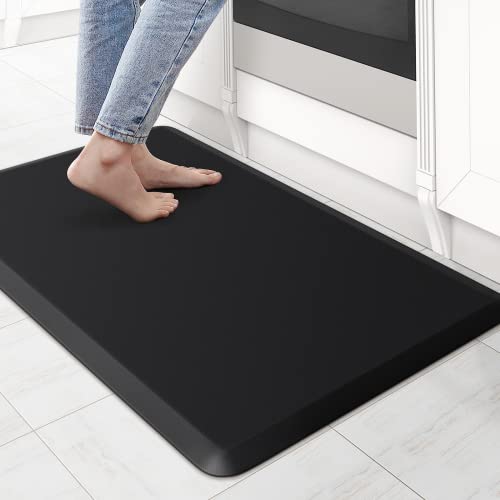
KitchenClouds
Anti-Fatigue Kitchen Mat for Comfortable Standing and Easier Cleanup
This KitchenClouds kitchen mat cushions your feet and joints during cooking and cleaning, with its biggest advantage being pressure relief from prolonged standing. Buy it if you spend long periods at the kitchen counter and want a water-resistant, easy-to-clean surface with added traction.
Pros and Cons
Pros
- Soft PVC foam provides noticeable cushioning for cooking and cleaning tasks.
- The water-resistant surface helps deter dust and debris and simplifies cleanup.
- A diamond-shaped underside and beveled edge support safer everyday use.
- The neutral design works across kitchen and workstation settings.
Cons
- It must be placed on a flat, dry floor because water underneath may cause slippage.
- Creases may appear after unfolding and require flat placement or warm-air treatment to remove.
The Best Deals This Week*
-
Kitchen Mat 2 PCS Cushioned Anti-Fatigue Floor Mat
$26.99
($37.99)Save $11.00 -
Anti-Fatigue Kitchen Mat Set for Comfortable
$22.99
($29.99)Save $7.00 -
KitchenClouds Anti-Fatigue Kitchen Mat
$14.99
($19.99)Save $5.00 -
Arenarug Upgrade Scalloped Kitchen Mats for Floor
$23.99
($26.99)Save $3.00
*Deals are selected by our commerce team
SoftDuo Kitchen Mat 2 PCS Cushioned Anti-Fatigue Floor Mat Standing Mat for Kitchen

SoftDuo
Kitchen Mat 2 PCS Cushioned Anti-Fatigue Floor Mat Standing Mat for Kitchen
$26.99 at AmazonEditors' Favorite
Color: Stylish Grey Size: 17.3"x29"+17.3"x47" Dimensions: 46.99999995206 x 17.29921258078 x 0.0393700787 inches Weight: 5 pounds Product Group: Kitchen Binding: Kitchen
Shop NowStepRite Anti-Fatigue Kitchen Mat Set for Comfortable Standing, StepRite 2-Piece Black Kitchen Rugs
StepRite
Anti-Fatigue Kitchen Mat Set for Comfortable Standing, StepRite 2-Piece Black Kitchen Rugs
StepRite's 0.4-inch kitchen mats cushion your feet and joints during food preparation, with stain-resistant surfaces for easier spill cleanup. They suit cooks who stand for long periods and need a versatile two-piece mat set for the kitchen or other work areas.
$22.99 at AmazonGreat Value
Color: Black Size: 17.3" x 30"+17.3" x 47"-0.4 inch Weight: 0.551155655 pounds Product Group: Furniture Binding: Kitchen
Shop NowKitchenClouds Anti-Fatigue Kitchen Mat for Comfortable Standing and Easier Cleanup
KitchenClouds
Anti-Fatigue Kitchen Mat for Comfortable Standing and Easier Cleanup
This KitchenClouds kitchen mat cushions your feet and joints during cooking and cleaning, with its biggest advantage being pressure relief from prolonged standing. Buy it if you spend long periods at the kitchen counter and want a water-resistant, easy-to-clean surface with added traction.
$14.99 at AmazonColor: Black Size: 28"L x 17.3"W x 0.5"Th Dimensions: 27.99999997144 x 17.29921258078 x 0.49999999949 inches Product Group: Kitchen Binding: Kitchen
Shop NowTranquilRelax 2-Piece Kitchen Mats, Cushioned Non-Slip Floor Mats, Black

Color: Black Size: 2-Piece | 30"+47" | Standard Product Group: Furniture Binding: Home
Shop NowArenarug Upgrade Scalloped Kitchen Mats for Floor 2PCS, Black Kitchen Rugs
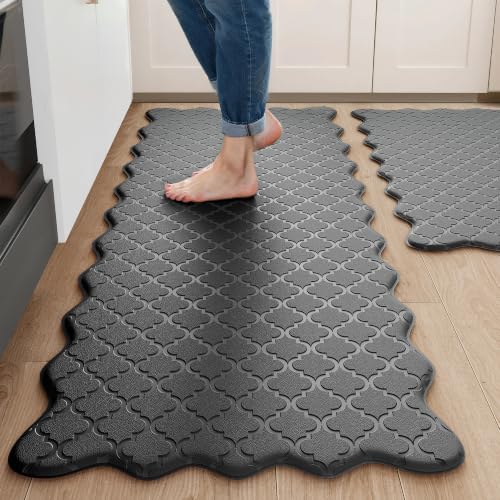
Color: Basic Solid- Black Size: 17.3"x30"+17.3"x47" Weight: 4.629707502 Pounds Product Group: Furniture
Shop Now


Write Your Review
No reviews yet. Be the first to share your experience!