

What People Actually Ask
Search the fermentation forums for a pickling crock and the recurring questions on r/fermentation are about water seals versus open crocks, what size to get, and which brands actually last (Ohio Stoneware comes up constantly, with owners saying their crocks will outlast them). A pickling crock is a heavy ceramic vessel for fermenting sauerkraut, kimchi, and pickles, and the right one keeps oxygen out so your ferment doesn’t grow surface mold. Here’s what fermenters actually recommend.
The Common Recommendations
Across the fermentation subreddit, The Spruce Eats, and the homesteading forums, the consensus is consistent: water-seal crocks are the easiest path for beginners because the moat blocks oxygen automatically, while open crocks (like the classic Ohio Stoneware) are cheaper and beloved by traditionalists who don’t mind managing the surface with a plate and weight. Ohio Stoneware is the name owners trust for longevity, often saying their crocks will outlast them. The picks below cover both styles plus airlock-jar alternatives. For storing finished ferments, see our food storage containers guide.

Pros & Cons
Pros
- The airtight water seal creates a true anaerobic environment without extra equipment, which is the single most important factor for safe lacto-fermentation.
- Food-grade double-ceramic construction is non-porous and will not crack, craze, or leech brine the way lower-density clay crocks often do.
- The included tamper and stone weights remove guesswork from packing vegetables tightly and keeping them submerged throughout fermentation.
- A lead-free and cadmium-free glaze makes it safe for long-duration ferments like traditional kimchi or sour pickles that sit for weeks.
Cons
- At 3.8 liters, the crock suits small to medium households; anyone fermenting for a large family or storing whole heads of cabbage will need a larger vessel.
- Stoneware is heavy and fragile compared to food-grade plastic or glass alternatives, so it is not suitable for kitchens with limited counter space or frequent moving.
Details
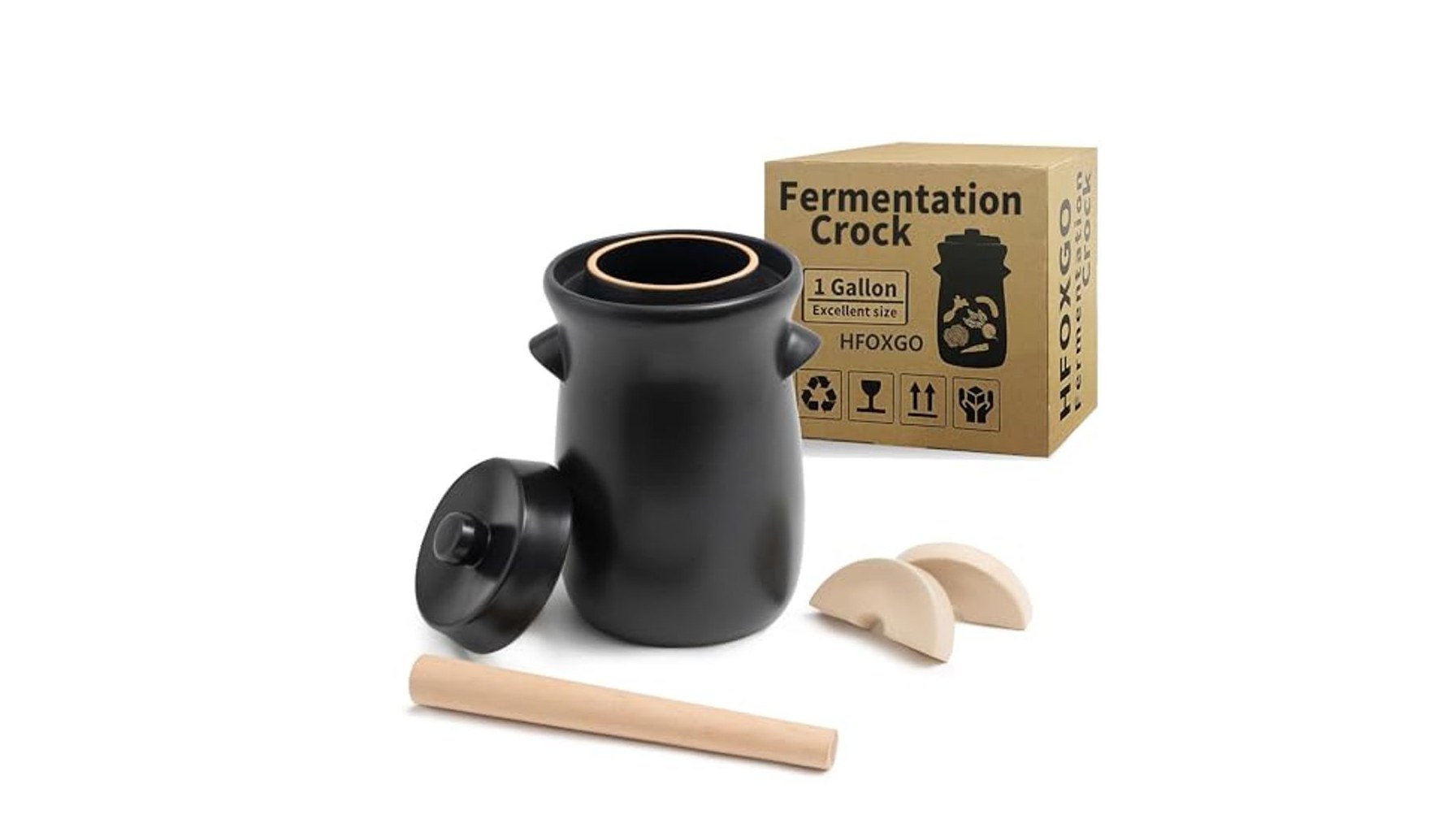
The HFOXGO crock is a 3.8-liter stoneware fermentation vessel designed to produce kimchi, sauerkraut, pickles, and kombucha at home without monitoring or burping.
Its water-seal lid is the core feature: fill the groove with water and CO2 escapes passively while oxygen cannot enter, maintaining the anaerobic conditions lacto-fermentation requires.
Built from double-layer food-grade ceramic with a lead-free glaze, the walls are non-porous and UV-blocking, protecting live cultures and enzymes from light and contamination.
The crock is wide enough for hand-washing but still stoneware, meaning it is heavier than glass and will crack if dropped on a hard floor.
Best for home cooks who ferment weekly and want a dedicated, odor-neutral vessel that produces consistent results without plastic or rubber components.
Best Uses
Pack shredded cabbage with salt, use the included tamper to compress it below its own brine, then place the stone weights on top before sealing. The water seal takes over from there.
For kimchi, the crock holds enough napa cabbage for a standard two to four pound batch. The ceramic stays neutral and will not pick up chili or garlic odors between batches.
As a kombucha vessel, the wide mouth accommodates a SCOBY and allows easy access during the first fermentation stage before transferring to bottles for carbonation.

Pros & Cons
Pros
- The water-seal moat design is a genuine set-it-and-forget-it system that eliminates daily maintenance common with open-crock methods.
- All fermentation essentials arrive in one kit: crock, lid, two weighting stones, and a pounder, so no separate purchases are needed.
- High-grade stoneware construction provides natural temperature insulation that supports stable, consistent fermentation results.
- The double-glazed interior surface resists garlic and cabbage odors, keeping the crock neutral for back-to-back batches.
Cons
- At 1 gallon, the crock is sized for small households only; those fermenting for larger families or long-term storage will need multiple batches or a larger vessel.
- Stoneware is heavier and more fragile than plastic or glass alternatives, which matters if counter space is limited or the crock needs to be moved frequently.
Details
The Kenley fermentation crock solves the core problem of home fermentation: keeping oxygen away from vegetables long enough for lactic acid bacteria to do their work safely.
Its water-seal lid is the standout feature. Water sitting in the lid’s moat lets CO2 escape while physically blocking air from re-entering, a passive system that requires no intervention once filled.
Built from natural stoneware with a food-safe glaze, the crock holds temperature more consistently than glass and does not leach flavors or chemicals into the brine over extended ferments.
The 1-gallon size handles one standard head of cabbage per batch. It is not suited for bulk fermenters or anyone preserving for more than two to three people regularly.
Best for home cooks who want a complete, reusable fermentation setup that requires minimal attention and produces consistent results batch after batch.
Best Uses
Sauerkraut and kimchi are the primary use cases. Pack shredded cabbage with salt, use the pounder to release brine, weight it down, seal the lid with water, and leave it for one to four weeks depending on desired sourness.
The crock also handles lacto-fermented pickles, fermented hot sauce, and brine-based vegetable ferments like carrots or beets. Any vegetable that ferments via submersion in saltwater brine works well in this format.
It is not designed for vinegar pickling, kombucha, or any ferment requiring an airlock adapter. Those processes need different vessel types.

Save $6.50
Pros & Cons
Pros
- The dual grommet system means you can seal unused airlock holes without sourcing extra hardware, keeping the lid functional across different fermentation styles.
- At 10 inches tall and 6.2 inches wide, each jar holds a full gallon comfortably, which is enough volume for a serious sourdough starter or a full batch of sauerkraut.
- BPA-free, rust-free plastic lids with silicone gaskets hold up to repeated washing better than standard metal canning lids, which corrode with acidic ferments.
- Protective packaging cushions reduce the risk of breakage in transit, which is a practical advantage given the size and weight of two gallon-sized glass jars.
Cons
- Square jar geometry can make thorough cleaning in the corners slightly more effort compared to round jars, especially after thick ferments like sourdough.
- With zero verified reviews currently available, buyers cannot yet confirm long-term lid seal performance under sustained pressure from active carbonated ferments.
Details
These are 1-gallon wide-mouth glass fermentation jars designed to handle sourdough starters, pickles, kombucha, sauerkraut, fruit wine, and mead without needing to buy separate equipment.
The airtight screw lid with built-in silicone gasket and dual grommet ports lets you run airlock fermentation or switch to a sealed storage setup using the same lid.
Each jar is made from thick food-grade glass, measures 10 inches tall by 6.2 inches wide, and has etched ml and fl oz scale marks for direct measurement inside the jar.
The square profile maximizes shelf and counter space but requires slightly more attention when scrubbing corners after dense ferments.
Best for home fermenters who want a complete, multi-use kit that handles both active fermentation and long-term storage in the same container.
What Fits
Each jar holds 1 full gallon, fitting a standard sourdough starter at any hydration level, a full head of cabbage packed for sauerkraut, or a 1-gallon batch of fruit wine or mead.
The 4.3-inch opening accepts wide measuring cups and standard canning funnels, and hands fit inside for packing whole vegetables or scrubbing the interior between uses.
Two jars store compactly side by side on a standard pantry shelf or countertop, and the square footprint wastes less space than round gallon jars of the same volume.
Pros & Cons
Pros
- Food-safe stoneware material ensures no off-flavors or chemical leaching even during extended brining or acidic fermentation.
- The 1-gallon size hits a practical sweet spot for home cooks who ferment in small batches rather than bulk production.
- Ohio Stoneware is a long-established American manufacturer, lending confidence in consistent material quality and construction standards.
- The simple, lidless crock design is easy to clean by hand and has no crevices where brine residue can hide.
Cons
- The crock does not include a water-seal lid or fermentation weights, so buyers need to source those separately for anaerobic ferments.
- At 1 gallon, capacity is limited to small batches only — anyone preserving in volume will need multiple crocks or a larger size.
Details
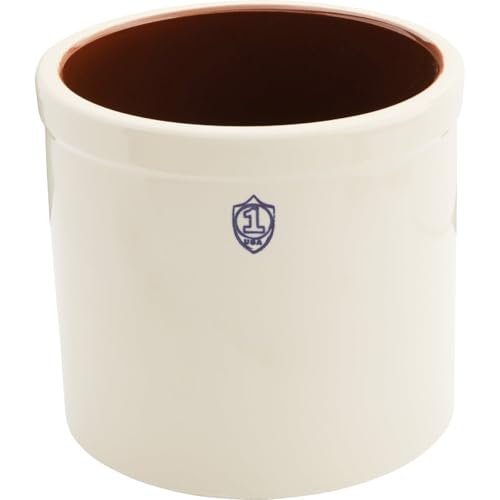
The Ohio Stoneware 1 Gallon Preserving Crock is a traditional open-top vessel designed for fermenting and brining vegetables at home without plastic or metal contact.
Stoneware’s thermal mass stabilizes fermentation temperatures, and its opacity blocks light that can degrade beneficial bacteria during longer ferments.
Built from fired stoneware clay, the crock is dense, chip-resistant under normal use, and sized at 1 gallon for manageable small-batch projects on a standard countertop.
It ships without a lid or weights, so buyers committed to anaerobic fermentation will need to budget for those additions separately.
Best for home cooks who ferment small batches of vegetables seasonally and want a chemical-free, low-maintenance crock that stores as well as it ferments.
What Fits
One gallon holds roughly 5 to 6 cups of shredded cabbage for sauerkraut, or enough sliced cucumbers for a solid batch of dill pickles with brine to spare.
Root vegetables like carrots and radishes pack well given the straight-sided crock shape, and the opening is wide enough to fit a standard fermentation weight or a small plate as a press.
For kimchi, expect to fit about 1 small to medium napa cabbage once salted and wilted down, which is a realistic single-household weekly batch.

Pros & Cons
Pros
- The extra-wide water channel seal reduces the need for daily top-ups compared to standard narrow-lip designs, making longer ferments more manageable.
- Non-porous food-safe glaze on the interior walls means the crock does not retain odors or staining after washing, keeping batches flavor-neutral.
- The kit ships complete with two ceramic weights and a wooden tamper, so no additional tools are needed to start a first batch.
- Earthenware ceramic blocks UV light, which helps protect temperature-sensitive probiotic cultures and enzymes that glass or clear vessels cannot shield.
Cons
- At 3L the crock produces roughly 5 mason jars per batch, which may require more frequent fermentation cycles for households consuming sauerkraut or kimchi daily.
- Ceramic crocks are heavier and more fragile than plastic alternatives, so storage and handling require more care, particularly for users with limited cabinet space.
Details
The TOMO 3L stoneware crock is built for fermenting vegetables and brewing kombucha at home, solving the core problem of oxygen exposure that causes spoilage in open-vessel ferments.
Its wide waterlock seal creates a one-way gas release valve — CO2 escapes while outside air stays blocked — and the wider channel means less frequent water refills than standard crocks.
Made from high-fire earthenware ceramic with a fully glazed, non-porous interior. The 3L size handles 2-3 cabbages per batch and produces around 5 standard mason jars of finished sauerkraut.
The ceramic body is heavier than plastic or glass alternatives and requires careful handling to avoid chipping, which is worth factoring in for small kitchens with limited counter space.
Best for home cooks who ferment regularly and want a durable, low-maintenance vessel that handles both vegetable lacto-ferments and full-vessel kombucha brewing.
Best Uses
The 3L capacity is well matched to lacto-fermented vegetables: pack shredded cabbage with salt for sauerkraut, or layer sliced vegetables with brine for half-sour pickles. The included weights hold everything submerged without improvising.
For kimchi, the waterlock seal manages the active off-gassing that typically forces daily burping of lidded jars. Load the crock, fill the seal channel, and check every few days rather than daily.
As a kombucha vessel, the full 3L batch size works for first fermentation. The ceramic walls block light and help buffer temperature swings, both of which support consistent SCOBY activity across batches.
About These Recommendations
The technique above is the point of this guide; the products are here because they help. We have not tested them ourselves — we did not buy or use this gear. The recommendations come from comparing specifications and materials against the patterns in verified owner reviews, so treat them as a shortlist worth researching rather than a verdict from our own kitchen.
Availability and prices change often, so check the current listing before buying. We earn a commission on purchases made through links on this page, which never affects what we recommend.
The Picks Owners Stand Behind
HFOXGO 1-Gallon Water-Seal Stoneware Crock
The best all-around pick for beginners. This 1-gallon stoneware crock uses a water-seal design, a moat around the rim that you fill with water so the lid sits in it, letting fermentation gases bubble out while completely blocking oxygen from getting in, which prevents the surface mold that frustrates new fermenters. It comes with the weights you need to keep vegetables submerged. The 1-gallon size suits most home batches of kraut or kimchi. For a foolproof, complete kit to start fermenting, this is where we’d begin.
Kenley 1-Gallon Ceramic Water-Seal Crock (with Pounder)
The most complete kit pick. This 1-gallon ceramic water-seal crock includes not just the weights but also a wooden pounder (tamper) for packing cabbage down and releasing its juices, the tool that makes sauerkraut-making much easier. Same oxygen-blocking water-seal design as the HFOXGO. The included pounder and weights mean you have everything to start the day it arrives. For someone who wants the full beginner-friendly setup in one box, the Kenley’s extras give it the edge.
Ohio Stoneware 1-Gallon Preserving Crock
The traditionalist’s pick and the name the forums trust most. This is a classic open-style preserving crock, no water seal, made by Ohio Stoneware, the USA brand fermenters say outlasts everything (owners report inheriting decades-old crocks still going strong). The open design means you manage the surface yourself with a plate and weight, the time-honored method, but you’re buying a heirloom-quality vessel. For someone who wants the most durable, traditional crock and doesn’t mind the hands-on method, this is the buy-it-for-life choice.
TOMO Ceramic Crock with Weights (3L)
The compact pick for small batches. At 3 liters (under a gallon), this ceramic crock with included weights suits singles, couples, or anyone fermenting small batches of sauerkraut, kimchi, or kombucha, and it stores more easily than the full-gallon crocks. The smaller size also ferments faster and lets you experiment with different vegetables without committing to a huge batch. For apartment fermenters or those just starting out who want to keep batches manageable, the compact 3L is the practical choice.
Folinstall 1-Gallon Fermentation Jars with Airlock Lids (2-Pack)
The glass-jar alternative for those who want to watch the ferment. Instead of opaque ceramic, this 2-pack of 1-gallon glass jars with airlock lids lets you see your fermentation progress, and the airlock does the same oxygen-blocking job as a water seal. Glass is also easy to clean and won’t hide anything. Getting two jars lets you ferment two things at once. For someone who wants the airlock benefit plus visibility, and likes the modern glass approach over traditional stoneware, this is the pick.
What Owners Warn Against
The fermentation forums flag clear pitfalls. First, the cardinal rule: keep vegetables fully submerged under the brine, exposure to air is what causes mold and spoilage, which is why weights (and a water seal or airlock) matter so much. Don’t skip the weights. Second, for water-seal crocks, remember to keep the moat topped up with water, if it evaporates dry, you lose the oxygen barrier; check it every few days. Third, on glaze safety: use only food-safe, lead-free glazed crocks for fermentation, since the acidic brine can leach from improperly glazed or antique/decorative crocks, never ferment in a vintage crock of unknown glaze origin. Fourth, don’t over-ferment in a warm spot; cooler temperatures (around 60-70°F) give better, slower fermentation. Finally, some surface yeast (kahm yeast) is harmless and normal in open crocks, but fuzzy or colored mold means discard, the water seal largely prevents this.
The Long-Haul Verdict
Over years of use, a quality stoneware pickling crock is genuinely a buy-it-for-life (or longer) tool, the forums are full of people fermenting in crocks they inherited from grandparents, and Ohio Stoneware’s reputation rests on exactly that durability. Glaze quality and a tight-fitting lid or seal are what matter for longevity and safe fermentation. Water-seal crocks are the lower-maintenance long-term choice since they automate the oxygen barrier, while open crocks reward the traditionalist willing to manage the surface. Caring for a crock is simple: wash with soap and water (no harsh chemicals that could linger in the porous-feeling glaze), dry it, and store it somewhere it won’t get chipped. Replace the brine and clean thoroughly between batches. With basic care, a good crock will ferment kraut and kimchi for decades. For canning and preserving the results, our storage guide covers the next step.
Frequently Asked Questions
What’s the difference between a water-seal crock and an open crock?
A water-seal crock has a moat around the rim that you fill with water; the lid sits in it, letting fermentation gases bubble out while blocking oxygen from entering, which prevents surface mold automatically. An open crock has no seal, so you manage the surface yourself with a plate and weight. Water-seal crocks are easier for beginners; open crocks are cheaper and traditional.
What size pickling crock should I buy?
A 1-gallon crock suits most home fermenters, making a sizable batch of sauerkraut or kimchi. Go smaller (around 3 liters) for singles, small batches, or apartment use, or larger (2+ gallons) if you ferment in bulk or preserve big harvests. Remember the crock should be filled most of the way for proper fermentation, so match the size to your typical batch.
Do I need weights for a pickling crock?
Yes, weights are essential. They keep the vegetables fully submerged under the brine, away from oxygen, which is what prevents mold and spoilage and lets the lactic-acid fermentation work properly. Many crocks come with fitted ceramic weights; if yours doesn’t, you’ll need them (or a plate weighted down). Submersion under brine is the single most important factor in successful fermentation.
Are pickling crocks safe, and what about lead in the glaze?
Modern food-safe, lead-free glazed crocks are safe for fermentation. The caution is with antique, decorative, or unknown-origin crocks, the acidic fermentation brine can leach lead from improperly glazed pottery. Only ferment in crocks explicitly labeled food-safe and lead-free. Reputable brands like Ohio Stoneware and the dedicated fermentation crocks here are made for food use; vintage finds of unknown glaze are a risk.
How do you clean and maintain a fermentation crock?
Wash it with soap and water between batches and dry it thoroughly, avoiding harsh chemicals. For water-seal crocks, keep the moat topped up with water during fermentation so the oxygen barrier holds. Store the crock where it won’t get chipped, and inspect the glaze for cracks over time. Quality stoneware needs little maintenance and can last for generations with basic care.
The Bottom Line
The best pickling crock comes down to how hands-on you want to be: a water-seal crock like the HFOXGO or Kenley automates the oxygen barrier and is the easiest path for beginners, while the classic open Ohio Stoneware is the traditionalist’s buy-it-for-life choice. Insist on food-safe lead-free glaze, use the weights to keep vegetables submerged, and match the size to your batch. Keep the seal topped up, and a good crock ferments kraut and kimchi for decades. For storing the results, see our food storage containers guide.


Write Your Review
No reviews yet. Be the first to share your experience!