

A Minja blender is almost certainly a Ninja blender with a typo, and the closest match in our product research is the Ninja Nutri-Plus personal blender, a single-serve setup with three 20oz cups. We couldn’t find a blender brand called Minja in the product data we work from.
This guide helps you sort out what you were really looking for, what a personal blender can and can’t do, and how the Ninja stacks up against two alternatives from other brands: a Vitamix and a small glass USB blender. We’re a research team, so everything below comes from product titles, listed specs and our own analysis of how these blenders are built to be used.
Is there such a thing as a Minja blender?
Short answer: no, not that we can find. The letters M and N sit right next to each other on a keyboard, and “Ninja” is one of the best-known names in home blenders. A search for “Minja blender” is most likely a slip of the finger, or a half-remembered brand name from a store shelf or a friend’s kitchen.
That matters because the spelling changes what you’ll see in the results. Search the misspelled name and you can end up on pages for unrelated products, or on listings that just borrow the keyword. Search for the right brand and you get actual model names, cup sizes and wattage figures you can compare. If you want a wider look at the brand, our roundup of the best Ninja blender options covers the range from single-serve cups to full-size pitchers.
It also helps to decide what kind of blender you need before you pick a brand. Personal blenders are built around a single cup that doubles as your drinking vessel. Full-size blenders use a big pitcher meant for family batches, soups and frozen drinks. If you’re still on the fence, the best blender guide walks through the main use cases.
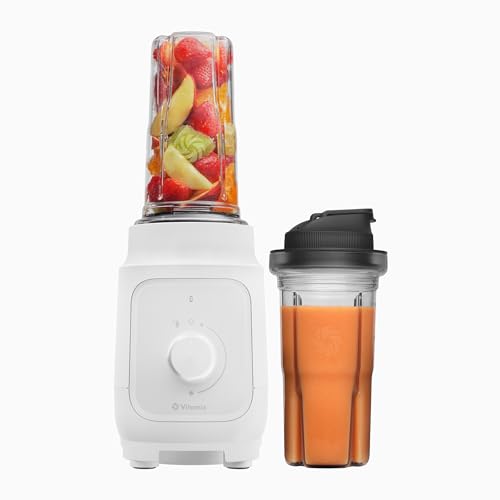
Let’s say you want to see what a step up from the usual Ninja looks like. The Vitamix Nano is a different brand, and it’s a useful reference point because it sits at a much higher price. Keep in mind it isn’t a Ninja, so treat it as an alternative, not a Minja or Ninja stand-in.
Vitamix Nano Personal Blender with SmoothiePilot Technology, White
Editors' Favorite
Color: White Size: 20 fl oz Dimensions: 8.5 x 5.5 x 15.3 inches Weight: 6.5 Pounds Product Group: Kitchen Binding: Kitchen
Shop NowThe Ninja Nutri-Plus: what the title tells you
The Ninja Nutri-Plus Personal Blender is the product in our data that fits the name you probably meant. Its title gives us a few solid facts. It’s a personal blender, it carries a 900PW rating, and it comes with three 20oz cups. The color listed is taupe.
Three cups is a practical detail. It means you can blend one smoothie, rinse nothing, and have a second or third cup ready for another person or another day. That’s 60oz of cup capacity across the set, though each blend is limited to what one 20oz cup can hold. Don’t confuse the total with a single large batch. If you need to make soup for six, a personal blender isn’t the right tool.
The 900PW figure is the number to compare against other personal blenders. Wattage isn’t the whole story, since blade design and cup shape matter too, but it gives you a rough read on motor strength when the other specs match. We can’t tell you from a title how it handles ice or frozen fruit, and we won’t pretend to. What we can say is that a 900-rated motor is aimed at people who want more than a basic shake maker.
The price in our data puts it at about half the Vitamix Nano, which is a big part of why Ninja personal blenders get recommended to first-time buyers. If a small, easy-to-store blender is what you’re after, our picks for the best nutri blender are a good next read.
Ninja Nutri-Plus Personal Blender, 900PW, (3) 20oz Cups, Taupe, BN301BRBRN

Editors' Favorite
Color: Taupe Size: 900-Peak-Watts Dimensions: 4.7 x 4.7 x 13.8 inches Weight: 5.34 pounds Product Group: Kitchen Binding: Kitchen
Shop NowWhat size and power to look for
Once you know you’re shopping for a personal blender, two specs do most of the work: cup size and motor power. Everything else is secondary.
Cup size
Twenty ounces is a common single-serve size, and it’s what the Ninja Nutri-Plus uses for each of its three cups. It’s enough for a standard smoothie with a banana, a handful of berries and some liquid. Smaller cups, in the 10 to 14oz range, suit protein shakes or baby food. Larger cups suit people who like a big breakfast smoothie. Pick the size that matches how you actually drink, not the largest number on the box.
Also think about fit. A cup that doesn’t fit your car’s cup holder or your bag is a cup you’ll leave at home. That’s worth a minute of thought, especially if you plan to blend and go.
Wattage and what it means
More watts generally means more power to crush ice and break down fibrous produce like kale or frozen mango. A figure around 900 is solid for a personal blender. Lower-wattage and battery-powered models can handle soft fruit, yogurt and powders, but they may struggle with a full cup of ice. That’s not a flaw, just a trade-off for size and portability.
When you compare, look at the same rating on each product. Some listings quote peak watts and others quote running watts, and the two numbers aren’t interchangeable. If the listing doesn’t say which, treat the number with caution.
For more on keeping a blender compact without giving up the basics, see our guide to the best small blender.
Portable and glass options
Not every personal blender plugs into the wall. Some run on a built-in battery and charge over USB, which changes where you can use them. The PAISHENKEJI glass portable blender is one example. Its title lists a glass body, a mini personal size and USB recharging, and it names uses such as baby food, travel, the beach, the office, sports and the gym.
It’s from a different brand than Ninja, so it belongs in the alternatives column. The appeal is in the format. A rechargeable blender goes where an outlet isn’t, and a glass cup doesn’t hold onto smells the way some plastic can. The limits are just as clear. A mini cup means small batches, and a battery-powered motor usually can’t match a plug-in motor on tough ingredients. Think of it as a travel companion, not a replacement for a countertop blender.
If glass is a priority for you, our list of the best glass blender models goes deeper on the material.

PAISHENKEJI
Portable Glass Blender for Smoothies and Baby Food: PAISHENKEJI 400ml Stainless Steel USB-C Mini Personal Blender
This 400ml glass-cup blender breaks down protein powder, vegetables, and baby food in 25 to 35 seconds using six stainless steel blades, with a 4000mAh battery that runs off any USB-C power source. Buy it if you want fresh blends at the office, gym, or on the road without hauling a countertop machine or tasting plastic in your drink.
Pros and Cons
Pros
- Glass cup and stainless steel housing deliver a more durable build than the all-plastic units common at this size.
- USB-C charging with a silicone port cap means you can top it up with the same cable as your phone while keeping water out.
- Overload, overheating, and power-off protections are built in, which matters when blending thicker mixes like baby food.
- Double-click activation reduces the chance of the blender switching on inside a gym bag or backpack.
Cons
- The glass cup adds noticeable weight compared to plastic portable blenders and is more vulnerable if dropped on a hard floor.
- At 400ml, capacity covers one serving only, so households blending for two will need to run it twice.
PAISHENKEJI Portable Glass Blender for Smoothies and Baby Food: PAISHENKEJI 400ml Stainless Steel USB-C Mini Personal Blender
PAISHENKEJI
Portable Glass Blender for Smoothies and Baby Food: PAISHENKEJI 400ml Stainless Steel USB-C Mini Personal Blender
This 400ml glass-cup blender breaks down protein powder, vegetables, and baby food in 25 to 35 seconds using six stainless steel blades, with a 4000mAh battery that runs off any USB-C power source. Buy it if you want fresh blends at the office, gym, or on the road without hauling a countertop machine or tasting plastic in your drink.
$39.99 at AmazonEditors' Favorite
Color: Silver Size: Standard size Dimensions: 7.87401574 x 2.755905509 x 2.755905509 Inches Product Group: Kitchen
Shop NowCommon mistakes when shopping for a personal blender
A few errors come up again and again. Here are the ones worth avoiding.
Trusting a misspelled search
We’ve covered this one. A typo like Minja can send you to the wrong listing, or to a seller who is trading on the confusion. Always confirm the brand and model name on the product page before you buy.
Buying on price alone
The three products here are listed at roughly $39.99, $89.99 and $179.95. That’s a wide spread, and the cheapest isn’t automatically the best value. If you’ll blend daily, a stronger motor and sturdier cups can be worth the extra money. If you’ll blend twice a month, a small portable model might be plenty.
Ignoring cleanup
A blender you hate cleaning is a blender that sits in the cabinet. Check whether the cups and blade assembly are listed as dishwasher safe, and think about how many parts you’ll have to wash. Fewer parts usually means less friction.
Overfilling the cup
Personal blenders work best when you leave headroom. Packing a cup to the brim with ice and fruit is the quickest route to a poor blend and a messy counter. Add liquid first, then soft ingredients, then frozen ones, and stop at the fill line if there is one.
If budget is your main concern, the best cheap blender guide shows where you can save without giving up too much.
When to move up or switch
A personal blender is a great starting point, but it has a ceiling. If you find yourself making two or three cups in a row to feed the family, or you want to blend hot soup, nut butter or large frozen batches, a full-size blender is the better fit. That’s when a higher-end model like the Vitamix starts to make sense, though the Nano in this guide is still a personal blender and not a full-size machine.
Switch the other way if you rarely blend at home. A rechargeable glass model can cover the occasional shake or the baby food batch without taking up counter space. And if you simply wanted the Ninja you were thinking of all along, the Nutri-Plus is the one to look at first.
One last tip. Write down what you plan to blend most often before you shop. Smoothies, shakes and sauces call for different strengths, and that list will make every spec on the page easier to read.
FAQ
Is Minja a real blender brand?
We couldn’t find a blender brand named Minja in the product data we use. It’s most likely a misspelling of Ninja. Check the brand name on the product page before you order.
What is a personal blender?
A personal blender is a compact model built around a single-serve cup. You fill the cup, attach the blade assembly, blend, and often drink straight from the cup. It’s meant for one or two servings, not a family-size batch.
How big are the cups on the Ninja Nutri-Plus?
The product title lists three 20oz cups. That gives you 60oz of cup capacity across the set, but each blend is limited to one 20oz cup. It’s a good size for a standard smoothie.
Can a USB rechargeable blender replace a plug-in one?
For light jobs, often yes. Portable models are handy for travel, the office and the gym, and they can handle soft fruit and powders. Plug-in blenders generally have stronger motors, so they’re the safer pick for ice and tough produce.
Is a Vitamix worth it over a Ninja?
That depends on how often you blend and what you blend. The Vitamix Nano is listed at $179.95 against $89.99 for the Ninja Nutri-Plus, and that price gap is the clearest difference we can confirm from the listings. We can’t judge blending performance from titles alone, so read the full specs and reviews before you decide.

Write Your Review
No reviews yet. Be the first to share your experience!