

Middle Eastern cookware is the mix of heavy lidded pots, wide shallow pans, baking trays and small long-handled coffee pots used across the Levant, the Gulf, Turkey and Iran. You don’t need a traditional vessel for every dish. A stainless saucepan, a sturdy sheet pan and one nonstick pot will cover most of what this cuisine asks for.
This guide explains which pieces matter, how copper, clay, stainless steel and ceramic nonstick behave, and where everyday pans can stand in for specialty ones. We pulled three products from our research to match the sections below. None of them is sold as Middle Eastern cookware, and we’ll say so each time.
What counts as Middle Eastern cookware
The region is huge, so there’s no single kit. Still, a few vessels show up again and again. A tall rice pot with a tight lid handles pilaf, maqluba and Persian rice. A dallah brews and pours Arabic coffee, while an ibrik (also called a cezve) makes Turkish coffee in a small, long-handled pot. A saj is a dome-shaped metal griddle for thin flatbread. Kanafeh bakes in a round, shallow pan. Tagines come from North Africa, but they often sit on the same shelf in shops that sell regional cookware.
The point is technique, not the label. Rice gets steamed under a snug lid. Stews braise low and slow. Flatbreads and pastries need dry, even oven heat. Any pan that does those jobs well belongs in your kitchen, whether or not it comes with a regional name.
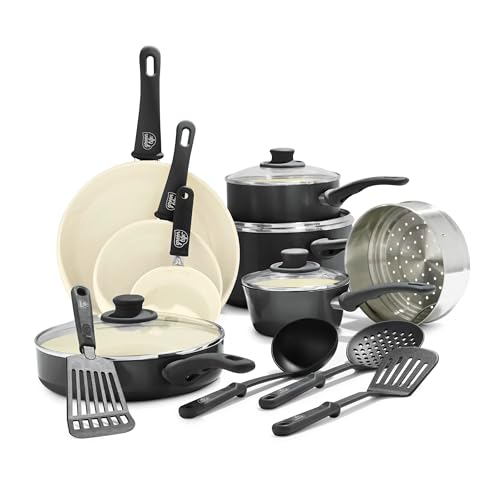
If you’re starting from nothing, a full set is the quickest way to cover the stovetop. The GreenLife 16 Piece Ceramic Nonstick Pots & Pans Cookware Set in Black & Cream is a general-purpose set, not a regional one. Sets of this size usually include a few pot sizes, so check the listing for the exact pieces and whether lids are included. A ceramic nonstick surface is meant to release food easily, which can help if you like the crisp rice crust known as tahdig. Nonstick coatings do wear over time, so keep the heat at low to medium and use soft utensils. Want to compare other options? Our best cookware set roundup lays them out.
GreenLife
Full Kitchen Starter Cookware Set: GreenLife 16 Piece Ceramic Nonstick Pots and Pans, Black and Cream
This 16 piece set covers every burner job from a 4 inch egg pan to a 5QT stock pot, with a PFAS free ceramic coating that releases food cleanly and wipes out in seconds. Buy it if you are stocking a first kitchen or replacing worn pans on a gas or electric range, since it arrives complete with lids, a steamer insert, and utensils.
Pros and Cons
Pros
- Reinforced wobble free bases sit flat on the burner and spread heat evenly across the cooking surface.
- Four utensils and a 7 inch stainless steamer are included, so nothing extra is needed on day one.
- Cookware vessels are built from a minimum of 65 percent recycled material.
- Dishwasher safe when you are rushed, with hand washing available to protect the finish long term.
Cons
- Not induction compatible, which rules it out for anyone cooking on a magnetic cooktop.
- The 350F oven ceiling means no broiling and no high heat oven finishes.
GreenLife Full Kitchen Starter Cookware Set: GreenLife 16 Piece Ceramic Nonstick Pots and Pans, Black and Cream
GreenLife
Full Kitchen Starter Cookware Set: GreenLife 16 Piece Ceramic Nonstick Pots and Pans, Black and Cream
This 16 piece set covers every burner job from a 4 inch egg pan to a 5QT stock pot, with a PFAS free ceramic coating that releases food cleanly and wipes out in seconds. Buy it if you are stocking a first kitchen or replacing worn pans on a gas or electric range, since it arrives complete with lids, a steamer insert, and utensils.
$99.99 at AmazonEditors' Favorite
Color: Graphite Black Size: 16 Piece Cookware Set Dimensions: 12.99 x 21.26 x 10.24 inches Weight: 15.4 Pounds Product Group: Kitchen Binding: Kitchen
Shop NowMaterials: copper, clay, stainless steel and ceramic
Material matters more than shape here. Each one changes how fast the pot heats, how forgiving it is with rice, and how much care it needs afterward.
Copper and tin
Traditional copper pots are usually lined with tin or stainless steel, because bare copper can react with acidic foods like tomato and lemon. Copper reacts quickly when you turn the heat up or down, which suits delicate sauces and sugar syrups. It also scorches rice fast over a high flame. Tin linings wear thin over years and need to be re-tinned, so factor that in. If copper appeals to you, our best copper cookware guide covers what to look for.
Clay and earthenware
Clay holds gentle, even heat and keeps stews moist, which is why it’s loved for slow-cooked dishes. It doesn’t like sudden temperature changes, though. Some makers tell you to soak unglazed clay before first use, and many say to avoid putting a cold pot on a hot burner. Not every clay pot is rated for the stovetop, so read the maker’s instructions before you light a flame.
Stainless steel, aluminum and ceramic nonstick
Stainless steel is durable, has no coating to chip and usually goes straight into the oven. Multi-ply builds sandwich a heat-spreading layer between steel surfaces, which smooths out hot spots. Aluminum heats quickly and evenly, which is why it’s common in bakeware. Ceramic nonstick releases food with less oil, but the surface has a shorter life than steel. For deeper comparisons, see our guides to best stainless steel cookware and best ceramic cookware.
Baking and roasting trays
A lot of Middle Eastern food finishes in the oven. Za’atar flatbreads, spiced kofta, roasted cauliflower and eggplant, sfeeha meat pies and trays of baklava all need a flat, rigid surface that won’t buckle under heat. Thin, flimsy pans warp and cook unevenly. A heavier pan stays flat and gives you steady browning from edge to center.
The Made In Cookware Sheet Pan is described as commercial grade aluminum bakeware. Aluminum spreads heat quickly, which helps flatbreads brown evenly and vegetables caramelize at the edges. If the pan is uncoated, lemon juice, tomato and vinegar marinades can react with the bare metal, so line it with parchment for those dishes. It isn’t a kanafeh pan or a deep baklava tray, so for syrup-soaked pastry you’ll want a pan with the right depth and dimensions. The title doesn’t give a size, so check the listing before you buy to make sure it fits your oven.

Made In
Half Sheet Pan for Roasting and Baking: Made In Commercial Grade 3004 Aluminum Bakeware, 13 x 17.75 Inch
This 13 by 17.75 inch aluminum sheet pan handles roasting, baking, and freezing with commercial-grade 3004 aluminum that conducts heat evenly up to 500F. Home cooks who want restaurant-line durability for nightly vegetable roasts and weekend baking will get the most from it.
Pros and Cons
Pros
- Made in the USA from commercial-grade 3004 aluminum, a heavier gauge than typical big-box sheet pans.
- Standard half-sheet dimensions mean common silicone mats, cooling racks, and parchment sheets drop right in.
- High 500F ceiling supports aggressive roasting and broiler-adjacent finishing.
- Straightforward single-piece construction with no coating to chip or peel over time.
Cons
- Bare aluminum is not nonstick, so parchment or a light oil coat is needed for sticky bakes and sugary glazes.
- Aluminum discolors and develops a patina with repeated high-heat use, which some buyers find unattractive even though it does not affect performance.
Made In Half Sheet Pan for Roasting and Baking: Made In Commercial Grade 3004 Aluminum Bakeware, 13 x 17.75 Inch
Made In
Half Sheet Pan for Roasting and Baking: Made In Commercial Grade 3004 Aluminum Bakeware, 13 x 17.75 Inch
This 13 by 17.75 inch aluminum sheet pan handles roasting, baking, and freezing with commercial-grade 3004 aluminum that conducts heat evenly up to 500F. Home cooks who want restaurant-line durability for nightly vegetable roasts and weekend baking will get the most from it.
$29.00 at AmazonEditors' Favorite
Color: Silver Size: Half Sheet Pan - Standard Dimensions: 17.75 x 13 x 1 inches Weight: 1.9 pounds Product Group: Kitchen Binding: Kitchen
Shop NowRice, stews and syrup on the stovetop
Rice sits at the center of many tables in the region, and the method is consistent. Rinse basmati until the water runs mostly clear, and many cooks soak it for 20 to 30 minutes before cooking. Then cook it gently with a tight lid. A clean kitchen towel under the lid is a common trick to catch steam so it doesn’t drip back onto the rice. Low heat and patience do most of the work.
The same pot logic applies to lentil soup, braised chicken and vegetable stews. You want a base that heats evenly, a lid that fits and handles that stay manageable. Small pots matter too. A simple sugar syrup for baklava or kanafeh, usually sugar, water and a squeeze of lemon, needs a saucepan you can watch closely. Small pot, real job.
The LEGEND COOKWARE 5-Ply Stainless Steel 3-Quart Sauce Pan with Lid fits that role. Its title lists induction compatibility, an oven-safe rating of 800°F and a no-coating build, and the seller says it heats evenly and won’t warp. Those are the seller’s claims, so read the full listing. At 3 quarts it’s a small-batch pot: rice for a couple of people, a pot of lentil soup or a batch of syrup. It’s too small for a family-size maqluba. Rice can stick to stainless if the heat runs high, so keep the flame low and use enough oil or butter.

LEGEND COOKWARE
5-Ply Stainless Saucepan for Sauces and Grains: LEGEND COOKWARE 3-Quart with Lid, Induction Ready
This 3-quart 5-ply stainless saucepan layers steel and aluminum to spread heat evenly from edge to center, so custards, rice, and reductions cook without scorched hot spots. Buy it if you want an uncoated pan that moves from induction burner to an 800°F oven and holds up to decades of daily use.
Pros and Cons
Pros
- Even edge-to-center heating makes it reliable for temperature-sensitive work like caramel, roux, and rice.
- Cast hollow riveted handles stay cooler than solid handles and stay tight through years of daily lifting.
- Uncoated stainless surface can be scrubbed, deglazed, or run at high heat without degrading.
- One pan covers stovetop, oven, and every cooktop type, reducing the cookware you need to own.
Cons
- It is not nonstick, so eggs and starches will grab unless you preheat the pan and add oil first.
- Hand washing is recommended and the heavy 3mm build makes it noticeably weightier than thin aluminum saucepans.
LEGEND COOKWARE 5-Ply Stainless Saucepan for Sauces and Grains: LEGEND COOKWARE 3-Quart with Lid, Induction Ready
LEGEND COOKWARE
5-Ply Stainless Saucepan for Sauces and Grains: LEGEND COOKWARE 3-Quart with Lid, Induction Ready
This 3-quart 5-ply stainless saucepan layers steel and aluminum to spread heat evenly from edge to center, so custards, rice, and reductions cook without scorched hot spots. Buy it if you want an uncoated pan that moves from induction burner to an 800°F oven and holds up to decades of daily use.
$89.99 at AmazonEditors' Favorite
Color: Stainless Steel 5-Ply Size: 3 Quarts Dimensions: 15.75 x 8.5 x 5.75 inches Weight: 3.31 pounds Product Group: Kitchen
Shop NowCommon mistakes
The first mistake is buying a specialty vessel you’ll use twice. A decorative tagine or a hammered copper tray looks great on a shelf, then sits there. Start with the pieces that match what you actually cook, and add one traditional item at a time.
The second is treating clay like metal. A cold clay pot on a hot burner can crack. Heat it gradually, and let it cool before washing. Third, overheating nonstick. High heat shortens the life of any coating, and rice rarely needs it anyway. Fourth, skipping the lid. Steam is what cooks rice and keeps stews tender, so a loose lid defeats the pot.
Finally, don’t overspend before you know your habits. A solid pot and a good tray beat a cabinet full of gear. If you’re watching costs, our best budget cookware guide is a sensible place to begin.
Care and when to replace
Care depends on material. Hand wash copper and clay, and dry them well. Stainless steel handles more abuse, though high heat can leave a rainbow tint that a bit of vinegar usually removes. Ceramic nonstick wants gentle sponges and no metal utensils.
Replace a pan when it tells you to. A warped tray that rocks on the counter won’t brown evenly. A nonstick surface that’s flaking or scratched through has done its job. Worn tin in a copper pot is a sign to get it re-lined. For a general roundup across materials, browse our best cookware page.
FAQ
What is Middle Eastern cookware?
It’s the range of pots, pans and vessels used to cook the food of the Levant, the Gulf, Turkey and Iran. Common pieces include lidded rice pots, copper pots, coffee pots like the dallah and ibrik, flatbread griddles and baking trays. Many of the same jobs can be done with standard stainless, aluminum or nonstick cookware.
Do I need a tagine or other traditional pots?
No. A tagine is North African and suits slow, moist braises, but a heavy lidded pot can do similar work. Buy traditional pieces if you love the style or cook a dish often. Otherwise, everyday cookware covers the technique.
Is copper cookware safe for Middle Eastern cooking?
Copper pots are usually lined with tin or stainless steel, because bare copper can react with acidic ingredients. Check the lining before you cook tomato or lemon dishes, and watch for worn spots in old tin. Follow the maker’s care instructions.
What pan works best for tahdig, the crispy rice crust?
A pot with a tight lid and a surface that releases rice well is the goal. Many cooks use nonstick for easy release, while others use well-oiled stainless or traditional pots. Keep the heat moderate so the crust browns without burning.
Can I use a sheet pan for baklava or kanafeh?
You can for flat bakes and roasting, but syrup-soaked pastries are better in a pan with taller sides. Baklava needs depth to hold layers and syrup, and kanafeh is traditionally baked in a round, shallow pan. Check pan dimensions before you commit.



Write Your Review
No reviews yet. Be the first to share your experience!