

Enameled cast iron occupies a curious middle ground in cookware technology. The base material—cast iron—has been pulling heat from stovetops and fires for centuries, storing thermal energy in its dense crystalline structure like a battery stores electricity. But raw cast iron demands maintenance: seasoning layers, careful drying, acidic ingredients handled with caution. The enamel coating changes that contract entirely.
That glassy layer fused to the iron at temperatures exceeding 1500°F creates a non-reactive barrier. You can simmer tomato sauce for hours without stripping seasoning or leaching metallic flavors. The porcelain surface resists staining from turmeric, beets, and red wine—ingredients that would mar bare iron permanently. Lodge applies this enamel in multiple layers, building up a surface that can handle metal utensils and aggressive scrubbing without the anxiety that accompanies traditional cast iron care.
The thermal physics remain unchanged. Cast iron’s heat capacity—its ability to absorb and hold energy—sits roughly four times higher than aluminum by volume. A preheated Dutch oven maintains its temperature when you add cold ingredients, which matters profoundly for browning meat or holding a steady simmer. That same density makes it slow to heat initially, but once saturated with thermal energy, it releases heat gradually and evenly. The thick walls eliminate hot spots that plague thinner cookware.
Construction Details That Shape Performance
Lodge casts these Dutch ovens in sand molds at their Tennessee foundry, pouring molten iron at approximately 2800°F. The cooling process determines the iron’s grain structure, which affects how it conducts heat. Slower cooling produces larger crystalline formations that distribute thermal energy more uniformly. The result is cookware that weighs between 13 and 17 pounds depending on capacity, with walls typically 4-5 millimeters thick.
The enamel application happens in stages. After casting, workers grind and smooth the iron surface to remove imperfections that would telegraph through the coating. A base layer of enamel goes on first, usually a darker, more durable formulation. This gets fired in a kiln, creating a chemical bond with the iron substrate. Subsequent layers add color and additional protection, with each firing cycle strengthening the union between glass and metal.
The interior typically receives a light-colored enamel—cream or white—that makes it easy to monitor fond development and color changes during cooking. Darker exteriors in red, blue, or black provide visual appeal while hiding exterior staining from oven use. The lid design matters too. Lodge uses a self-basting system where condensation collects on the domed interior surface and drips back onto food, creating a continuous moisture cycle that keeps braises tender.
How Enamel Changes Your Cooking Approach
Traditional cast iron requires oil-based seasoning that breaks down under certain conditions. Enameled versions eliminate that variable entirely. You can deglaze with wine immediately after searing without worrying about damaging a seasoning layer. Long-simmered acidic sauces—marinara, chili with tomatoes, vinegar-based braises—cause no harm. The pot cleans with regular dish soap and a sponge, a heresy with bare iron.
But the enamel introduces its own constraints. The coating can chip if you drop the pot or bang it against hard surfaces. Thermal shock—plunging a hot pot into cold water, or placing a cold pot directly onto high heat—can crack the enamel layer. Preheating empty on high heat may cause the coating to fail over time. These aren’t deal-breakers, but they demand awareness that bare cast iron doesn’t require.
The cooking surface behaves differently than seasoned iron. Enamel is non-stick in the sense that it won’t chemically bond with food, but it lacks the slick polymerized surface that well-maintained bare iron develops. Eggs and delicate fish require more fat to prevent sticking. On the other hand, you get fond development—those browned bits that create sauce foundations—more reliably because the light interior makes them visible and the surface texture promotes adhesion without burning.
Capacity Planning and Size Selection
Dutch oven capacity determines what recipes fit comfortably. A 6-quart model handles whole chickens, pot roasts for four to six people, or batch cooking for meal prep. The 7.5-quart size accommodates larger cuts of meat or cooking for eight. Smaller 4 or 5-quart versions work for side dishes, soups for two, or recipes where you need multiple pots in use simultaneously.
Internal diameter matters as much as volume. A wider, shallower pot provides more surface area for browning meat in a single layer. Taller, narrower designs better suit stocks and soups where you want to minimize evaporation. Lodge’s round shape is traditional, but oval variants accommodate long roasts or whole fish that don’t fit circular footprints. Check your oven dimensions too—a 7.5-quart pot typically measures 12 inches in diameter and stands 6 inches tall including the lid knob.
Weight becomes relevant if you’re moving the pot frequently or have mobility concerns. A 6-quart model weighs around 14 pounds empty, closer to 20 pounds loaded with a roast and vegetables. The handles—large loops on either side—distribute load well, but plan on using both hands and possibly potholders that provide grip rather than just heat protection.
Comparing Lodge to Premium Competitors
Lodge positions itself as accessible enameled cast iron, typically priced 60-70% below French brands. The tradeoff appears primarily in finish refinement rather than functional performance. Premium manufacturers often polish the interior enamel to a smoother texture that releases food more easily. The casting may be slightly thinner and lighter while maintaining thermal mass. Color options expand significantly, and some brands offer lifetime warranties versus Lodge’s limited coverage.
In practical cooking tests, Lodge’s heat retention and distribution match more expensive options. The thicker casting actually benefits steady-state cooking—once hot, it stays hot longer. The enamel durability proves comparable in normal use. Chips and cracks typically result from impact or thermal shock regardless of price point. The light interior enamel performs identically for monitoring cooking progress.
Where differences emerge: the fit between lid and pot body tends to be slightly looser on Lodge models, allowing more moisture escape during long braises. The enamel texture inside catches slightly more food, requiring more fat or liquid to prevent sticking. The handles can get hot faster because they’re solid cast iron rather than hollow or insulated designs. None of these issues prevent good cooking, but they represent the value equation you’re accepting.
Maintenance Realities and Longevity
Daily cleaning requires only hot water, dish soap, and a non-abrasive sponge. Stubborn residue yields to a paste of baking soda and water, left to sit for 15 minutes before scrubbing. Bar Keeper’s Friend removes staining from the interior enamel without damaging the coating. The exterior develops patina over time—darkening where food has bubbled over or where oven heat concentrates. This is cosmetic rather than functional degradation.
Chips in the enamel don’t necessarily end the pot’s useful life. Small chips on the exterior matter little. Interior chips expose bare iron, which can rust and potentially react with acidic foods. If chips remain small and you avoid cooking highly acidic ingredients directly over them, the pot remains functional for years. Large cracks or extensive chipping that exposes significant iron surface area signal replacement time.
Storage presents few challenges. Unlike bare cast iron, you can nest other cookware inside without worrying about damaging seasoning. Place a dish towel or paper towel between nested pieces to prevent enamel chipping from pot-to-pot contact. The lids can be stored inverted on top of the pot body or separately. Avoid stacking heavy items directly on the lid knob, which can crack under point loads.
Specific Cooking Applications Where It Excels
Braising represents the ideal use case. The heavy lid traps moisture while the dense walls maintain stable low temperatures for hours. Tough cuts of meat—short ribs, pork shoulder, lamb shanks—break down into tender results as collagen converts to gelatin. The even heat prevents scorching on the bottom while the top stays hot enough to prevent condensation from dripping as plain water rather than flavorful liquid.
Bread baking has become a signature application. Preheating the covered pot creates a steam chamber that mimics professional bakery ovens. When you drop wet dough into the hot pot and cover it, the moisture released during baking stays trapped, keeping the crust soft initially so the loaf can expand fully. Then you remove the lid for the final phase, allowing the crust to dry and brown. The retained heat in the iron maintains oven spring that lighter baking vessels can’t match.
Deep frying works surprisingly well. The thermal mass holds oil temperature steady when you add cold food, and the high sides contain splatter. However, the enamel limits maximum temperature—you should keep oil below 400°F to avoid coating damage. For shallow frying or pan-frying, it’s excellent. For true deep frying at higher temperatures, bare cast iron or stainless steel prove more durable.
Soups and stews benefit from the same heat stability that makes braising successful. You can start with a sauté directly in the pot, build layers of flavor, then add liquid and simmer for hours. The light interior makes it easy to see when aromatics have softened or when fond needs deglazing. The size accommodates batch cooking—doubling recipes for freezing or meal prep across several days.
Can you use metal utensils in an enameled Dutch oven?
Yes, metal utensils won’t scratch quality enamel under normal cooking pressure. The coating is essentially glass, harder than steel. However, banging metal tools aggressively or using them as prying levers can chip the enamel, especially at the rim where the coating is thinnest. Wooden or silicone utensils eliminate any risk and won’t conduct heat from the pot to your hand. For stirring and scraping fond, metal works fine with reasonable care. Sharp-edged tools like whisks with thin wires pose minimal risk, but avoid using knives to cut food while it’s in the pot.
How hot can you safely heat an enameled cast iron Dutch oven?
Lodge rates their enameled cookware safe to 500°F, which covers most home cooking needs including braising, baking bread, and roasting. Some premium brands claim higher tolerances, but the practical limit concerns the enamel coating rather than the iron underneath. Sustained exposure above 500°F can discolor or damage the enamel over time. The bigger risk is heating the pot empty or on high heat without food or liquid inside—this creates thermal stress that can crack the coating. Always preheat gradually with liquid or fat inside, and avoid direct contact with open flames that concentrate extreme heat on small areas.
Does the enamel coating affect how cast iron retains and distributes heat?
The enamel layer is thin enough—typically less than a millimeter—that it doesn’t meaningfully change the thermal properties. The cast iron underneath still provides the heat capacity and even distribution that makes the cookware effective. Enamel is actually a decent thermal conductor compared to many materials, though not as conductive as the iron itself. In practical terms, you won’t notice any difference in how the pot heats, holds temperature, or recovers heat after adding cold ingredients compared to bare cast iron of the same thickness. The real difference is chemical reactivity and maintenance, not thermal performance.
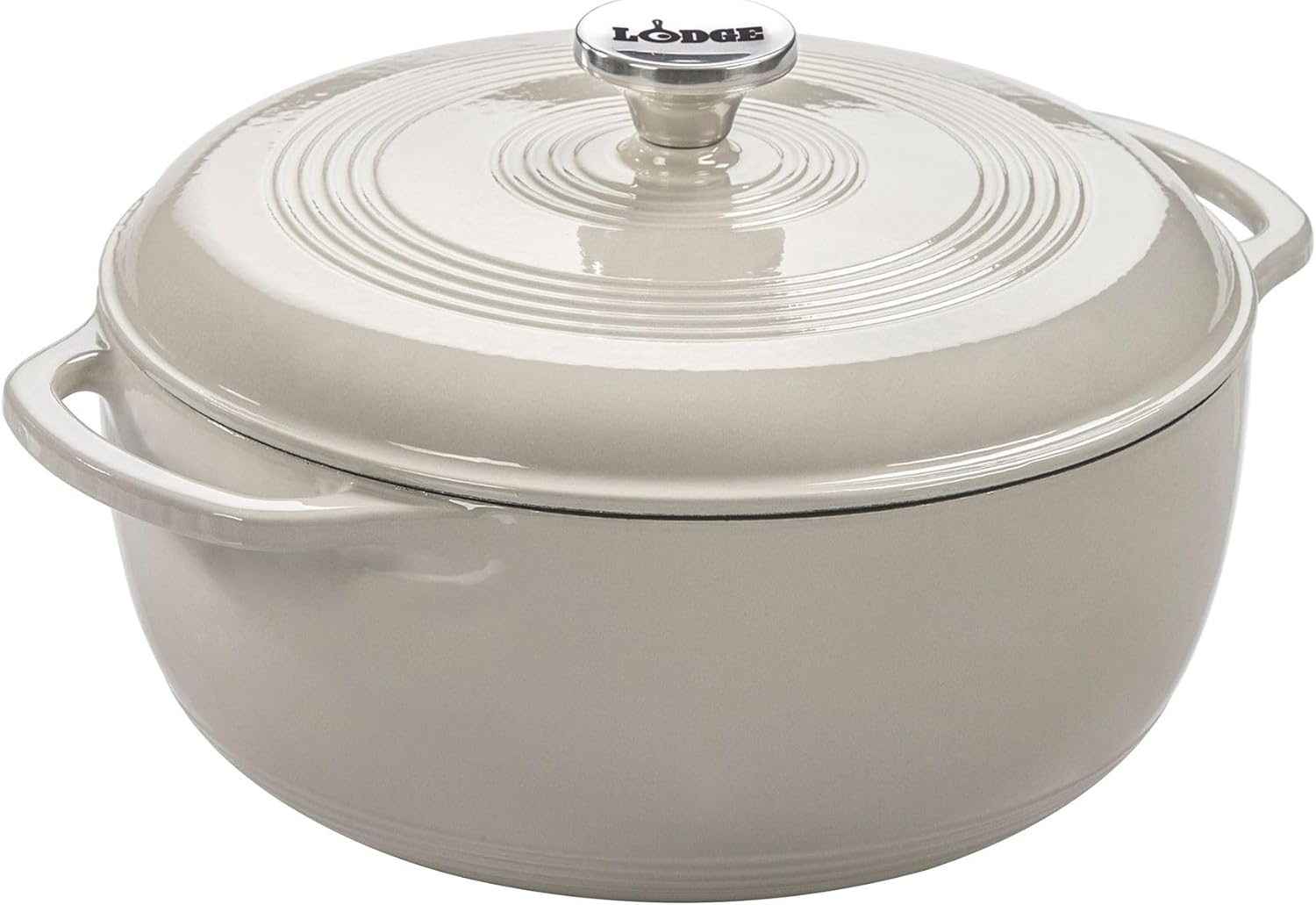
Lodge
6-Quart Enameled Cast Iron Dutch Oven for Bread Baking & Braising
This 6-quart enameled cast iron Dutch oven delivers even heat distribution and superior retention for bread baking, braising, and one-pan meals without rust or seasoning maintenance. Buy it if you want cast iron durability with the convenience of a non-reactive enamel surface that handles acidic ingredients and refrigerator storage.
Pros and Cons
Pros
- Handcrafted in the USA by a family-owned company with 125+ years of cast iron expertise, built to last generations.
- Dishwasher-safe with durable porcelain enamel that resists staining and requires no special maintenance or re-seasoning.
- 6-quart capacity handles family-sized portions for batch cooking, bread baking, and entertaining without crowding.
Cons
- Heavy weight (approximately 8 lbs) requires two hands and careful stovetop-to-oven transfers, especially when full.
- Oyster white enamel may show staining over time with heavy use of deeply colored foods like beets or red wine.

Lodge
6-Quart Enameled Cast Iron Dutch Oven for Bread Baking & Braising, Caribbean Blue
This 6-quart enameled cast iron Dutch oven retains heat for consistent braising and bread baking while resisting rust without seasoning. Buy it if you want reliable stovetop-to-oven versatility up to 500°F with easier maintenance than bare cast iron.
Pros and Cons
Pros
- Heat retention rivals expensive European brands at a lower price point.
- Enamel finish resists staining and cleans up without scrubbing or re-seasoning.
- 6-quart capacity handles a whole chicken or enough stew for six servings.
Cons
- Hand washing recommended despite dishwasher-safe claim to preserve enamel finish over time.
- Cast iron weight makes this pot heavier than aluminum or stainless alternatives.

Lodge
6-Quart Enameled Cast Iron Dutch Oven for Bread Baking, Braising & Slow Cooking - Island Spice Red
This 6-quart enameled cast iron Dutch oven retains heat exceptionally well for consistent braising and crusty bread baking, and the enamel coating eliminates rust concerns while remaining oven-safe to 500°F. Buy it if you want Lodge's legendary cast iron performance with colorful, low-maintenance enamel that goes straight from stovetop to oven to table.
Pros and Cons
Pros
- Cast iron core delivers superior heat retention for consistent cooking results across all burner types.
- Enamel finish eliminates the rust risk and seasoning routine required by bare cast iron.
- Safe for stovetop, oven up to 500°F, and refrigerator, covering nearly every cooking and storage need.
Cons
- Cast iron weight makes it heavier than aluminum or stainless steel Dutch ovens, which can be challenging when full.
- Enamel can chip if dropped or struck, requiring careful handling to maintain the coating.
Lodge 6-Quart Enameled Cast Iron Dutch Oven for Bread Baking & Braising
Lodge
6-Quart Enameled Cast Iron Dutch Oven for Bread Baking & Braising
This 6-quart enameled cast iron Dutch oven delivers even heat distribution and superior retention for bread baking, braising, and one-pan meals without rust or seasoning maintenance. Buy it if you want cast iron durability with the convenience of a non-reactive enamel surface that handles acidic ingredients and refrigerator storage.
$89.90 at AmazonEditors' Favorite
Material: Cast Iron Finish Type: Enameled Product Care Instructions: Hand Wash Only, Oven Safe Is Oven Safe: Yes Lid Material: Cast Iron Is the item dishwasher safe?: No Capacity: 6 Liters Item Weight: 14.88 Pounds Item Dimensions W x H: 13.5"W x 10.9"H Item Dimensions: 13.5 x 10.9 x 7.3 inches With Lid: Yes Temperature Rating: 500 Degrees Fahrenheit Brand Name: Lodge Manufacturer: Lodge UPC: 075536462134 Global Trade Identification Number: 10075536462131 Part Number: EC6D13 Model Number: Enameled Dutch Oven Unit Count: 1.0 Count Included Components: Cookware;Dutch Ovens;dutch-ovens Item Type Name: Enameled Dutch Oven Best Sellers Rank: #655 in Kitchen & Dining (See Top 100 in Kitchen & Dining) #2 in Dutch Ovens ASIN: B00U1OCPWQ Customer Reviews: 4.7 4.7 out of 5 stars (38,847) 4.7 out of 5 stars Color: Oyster White Item Shape: Round Brand: Lodge
Shop NowLodge 6-Quart Enameled Cast Iron Dutch Oven for Bread Baking & Braising, Caribbean Blue
Lodge
6-Quart Enameled Cast Iron Dutch Oven for Bread Baking & Braising, Caribbean Blue
This 6-quart enameled cast iron Dutch oven retains heat for consistent braising and bread baking while resisting rust without seasoning. Buy it if you want reliable stovetop-to-oven versatility up to 500°F with easier maintenance than bare cast iron.
$89.90 at AmazonGreat Value
Color: Blue Size: 6 Quart Dimensions: 13.56 x 10.93 x 7.31 inches Weight: 13.52 Pounds Product Group: Kitchen Binding: Kitchen
Shop NowLodge 6-Quart Enameled Cast Iron Dutch Oven for Bread Baking, Braising & Slow Cooking - Island Spice Red
Lodge
6-Quart Enameled Cast Iron Dutch Oven for Bread Baking, Braising & Slow Cooking - Island Spice Red
This 6-quart enameled cast iron Dutch oven retains heat exceptionally well for consistent braising and crusty bread baking, and the enamel coating eliminates rust concerns while remaining oven-safe to 500°F. Buy it if you want Lodge's legendary cast iron performance with colorful, low-maintenance enamel that goes straight from stovetop to oven to table.
$89.90 at AmazonColor: Island Spice Red Size: 6 Quart Dimensions: 13.5 x 11 x 7.3 inches Weight: 14.88 pounds Product Group: Kitchen Binding: Kitchen
Shop NowLodge Essential Enamel Cast Iron Dutch Oven, 6 Quart, Desert Sage

Color: 6 Qt Desert Sage Size: 6 Quart Dimensions: 13.25 x 11.6 x 6 inches Weight: 13.72 pounds Product Group: Kitchen Binding: Kitchen
Shop NowLodge Essential Enamel Cast Iron Dutch Oven, 7.5 Quart, Storm Blue

Color: Storm Blue Size: 7.5 Quart Dimensions: 14.2 x 14.2 x 6.7 Inches Weight: 17.085825305 Pounds Product Group: Kitchen Binding: Kitchen
Shop Now




Write Your Review
No reviews yet. Be the first to share your experience!