

A little coffee maker is any brewer built for roughly one to four cups at a time, and the right one depends more on how you like your coffee than on size alone. A glass French press and a small syphon set are both compact, yet they brew in very different ways and suit very different mornings.
This guide explains what “little” really means in cups and counter space, how brewing style changes the taste of a small batch, and how to avoid the mistakes that make small pots taste flat or bitter. Along the way, we point to two compact options from the HomeWhisk product database that match the topic, and we explain who should skip them.
What counts as a little coffee maker
There’s no official size cutoff. In practice, shoppers use the phrase for anything that brews under about 20 ounces in one go, or anything that fits in a small kitchen, a dorm room, an office desk or a camping bin. The label “cup” is where people get tripped up, so it’s worth slowing down on that first.
Capacity in real mugs
Coffee makers count a cup as about 4 to 6 ounces, while the mug you actually drink from usually holds 8 to 12 ounces. A brewer sold as “4 cups” often fills just two regular mugs. Do the math before you buy. If you drink one 10 ounce mug each morning, a 3-cup or 4-cup brewer covers you with room to spare. If two people share a pot, you’ll want to double that.
The same logic applies to a 34 ounce vessel. Counting 4 ounce cups, that’s a bit over eight cups. Counting 8 ounce mugs, it’s closer to four. Neither number is wrong. They just describe different things.
Footprint and storage
A small brewer should earn its spot. Think about where it lives between uses. A tall glass carafe fits on a shelf or in a cabinet, while a machine with a cord and a hot plate needs a permanent outlet. Weight matters too if you travel. Glass is fragile, so a camping trip calls for a padded bag or a sturdy case.
Pick a brewing style before you pick a size
Size gets all the attention, but style decides the flavor. A small drip machine gives you a clean, light cup with almost no effort. A pod brewer is fast and tidy, though you pay more per cup. Pour-over rewards patience. Immersion brewers such as a French press steep the grounds in hot water, which gives a fuller body and a heavier texture on the tongue.
If you want a quick comparison of compact machines that brew into a carafe or mug, see our roundup of the best cup coffee maker options. If you drink your coffee without milk or sugar, a method that keeps the oils in the cup, like a press, tends to show off the beans more honestly. Our guide to the best coffee maker for black coffee goes deeper on that point.
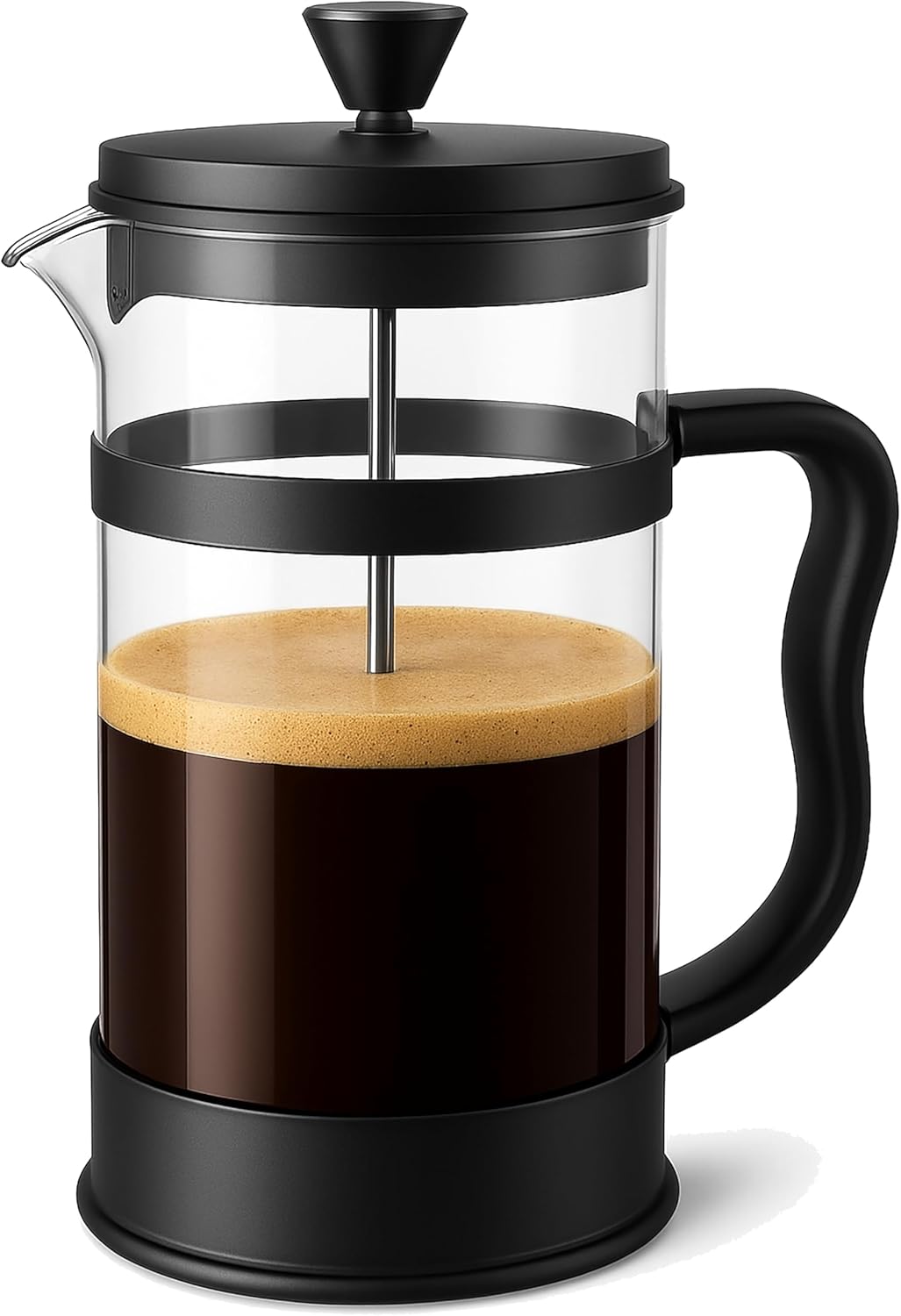
For a low-cost, low-fuss small batch, a glass press is hard to beat on paper. The Utopia Kitchen Borosilicate Glass French Press Coffee Maker is listed at 34 oz, described as a heat-resistant cafetiere and tea maker with thickened glass, and aimed at travel and camping. It comes in black. Those details come straight from the product title, so check the listing for dimensions, the lid design and what’s in the box.
UTOPIAKITCHEN
34 Oz Borosilicate Glass French Press Coffee Maker by Utopia Kitchen with 4-Filter System
This 34 oz borosilicate glass French press uses a 4-filter system with 80 mesh filtration to brew residue-free coffee with full flavor extraction. Buy it if you want consistent, sediment-free coffee at home or while camping without spending more than $15.
Pros and Cons
Pros
- The 80 mesh filter captures fine grounds that slip through standard French press screens, delivering cleaner cups.
- Heat-resistant borosilicate glass maintains flavor integrity and survives rapid temperature changes without breaking.
- Dishwasher-safe components (except lid) simplify cleanup after daily use.
Cons
- The lid requires hand-washing with gentle detergent to prevent finish damage, adding an extra cleanup step.
- Some users report the plunger requires firm, steady pressure to avoid grounds bypassing the filter.
UTOPIAKITCHEN 34 Oz Borosilicate Glass French Press Coffee Maker by Utopia Kitchen with 4-Filter System
UTOPIAKITCHEN
34 Oz Borosilicate Glass French Press Coffee Maker by Utopia Kitchen with 4-Filter System
This 34 oz borosilicate glass French press uses a 4-filter system with 80 mesh filtration to brew residue-free coffee with full flavor extraction. Buy it if you want consistent, sediment-free coffee at home or while camping without spending more than $15.
$14.24 at AmazonEditors' Favorite
Other Special Features of the Product: Coffee Plunger Coffee Maker Type: French Press Specific Uses For Product: Instant Coffee Maker Recommended Uses For Product: Home use, Office use, Travel, Camping, Outdoor activities Operation Mode: Manual Wattage: 1000 watts Human Interface Input: Buttons Coffee Input Type: Ground Smart Home Compatibility: Not Smart Home Compatible Power Source: Manual Filter Type: Stainless Steel Color: Black Style: French Press Material: Plastic, Borosilicate Glass Is the item dishwasher safe?: Yes Brand Name: Utopia Kitchen Included Components: Plunger Model Name: PARENT Model Number: UKFRENCHPRESSPRNT UPC: 817706022089 Part Number: UKFRENCHPRESSBLACKNEW Best Sellers Rank: #2,733 in Home & Kitchen (See Top 100 in Home & Kitchen) #3 in Coffee Presses ASIN: B01N78X92P Customer Reviews: 4.4 4.4 out of 5 stars (11,433) 4.4 out of 5 stars Capacity: 2.1 Pounds Item Dimensions D x W x H: 9"D x 6"W x 6"H Item Weight: 1.2 Pounds Number of Items: 1 Unit Count: 1.0 Count coffee_filter_size: #4 Brand: Utopia Kitchen Product Dimensions: 9"D x 6"W x 6"H Special Feature: Coffee Plunger
Shop NowWho is it for? Someone who wants a simple, no-cord way to make a few mugs at once, and who doesn’t mind a slightly coarser, fuller cup. Who should pass? Anyone who wants a timer, a warm plate, or a hands-off machine that brews while they get dressed. A press needs you standing there at the start and the end.
How to brew a small batch well
Small batches are less forgiving than big ones. When you only brew a few ounces, a slightly wrong ratio or a few degrees off temperature shows up right away in the cup. The good news is that the basics are simple and don’t change much from one brewer to the next.
Start with a ratio
A common starting point is 1 gram of coffee for every 16 grams of water. For a 17 ounce batch, which is about 500 grams of water, that’s roughly 31 grams of coffee. If you don’t own a scale, a level tablespoon of ground coffee weighs around 5 grams, so you’d use about six tablespoons. Taste the result, then adjust by a gram or two. Stronger isn’t always better. Too much coffee in too little water often tastes harsh.
Match the grind to the method
Grind size controls how fast water pulls flavor out of the coffee. Immersion brewers like a press want a coarse, even grind, close to coarse sea salt. Drip machines want a medium grind. Very fine powder slips through a press screen and leaves sludge in the cup, while a grind that’s too coarse in a drip machine tastes thin and sour. Buy whole beans if you can and grind just before brewing. If you do use a drip machine, our look at the best coffee beans for a drip coffee maker can help you choose a roast that suits it.
Water temperature and timing
Water just off the boil, somewhere between 195 and 205 degrees Fahrenheit, extracts well without scorching the grounds. Let a kettle sit for about 30 seconds after it clicks off. For a press, a steep of around four minutes is a reasonable start. Pour the coffee into a mug or thermal carafe right after you press, because coffee left sitting on the grounds keeps extracting and turns bitter. If hot, steady heat is your top priority, take a look at the best coffee maker for hot coffee.
A hands-on option for coffee fans: the syphon set
Not every little coffee maker is about speed. Some are about the ritual. A syphon, also spelled siphon, uses heat and vapor pressure to push water from a lower chamber up into an upper one, where it mixes with the grounds. When you take the heat away, the brewed coffee draws back down through a filter. It’s part kitchen science and part tabletop show.
The WANLWH Syphon Coffee Maker Set is listed as a 3-cup Japanese pot with a grinder. That’s all the product title tells us, so look at the full listing for the heat source, the filter type and the grinder details before you decide. Since a “3-cup” label is a sizing term and not a promise of three mugs, plan on one or two regular mugs per batch.

WANLWH
Manual Vacuum Siphon Brewing at Home: WANLWH 3-Cup Japanese Syphon Coffee Maker Set with Hand Grinder and Borosilicate Cups
This 3-cup syphon pot uses vapor pressure and vacuum draw to saturate grounds at brewing temperature and pull a clean, sediment-free cup back into the lower chamber. Buy it if you want a full manual setup out of one box, since the brass-chambered hand grinder, storage jar, two glass cups, measuring spoon, and stirrer are all included.
Pros and Cons
Pros
- Complete kit covers grinding, brewing, and serving with two matching borosilicate cups included.
- Manual brewing needs no power outlet, so it works at home, at the office, or while camping.
- Glass and stainless steel build avoids plastic in the brew path.
- Presentation-ready packaging makes it workable as a wedding or housewarming gift.
Cons
- Three-cup capacity tops out at one or two servings, so it will not cover a household of coffee drinkers or guests.
- Syphon brewing is a multi-step process with two glass chambers to disassemble and dry, which is slower to set up and clean than a drip machine.
WANLWH Manual Vacuum Siphon Brewing at Home: WANLWH 3-Cup Japanese Syphon Coffee Maker Set with Hand Grinder and Borosilicate Cups
WANLWH
Manual Vacuum Siphon Brewing at Home: WANLWH 3-Cup Japanese Syphon Coffee Maker Set with Hand Grinder and Borosilicate Cups
This 3-cup syphon pot uses vapor pressure and vacuum draw to saturate grounds at brewing temperature and pull a clean, sediment-free cup back into the lower chamber. Buy it if you want a full manual setup out of one box, since the brass-chambered hand grinder, storage jar, two glass cups, measuring spoon, and stirrer are all included.
$85.99 at AmazonEditors' Favorite
Color: Siphon Coffee Maker Set Size: 3-CUP (360ML) Dimensions: 3.93 x 6.3 x 14.76 Inches Weight: 2.58 pounds Product Group: Kitchen Binding: Kitchen
Shop NowThis style suits people who enjoy the process and brew for one or two. It isn’t a fit for busy weekday rushes, since setup, heating and cleanup all take more attention than pressing a button. It also asks for care with glass and a heat source, so keep it away from the edge of the counter and let every part cool before you wash it.
Common mistakes with small brewers
Most disappointing cups from small makers trace back to a short list of errors. Fix these and you’ll notice a bigger difference than any upgrade can give you.
- Using stale or pre-ground coffee that has sat open for weeks.
- Guessing the amount of coffee instead of measuring it.
- Grinding too fine for an immersion brewer.
- Pouring water straight from a rolling boil.
- Leaving brewed coffee on the grounds or on a hot plate for too long.
- Skipping regular cleaning, which lets old oils turn the next pot rancid.
Glass needs a little extra thought. Even heat-resistant glass can crack from a sudden shock, so warm it with hot tap water first if the kitchen is cold, and don’t set a hot carafe on a wet surface. Check the maker’s care notes before putting any glass part in the dishwasher.
Cleaning and care for compact brewers
Small parts mean small crevices. Rinse the press or syphon right after you finish so grounds don’t dry in place. Once a week, wash all the pieces with warm, soapy water and a soft brush, taking apart any screen or filter so you can reach the mesh. If you notice a stale smell or a bitter aftertaste, that’s usually coffee oil that has built up. Soaking the parts in a mix of warm water and a little dish soap for a few minutes loosens most of it. Dry everything before storing it.
When to move up to a bigger machine
A little coffee maker is perfect until your household changes. If you regularly pour more than four mugs, host guests on weekends, or want a coffee ready the moment you wake, it’s time to look at a full-size brewer with a programmable timer. Our best coffee maker guide covers those larger machines. If you like iced drinks in summer, the best iced coffee maker roundup shows brewers designed to chill a batch quickly.
For many people, though, a small brewer is the smarter long-term choice. It uses less counter space, makes less waste, and encourages fresh coffee in smaller amounts. That’s a win for flavor and for your wallet.
FAQ
What is the smallest size of coffee maker I can buy?
Single-mug drippers and pour-over cones brew one cup at a time, and small presses start around 12 ounces. Many “personal” brewers sit in the 1 to 4 cup range. Check the ounce capacity in the listing, not just the cup label, because cup sizes differ from brand to brand.
Is a French press a good little coffee maker?
Yes, for people who like a full-bodied cup and don’t mind a manual process. It needs no electricity and no paper filters. The tradeoff is that you’ll need to time the steep, pour the coffee out promptly and clean the screen after each use.
How much coffee should I use in a small brewer?
Start with about 1 gram of coffee per 16 grams of water, then adjust to taste. That works out to roughly one level tablespoon for every 3 ounces of water as a quick guide. A kitchen scale makes it far easier to repeat a cup you liked.
Can a small coffee maker make iced coffee?
Yes. Brew a stronger batch, using a little more coffee for the same amount of water, and pour it over a full glass of ice. Some brewers are built for this, and the best iced coffee maker list is a good place to compare them.
Are syphon coffee makers worth the effort?
They’re worth it if you enjoy the process and want a clean, bright cup. They aren’t worth it if you want speed. A syphon takes more setup and cleanup than a drip machine or press, so treat it as a weekend brewer unless you’ve got patience on weekday mornings.




Write Your Review
No reviews yet. Be the first to share your experience!