

A leafy green juicer is a machine that squeezes kale, spinach, chard and other thin, fibrous greens without leaving most of the liquid behind in the pulp. For greens, a slow cold press juicer is usually the better fit, because it crushes and presses the leaves instead of just spinning them against a screen.
This guide explains why greens are harder to juice than carrots or apples, what features matter, how to feed leaves into the machine, and where a budget centrifugal model still makes sense. Along the way we look at three juicers listed on the site, using only what their product listings say. Our team researches products, so you won’t find claims of hands-on kitchen time here.
Why leafy greens are tricky to juice
Carrots and apples are dense and full of water. Push them through almost any juicer and liquid runs out. Leafy greens are the opposite. A handful of spinach is mostly thin, flat tissue with very little water per square inch, and kale brings tough stems and ribs on top of that. A machine that only shreds the leaves leaves them damp and fluffy instead of squeezed dry.
That’s why many people end up with a pale, thin glass of green juice and a pile of wet pulp that still looks half full. The fix is rarely about buying the most expensive model. It’s about matching the juicing method to the produce you actually plan to use.
What to look for in a leafy green juicer
Three things decide how well a machine handles greens: the juicing method, the size of the feed chute, and how easy it is to clean. Each one changes your weekly routine more than a spec sheet suggests.
Cold press versus centrifugal
A centrifugal juicer shreds produce with a fast-spinning blade and flings the pulp outward through a mesh basket. It’s quick, and it works well on hard, wet items like apples and carrots. With leaves, the speed is a drawback. Greens tend to wad up in the basket and pass through without giving up much liquid.
A cold press juicer, sometimes called a slow or masticating juicer, turns an auger at low speed and squeezes the produce against a screen. That steady pressure is better suited to folded leaves and herbs. The trade-off is time. Cold press machines usually run slower, and the feed chute is often narrower, so you do more prep before you start.
Chute size and prep
A wide chute saves cutting time with whole apples, cucumbers and carrots. For greens, though, chute width matters less than technique. Even in a wide opening, loose leaves just float and get pushed around. You’ll get better results by rolling leaves into a tight bundle and feeding them in with a firmer piece of produce.
Cleanup
Greens leave green residue in screens and augers, and it dries fast. A juicer with fewer parts and a quick rinse routine is more likely to stay in use after the first month. Anything you dread washing will end up in a cupboard. Keep that in mind when you compare models.
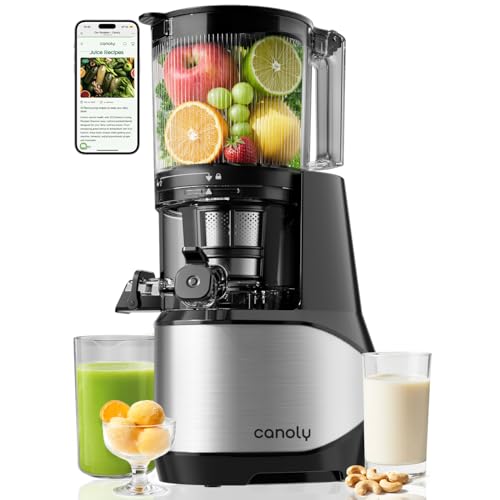
If you’d like a machine that does more than juice, the Canoly 3-in-1 Cold Press Juicer C09 is built to make juice, sorbet and nut milk, according to its listing. That range suits a household that wants one appliance for green juice in the morning and frozen fruit desserts later in the week. It sits at the higher end of the three juicers here, and the extra functions are the reason. If you only ever want green juice, you may not use the other two modes.
Canoly
Whole-Fruit Cold Press Juicing at Home: Canoly C09 3-in-1 Masticating Juicer for Juice, Sorbet, and Nut Milk
The Canoly C09 is a single-auger cold press juicer that swaps between two strainers to produce fresh juice, frozen fruit sorbet, and nut milk, with a 6-inch chute that takes whole apples and full celery bunches without pre-chopping. It suits families doing large-batch weekend prep who want one machine covering all three jobs instead of a juicer plus a separate frozen dessert maker.
Pros and Cons
Pros
- Whole-fruit chute eliminates most prep work, which matters when you juice on weekday mornings.
- Masticating auger paired with an AC brushless motor pulls yield from hard produce like carrots and celery.
- Removable parts are BPA-free and rinse clean, keeping daily teardown short.
- Sorbet strainer turns frozen fruit into dessert with no added sugar or dairy.
Cons
- Cold press juicers with wide chutes take up meaningful counter and vertical clearance, so measure under your upper cabinets before buying.
- This model is new enough that long-term owner feedback on the strainers and auger is still thin.
Canoly Whole-Fruit Cold Press Juicing at Home: Canoly C09 3-in-1 Masticating Juicer for Juice, Sorbet, and Nut Milk
Canoly
Whole-Fruit Cold Press Juicing at Home: Canoly C09 3-in-1 Masticating Juicer for Juice, Sorbet, and Nut Milk
The Canoly C09 is a single-auger cold press juicer that swaps between two strainers to produce fresh juice, frozen fruit sorbet, and nut milk, with a 6-inch chute that takes whole apples and full celery bunches without pre-chopping. It suits families doing large-batch weekend prep who want one machine covering all three jobs instead of a juicer plus a separate frozen dessert maker.
$199.99 at AmazonEditors' Favorite
Color: Classic Size: Extra Large Dimensions: 13.7 x 7.48 x 17.4 inches Weight: 13.23 pounds Product Group: Kitchen
Shop NowHow to juice kale, spinach and other greens
Good technique makes up a lot of the gap between a mediocre juicer and a good one. These steps apply whichever machine you own, with small adjustments for speed and chute size.
Prep the produce
Wash everything well, since leaves hold grit. Shake off the loose water, then dry the leaves with a clean towel or a salad spinner. Very wet greens dilute the juice. Strip tough kale ribs if your juicer struggles with them, or cut the stems into short pieces so they feed evenly.
Feed greens the right way
Roll the leaves into a tight cylinder, or fold them around a stalk of celery or a wedge of cucumber. Then send the bundle through the chute in small batches. Alternate soft items with hard ones. A piece of apple after a bundle of spinach helps push the last of the leaves through the screen and carries extra liquid with it.
Don’t force the plunger. If the machine slows down or the motor sounds strained, stop, clear the chute and try a smaller bundle.
Balance the flavor
Raw greens taste grassy and sometimes bitter. A green apple, a few slices of cucumber, a squeeze of lemon or a small piece of ginger will smooth it out. If you’re new to green juice, start with mild spinach and cucumber before moving on to kale or chard. Many readers who want to go deeper will find more options in our best juicer for green juice guide.
Wide chutes are handy when you also juice whole produce. The AMZCHEF Cold Press Juicer Machine lists a 6-inch chute for whole fruits and vegetables, which is meant to cut down on chopping. For greens you’ll still want to bundle leaves, but the large opening is useful on days when you juice apples, cucumbers or other bulky produce alongside them. It’s also a cold press design, so it fits the slow-squeeze approach described above.

AMZCHEF
Whole-Fruit Cold Press Juicing Without Pre-Cutting: AMZCHEF 6-Inch Wide Chute Masticating Juicer Machine
This AMZCHEF slow masticating juicer takes whole apples, oranges, and vegetables through a 6-inch chute and runs them through a triple stainless steel filter for pulp-free juice with no chopping beforehand. It suits families who juice daily and want a quiet, 2000ml-capacity machine that skips the prep-board stage entirely.
Pros and Cons
Pros
- Whole fruits and vegetables drop straight in, cutting several minutes of prep from each juicing session.
- Slow auger extraction with triple filtration delivers a high yield and a silky, low-pulp texture.
- Full disassembly makes cleanup a rinse-and-reassemble job rather than a scrubbing chore.
- Quiet operation makes it usable at hours when a centrifugal juicer would be disruptive.
Cons
- Fibrous greens like kale and celery still need to be cut short to prevent auger wrapping, so the wide chute does not eliminate prep for every ingredient.
- The stainless steel body and 2000ml container give it a larger counter footprint than compact vertical juicers.
AMZCHEF Whole-Fruit Cold Press Juicing Without Pre-Cutting: AMZCHEF 6-Inch Wide Chute Masticating Juicer Machine
AMZCHEF
Whole-Fruit Cold Press Juicing Without Pre-Cutting: AMZCHEF 6-Inch Wide Chute Masticating Juicer Machine
This AMZCHEF slow masticating juicer takes whole apples, oranges, and vegetables through a 6-inch chute and runs them through a triple stainless steel filter for pulp-free juice with no chopping beforehand. It suits families who juice daily and want a quiet, 2000ml-capacity machine that skips the prep-board stage entirely.
$129.99 at AmazonEditors' Favorite
Color: Grey Size: 600ml Dimensions: 17 x 8 x 14 inches Weight: 9.92080179 pounds Product Group: Kitchen
Shop NowCan a centrifugal juicer handle greens?
Yes, with limits. A centrifugal machine can produce green juice, but expect less liquid from leaves and more foam. If you juice greens a few times a month and mostly use the machine for fruit, it can be a reasonable and affordable choice. If greens are the whole point, a cold press model is more efficient and will waste less produce.
To get the most from a fast machine, pack leaves around firm, juicy produce. Pushing spinach through on its own tends to give a weak result. Pairing it with cucumber or apple helps the blade and basket do their job. Drink the juice soon after making it, since the faster spinning adds air and the foam settles quickly.
For shoppers on a tight budget, the DUMOS Juicer Machine is a centrifugal model with a 17,000 RPM motor, a 2.6-inch feed chute and dual-speed settings. The listing describes it as made for fruits and vegetables, with a BPA-free, easy-clean design. It’s the lowest priced of the three juicers on this page, which makes it an easy way to try juicing before you commit to a larger machine. Just don’t expect it to squeeze leaves as dry as a slow juicer would. For other low-cost options, see our best budget juicer roundup.

DUMOS
Whole-Fruit Juicing in Minutes: DUMOS Centrifugal Juice Extractor with 2.6-Inch Wide Feed Chute and Dual-Speed Control
The DUMOS centrifugal juicer pushes whole apples, carrots, and cucumbers through a 2.6-inch chute and spins them against stainless steel cutting blades, so a glass of juice takes minutes instead of a chopping session. Buy it if you want fast morning juice from firm fruit and vegetables with parts that rinse clean or go on the dishwasher top rack.
Pros and Cons
Pros
- Whole produce fits the wide chute, so prep is limited to washing and trimming stems.
- Speed switching takes one press, letting you run mixed batches of soft and firm produce back to back.
- Detachable BPA-free parts rinse under running water or go straight into the dishwasher.
- Safety sensors mean the motor will not spin unless the lid is locked in place.
Cons
- The listing quotes two different motor speeds, 17,000 and 15,000 RPM, so confirm the specification before buying.
- Centrifugal extraction whips air into the juice and handles leafy greens poorly, so drink it fresh and juice greens elsewhere.
DUMOS Whole-Fruit Juicing in Minutes: DUMOS Centrifugal Juice Extractor with 2.6-Inch Wide Feed Chute and Dual-Speed Control
DUMOS
Whole-Fruit Juicing in Minutes: DUMOS Centrifugal Juice Extractor with 2.6-Inch Wide Feed Chute and Dual-Speed Control
The DUMOS centrifugal juicer pushes whole apples, carrots, and cucumbers through a 2.6-inch chute and spins them against stainless steel cutting blades, so a glass of juice takes minutes instead of a chopping session. Buy it if you want fast morning juice from firm fruit and vegetables with parts that rinse clean or go on the dishwasher top rack.
$29.97 at AmazonEditors' Favorite
Color: Modern Black Size: 2-Speed Dimensions: 9.84 x 6.3 x 12.99 inches Weight: 5 Pounds Product Group: BISS Binding: Kitchen
Shop NowCommon mistakes with leafy green juicing
Most disappointing batches trace back to a handful of habits. Fixing them costs nothing.
Feeding loose leaves one at a time is the biggest one. They get caught, spin and clog. Bundle them instead. Another is skipping the wash and dry step, which leaves grit in your glass and water in your juice. A third is running the machine at full speed when it has a slower setting. Slower is often better for soft produce, so use the lower speed on a dual-speed model when you’re feeding greens.
Using only greens is another trap. Pure kale juice is intense, and plain spinach juice has little sweetness. Blend greens with milder, juicier items so you actually enjoy drinking it. Variety is also a good idea. Rotating between spinach, kale, romaine and chard keeps flavors interesting and avoids leaning on one ingredient every day.
Finally, don’t leave pulp to dry. Rinse the screen and parts right after juicing. Dried green fibers are hard to scrub out, and a partly blocked screen will lower your yield the next time. If you’re juicing for a short program, our guide to the best juicer for a juice cleanse covers machines that handle heavier use.
When to upgrade or replace your juicer
You don’t need to replace a juicer just because a newer one exists. But a few signs suggest it’s time. If the pulp coming out is still wet and green, if the motor labors on small bundles, or if you’ve started avoiding greens because the results are poor, a better-matched machine will help.
Think about how you use it, too. If you started with a fast centrifugal unit and now juice kale or spinach several times a week, moving to a cold press model is the most sensible upgrade. If you’re comparing options by price, our best juicer under $200 list is a good place to narrow things down. People who juice mainly for wellness goals may also like the best juicer for health guide. For a broader look at machines built around leaves, our best juicer for leafy greens roundup compares more models side by side.
FAQ
What is the best type of juicer for leafy greens?
A cold press (slow or masticating) juicer is generally the best type for leafy greens. It presses the leaves at low speed, which pulls out more liquid than a fast centrifugal blade. A centrifugal model can still make green juice, but the yield from leaves is usually lower.
Can you juice spinach and kale in any juicer?
You can try, but results vary a lot. Most machines will process them, yet some leave the pulp wet and the juice thin. Bundle the leaves tightly and feed them alongside a firm item like apple or cucumber to improve the output.
Why is my green juice foamy and thin?
Foam comes from air mixing into the juice, and it’s more common with fast centrifugal machines. Thin juice usually means the leaves weren’t squeezed well. Try bundling the greens, using a slower speed if your juicer has one, and mixing in juicy produce.
How long does fresh green juice last?
Fresh juice tastes best right after you make it. If you need to store it, pour it into an airtight glass jar filled to the top and keep it in the refrigerator, then drink it within a day. Color and flavor still fade with time.
Is a wide feed chute important for leafy greens?
Not very. A wide chute saves time on whole fruits and vegetables, but leaves need to be rolled or folded no matter what the opening size is. Technique and the juicing method matter more for greens than chute width.









Write Your Review
No reviews yet. Be the first to share your experience!