

A large flat skillet is a wide, shallow pan, typically 12 inches or more across, with low sides and a broad base that gives food room to brown instead of steam. If you cook for three or more people, or you hate crowding a pan, it’s the size to look at first.
This guide covers what size to buy, which materials suit which kind of cook, how handles and weight change daily use, and the mistakes that shorten a pan’s life. Two listings from our research sit inside, with details taken straight from their product titles.
What makes a skillet large and flat
Skillet sizes are named by the measurement across the top rim. The flat cooking surface inside is smaller, often by an inch or two, because the walls slope or curve outward. So a 12-inch skillet gives you a cooking floor closer to 9 or 10 inches. Keep that in mind when you compare pans, because two “12-inch” pans from different makers can behave differently.
“Flat” usually means low sides and a wide, even base. Low walls let steam escape, which is why a flat skillet sears meat and crisps vegetables better than a deep sauté pan does. The tradeoff is splatter. Shallow sides don’t hold back hot oil the way a deeper pan does, so you’ll want to use less fat and a bit more care when you shallow-fry.
As a rough guide, a 12-inch skillet fits about four chicken thighs in a single layer. Fewer than that and you can brown them. More than that and they’ll touch, trap moisture and turn pale. A big, flat pan earns its place by letting you cook one batch rather than two.
Carbon steel for a big, flat sear
Carbon steel is a favorite for wide skillets. It’s lighter than cast iron of the same diameter, heats quickly and responds fast when you change the burner. With use it develops a dark seasoning layer that gets more slick over time. It isn’t a nonstick pan on day one, and it can rust if you leave it wet.
The OXO Obsidian 12-inch carbon steel frying pan is a good example of this type. Its title lists a pre-seasoned surface that builds natural nonstick with use, induction compatibility, oven-safe construction and a removable silicone handle. One thing to read closely: the listing title ends with “Pack of 6,” so confirm the quantity in the offer before you order. If you only want one pan, that matters.
A pre-seasoned pan saves you the first round of oiling and baking, but it doesn’t replace routine care. Wipe it dry after washing and rub in a very thin film of oil. That small habit protects the surface for years.
OXO Obsidian 12" Carbon Steel Frying Pan, Pre-Seasoned Skillet, Builds Natural Nonstick with Use, Induction Ready, Oven Safe, Removable Silicone Handle, 12" Frying Pan Skillet (Pack of 6)
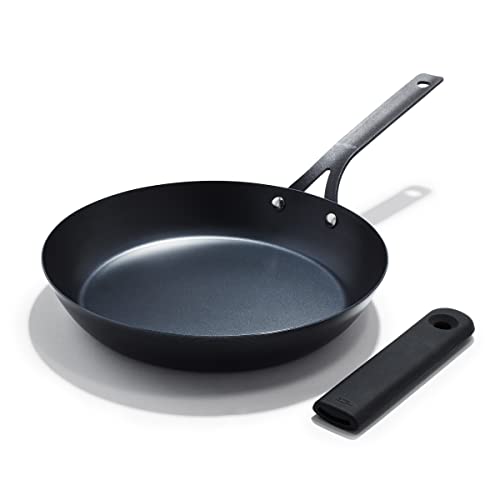
OXO
Obsidian 12" Carbon Steel Frying Pan, Pre-Seasoned Skillet, Builds Natural Nonstick with Use, Induction Ready, Oven Safe, Removable Silicone Handle, 12" Frying Pan Skillet (Pack of 6)
$413.94 at AmazonEditors' Favorite
Color: Negro Size: 12" Frying Pan Skillet (Pack of 6) Dimensions: 16 x 12 x 2 inches Product Group: Kitchen Binding: Product Bundle
Shop NowMaterial choices for a large flat skillet
Material affects weight, heat behavior and upkeep more than any other feature. Here’s how the common options compare for a pan this wide.
Cast iron and carbon steel
Both hold heat well and take a hard sear. Cast iron is heavier and holds heat longer, which helps when you drop cold steaks into the pan. Carbon steel is quicker to heat and easier to lift. A 12-inch cast iron pan can be hard to handle one-handed when it’s full, so think about your wrists before you buy. Both need seasoning and both dislike the dishwasher.
Nonstick and aluminum
Aluminum is light and spreads heat quickly, which is why many nonstick pans use it as a base. A coated pan makes eggs, fish and pancakes easy, and cleanup takes seconds. The weak spot is the coating. High heat, metal utensils and rough scrubbing wear it down, and no coating lasts forever. If you want a pan for eggs, our best non-stick skillet roundup is a good place to compare, and the best 12-inch nonstick skillet page narrows it to this size.
Stainless steel
Stainless doesn’t rust, handles acidic sauces and goes in the oven or dishwasher without fuss. Food does stick more easily unless you preheat well and use enough fat. Many cooks like stainless for pan sauces, since the browned bits on the bottom dissolve into the liquid. You can see how those pans stack up on our best stainless skillet page.
Square and griddle-style options
Not every large flat skillet is round. A square pan uses the corners of a rectangular burner area and gives you more usable surface, which suits pancakes, grilled sandwiches, flatbreads and rows of bacon. It’s a different shape for a different job.
The Sorandy square skillet fits this idea. Its title calls it an aluminum alloy square skillet and a non stick griddle with a copper color, says it’s dishwasher safe, and describes it as suited to open flames and the stove. The title also mentions a stainless steel frying pan, so the wording mixes materials. Check the full listing for the construction and the exact dimensions before you buy, because the title doesn’t give a size. Worth knowing, too, that a dishwasher-safe label doesn’t mean hand washing won’t extend the life of a coated surface.
If you mostly cook breakfast, a square pan could save you from cooking in rounds. If you mainly sear meat, a round pan with a thicker base is usually a better match. For pancake-focused cooks, the best skillet for pancakes page goes deeper on shapes and surfaces.

Sorandy
Square Skillet for Steak and Eggs: Sorandy Aluminum Alloy Copper-Color Non-Stick Frying Pan, Induction and Open Flame Compatible
This copper-toned square aluminum alloy skillet sears steak and fries eggs across a flat, corner-to-corner surface, and its compound base spreads heat evenly so food cooks without hot spots. Buy it if you cook for one or two and want a compact pan that works on gas, electric, and induction without swapping cookware.
Pros and Cons
Pros
- Flat square cooking surface makes better use of the pan area for steaks, grilled cheese, and side-by-side eggs.
- Works on induction as well as gas and electric, so it stays useful if your cooktop changes.
- Non-stick coating plus dishwasher-safe cleanup keeps daily washing down to a rinse.
- Aluminum alloy body heats quickly, so preheating takes less time than with heavier cast iron.
Cons
- The listing does not state pan dimensions or depth, so confirm the size fits your burner and portion needs before ordering.
- Non-stick coatings on aluminum pans wear faster under metal utensils and high-heat searing than bare stainless or cast iron.
Sorandy Square Skillet for Steak and Eggs: Sorandy Aluminum Alloy Copper-Color Non-Stick Frying Pan, Induction and Open Flame Compatible
Sorandy
Square Skillet for Steak and Eggs: Sorandy Aluminum Alloy Copper-Color Non-Stick Frying Pan, Induction and Open Flame Compatible
This copper-toned square aluminum alloy skillet sears steak and fries eggs across a flat, corner-to-corner surface, and its compound base spreads heat evenly so food cooks without hot spots. Buy it if you cook for one or two and want a compact pan that works on gas, electric, and induction without swapping cookware.
$31.72 at AmazonEditors' Favorite
Color: #111 Size: #111 Dimensions: 10.236220462 x 17.716535415 x 2.362204722 inches Product Group: Kitchen
Shop NowHandle, weight and stovetop fit
A wide pan is only useful if you can move it comfortably. Pick it up in your mind with a full load of food, not empty. A pan that feels fine in the box can feel awkward when it holds two pounds of chicken and some oil.
Handle design
Long handles give leverage, but a 12-inch pan with a short handle can tip when it’s loaded. A helper handle on the opposite side makes lifting easier with heavier metals. A removable handle, like the one in the OXO title, can make the pan easier to store and, depending on the design, easier to fit into a busy oven. Check what the handle is made of before you assume it can go under a broiler.
Burner match
A 12-inch base on a small burner heats the center hard and leaves the edges cooler. You can work around it by preheating a little longer and moving food from the middle to the sides as it browns. Induction cooktops need a magnetic base, so check the listing for induction compatibility. Aluminum alone usually won’t work, and that’s why some aluminum pans add a steel plate on the bottom.
Storage
Wide pans take cabinet space. Measure your shelf or drawer first. If you’re also shopping for a full cookware lineup, a best skillet set can give you several sizes that nest together.
Common mistakes with a big skillet
Most problems come from heat and crowding. Here are the ones that show up again and again.
Starting with a cold pan is the first. Metal pans need a minute or two to heat evenly, and food dropped into a cold surface sticks. Overheating is the second, especially with nonstick. Medium heat is plenty for most jobs in a wide pan, because the surface area is large and food browns fast.
Overcrowding is the third. It’s tempting to pile everything in, since the pan is big. Don’t. Food that touches steams, and steamed food doesn’t brown. Cook in two batches if you have to, and keep the first batch warm in a low oven.
Cooling a hot pan under cold water is the fourth. Sudden temperature changes can warp thin metal. Let the pan sit for a few minutes before washing. A warped base spins on the burner and heats unevenly. Not fixable.
Last, using the wrong cleaning method. Soaking carbon steel or cast iron invites rust. Nonstick surfaces dislike steel wool. A soft sponge and mild soap work for most pans, and a quick dry on the burner finishes the job.
When to replace or upgrade
A good skillet lasts a long time, but every pan has a limit. Replace a coated pan when the surface flakes, peels or stops releasing food, even with a little oil. Replace any pan with a warped base that rocks or spins, since it won’t heat evenly. Carbon steel and cast iron rarely need replacing. They can usually be stripped and re-seasoned if they rust or turn sticky.
Upgrade when your cooking changes. If you’ve gone from cooking for one to cooking for four, a 12-inch pan may beat a 10-inch. If you’ve switched to induction, make sure your next pan is rated for it. And if you’re curious about a heavier, enameled option, our best cast iron enamel skillet page covers that style. Whatever you choose, match the pan to the food you cook most, not to the one dish you make twice a year.
FAQ
What size is a large flat skillet?
Most people mean a 12-inch skillet, measured across the top rim. Some makers sell 14-inch pans, but those need a large burner and a roomy cabinet. The actual cooking surface is smaller than the stated size, so compare the base measurement when it’s listed.
Will a large flat skillet work on an induction cooktop?
Only if its base is magnetic. Carbon steel, cast iron and many stainless pans work. Aluminum alone usually doesn’t. Check the listing for an induction note. The OXO Obsidian title says induction ready, while the Sorandy title doesn’t mention induction at all.
Can I put a large skillet in the oven?
Often yes, but the handle sets the limit. Metal handles tend to go in the oven, while plastic and some coated handles don’t. The OXO title says oven safe with a removable silicone handle. For any pan, confirm the temperature rating from the maker before you use it that way.
Do I need to season a carbon steel skillet?
Carbon steel builds its nonstick surface through seasoning, which means thin layers of oil baked onto the metal. A pre-seasoned pan gives you a head start. You’ll still add to it through regular cooking and a light oiling after cleaning.
What’s the difference between a flat skillet and a griddle?
A skillet has raised sides that hold in food and some liquid. A griddle is flatter, with very low edges or none, and is built for pancakes, sandwiches and bacon. Some listings blur the two terms, as the Sorandy title does, so read the dimensions and the side height before you decide.



Write Your Review
No reviews yet. Be the first to share your experience!