

Spraying water is easy. Spraying oil is a small engineering problem, and understanding why explains almost everything that goes wrong with a kitchen oil sprayer. Oil is roughly fifty to a hundred times more viscous than water, and its surface tension resists being torn into droplets. A mist only forms when liquid is forced through a small opening hard enough that the sheet coming out becomes unstable and shatters. Every refillable mister on the market is a different mechanical answer to that same question, and every one of them degrades as the opening it depends on fouls up. Pressure has to come from somewhere, the orifice has to be small, and the oil has to stay clean enough to pass through it.
Pump bottles store energy in air, and that changes how they behave
The common design is a bottle with a plunger on top. You push that plunger eight to twelve times, compressing the air above the oil, and pressing the button opens a valve so the trapped air pushes oil up a dip tube and out through the nozzle. No motor, no propellant, just stored air. The consequence is written into the physics: each spray releases some of that air, so pressure falls as you go. The first burst after pumping is a genuinely fine mist, the third is coarser, and by the fifth you are getting an uneven spatter or a dribble down the side of the bottle. That is not a defect, and shopping around does not avoid it. These need re-pumping every three to five sprays.
The same physics produces the single most common user error. Fill a bottle to the shoulder and there is barely any air left to compress, so pumping accomplishes almost nothing and no mist ever forms. Fill to about two-thirds and leave the top third as air, which on a 100ml bottle means roughly 65 to 70ml of oil. People fill these to the brim because that is what you do with a bottle, then conclude the sprayer is broken. It is working exactly as designed and being asked to do something impossible.
Trigger sprayers make their own pressure, with a catch
The other design borrows from the garden and the cleaning cupboard. Squeeze a trigger and a small piston drives a measured shot of oil straight through the nozzle. Nothing is stored, so the spray from a full bottle matches the spray from a nearly empty one, and there is no pumping ritual to remember. For anyone who finds counting plunger strokes irritating, that consistency is the whole appeal.
The trade is complexity. A trigger head holds a piston, a spring, a couple of one-way valves and several seals, against a pump head’s simpler arrangement, and seals are precisely what oil attacks over months of use, softening or gumming until the piston stops sealing and the trigger goes slack. So the design that dodges one failure mode invites another. Spray oil twice a week and the simpler pump is easier to live with and cheaper to replace. Spray it several times a day and the trigger earns its keep.
The nozzle is the whole specification, and nobody prints it
Here is the frustrating part of shopping for one. The most important number is the diameter of the nozzle orifice, and essentially no manufacturer publishes it. A wider opening passes oil with little resistance, which sounds good until you see the result, which is a stream or a coarse splatter rather than a mist. A narrower one produces the fine even fog people actually want, and it blocks sooner. That is the entire tradeoff, hidden behind marketing copy about even coverage.
Because the number is invisible, look instead for an adjustable nozzle that twists between mist and stream. This is not a gimmick. Thin refined oil at room temperature atomises happily on the narrow setting, while a thicker oil, or the same oil on a cold morning, needs the wider one to come out at all. Opening the orifice up also gives you a way to push a partial clog through. Test the pattern in the first week: hold the nozzle eight to ten inches from a pan and you want a soft circular fog, not a jet with dry patches around it.
Why it stops misting after three weeks, and it is not the pump
Almost every complaint follows the same arc. It works beautifully for two or three weeks, then it spits, then it stops, and people blame the pump. The pump is usually fine. Oil exposed to air slowly reacts with it and polymerises, meaning the molecules link into longer chains that form a sticky varnish. This is the same chemistry that builds seasoning on a cast iron pan, where thin layers of oil are deliberately baked into a hard slick coating, and it does not care whether the surface is useful cookware or the inside of a nozzle a third of a millimetre across. The film left in the nozzle after each spray thickens into gum, the orifice narrows, and eventually the passage closes.
The second mechanism is straightforward physical blockage. Unfiltered oils carry fine solids, and infused oils carry fragments of whatever went into them, and any of that reaching a narrow orifice can plug it in a single spray. When a sprayer goes from working to dead overnight rather than fading gradually, particulates are almost always the reason, and the fix is a wash rather than a replacement.
Which oils cooperate and which ones cause trouble
Thin refined oils are what these bottles are built around. Avocado oil, refined olive oil and light neutral vegetable oils are low enough in viscosity to atomise on a narrow setting and clean enough not to carry solids into the orifice. Fill with one of those and most of the reliability problems people report never appear in the first place.
Extra virgin olive oil is the awkward case, because it is exactly what many people want to spray. It is unrefined by definition, so it carries suspended particulates and natural waxes that a fine nozzle catches, and it is thicker, so it needs more pressure for the same mist. It also partially solidifies in a fridge, meaning a sprayer stored cold produces nothing until it warms up. Anything infused is the reliable way to ruin a fine nozzle, since garlic, chilli, rosemary and cracked pepper all shed solid fragments, and a fragment a fraction of a millimetre across is enough to sit in the orifice and stop the spray. Keep a second wide-nozzle bottle for infused oil and clean it weekly.
Glass, plastic, and the honest case for owning one
Glass versus plastic gets argued as a durability question, which misses the point, since plastic survives being dropped and glass does not. The real difference is light. Oil goes rancid through the same oxidation reaction that gums up nozzles, and light accelerates it, so dark or tinted glass keeps a bottle tasting fresh for weeks longer than clear packaging does. Clear plastic offers no protection at all, and it picks up and holds oily smells over months. Tinted glass with a stainless pump assembly is the combination that lasts, because the oil is shielded and the mechanism is not made of something oil degrades.
As for why to bother, the honest answer is coverage and control and nothing grander. A one-second spray from a working mister lays down a fraction of a teaspoon spread across the whole surface of a pan, against the one to two teaspoons most people pour freehand into a puddle they then tilt around. Spread thinly, a small amount covers far more surface than the same amount poured, which is genuinely useful on a wide skillet, across salad leaves, or on air-fryer food where you want a light film rather than a pool. That is the case for owning one, and it is not a case a spray bottle can stretch any further.
Maintenance, aerosols, and choosing what suits you
Maintenance is short and it decides everything. Every two to three weeks, empty whatever is left, wash the bottle and pump head in hot water with dish soap, and run hot water through the nozzle for fifteen or twenty seconds in both settings if it adjusts. Dry it before refilling, then refill small amounts often rather than filling once and leaving it standing for months. A sprayer treated as a permanent oil store will fail, because the oil inside is slowly varnishing the parts that make it work. One treated as a tool that gets washed will keep misting for years.
That is also the fair comparison with an aerosol can. Commercial sprays carry a propellant plus additives such as lecithin and anti-foaming agents, which is why they atomise perfectly every time and never clog. What they leave behind is a residue that builds into a gummy film on nonstick pans over repeated use, one that resists normal washing and eventually spoils the coating. A refillable mister avoids that residue and the propellant and lets you choose the oil, at the cost of pumping and washing.
So match the tool to your habits rather than to the best specification. A pump mister in tinted glass with an adjustable nozzle and a stainless head, filled two-thirds with a thin refined oil and washed monthly, is the setup that keeps working. If pumping every few sprays annoys you more than seals eventually failing, take a trigger sprayer instead. And if you know you will never wash it, buy the aerosol or keep a silicone brush and a spoon by the hob, because an unwashed mister becomes a blocked ornament within a couple of months no matter what it cost.
Why does my oil sprayer spit oil instead of misting?
Spitting nearly always means there is too little pressure behind the oil, or the orifice is partly blocked. Check the fill level first, since a bottle filled past about two-thirds has no room for the air that does the work and will spit no matter how hard you pump. If the level is right, give the plunger eight to twelve full strokes and remember that pressure drops with every spray and needs topping up every three to five presses. If it still spits, the nozzle has gummed up or caught a particle, so empty the bottle and flush the head with hot soapy water for twenty seconds. Thick and unrefined oils cause this far more often than thin refined ones, so switching oil sometimes solves it outright.
How often should I clean a refillable oil mister?
Every two to three weeks with a thin refined oil, and weekly with extra virgin or anything infused. Cleaning means emptying the bottle rather than topping it up, then washing the glass and pump assembly in hot water with dish soap and running hot water through the nozzle in each of its settings. Let it dry fully before refilling so no water sits in the dip tube. The reason for the schedule is that oil left in contact with air polymerises into a sticky varnish inside the nozzle, and that is much easier to interrupt than to reverse. Filling a small bottle often, rather than a large one once, keeps the oil fresh and the mechanism clear at the same time.
Can I put extra virgin olive oil in an oil sprayer?
Yes, with adjusted expectations. Extra virgin olive oil is unrefined, so it carries fine particulates and natural waxes that a narrow nozzle traps, and it is thicker than refined oil so it needs more pressure to break into a mist. Use the wider setting if your nozzle adjusts, and plan on cleaning the bottle about weekly rather than every few weeks. Keep it at room temperature rather than in the fridge, since it partly solidifies when cold and will not spray until it warms up. If the fine even fog matters more to you than that particular oil, a refined olive or avocado oil sprays noticeably better and clogs far less.

TrendPlain
Glass Olive Oil Sprayer for Air Fryer & Cooking – TrendPlain 16oz 2-in-1 Dispenser Bottle
The TrendPlain 16oz glass oil sprayer delivers both a fine mist and a steady pour from one BPA-free bottle, dispensing just 0.15g of oil per spray for precise, low-waste cooking. Home cooks focused on portion control, air fryer meals, or clean salad dressing will get the most from this dual-function kitchen tool.
Pros and Cons
Pros
- Dual spray-and-pour functionality eliminates the need for separate mister and pourer bottles in your kitchen drawer.
- The 0.15g-per-spray metering is genuinely useful for anyone tracking fat intake or following a calorie-conscious diet.
- BPA-free glass keeps oil flavor neutral and makes it safe to use with heat-infused or flavored oils that degrade plastic.
- Lifetime support policy removes the usual risk of buying a low-cost kitchen gadget that fails after the return window closes.
Cons
- Glass construction adds fragility compared to stainless or plastic sprayers, so it requires careful handling near tile or hard surfaces.
- No reviews are currently available to confirm long-term nozzle performance or how well the spray mechanism holds up after months of daily use.

YARRAMATE
Cooking Oil Sprayer and Pourer for Salad, Grilling, and Roasting: YARRAMATE 16 oz 2-in-1 Glass Bottle
The YARRAMATE 16 oz bottle sprays or pours cooking oil, with dual dispensing providing more precise control during meal preparation. It suits home cooks who want a refillable, transparent dispenser for salad dressing, griddling, roasting, or grilling.
Pros and Cons
Pros
- Dual-function dispensing handles both fine misting and controlled pouring.
- Food-grade BPA-free PP and thick lead-free glass provide a substantial refillable design.
- The visible oil level simplifies kitchen inventory and refill timing.
- Its 470 ml capacity works well for frequent cooking, grilling, and salad preparation.
Cons
- The bottle is designed for hand cleaning, so it may require more maintenance than dishwasher-safe dispensers.
- The product data does not specify its weight or dishwasher compatibility.

FineDine
Controlled Oil Spraying for Air Frying and Roasting: FineDine 16 oz Glass Olive Oil Sprayer
The FineDine 16 oz Glass Olive Oil Sprayer switches between a fine mist and steady stream, giving cooks more precise oil portioning across everyday recipes. It suits air-fryer users, salad makers, and home cooks who want measured application from a BPA-free glass bottle.
Pros and Cons
Pros
- The mist-or-stream switch adapts oil application to different cooking methods.
- Glass construction avoids plastic contact and provides a clean, modern appearance.
- Measurement markings support more controlled refills and portioning.
- The anti-drip design helps keep cooking surfaces cleaner.
Cons
- The 16-ounce glass bottle may need frequent refilling during high-volume cooking.
- Glass can be heavier and more breakable than a plastic oil sprayer.
The Best Deals This Week*
-
Glass Olive Oil Sprayer for Air Fryer & Cooking
$8.99
($9.99)Save $1.00 -
Cooking Oil Sprayer and Pourer for Salad
$8.59
($10.99)Save $2.40 -
Controlled Oil Spraying for Air Frying
$5.99
($8.99)Save $3.00 -
FLAIROSOL OLIVIA SIGNATURE Oil Sprayer
$23.98
($29.99)Save $6.01
*Deals are selected by our commerce team
TrendPlain Glass Olive Oil Sprayer for Air Fryer & Cooking – TrendPlain 16oz 2-in-1 Dispenser Bottle
TrendPlain
Glass Olive Oil Sprayer for Air Fryer & Cooking – TrendPlain 16oz 2-in-1 Dispenser Bottle
The TrendPlain 16oz glass oil sprayer delivers both a fine mist and a steady pour from one BPA-free bottle, dispensing just 0.15g of oil per spray for precise, low-waste cooking. Home cooks focused on portion control, air fryer meals, or clean salad dressing will get the most from this dual-function kitchen tool.
$8.99 at AmazonEditors' Favorite
Color: Black Size: 15.9 Ounces Dimensions: 7.7165354252 x 7.7165354252 x 1.6535433054 inches Weight: 0.330693393 pounds Product Group: Kitchen Binding: Kitchen
Shop NowYARRAMATE Cooking Oil Sprayer and Pourer for Salad, Grilling, and Roasting: YARRAMATE 16 oz 2-in-1 Glass Bottle
YARRAMATE
Cooking Oil Sprayer and Pourer for Salad, Grilling, and Roasting: YARRAMATE 16 oz 2-in-1 Glass Bottle
The YARRAMATE 16 oz bottle sprays or pours cooking oil, with dual dispensing providing more precise control during meal preparation. It suits home cooks who want a refillable, transparent dispenser for salad dressing, griddling, roasting, or grilling.
$8.59 at AmazonGreat Value
Color: 02_1Pc Black Size: 16 Ounces Dimensions: 3.22047243766 x 3.22047243766 x 7.09842518961 inches Weight: 0.66 Pounds Product Group: Kitchen Binding: Unknown Binding
Shop NowFineDine Controlled Oil Spraying for Air Frying and Roasting: FineDine 16 oz Glass Olive Oil Sprayer
FineDine
Controlled Oil Spraying for Air Frying and Roasting: FineDine 16 oz Glass Olive Oil Sprayer
The FineDine 16 oz Glass Olive Oil Sprayer switches between a fine mist and steady stream, giving cooks more precise oil portioning across everyday recipes. It suits air-fryer users, salad makers, and home cooks who want measured application from a BPA-free glass bottle.
$5.99 at AmazonColor: Black Size: 16 Ounces Product Group: Kitchen Binding: Home
Shop NowCXINYI - 16oz/470ml Olive Oil Dispenser for Kitchen with Stickers - 2 in 1 Olive Oil Sprayer for Cooking, Air Fryer, and Salad, Black&Green (Light-Proof Kitchen Gadget)

CXINYI
- 16oz/470ml Olive Oil Dispenser for Kitchen with Stickers - 2 in 1 Olive Oil Sprayer for Cooking, Air Fryer, and Salad, Black&Green (Light-Proof Kitchen Gadget)
$15.99 at AmazonColor: Black&Green Size: 470 ml Dimensions: 4.08 x 4.08 x 7.21 inches Weight: 1.3668660244 pounds Product Group: Kitchen Binding: Tools & Home Improvement
Shop NowFLAIROSOL OLIVIA SIGNATURE Oil Sprayer for Cooking, 200ml Glass, Green/Gold
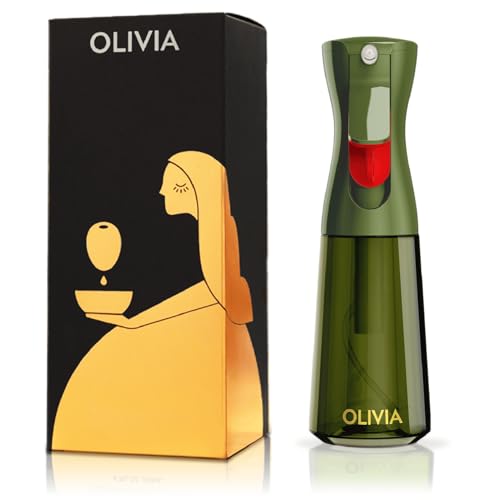
Color: Green Size: 6.8 Ounces Dimensions: 3.93 x 3.93 x 9.05 inches Weight: 0.73193470984 pounds Product Group: Kitchen Binding: Tools & Home Improvement
Shop Now








Write Your Review
No reviews yet. Be the first to share your experience!