

A K cup and drip coffee maker combo is a single machine with two brewing paths: a pod holder for single cups and a carafe side for a full pot. If you want both in one unit, you need to confirm that dual setup before you buy. Many machines sold as “drip” makers only brew into a carafe, and that matters for how you shop.
This guide explains how combo machines work, how to decide whether you need one, and what to check on the spec sheet. We also look at two carafe-style drip makers from our product database, clearly labeled as drip-only options for readers who decide a combo isn’t worth the counter space.
What a K cup and drip combo actually does
A combo machine pairs a pod brewer with a standard drip basket. One side takes a K-Cup pod and brews a single mug in about a minute. The other side takes ground coffee and a paper or permanent filter, then brews a multi-cup pot into a glass or thermal carafe. Some models share one water tank between both sides. Others use two separate reservoirs.
That shared-versus-separate detail is the first thing to check. A shared tank saves space, but it means you refill more often when you switch between a single cup and a full pot. Separate tanks cost more counter room. They also let one person drink a pod while another pot is brewing.
Who benefits most from a combo
Households with mixed habits get the most out of one. Say one person grabs a quick cup at 6 a.m. and four people want a pot on Sunday morning. A combo covers both without two appliances. Offices and small guest rooms are a good fit too.
Who should skip it
If everyone drinks the same amount at the same time, a good drip maker is simpler and usually brews better. You give up pod convenience, but you also drop a part that needs descaling and a second path that can clog. Plenty of people find that trade fair.
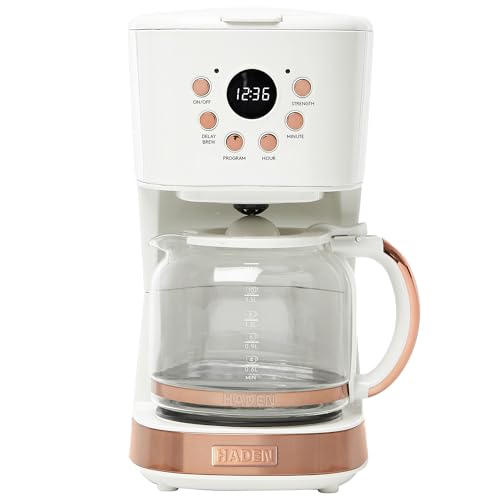
If you’ve already decided that a straightforward carafe machine suits your mornings, one well-reviewed choice is the HADEN 12-cup programmable model. It’s a drip-only machine, not a combo, and it doesn’t brew pods.
HADEN
12-Cup Programmable Drip Coffee Maker with Brew Strength Control - HADEN Coffee Machine
This HADEN drip brewer makes up to 12 cups on a programmable schedule, with a Brew Strength setting that lets you dial in a bolder pot without changing your grind or dose. Buy it if you want scheduled morning coffee for a household or office rather than single-cup convenience, and you care about how the machine looks sitting out on the counter.
Pros and Cons
Pros
- Programmable clock plus Delay Brew handles hands-off morning brewing on a set schedule.
- Washable permanent filter cuts consumable costs and cleanup steps.
- Brew Strength control gives real influence over cup intensity from the front panel.
- Retro British styling and finish suit kitchens where the machine stays on display.
Cons
- Twelve-cup drip format is inefficient for one or two cups at a time, since partial pots sit on the warming plate and degrade.
- The permanent filter passes more oils and fine sediment than paper, which some drinkers dislike in the finished cup.
HADEN 12-Cup Programmable Drip Coffee Maker with Brew Strength Control - HADEN Coffee Machine
HADEN
12-Cup Programmable Drip Coffee Maker with Brew Strength Control - HADEN Coffee Machine
This HADEN drip brewer makes up to 12 cups on a programmable schedule, with a Brew Strength setting that lets you dial in a bolder pot without changing your grind or dose. Buy it if you want scheduled morning coffee for a household or office rather than single-cup convenience, and you care about how the machine looks sitting out on the counter.
$68.59 at AmazonEditors' Favorite
Color: Ivory and Copper Size: Large Dimensions: 8.749999991075 x 8.49999999133 x 13.99999998572 Inches Weight: 4 Pounds Product Group: Kitchen Binding: Kitchen
Shop NowSingle-serve convenience versus full-pot value
Pods cost more per cup than ground coffee. That’s the plain math, and it’s why many combo owners use the pod side for weekdays and the drip side for weekends or guests. Ground coffee bought by the pound spreads across a lot more cups, and you control the strength by changing the scoop count.
Taste is the other piece. Drip brewing gives you control over dose and grind. Pods fix the dose for you. Neither is wrong. They just serve different priorities.
How to check the pod side before buying
Look for the pod size the machine accepts, the cup sizes it offers, and whether a reusable filter basket is included or sold separately. A reusable basket lets you run your own grounds through the pod side, which cuts per-cup cost.
How to check the drip side before buying
Check the carafe size, whether it’s glass or thermal, and whether the machine has a brew-pause feature so you can pour mid-cycle. A programmable timer is useful if you want coffee ready when you wake up. Warming plate time varies, so look at the stated keep-warm window on the product page.
Capacity and carafe size
Match the carafe to your household. A 12-cup pot suits a family or an office. An 8-cup pot is plenty for two people who drink two mugs each. Remember that “cups” on coffee makers are usually small measures, not 12-ounce mugs, so a 12-cup carafe makes fewer full mugs than the label suggests.
Smaller households sometimes prefer a compact drip maker that brews fewer cups with better temperature control. The Kismile 8-cup model is one example, again a drip-only machine and not a pod combo. Per its listing, it’s SCA-certified, heats water in about 3 seconds to between 197 and 205 degrees Fahrenheit, and has adjustable flow control, a removable water tank and a 40-minute keep-warm.

Kismile
SCA-Certified 8-Cup Drip & Cold Brew Coffee Maker with Flow Control: Kismile SCA-197 Pour Over Machine
This Kismile brewer heats water in 3 seconds and holds the SCA-approved 197-205°F range, delivering up to 8 cups of balanced drip coffee in about 6 minutes. Buy it if you want pour-over control and deep cold brew from one machine without babysitting a manual setup.
Pros and Cons
Pros
- Fast 3-second heating gets a full pot ready in roughly 6 minutes.
- Flow-control lever gives real pour-over adjustability most drip machines lack.
- Doubles as a deep cold brew maker, replacing a separate iced coffee device.
- Detachable water tank and washable brew parts make daily cleanup simple.
Cons
- Keep-warm tops out at 40 minutes, so late-morning coffee will cool.
- Manual flow control adds a learning curve versus a one-button drip maker.
Kismile SCA-Certified 8-Cup Drip & Cold Brew Coffee Maker with Flow Control: Kismile SCA-197 Pour Over Machine
Kismile
SCA-Certified 8-Cup Drip & Cold Brew Coffee Maker with Flow Control: Kismile SCA-197 Pour Over Machine
This Kismile brewer heats water in 3 seconds and holds the SCA-approved 197-205°F range, delivering up to 8 cups of balanced drip coffee in about 6 minutes. Buy it if you want pour-over control and deep cold brew from one machine without babysitting a manual setup.
$89.97 at AmazonEditors' Favorite
Color: Red Size: normal Dimensions: 12.83 x 11.22 x 6.3 Inches Product Group: Kitchen
Shop NowBrew temperature and why it matters
Coffee extracts best when the water sits roughly between 195 and 205 degrees Fahrenheit. Cheaper machines often run cooler, which can leave a flat, sour cup. Pod machines usually brew fast, so the heating element has to work harder in a short window.
When you compare any two machines, look for a stated brewing temperature range. If a listing doesn’t mention temperature at all, that’s a gap in what you can verify. Plan around what’s written, not what’s implied.
Flow control and bloom
Adjustable flow, as on the Kismile listing above, lets you slow the water over the grounds. That mimics a pour-over bloom. It’s a feature of drip machines more than pod machines, so it’s a point in favor of choosing a drip unit if you care about control.
Common mistakes when shopping for a combo
The biggest one is assuming “coffee maker” means “combo.” Read the title and the feature list. If pods aren’t mentioned, the machine probably doesn’t take them.
Another mistake is ignoring upkeep. Two brewing paths means two sets of parts to clean. Descale on the schedule the maker recommends, rinse the pod holder, and wash the basket after each use. Skip it, and flavor suffers.
A third mistake is buying for the rare big day instead of the normal one. A huge carafe that brews four mugs on a typical Tuesday wastes coffee and warming-plate energy. Shop for everyday use first.
Fourth, don’t overlook counter footprint. Combo machines are wider than single-purpose ones. Measure the gap under your cabinets before ordering.
When a commercial or high-volume brewer makes sense
Most homes never need to brew 24 cups at once. If you run a small shop, a church kitchen or a busy office, a high-volume machine is a different category. It isn’t a pod combo, and it isn’t meant for a home counter. Plan for the space, the power draw and the warmer plates.
For the vast majority of readers, the better path is to pick either a combo, if the spec sheet confirms both brewing paths, or a quality drip maker. Browse our roundups of the best drip coffee maker, the best small drip coffee maker and the best cheap drip coffee maker to compare more options.
Coffee choice matters as much as the machine
Drip machines reward fresh, medium-ground beans. Our guide to the best coffee beans for drip coffee maker setups covers what to look for, and the best coffee for a drip coffee maker page lists pre-ground options when you don’t own a grinder.
Use roughly the same ratio each time so you can fix problems. Too bitter? Use a coarser grind or fewer scoops. Too weak? Add a scoop or grind finer. Small changes beat guessing.
When to replace or upgrade
Replace your machine if it takes much longer to brew than it used to, leaks, or leaves mineral buildup that descaling can’t fix. Those are signs the heating element or seals are tired. Don’t ignore them. A failing machine wastes coffee and can be a safety concern.
Upgrade if you’re tired of choosing between a quick mug and a full pot. That’s the moment a combo makes sense. If you only want a bigger pot, step up to a larger drip carafe instead. For the high-volume case described earlier, there are commercial 24-cup units with multiple carafes, but they’re far larger than a household needs, so we left them out of the home picks.
Whichever way you go, read the product page for confirmed features. Our job is to research and compare the listings so you can shop with better information.
FAQ
Is there a K cup and drip coffee maker combo that does both?
Yes. Several brands sell machines with a pod side and a carafe side. Check the product title and feature list for both. The two machines we describe above are drip-only, so they don’t brew pods.
Do combo machines make a good pot of coffee?
It depends on the model. The drip side of a well-built combo can match a standalone drip maker, but brew temperature and shower-head design vary. Read the listing for temperature and flow details.
Is a combo cheaper than buying two machines?
Often, yes, and it saves counter space. But the combo may cost more than a simple drip maker alone. Decide whether you’d use both functions weekly before paying extra.
How much coffee should I use in a drip maker?
A common starting point is about 2 tablespoons of ground coffee per 6 ounces of water. Adjust to taste. Because label “cups” are small, it helps to measure by water volume rather than by the cup count printed on the carafe.
How often should I descale?
Follow the maker’s guidance, but many people descale every one to three months, sooner with hard water. If brewing slows or the coffee tastes off, descale sooner. For more drip options, see the best auto drip coffee maker roundup.




Write Your Review
No reviews yet. Be the first to share your experience!