

An industrial sized blender is a high-capacity, high-power machine built to process large batches, and for most home kitchens the practical version is a full-size countertop blender with a jar around 48 ounces, paired with a hand blender for pots and big bowls. True restaurant units hold gallons and need dedicated space and wiring, so most households don’t need one.
This guide helps you decide how much capacity you actually need, what separates a heavy-duty jar blender from a stick blender, and where each type earns its spot on the counter. We evaluated the options below by researching their listed specs, so you’ll see only what the product titles confirm.
What “industrial sized” really means for a home kitchen
The phrase gets used loosely. In a commercial kitchen it means a jar of 64 ounces or more, a heavy motor base and a sealed lid that survives hours of daily use. At home, shoppers usually mean one of three things: a bigger jar so a whole family’s smoothies come out in one batch, a stronger motor for ice and frozen fruit, or a tool that can handle soup in a stockpot without ladling it into a jar first.
Be honest about which of those you’re after. Capacity is only one part of the picture. A large jar with a weak motor stalls on frozen fruit, while a compact, powerful machine can beat a bigger one on texture.
If you’re still comparing styles, our best blender for guide sorts models by the job you need done, and the best juice blender idea is worth a look for heavy produce loads.
The Vitamix 36019 Quiet One is a good example of the top end of home-sized machines. Its title lists a 48 oz container, which is large enough for several servings at once, and the Quiet One name points to a design aimed at reducing noise during long runs.

Vitamix
Bar Drinks and Batch Blending: Vitamix 36019 Quiet One 48 oz Blender
It blends bar drinks and other kitchen preparations in a 48 oz container, while its magnetically secured back cover reduces cleaning time. It suits bars and busy kitchens that need programmable blending, a large container, and a 15-amp motor.
Pros and Cons
Pros
- Six program buttons provide a more consistent workflow than manual blending alone.
- The 48 oz polycarbonate container handles larger drink batches.
- The magnetically secured back cover makes cleanup less time-consuming.
- Its Quiet One design is intended for on-counter bar use.
Cons
- The 15-amp electrical requirement may not suit every kitchen setup.
- The on-counter bar format requires dedicated space for the 48 oz container and blender.
Vitamix Bar Drinks and Batch Blending: Vitamix 36019 Quiet One 48 oz Blender
Vitamix
Bar Drinks and Batch Blending: Vitamix 36019 Quiet One 48 oz Blender
It blends bar drinks and other kitchen preparations in a 48 oz container, while its magnetically secured back cover reduces cleaning time. It suits bars and busy kitchens that need programmable blending, a large container, and a 15-amp motor.
$1,158.05 at AmazonEditors' Favorite
Color: Black Size: 48 Ounce Dimensions: 12.8 x 13.8 x 22 inches Weight: 12 pounds Product Group: Kitchen Binding: Kitchen
Shop NowCapacity: how big a jar do you need
Match the jar to your biggest regular batch, not your biggest occasional one. A 48 oz jar is a common size for a household of four, and it leaves headroom so ingredients can circulate instead of packing against the blades.
Never fill to the brim
The stated capacity is the volume of the jar, not the amount you should blend. Hot liquids expand and splash, and thick mixtures need space to form a vortex. Filling about two thirds is a safe habit, and a lot of manufacturers recommend something similar in their manuals, so check yours.
When a bigger jar backfires
Very large jars struggle with small amounts. A cup of dressing in a huge container can spread thin across the base and never reach the blades. If you often make small portions, a smaller blender is a better fit. See our best small blender and best mini blender picks.
Jar blender versus hand blender for big batches
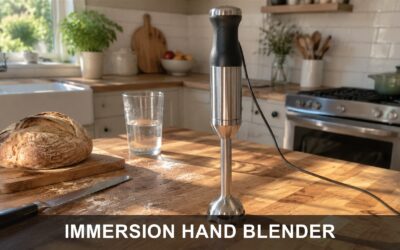
A jar blender is the right answer for smoothies, frozen drinks, nut butters and anything that benefits from a vortex. A hand blender, also called a stick or immersion blender, goes into the pot instead. That matters for soup, sauce or a large bowl of puree, since you skip the transfer and the cleanup of a heavy jar.
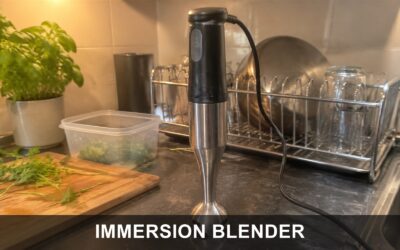
The KitchenAid KHBV53 is a corded hand blender with variable speed, and the title names Ice Blue as the color. Variable speed lets you start slow to avoid splatter, then ramp up once the blade is submerged. Corded models also don’t run out of battery halfway through a pot of soup. That’s the point.
KitchenAid Variable Speed Corded Hand Blender, KHBV53, Ice Blue

Editors' Favorite
Color: Ice Blue Size: 5 Speed Dimensions: 2.5 x 3.56 x 16.3 Inches Weight: 2.44 Pounds Product Group: Kitchen Binding: Kitchen
Shop NowIt isn’t an industrial machine, and it won’t replace a jar for ice-heavy drinks. But for working inside a big stockpot, it handles volume that no countertop jar can match, because the pot is the container. Our best stick blender and best hand blender pages compare more of these.
Power, blades and what to look for
Motor strength and blade design decide how well a blender handles tough ingredients. Product titles don’t always list wattage, so read the full specification on the listing before you buy rather than assuming.
Speed control
Variable speed gives you control over texture. Low speeds keep salsa chunky, and high speeds make a smooth puree. A single-speed machine is simpler, but you lose that range.
Attachments
Some compact models add extras. The Megawise 3-in-1 Hand Blender lists 12 speeds and includes a blender stick, a whisk and a milk frother. That makes it a flexible light-duty option for smoothies, whipped cream and frothed milk, though it sits at the small end of the scale and isn’t a heavy-duty choice.
MEGAWISE 3-in-1 Hand Blender – 12-Speed, Includes Powerful Blender Stick, Whisk, and Milk Frother – Easy to Clean and Perfect for Smoothies, and More (Red)

MEGAWISE
3-in-1 Hand Blender – 12-Speed, Includes Powerful Blender Stick, Whisk, and Milk Frother – Easy to Clean and Perfect for Smoothies, and More (Red)
$21.42 at AmazonEditors' Favorite
Color: Red Size: Large Dimensions: 10 x 5.7 x 6.5 inches Weight: 1.2 Pounds Product Group: Kitchen Binding: Kitchen
Shop NowIf budget matters more than raw capacity, compare budget models before you commit to a pricier one.
Noise, storage and counter space
Big machines take up room. Measure the gap under your cabinets before you buy, because many full-size jars are tall once they sit on the base. If the lid can’t clear the cabinet, you’ll end up lifting the jar off every time you want to add something.
Noise matters too. Any high-power motor is loud, which is why a model sold as quiet gets attention from early risers and apartment dwellers. A hand blender is usually quieter in short bursts, since it runs for less time on softer ingredients. Neither is silent, so run times and ingredient choices still count.
Storage is the other trade-off. A hand blender slides into a drawer, while a 48 oz jar blender tends to live on the counter. If counter space is tight, ask yourself how often you’d really use it. A machine you use three times a week earns its footprint. One you use twice a year doesn’t.
What to blend in a large machine
Big batches shine for a few jobs. Weekly smoothie prep is the obvious one: blend a full jar, then portion it into cups and freeze them. Soups are next. Roast the vegetables, add stock, blend, and you have dinner for several nights. Sauces such as tomato, pesto and enchilada sauce all scale well, too.
Frozen desserts and nut butters work in a strong jar blender, though they’re harder on the motor. Work in smaller amounts, stop to scrape the sides, and give the base time to cool between rounds. Dough and heavy batters are better left to a stand mixer or food processor.
For hand blenders, think wet and soft. Cooked vegetables, cream soups, pancake batter and whipped cream are all fair game. Hard ice and dense frozen chunks are not. Keep the blade submerged to cut down on splatter, and tilt the pot slightly to help the mixture flow.
Common mistakes with large blenders
Overfilling is the big one. Another is blending hot liquid in a sealed jar, because steam builds pressure and can push the lid off. Vent the lid cap, cover it with a towel and start on low.
People also run the motor too long. If the base feels hot or you smell something off, stop and let it rest. Add liquid first, then soft items, then ice or frozen pieces on top, since that order helps the blades pull everything down.
Cleaning is easy to skip and shouldn’t be. Fill the jar halfway with warm water, add a drop of dish soap and run it for 30 seconds. Rinse and air dry. Check the care guide for your model before using a dishwasher.
When to upgrade or add a second blender
Upgrade if your current blender stalls on frozen fruit, leaves grit in nut butter, or you’re batching so often that you make two rounds every time. Add a second tool if you only need soup or sauce help. A hand blender costs far less than a bigger jar and solves a different problem.
For brand-specific shopping, our best Ninja blender page are a good next stop.
FAQ
What is considered an industrial sized blender?
In commercial kitchens it usually means a jar of 64 ounces or more with a heavy-duty motor and base. For home use, people often mean a full-size blender with a 48 oz jar or similar.
How big should a blender jar be for a family?
A 48 oz jar suits many households of three to five people. Smaller families can do fine with less, and larger ones may want to blend in two batches.
Can a hand blender replace a big jar blender?
For soups, sauces and purees it can. For ice, frozen drinks and nut butters, a jar blender usually does better because of the vortex it creates.
Is a more powerful blender always better?
Not always. Power helps with ice and fibrous produce, but jar shape, blade design and speed control affect results as well. Match the machine to what you blend most.
How full should I fill a large blender?
About two thirds is a safe habit. Leave space for expansion, especially with hot liquids, and always vent the lid when blending warm food.
Write Your Review
No reviews yet. Be the first to share your experience!