

Induction cooktops have transformed how home cooks approach everyday meals, but they demand cookware with specific magnetic properties. Not every pan works on induction, and understanding what separates a functional piece from an exceptional one requires looking beyond the “induction-ready” label. The real question isn’t whether a pan technically functions on your cooktop—it’s whether it delivers consistent heat, durability, and value that justify its price.
The market spans from twenty-dollar basics to five-hundred-dollar heirlooms, and each price tier brings distinct trade-offs in materials, construction, and longevity. Knowing where manufacturers cut corners—and where they invest in meaningful performance gains—helps you avoid both cheap disappointments and overpriced status symbols.
What Makes a Pan Induction-Compatible
Induction cooking generates heat through electromagnetic fields that require ferromagnetic materials in your cookware’s base. A simple magnet test reveals compatibility: if a refrigerator magnet clings firmly to the bottom, the pan will work. Stainless steel with an iron core, cast iron, and carbon steel all qualify. Pure aluminum, copper, and most non-stick pans without a magnetic base layer do not.
However, magnetic compatibility represents only the entry requirement. High-quality induction pans feature thick, flat bases that maximize contact with the cooktop surface. Warped or thin bottoms create air gaps that reduce efficiency and cause uneven heating. The best manufacturers bond multiple metal layers—often aluminum or copper cores sandwiched between stainless steel—to combine induction compatibility with superior heat distribution.
Base diameter matters more than many shoppers realize. Induction burners concentrate energy in specific zones, typically ranging from six to ten inches. A pan with a narrow base on a large burner wastes energy and heats unevenly. Match your cookware dimensions to your most-used burner sizes for optimal results.
Budget Tier: What Twenty to Fifty Dollars Buys
Entry-level induction pans typically use thin stainless steel with a magnetic disk welded to the bottom. These disks concentrate heat in the center while the pan’s edges remain cooler—acceptable for boiling water or reheating soup, but frustrating for techniques that demand even heat like pan-searing or sauce reduction.
Budget options often exhibit poor temperature control. They heat rapidly but lack the thermal mass to maintain stable temperatures when you add cold ingredients. A chicken breast dropped into a budget pan will cause temperatures to plummet, resulting in steamed rather than seared meat. The thin construction also makes these pans prone to warping after repeated high-heat use.
That said, budget induction pans serve specific roles well. A basic stainless skillet works fine for scrambled eggs, sautéed vegetables, or tasks where precise temperature control isn’t critical. If you’re testing whether induction cooking suits your needs before investing in quality pieces, a twenty-five-dollar pan provides a reasonable entry point. Just don’t expect it to perform like cookware costing five times as much.
Mid-Range Tier: The Seventy to One-Fifty Sweet Spot
Between seventy and one hundred fifty dollars, construction quality improves substantially. Most pans in this range feature tri-ply or five-ply bonded construction—layers of stainless steel encasing an aluminum or copper core that extends across the entire cooking surface, not just the base. This design eliminates hot spots and provides the even heating that separates adequate cookware from genuinely useful tools.
Mid-tier pans typically weigh significantly more than budget options, a direct result of thicker material layers. This added mass stabilizes temperatures during cooking. Drop a pound of diced onions into a quality mid-range pan and temperatures dip briefly, then recover. The difference in browning quality and cooking control is immediately apparent.
Handles represent another area where mid-range manufacturers invest. Cheaper pans use spot-welded handles that eventually loosen. Better models employ riveted or bolted attachments that remain secure through years of use. Ergonomic designs with adequate length and comfortable grips make a tangible difference during prolonged cooking sessions.
For most home cooks, this price tier delivers the best return on investment. A hundred-dollar stainless skillet from established brands like Tramontina, Cuisinart’s MultiClad line, or Made In will outperform and outlast three sequential budget pans. Unless you’re cooking professionally or have specific performance requirements that justify premium prices, mid-range induction cookware handles virtually every home cooking task with competence.
Premium Tier: Justifying Two Hundred Dollars and Beyond
Premium induction pans cost between two hundred and five hundred dollars, and distinguishing genuine performance benefits from brand prestige requires scrutiny. The best high-end options incorporate copper cores rather than aluminum. Copper conducts heat roughly twice as efficiently as aluminum, providing faster response to temperature adjustments and even more uniform heating across the cooking surface.
Manufacturers like Demeyere, All-Clad’s Copper Core line, and Hestan invest in thicker material layers—often exceeding three millimeters total thickness compared to two millimeters in mid-range pans. This additional thermal mass further stabilizes cooking temperatures and improves heat retention. For techniques like achieving restaurant-quality sears or maintaining precise temperatures for delicate sauces, the difference becomes noticeable.
Premium pans also feature superior finishing. Cooking surfaces are polished to higher standards, making them easier to clean and more stain-resistant. Welded seams show no gaps where food particles might lodge. Lids fit precisely, and oven-safe ratings typically extend to 500°F or higher—useful for techniques that start stovetop and finish under the broiler.
However, diminishing returns set in at this tier. A five-hundred-dollar pan doesn’t cook twice as well as a hundred-dollar pan—improvements are incremental rather than transformative. If you cook daily, demand precise control for advanced techniques, or simply want cookware that will last decades with minimal maintenance, premium options deliver value. For occasional cooks or those still developing technique, the performance gains rarely justify the cost.
Material-Specific Considerations for Induction
Cast iron and carbon steel pans deserve special mention for induction cooking. Both materials are inherently magnetic and heat efficiently on induction cooktops. Cast iron’s extreme thermal mass makes it ideal for high-heat searing and baking, though its slow heat response and considerable weight limit versatility. A well-seasoned cast iron skillet costs thirty to sixty dollars and provides performance that punches well above its price point for specific tasks.
Carbon steel combines cast iron’s heat retention with lighter weight and faster heating. These pans develop natural non-stick properties through seasoning and excel at stir-frying, searing, and tasks requiring high temperatures. Quality carbon steel pans cost between forty and ninety dollars—significantly less than comparable stainless options—though they require more maintenance to prevent rust.
Non-stick pans with induction-compatible bases occupy a different category. They simplify cooking delicate foods like fish or eggs but sacrifice durability. Even premium non-stick coatings deteriorate within three to five years with regular use. Budget non-stick pans (fifteen to thirty dollars) make economic sense as disposable tools, while spending over seventy dollars on non-stick feels wasteful given their limited lifespan.
Making the Smart Investment
Building an induction-ready cookware collection doesn’t require buying everything at once or sticking to a single price tier. Most cooks benefit from a strategic mix: a workhorse stainless skillet from the mid-range tier, a cast iron pan for searing, and a budget non-stick for eggs. This combination covers ninety percent of home cooking tasks without redundant spending.
Prioritize pieces you’ll use daily. A ten-inch skillet and a three-quart saucepan see more action in most kitchens than specialty items like woks or grill pans. Once core pieces are in place, add specialized items as needs arise rather than purchasing complete sets that include sizes you’ll rarely touch.
Pay attention to manufacturer warranties. Mid-range and premium brands typically offer lifetime guarantees against defects—a signal of construction confidence worth considering. Budget manufacturers rarely back their products beyond one year, if at all.
Consider buying open-stock pieces rather than sets. Prepackaged sets often include odd sizes or duplicate items to inflate perceived value. Individual pieces cost more per item but ensure you’re only buying what you’ll actually use. Watch for holiday sales on quality brands—November through January often brings twenty to thirty percent discounts on cookware that never goes on sale otherwise.
Can I use my existing cookware on an induction cooktop?
Test each piece with a refrigerator magnet against the pan’s bottom exterior. If the magnet sticks firmly, the pan will work on induction. Most stainless steel and all cast iron cookware is compatible. Pure aluminum, copper, glass, and ceramic pans will not work unless they have a magnetic base layer added by the manufacturer. Some older stainless pans use non-magnetic steel grades—the magnet test is the only reliable verification method.
Do expensive induction pans really heat more evenly?
Yes, but construction matters more than price alone. Pans with fully-clad aluminum or copper cores distribute heat far more evenly than thin stainless steel with magnetic disks welded to the bottom. A well-constructed hundred-dollar tri-ply pan will outperform a poorly-made two-hundred-dollar pan. Look for specifications listing bonded layers across the entire pan, not just the base. Thickness also contributes—quality pans typically exceed 2.5mm total thickness, which helps maintain stable temperatures during cooking.
How long should a quality induction pan last?
Stainless steel induction pans from reputable mid-range or premium brands should last twenty years or more with proper care. The bonded metal layers don’t degrade, and quality stainless steel resists corrosion indefinitely. Cast iron and carbon steel can last generations if maintained correctly. Non-stick pans represent the exception—even expensive non-stick coatings wear out within three to five years of regular use. Factor replacement costs into your purchasing decision when considering non-stick options.

COOKER KING
Eggs and Single-Serving Meals: COOKER KING 8-Inch Hybrid Nonstick Stainless Steel Pan
The COOKER KING 8-inch skillet cooks eggs, omelets, grilled cheese, and single portions, with its 3-ply aluminum-core construction providing fast, even heating. It suits solo cooks and small kitchens needing compact, induction-ready cookware with easier food release and cleanup.
Pros and Cons
Pros
- The pan is made without PFOA, PTFE, PFAS, lead, cadmium, or other toxic metals listed by the manufacturer.
- Its hybrid cooking surface is designed to tolerate metal utensils while improving food release.
- The stay-cool handle supports safer stovetop handling during routine cooking.
- The 3-ply clad base combines stainless steel durability with an aluminum core for responsive, even heating.
Cons
- The 8-inch surface is too small for family-size portions or cooking several items at once.
- Eggs require low heat, and the manufacturer advises against heating the pan while empty.

FogDream
Eggs, Steaks and Small Meals: FogDream 8-Inch Honeycomb Hybrid Stainless Steel Frying Pan with Lid
The FogDream 8-inch skillet fries, sears and sautés with a honeycomb hybrid surface that provides easier food release without a traditional PTFE nonstick coating. It suits singles, couples and small-meal cooks who want induction compatibility, oven use and durable metal-utensil-safe construction.
Pros and Cons
Pros
- The aluminum core and stainless steel cladding provide fast, even heating while resisting warping.
- Oven safety to 500°F supports stovetop-to-oven dishes such as frittatas and roasted meats.
- The included lid adds control when simmering, steaming or containing splatter.
- The stay-cool handle improves comfort during routine stovetop cooking.
Cons
- The 8-inch cooking area is too small for family-size portions or multiple large ingredients.
- Best food release requires initial seasoning, proper preheating and a small amount of oil, so it is less effortless than conventional coated nonstick cookware.

CAROTE
3-Piece Non Stick Frying Pan Set for Induction Cooking, Granite Coating, PFOA Free (8, 10, 12 Inch)
This three-pan set delivers reliable nonstick performance across all cooktops including induction, with a granite coating that requires minimal oil for healthier everyday cooking. Home cooks who want a complete skillet range without toxic chemicals should consider this affordable PFOA-free option.
Pros and Cons
Pros
- Works on all cooktop types including induction, making it future-proof if you upgrade your stove.
- Granite coating requires minimal oil, which speeds cleanup and reduces smoke during cooking.
- Three-pan sizing covers most daily cooking tasks from single servings to larger batches.
Cons
- Zero customer reviews at launch means long-term durability and coating lifespan remain unverified.
- Heat-resistant handle performance under prolonged high-heat use is not specified by the manufacturer.
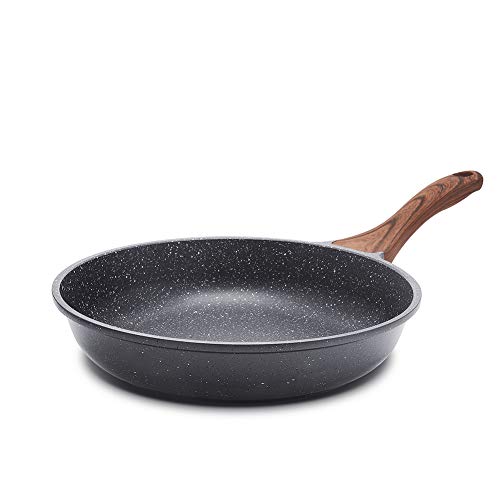
SENSARTE
Best Nonstick Omelette Pan for Daily Use — SENSARTE Swiss Granite 9.5 Inch Skillet
The SENSARTE 9.5-inch skillet uses Swiss ILAG granite coating on a cast aluminum body to deliver even heat and truly effortless food release without PFOA or harmful chemicals. Home cooks who want a lightweight, induction-compatible pan that cleans up in seconds will get the most out of this.
Pros and Cons
Pros
- PFOA-free Swiss ILAG coating meets international safety certifications, making it a cleaner choice than budget nonstick pans with unverified coatings.
- The flat, thick base heats up quickly and evenly, which matters most when cooking eggs or sautéing vegetables where temperature control is key.
- Induction compatibility combined with a lightweight cast aluminum body makes this pan versatile across gas, electric, and induction setups.
- Dishwasher-safe construction removes the daily friction of hand-washing a dedicated egg or omelette pan.
Cons
- The 302°F oven limit rules this pan out for high-heat oven tasks like searing and finishing steaks or roasting at standard oven temperatures.
- At 9.5 inches, the cooking surface is best suited for one to two servings — not practical for larger omelettes or family-sized portions.

Utopia Kitchen
3-Piece Nonstick Frying Pan Set for Omelets, Pancakes & Stir-Fry (8, 9.5, 11 Inch)
This three-pan nonstick set delivers even heat distribution across 8, 9.5, and 11-inch surfaces with induction-compatible bottoms and PFOA-free coating. Home cooks who need multiple pan sizes for everyday tasks like omelets, sautéing, and reheating will appreciate the riveted bakelite handles and versatile cooktop compatibility.
Pros and Cons
Pros
- Three sizes handle everything from single eggs to family-sized stir-fries without buying separate specialty pans.
- Nonstick surface releases food cleanly and cuts cleanup time compared to stainless steel.
- Works across all cooktop types including induction, eliminating compatibility guesswork.
Cons
- Hand washing recommended despite dishwasher-safe claim to preserve nonstick coating longevity.
- No reviews available yet to confirm long-term durability or coating performance after repeated use.

CAROTE
Tri-Ply Stainless Steel Frying Pans for Searing and Everyday Cooking: CAROTE 3-Piece Skillet Set 8", 10", 12"
This three-piece tri-ply stainless steel skillet set covers 8", 10", and 12" pans that heat quickly and evenly for eggs, vegetables, searing, and sautéing. It suits cooks replacing worn nonstick with a full stainless lineup that works on induction, gas, electric, and ceramic cooktops and moves from stovetop to oven.
Pros and Cons
Pros
- Tri-ply stainless steel delivers fast, even heating for consistent searing and sauteing.
- The 8", 10", and 12" spread covers nearly every daily cooking job in one purchase.
- Works on every common cooktop including induction, plus oven and dishwasher safe.
- Backed by CAROTE customer support if anything goes wrong with the cookware.
Cons
- Bare stainless steel is not nonstick, so eggs and fish need proper preheating and enough fat to release cleanly.
- The set ships without lids, which limits steaming and simmering compared to covered skillets.

COOKER KING
Healthy Everyday Frying with COOKER KING 3-Piece Stainless Steel Nonstick Skillet Set
This 8, 10, and 12-inch skillet set handles eggs, fish, and searing with even heating from its 3-ply aluminum-core construction. It suits home cooks seeking induction-ready, metal-utensil-safe pans without PFOA, PTFE, PFAS, lead, or cadmium.
Pros and Cons
Pros
- The set includes versatile 8, 10, and 12-inch pans for individual portions and larger meals.
- Its 3-layer stainless steel construction uses an aluminum core for faster, more even heating.
- The ceramic-etched cooking surface is designed to resist sticking while allowing metal utensil use.
- Each pan is dishwasher-safe, induction-compatible, and rated for oven temperatures up to 900°F.
Cons
- Eggs require low heat, and general cooking should stay around medium-low, so users may need to adjust from typical high-heat habits.
- The pans should not be heated empty, and abrasive pads or steel wool can damage the cooking surface.
The Best Deals This Week*
-
CAROTE 3-Piece Non Stick Frying Pan Set
$42.99
($59.99)Save $17.00 -
Best Nonstick Omelette Pan for Daily Use
$17.99
($23.99)Save $6.00 -
Utopia Kitchen 3-Piece Nonstick Frying Pan Set
$38.69
($42.99)Save $4.30
*Deals are selected by our commerce team
COOKER KING Eggs and Single-Serving Meals: COOKER KING 8-Inch Hybrid Nonstick Stainless Steel Pan
COOKER KING
Eggs and Single-Serving Meals: COOKER KING 8-Inch Hybrid Nonstick Stainless Steel Pan
The COOKER KING 8-inch skillet cooks eggs, omelets, grilled cheese, and single portions, with its 3-ply aluminum-core construction providing fast, even heating. It suits solo cooks and small kitchens needing compact, induction-ready cookware with easier food release and cleanup.
$29.99 at AmazonEditors' Favorite
Color: Silver Size: 8 Inch Dimensions: 5.6 x 8 x 1.4 inches Weight: 1.8298367746 pounds Product Group: Kitchen Binding: Kitchen
Shop NowFogDream Eggs, Steaks and Small Meals: FogDream 8-Inch Honeycomb Hybrid Stainless Steel Frying Pan with Lid
FogDream
Eggs, Steaks and Small Meals: FogDream 8-Inch Honeycomb Hybrid Stainless Steel Frying Pan with Lid
The FogDream 8-inch skillet fries, sears and sautés with a honeycomb hybrid surface that provides easier food release without a traditional PTFE nonstick coating. It suits singles, couples and small-meal cooks who want induction compatibility, oven use and durable metal-utensil-safe construction.
$19.99 at AmazonGreat Value
Color: Gold Size: 8" With Lid Dimensions: 12.99 x 12.99 x 3.94 inches Product Group: Kitchen
Shop NowCAROTE 3-Piece Non Stick Frying Pan Set for Induction Cooking, Granite Coating, PFOA Free (8, 10, 12 Inch)
CAROTE
3-Piece Non Stick Frying Pan Set for Induction Cooking, Granite Coating, PFOA Free (8, 10, 12 Inch)
This three-pan set delivers reliable nonstick performance across all cooktops including induction, with a granite coating that requires minimal oil for healthier everyday cooking. Home cooks who want a complete skillet range without toxic chemicals should consider this affordable PFOA-free option.
$42.99 at AmazonColor: Black Size: 8"+10"+12" Dimensions: 1 x 1 x 1 inches Weight: 6.49922748376 Pounds Product Group: Kitchen
Shop NowSENSARTE Best Nonstick Omelette Pan for Daily Use — SENSARTE Swiss Granite 9.5 Inch Skillet
SENSARTE
Best Nonstick Omelette Pan for Daily Use — SENSARTE Swiss Granite 9.5 Inch Skillet
The SENSARTE 9.5-inch skillet uses Swiss ILAG granite coating on a cast aluminum body to deliver even heat and truly effortless food release without PFOA or harmful chemicals. Home cooks who want a lightweight, induction-compatible pan that cleans up in seconds will get the most out of this.
$17.99 at AmazonColor: Gray Size: 9.5 Inch Dimensions: 17.5 x 9.5 x 2.2 Inches Weight: 1.45 pounds Product Group: Kitchen Binding: Kitchen
Shop NowUtopia Kitchen 3-Piece Nonstick Frying Pan Set for Omelets, Pancakes & Stir-Fry (8, 9.5, 11 Inch)
Utopia Kitchen
3-Piece Nonstick Frying Pan Set for Omelets, Pancakes & Stir-Fry (8, 9.5, 11 Inch)
This three-pan nonstick set delivers even heat distribution across 8, 9.5, and 11-inch surfaces with induction-compatible bottoms and PFOA-free coating. Home cooks who need multiple pan sizes for everyday tasks like omelets, sautéing, and reheating will appreciate the riveted bakelite handles and versatile cooktop compatibility.
$38.69 at AmazonColor: Grey-Black Size: Variety Pack Dimensions: 7 x 11 x 2 inches Weight: 1.1 Pounds Product Group: Kitchen Binding: Kitchen
Shop NowCAROTE Tri-Ply Stainless Steel Frying Pans for Searing and Everyday Cooking: CAROTE 3-Piece Skillet Set 8", 10", 12"
CAROTE
Tri-Ply Stainless Steel Frying Pans for Searing and Everyday Cooking: CAROTE 3-Piece Skillet Set 8", 10", 12"
This three-piece tri-ply stainless steel skillet set covers 8", 10", and 12" pans that heat quickly and evenly for eggs, vegetables, searing, and sautéing. It suits cooks replacing worn nonstick with a full stainless lineup that works on induction, gas, electric, and ceramic cooktops and moves from stovetop to oven.
$67.49 at AmazonColor: Gold Size: 3 PCS Dimensions: 2.8 x 12 x 7.4 inches Product Group: Kitchen
Shop NowCOOKER KING Healthy Everyday Frying with COOKER KING 3-Piece Stainless Steel Nonstick Skillet Set
COOKER KING
Healthy Everyday Frying with COOKER KING 3-Piece Stainless Steel Nonstick Skillet Set
This 8, 10, and 12-inch skillet set handles eggs, fish, and searing with even heating from its 3-ply aluminum-core construction. It suits home cooks seeking induction-ready, metal-utensil-safe pans without PFOA, PTFE, PFAS, lead, or cadmium.
$78.99 at AmazonColor: Stainless Steel Size: 8 10 12 Inch Dimensions: 12 x 7 x 0.5 inches Weight: 8.9507678372 Pounds Product Group: Kitchen Binding: Kitchen
Shop Now




Write Your Review
No reviews yet. Be the first to share your experience!