

Induction cooking cookware has to be magnetic. If a magnet sticks firmly to the bottom of a pot or pan, it will heat on an induction cooktop. If it doesn’t, it won’t. That’s the whole rule, and everything else is detail.
This guide walks you through what makes cookware work on induction, how to check the pans you already own, which materials suit the way you cook, and the mistakes that cause scratched glass tops and hot spots. By the end, you’ll know what to keep, what to replace and what to look for on a label.
What makes cookware work on induction
An induction cooktop doesn’t heat the surface the way a gas flame or an electric coil does. It creates a magnetic field under the glass, and that field generates heat inside the base of the pan itself. So the pan has to contain a magnetic metal. Cast iron qualifies. So do many stainless steel pans, as long as the base layer is a magnetic grade of steel.
Plain aluminum, copper and glass don’t respond on their own. Many aluminum and copper pans get around this with a bonded steel disc or layer on the bottom. If you’re shopping, look for the induction coil symbol on the packaging or the word “induction” in the product title. Don’t assume.
The payoff is speed and control. Because the heat is made in the pan, water comes to a boil quickly, and turning the dial down changes the temperature almost at once. The cooktop surface stays cooler than a radiant electric burner, though it still gets warm from the hot pan.
The magnet check
Grab a refrigerator magnet and hold it to the outside of the base. A strong pull means the pan is a good candidate. A weak pull or a magnet that slides off is a warning sign. Some stainless pans have a magnetic outer layer on the base and a nonmagnetic interior, which is fine. What matters is the bottom.
Flat bottoms matter
The base should sit flat against the glass. A warped pan leaves a gap, and the cooktop may heat unevenly or cut out. Place a ruler across the bottom of a cold pan and look for daylight underneath. Quality induction-ready sets are built with a thick, bonded base to resist warping, but even good pans can bend if they’re heated empty or plunged into cold water while hot.
Stainless steel sets for everyday induction cooking
Stainless steel is the most common answer for a full induction kitchen. It doesn’t react with acidic foods like tomato sauce, it handles high heat, and it goes from stovetop to oven. A set also keeps your pots and pans matched, so the lids and sizes make sense together.
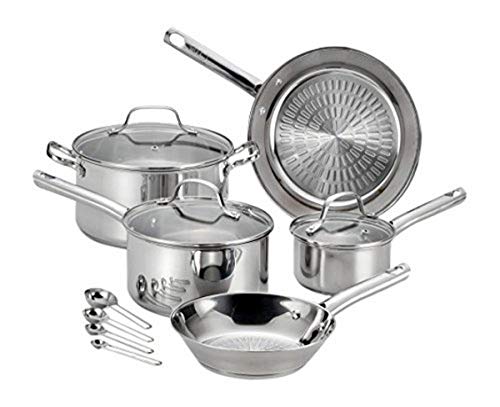
One example is the T-Fal Performa Stainless Steel Cookware Set, a 12-piece set that the maker lists as induction, oven and broiler safe up to 500F and dishwasher safe. At $119.99 with a 4.9 rating in the site’s product data, it sits at the budget-friendly end of full sets. A 12-piece count generally gets you a range of saucepans, a skillet or two, a larger stockpot and lids, so you can cover most weeknight meals without buying anything else.
T-Fal
Induction-Ready 12-Piece Stainless Cookware Set: T-fal Performa 18/10 Steel Pots and Pans, Oven Safe to 500F
This 12-piece T-fal Performa set covers frying, simmering, and braising with 18/10 stainless steel construction and a Techno Release interior that loosens food for easier cleanup. It suits cooks upgrading to an induction-compatible set who want oven and dishwasher versatility without buying pieces individually.
Pros and Cons
Pros
- Induction-compatible base makes the set usable on every common cooktop type, including modern induction ranges.
- Every piece is dishwasher safe, so cleanup does not require hand washing after weeknight cooking.
- The 500F oven and broiler rating covers stovetop-to-oven recipes most stainless sets cap below.
- Four measuring spoons and three lids are included, so the set is ready to use out of the box.
Cons
- Stainless interiors still need proper preheating and fat to release delicate foods, so it will not behave like a nonstick pan.
- The set skips a large stockpot and a saute pan, so high-volume cooks may need to add pieces later.
T-Fal Induction-Ready 12-Piece Stainless Cookware Set: T-fal Performa 18/10 Steel Pots and Pans, Oven Safe to 500F
T-Fal
Induction-Ready 12-Piece Stainless Cookware Set: T-fal Performa 18/10 Steel Pots and Pans, Oven Safe to 500F
This 12-piece T-fal Performa set covers frying, simmering, and braising with 18/10 stainless steel construction and a Techno Release interior that loosens food for easier cleanup. It suits cooks upgrading to an induction-compatible set who want oven and dishwasher versatility without buying pieces individually.
$119.99 at AmazonEditors' Favorite
Color: Silver Size: 0 Dimensions: 22 x 10 x 15 inches Weight: 3.15 Pounds Product Group: Kitchen Binding: Kitchen
Shop NowIf you want to compare more options before buying, our best stainless steel cookware and best cookware set guides cover the wider field.
Choosing a material for your cooking style
Magnetic isn’t the only question. Different materials behave differently once they’re on the burner, so match the pan to the job.
Stainless steel
Good for searing, simmering sauces, boiling pasta and building pan sauces. Food can stick if the pan isn’t preheated and oiled, and there’s a small learning curve. The upside is durability. A decent stainless pan can last for years.
Enameled cast iron
Cast iron holds heat well and works naturally on induction because it’s magnetic. The enamel coating means you don’t have to season it and it won’t react with acidic foods. The tradeoff is weight. A Dutch oven filled with stew is a heavy lift, and dropping one on a glass cooktop is how you end up with a crack.
The QuliMetal Enameled Cast Iron Cookware Set is a 5-piece option with a skillet, a frying pan, a saucepan, a Dutch oven and a lid. The title says it’s made for all stovetops, describes it as PFA free, and points to sourdough bread baking as one use for the Dutch oven. It’s priced at $175.99 and carries a 4.9 rating in the product data.

QuliMetal
Enameled Cast Iron Cookware Set for Sourdough Baking and Everyday Cooking: QuliMetal 5-Piece Dutch Oven, Saucepan and Skillet Set
This five-piece enameled cast iron set covers a 4.3-quart Dutch oven, a 2-quart saucepan, and 8-inch, 10-inch, and 11-inch skillets, with heat retention strong enough to hold a stew warm well after the burner is off. It suits home bakers and one-pot cooks who want a single set that handles sourdough loaves, braises, and weeknight eggs across any stovetop.
Pros and Cons
Pros
- Hard-coat enamel inside and out resists scratching and chipping, so no seasoning routine is required.
- Snug lids on the Dutch oven and saucepan lock in moisture for tender pot roasts and braises.
- Works on all stovetop types, including induction, gas, and electric.
- The enamel surface handles acidic ingredients like tomato and wine that bare cast iron reacts with.
Cons
- Cast iron construction makes these pieces heavy, which is awkward for one-handed skillet work or for cooks with wrist strain.
- Only the Dutch oven and saucepan include lids, so the three skillets are left uncovered.
QuliMetal Enameled Cast Iron Cookware Set for Sourdough Baking and Everyday Cooking: QuliMetal 5-Piece Dutch Oven, Saucepan and Skillet Set
QuliMetal
Enameled Cast Iron Cookware Set for Sourdough Baking and Everyday Cooking: QuliMetal 5-Piece Dutch Oven, Saucepan and Skillet Set
This five-piece enameled cast iron set covers a 4.3-quart Dutch oven, a 2-quart saucepan, and 8-inch, 10-inch, and 11-inch skillets, with heat retention strong enough to hold a stew warm well after the burner is off. It suits home bakers and one-pot cooks who want a single set that handles sourdough loaves, braises, and weeknight eggs across any stovetop.
$175.99 at AmazonEditors' Favorite
Color: E Blue 5PC Size: Blue 5PC-A Dimensions: 13.86 x 8.9 x 25.12 inches Product Group: Kitchen
Shop NowNonstick and ceramic coatings
Nonstick pans are handy for eggs, pancakes and delicate fish. They don’t last as long as steel or cast iron, and high heat shortens their life. If you go this route, confirm the product explicitly says it works with induction. Some coated pans are made of aluminum with no magnetic layer, so they’ll sit cold on your cooktop. Our guides to best cookware pans and best budget cookware are a good place to start if price is the main concern.
Common mistakes with induction cookware
Most problems come down to a handful of habits. Fix these and your pans will work better and last longer.
First, using the wrong burner size. Induction heats best when the pan base roughly matches the cooking zone. A small saucepan on a big zone can heat unevenly, and a huge skillet on a small zone leaves the edges cold. Match them where you can.
Second, sliding pans across glass. Rough cast iron bases can scratch a glass top. Lift the pan instead of dragging it, and wipe the bottom before setting it down so grit doesn’t get trapped underneath.
Third, heating an empty pan. Induction is fast. An empty nonstick pan can overheat in under a minute, which can damage the coating and warp the base. Add oil or food before you turn it on.
Fourth, ignoring the buzz. A faint hum or buzz is normal with some pans, especially at high power. It comes from vibration in layered bases. It isn’t a defect. But a loud rattle or clicking might mean a loose base layer.
Fifth, going straight to maximum power. Start at medium, let the pan warm up, then adjust. You’ll get better browning and fewer burnt spots.
When to replace or upgrade your cookware
Switching to induction doesn’t always mean tossing everything. Keep any cast iron, magnetic stainless pans and enameled pots that pass the magnet check. Replace what fails it, and replace anything with a warped base, a flaking coating or loose handles.
If most of your old collection is aluminum or has a worn nonstick surface, buying a full set can be easier than patching gaps one pan at a time. A matched set also saves cabinet space, because lids and sizes are designed to nest. For a wider look at what’s available at different price points, see our best cookware roundup and the best value cookware guide.
Care tips that extend the life of induction pans
Let pans cool before washing. Cold water on a hot base is a classic way to warp metal. Use a soft sponge on coated surfaces and skip metal utensils. For stainless steel, a paste of baking soda and water lifts stuck-on residue without scratching. For enameled cast iron, avoid sudden temperature changes and skip abrasive pads, which can dull the enamel.
Store pans with a cloth or paper towel between them if you stack them. That protects the cooking surface and keeps the base clean for the next time you set it on glass.
FAQ
Can I use any pan on an induction cooktop?
No. The pan needs a magnetic base. Cast iron and many stainless steel pans work. Plain aluminum, copper and glass usually don’t, unless they have a bonded steel layer. Use a magnet to check.
Is stainless steel cookware good for induction?
Yes, as long as the base contains magnetic steel. Many sets, like the T-Fal Performa 12-piece set, are labeled induction compatible. It’s a durable, versatile choice for most cooks.
Does cast iron scratch an induction cooktop?
It can. Rough bases dragged across glass leave marks. Lift the pan rather than sliding it, and keep the cooktop and the pan bottom clean. Enameled cast iron has a smoother finish, but it’s still heavy, so handle it carefully.
Why does my induction pan make noise?
A light hum or buzz is usually normal. It comes from the magnetic field and layered metal vibrating, and it’s more noticeable at high power. Lower the heat setting and the sound often fades.
Do I need special pots for induction?
You don’t need a special brand, just a pan that’s labeled induction ready or passes the magnet check. A flat base and a size that fits the cooking zone will give you the best results.


Write Your Review
No reviews yet. Be the first to share your experience!