

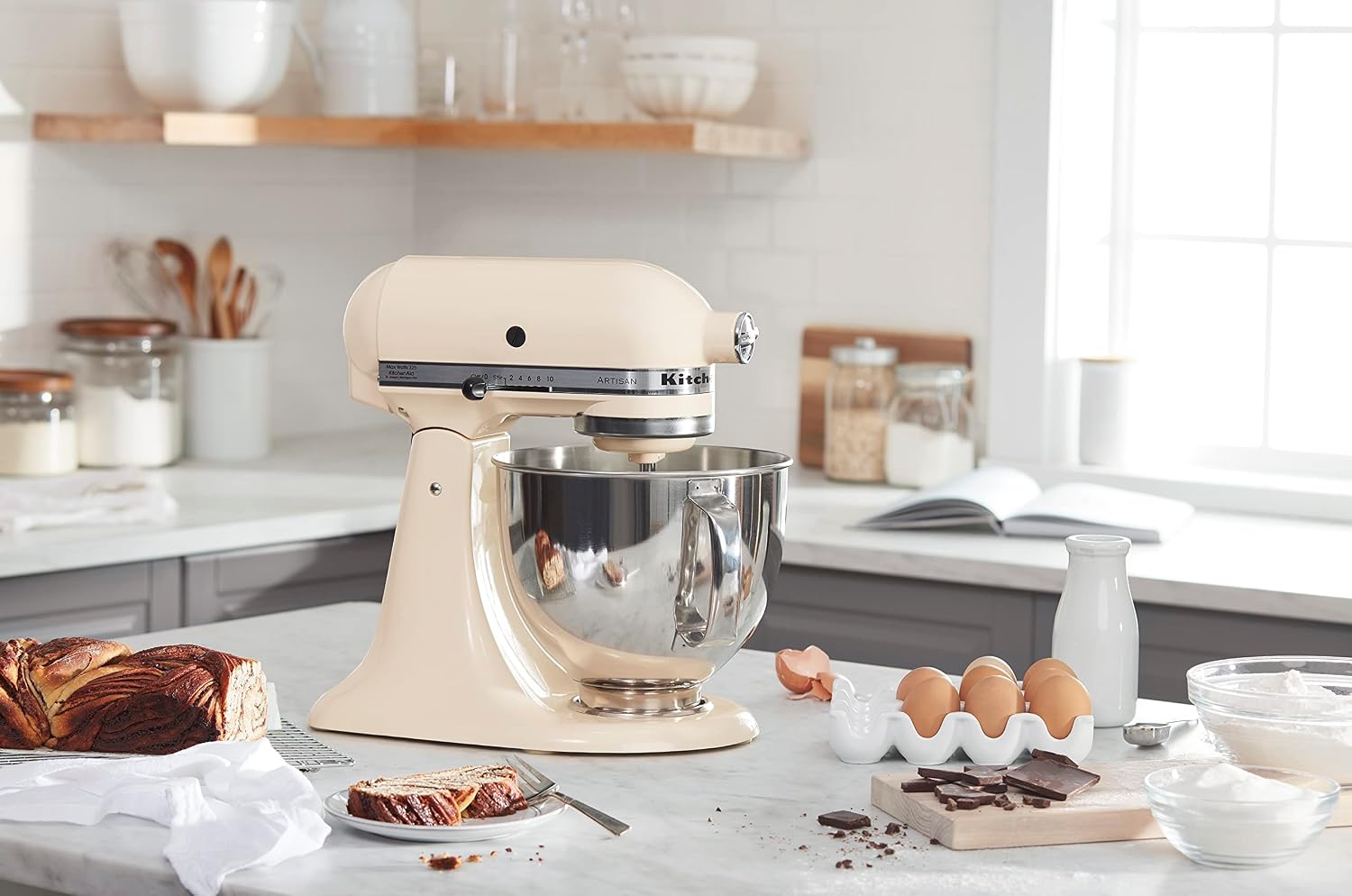
TL;DR — Attach the right tool for the job (flat beater for creaming and general mixing, whisk for whipping air into eggs and cream, dough hook for kneading bread), start on low to avoid a mess, and don’t overmix. The HomeWhisk team compiled this from manufacturer guidance and aggregated owner feedback. A stand mixer is simple once you know which attachment does what and why you start slow — those two things prevent almost every beginner mistake. Here’s how to use one confidently from your first batch of dough or meringue.
The HomeWhisk editorial team researches kitchen equipment by analyzing manufacturer specifications, usage guidance, and aggregated user reviews from major retailers and cooking communities. This guide reflects common manufacturer operating instructions, not personal testing.
A stand mixer looks intimidating but is one of the easiest appliances to master. The whole skill is knowing which of the three attachments to use, controlling the speed, and not overworking your mix. Here’s the complete beginner’s walkthrough. For choosing a model, see our best stand mixer guide.
The Three Attachments and What They Do
Everything a stand mixer does comes down to choosing the right attachment. Get this right and you’re most of the way there.
The flat beater (paddle) is the all-purpose tool — use it for creaming butter and sugar, mixing cookie dough, cake batter, mashed potatoes, and most general mixing. It’s what you’ll reach for most often. It mixes thoroughly without whipping in much air.
The wire whisk (balloon whisk) is for incorporating air: whipping egg whites into meringue, whipping cream, making light sponge batters, and anything that needs volume and fluffiness. Don’t use it for heavy doughs — thick mixtures can bend or damage the thin wires.
The dough hook is for kneading yeast doughs: bread, pizza dough, rolls, and other stiff doughs. It mimics hand-kneading, working the dough to develop gluten with none of the effort. Use it on low speeds only.
The simple rule: paddle for mixing and creaming, whisk for whipping air in, hook for kneading dough. Using the wrong one is the most common beginner error — a whisk in stiff dough gets clogged and strained, a dough hook on cake batter doesn’t mix well. Match the attachment to the task and results follow. Most mixers include all three; our best stand mixer guide notes which come with extras.
Setting Up and Your First Use
Here’s the step-by-step for getting started safely and cleanly.
1. Attach the bowl. Lock the mixing bowl onto the base (it usually twists or clicks into place). Make sure it’s secure.
2. Insert the attachment. For a tilt-head mixer, tilt the head back, slide the attachment onto the shaft, and lock it (often a push-and-twist). For a bowl-lift mixer, attach it to the raised shaft. Confirm it’s locked so it doesn’t fall during mixing.
3. Set the height if needed. The beater should be close to the bowl bottom but not scraping it — most mixers come pre-set, but if it’s leaving ingredients unmixed at the bottom or hitting the bowl, there’s an adjustment screw. For most users the factory setting is fine.
4. Add ingredients per your recipe. For creaming, start with room-temperature butter; for dough, follow the recipe’s order.
5. Lower the head (tilt-head) or raise the bowl (bowl-lift) into position before turning on.
6. Start on the LOWEST speed. This is critical — starting fast throws flour, sugar, and liquid out of the bowl in a cloud. Begin slow, then increase gradually once ingredients are combined.
7. Use the speed the recipe calls for, and turn back to low before stopping. Scrape the bowl with a spatula as needed (with the mixer off).
That’s the whole setup. The two things beginners forget — locking the attachment and starting on low — are the two that cause the most trouble.
Speed Control and Common Techniques
Knowing which speed to use for which task turns a stand mixer from confusing to intuitive. Speeds generally run 1 (lowest) to 8-10 (highest).
Low speeds (1-2/ stir): combining dry ingredients, starting any mix to avoid splatter, adding flour to a batter, and — importantly — all dough kneading with the hook (high speed strains the motor and overworks dough).
Medium speeds (4-6): creaming butter and sugar, mixing most batters and cookie dough, and general beating. This is the workhorse range.
High speeds (8-10): whipping cream and egg whites to volume, making meringue, and light frostings — tasks where you want to beat air in fast. Only use high with the whisk on light mixtures, never on stiff dough.
Key techniques:
- Creaming butter and sugar: beat softened butter and sugar on medium with the paddle until pale and fluffy (2-4 minutes) — this builds the structure of cakes and cookies.
- Kneading dough: use the hook on low for the time the recipe says (usually 5-10 minutes); the dough should become smooth and elastic and pull away from the bowl.
- Whipping: use the whisk, starting low then increasing to high, and watch closely — overwhipped cream turns to butter, and overwhipped egg whites go grainy.
The universal cautions: start low, don’t overmix (overmixing makes cakes tough and can overwork dough), and don’t run a dough hook on high.
Care, Safety, and Getting the Most From It
A few habits keep the mixer working well and expand what you can do with it.
Don’t overload it. Every mixer has a capacity limit — stuffing in a double batch of stiff dough strains the motor and can burn it out. Stick to recommended batch sizes, especially for heavy bread dough. If the motor sounds labored or the mixer “walks” across the counter, you’re overloading it.
Turn off before scraping or changing attachments. Never put a spatula (or your hand) into a running mixer. Turn it off, scrape the bowl, and resume.
Clean attachments after each use. The bowl, paddle, whisk, and hook are usually dishwasher-safe (check your model), but hand-washing preserves finishes. Wipe the mixer body with a damp cloth — never submerge the motor base.
Explore attachments. A big reason stand mixers earn their counter space is the attachment hub on many models, which powers pasta rollers, meat grinders, spiralizers, and more — turning the mixer into a multi-tool. If you bake and cook a lot, these extend its value considerably. Our best stand mixer guide notes which models have a compatible hub.
If you only bake occasionally, be honest about whether you need a stand mixer at all — a best hand mixer handles light jobs for far less money and space. The stand mixer earns its place if you bake regularly, knead bread, or use the attachments.
Frequently Asked Questions
What are the three stand mixer attachments for?
The flat beater (paddle) is for general mixing, creaming butter and sugar, cookie dough, and cake batter. The wire whisk is for whipping air into egg whites, cream, and light batters. The dough hook is for kneading yeast doughs like bread and pizza. The simple rule: paddle for mixing, whisk for whipping, hook for kneading. Using the wrong attachment — like a whisk in stiff dough — is the most common beginner mistake.
Why do you start a stand mixer on low speed?
Starting on low prevents ingredients from flying out of the bowl. If you start fast with flour, sugar, or liquid in the bowl, they get thrown out in a cloud, making a mess and wasting ingredients. Begin on the lowest speed to combine everything, then gradually increase to the speed your recipe requires. Also turn back to low before stopping. This single habit prevents the messiest beginner mistake.
What speed should I use for kneading bread dough?
Low speed only — usually speed 1-2 with the dough hook. High speed strains the motor and can overwork the dough, and it may make the mixer “walk” across the counter. Knead for the time the recipe specifies (typically 5-10 minutes) until the dough is smooth, elastic, and pulls away from the bowl. Never knead stiff dough on high, and don’t exceed your mixer’s dough capacity, as heavy dough strains the motor.
Can I overmix with a stand mixer?
Yes, easily — a stand mixer is powerful and efficient, so overmixing is a real risk. Overmixed cake and muffin batter develops too much gluten and turns tough and dense. Overwhipped cream becomes butter; overwhipped egg whites turn grainy and collapse. Mix only until ingredients are combined or the recipe’s visual cue is reached (pale and fluffy for creaming, stiff peaks for whites). Watch closely, especially when whipping, and stop as soon as it’s done.
Is a stand mixer worth it if I don’t bake much?
Probably not. A stand mixer is transformative for frequent bakers — hands-free kneading and whipping, and it lasts decades — but it’s large, expensive, and commonly bought aspirationally then left idle. If you bake only occasionally, a best hand mixer handles light mixing and whipping for a fraction of the cost and space. The stand mixer earns its counter space if you bake regularly, knead bread, or use its attachments (pasta, grinding).
How do I clean a stand mixer?
The bowl and attachments (paddle, whisk, hook) are usually dishwasher-safe — check your model — though hand-washing preserves their finish. Wipe the mixer body and head with a damp cloth to remove splatter, and never submerge the motor base in water. Clean the attachment hub area if you use it. Cleaning after each use prevents dried-on batter and dough, which are much harder to remove later. Dry attachments fully before storing.
Related buying guides: best air fryer, best blender and best instant pot.
The Bottom Line
A stand mixer is easy to master once you know the essentials: use the paddle for mixing and creaming, the whisk for whipping air into cream and egg whites, and the dough hook (on low) for kneading bread. Always start on the lowest speed to avoid a mess, match the speed to the task, and don’t overmix. Lock attachments before running, turn off before scraping, and don’t overload the motor with oversized batches. Used this way, a stand mixer handles baking tasks effortlessly for decades. If you bake often, it’s worth every inch of counter; if rarely, consider a best hand mixer instead. See our best stand mixer guide to choose.

Save $120.04
Pros & Cons
Pros
- Durable all-metal construction means this mixer can run for 20-plus years of regular use without motor failure or gear stripping.
- The 5-quart capacity handles both small everyday batches and large holiday baking without needing a second bowl size.
- Dishwasher-safe bowl and accessories save 10 minutes of cleanup per baking session compared to hand-wash-only competitors.
Cons
- At 22.8 pounds, this mixer stays on the counter because moving it in and out of storage multiple times per week becomes a workout.
- The tilt-head mechanism can feel loose after years of heavy use, requiring occasional adjustment to maintain a secure lock during mixing.
Details
This is a 325-watt tilt-head stand mixer designed for home bakers who make multiple batches of cookies, bread, or whipped cream weekly. It solves the arm fatigue and inconsistent results that come from hand mixing or underpowered budget mixers.
The 10-speed motor runs from a slow stir that folds in chocolate chips without breaking them to speed 8 that whips egg whites into stiff peaks in under 3 minutes. The planetary mixing action rotates the beater in one direction while spinning it around the bowl in the other, hitting all 59 touchpoints so you don’t need to stop and scrape constantly.
The body is die-cast metal, not plastic, and the 5-quart polished stainless steel bowl has a comfortable handle. It measures 13.9 inches tall and 8.7 inches wide, fitting under most cabinets but taking up permanent counter space due to its 22.8-pound weight.
The included pouring shield blocks splatter but adds an extra piece to wash. The C-shaped dough hook can struggle with very stiff bread doughs over 3 pounds, requiring you to knead the final minute by hand.
Best for frequent bakers who make large batches and want a machine that will outlast cheaper models by a decade or more.
How to Use
Tilt the head back until it locks, then slide the bowl onto the base and twist clockwise to secure. Attach your beater or whisk by sliding it up the shaft and turning a quarter turn. Lower the head and push until you hear the click.
Start every recipe on speed 1 or 2 to incorporate dry ingredients without creating a flour storm, then increase speed gradually. The pouring shield snaps onto the bowl rim and lets you add ingredients through the chute while mixing. Stop the mixer and raise the head to scrape down the bowl halfway through thick batters.
After use, hand-wash attachments immediately or run them through the dishwasher. Wipe the motor housing with a damp cloth but never submerge the base. Store beaters and whisk in the bowl to keep all parts together.
Save $100.04
Pros & Cons
Pros
- The tilt-head design locks in place during mixing but lifts up easily so you can add ingredients or swap attachments without reaching around the motor.
- Reviewers confirm the motor powers through stiff cookie dough and dense bread recipes that burn out weaker mixers.
- The bowl capacity works for family-size batches without taking up the counter space of 5-quart or larger models.
Cons
- The 4.5-quart bowl is too small if you regularly double recipes or bake for gatherings of 8 or more people.
- The flat beater does not scrape the bowl edges completely, so you may need to stop and manually scrape down thick batters.
Details
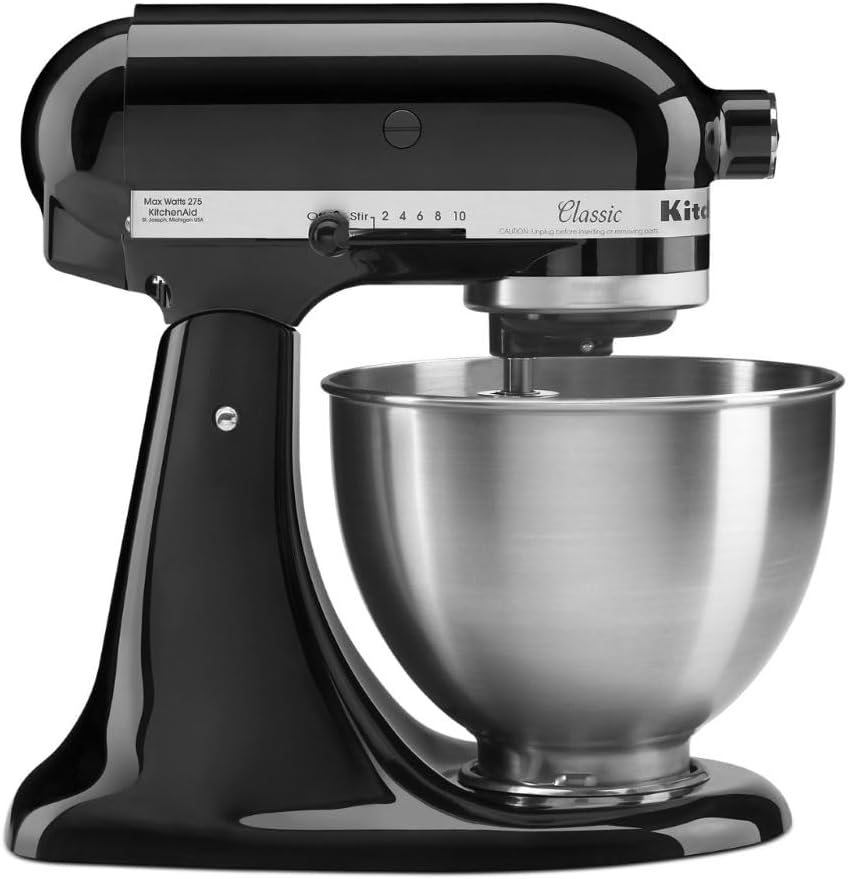
The KitchenAid K45SS is a 4.5-quart tilt-head stand mixer built for home bakers who make standard recipes several times a week. It solves the arm fatigue and inconsistent results that come from hand-mixing bread dough, cookie batters, and whipped toppings.
The 10-speed motor gives you control from slow stirring that keeps flour in the bowl to high-speed whipping for meringues. The 59-point planetary mixing action means the beater touches 59 spots per rotation, so ingredients blend evenly without you stopping to scrape.
The body is metal, not plastic, so it stays planted on the counter when kneading dense dough. It weighs 22 pounds and measures 13.9 inches tall. The brushed stainless steel bowl holds enough for 6 dozen cookies or 6 pounds of mashed potatoes.
The bowl does not have a handle, and the flat beater leaves a small unmixed ring at the bowl edge with very thick batters. You may need to scrape manually once or twice per recipe.
Best for home bakers who make bread, cookies, and cakes weekly and want a mixer that will last 10-plus years without replacing the motor.
How to Use
Tilt the motor head back until it locks, then slide the bowl onto the base and twist to secure. Attach the flat beater for most batters, the dough hook for bread, or the wire whip for cream and eggs.
Start on speed 2 when combining dry and wet ingredients to avoid flour clouds. Once incorporated, increase to speed 4-6 for cookie dough or speed 8-10 for whipping cream to stiff peaks. The mixer will reach all areas of the bowl automatically.
For bread dough, knead on speed 2 for 4-6 minutes until the dough pulls away from the bowl sides and becomes smooth. Tilt the head back to remove the bowl without reaching under the motor.
Save $90.00
Pros & Cons
Pros
- Strong enough for bread dough but precise enough for delicate meringues across 12 speeds.
- The included splash guard with pour spout stops flour from escaping and lets you add liquids without stopping the mixer.
- Optional attachments turn this into a pasta maker or meat grinder using the same motor.
Cons
- The 5.5-quart bowl is smaller than some competitors, limiting batch sizes for large families.
- Attachments are sold separately and add to the total investment if you want the pasta or grinding functions.
Details
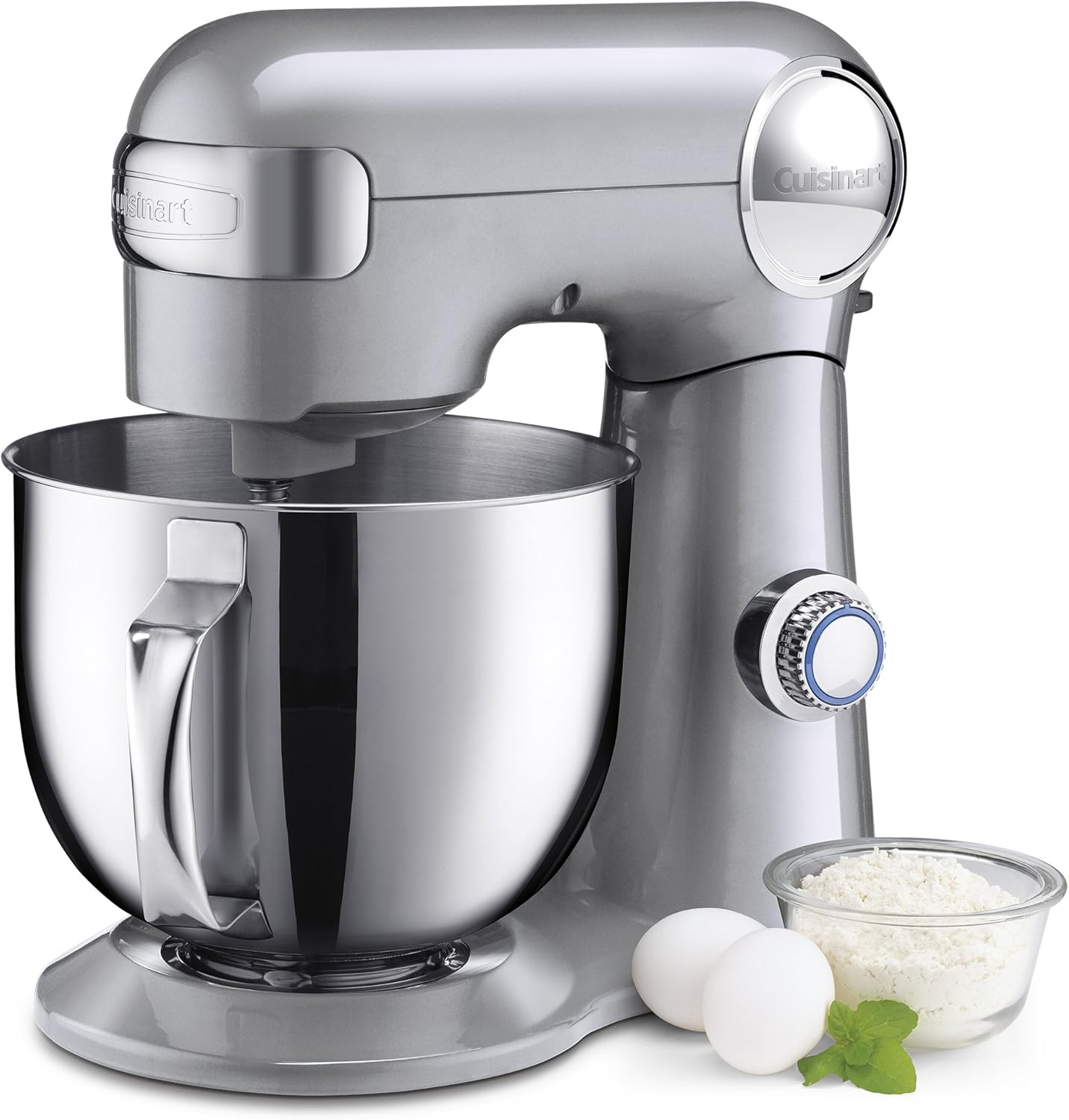
This stand mixer replaces hand mixing and underpowered models that stall on thick dough. The 500-watt motor and metal gears handle bread, pizza dough, and dense batters without overheating.
Twelve speeds give you control: start at 1 to fold in flour without clouds, use 6 for creaming butter, and hit 12 for stiff peaks in egg whites. The tilt-back head locks securely and lifts with one hand for easy bowl access.
Die-cast metal housing keeps it stable during kneading. The 5.5-quart polished stainless steel bowl holds enough for most recipes but may feel small if you regularly double batches. Weighs enough to stay put but light enough to move for storage.
The power outlet limits you to one attachment at a time, and you need to buy those separately. The splash guard helps but does not seal completely at high speeds with thin liquids.
Best for home bakers who mix weekly and want the option to add pasta or grinding tools later without cluttering the kitchen with separate machines.
How to Use
Tilt the head back, lock the bowl into the base with a twist, and attach the tool you need: the flat paddle for most batters, the whisk for eggs and cream, or the dough hook for bread. Start on speed 1 when adding dry ingredients to avoid mess.
Use the splash guard when mixing liquids or powders. The pour spout lets you add oil or milk without removing the guard or stopping the motor. Gradually increase speed once ingredients combine.
After mixing, tilt the head back and lift the bowl off. The bowl, paddle, whisk, and hook all go in the dishwasher. Wipe the motor housing and head with a damp cloth, never submerge the base.

Pros & Cons
Pros
- Spiral mixing technology delivers noticeably better dough structure compared to traditional stand mixers, especially for high-hydration recipes.
- The removable breaker bar transforms this from a specialty dough mixer into a multi-purpose baking tool.
- Precise speed control across 58 settings gives experienced bakers granular control over gluten development and ingredient incorporation.
Cons
- At $799, this costs significantly more than standard stand mixers and only justifies the price if you regularly make artisan dough.
- The 7.3 quart capacity and countertop footprint require dedicated storage space in smaller kitchens.
Details
The Ooni Halo Pro brings commercial spiral mixing technology to home kitchens, solving the problem of underwhelming dough texture from conventional planetary mixers. Spiral mixers keep the hook stationary while rotating the bowl, creating superior gluten development without overheating the dough.
The dual-kneading system with removable breaker bar handles everything from stiff bagel dough to 80% hydration ciabatta. The rotating bowl moves at different speeds than commercial units to fit the 7.3 quart capacity, while 58 speed settings let you start slow for dry ingredient incorporation and ramp up for gluten development.
The mixer weighs enough to stay stable during heavy kneading and comes with a splash guard featuring a pour spout. The charcoal grey housing resists fingerprints better than stainless but takes up roughly 14 inches of counter depth when assembled.
The breaker bar must be removed when switching to the flexible beater or geared whisk, adding an extra step compared to lift-bowl mixers. This takes about 30 seconds but interrupts workflow if you frequently alternate between dough and batter.
Best for home bakers who make pizza or bread weekly and want results that match their favorite bakery, not casual bakers who occasionally need a stand mixer.
How to Use
Start with the spiral dough hook and breaker bar installed for any yeast dough. Add dry ingredients first, start at the lowest speeds to combine, then increase gradually as the dough forms. The spiral action requires less intervention than planetary mixers since the bowl rotation naturally folds ingredients together.
For cakes or batters, remove the breaker bar by lifting it straight up, then attach the flexible beater. Use mid-range speeds for creaming butter and sugar, stopping to scrape sides only once. The geared whisk handles whipped cream and meringues at higher speeds without splattering when you use the splash guard.
Clean attachments immediately after use since dried dough in the spiral hook grooves requires soaking. The bowl and splash guard are dishwasher safe, but hand-washing the breaker bar prevents wear on the connection point.

Pros & Cons
Pros
- The stand-to-hand conversion works smoothly and the hand mixer locks securely back into the base, making it genuinely useful as two tools instead of a gimmick.
- The side-shifting bowl mechanism reduces the need to stop and scrape, especially when mixing thick batters or doughs with dry pockets.
- All attachments and the stainless steel bowl are dishwasher safe, cutting cleanup time after messy baking sessions.
Cons
- The 290-watt motor handles most home recipes but may struggle with very stiff doughs like bagels or dense whole-grain breads compared to higher-wattage stand mixers.
- The 4-quart bowl is smaller than typical stand mixer bowls, so large-batch baking (triple recipes or holiday cookie marathons) requires mixing in stages.
Details
The Hamilton Beach 64654 is a dual-function mixer that works as a stand mixer for hands-free mixing and a hand mixer when you need portability. It solves the problem of needing two mixers without sacrificing counter or storage space.
The Shift and Stir lever moves the bowl horizontally while the beaters spin, forcing ingredients from the bowl edges into the mixing path. The 290-watt motor provides enough torque for cookie dough, bread dough, and meringue without overheating.
The 4-quart stainless steel bowl resists staining and denting. The mixer weighs enough to stay stable during stand use but light enough to lift when detached. Attachments lock into place with a simple twist.
The bowl capacity limits you to smaller batches compared to 5- or 6-quart stand mixers, and the motor is not designed for extended kneading of very heavy doughs.
Best for home bakers who want stand mixer convenience for regular recipes but also need the flexibility of a hand mixer for small jobs or scraping bowls.
How to Use
Lock the hand mixer into the stand base before adding ingredients. Start on speed 1 when incorporating dry ingredients to prevent flour clouds, then increase speed as the mixture comes together. Use the Shift and Stir lever during mixing to move the bowl left and right.
For the hand mixer function, unlock it from the base by pressing the release button. The beaters stay attached. Use it directly in pots, bowls, or measuring cups for gravies, dressings, or small batches. The bowl rest feature on the hand mixer lets you set it on the edge of a bowl without it tipping.
Attach dough hooks for bread or pizza dough, traditional beaters for cake and cookie batter, and the whisk for egg whites or cream. Wash all attachments and the bowl in the dishwasher or by hand after each use to prevent residue buildup.

Pros & Cons
Pros
- The steel frame combines a 225-pound capacity with a portable 13.2-pound design.
- Instant fold and setup reduces packing time between kitchen workstation sessions.
- The adjustable width and 18.9-inch working depth support varied compatible equipment sizes.
- The black powder-coated finish and EVA pads provide practical protection for regular handling.
Cons
- Compatibility is limited to equipment no wider than 21.06 inches and no deeper than 18.9 inches.
- The product data does not confirm compatibility with specific food mixers or kitchen appliances.
Details
The Rockville RXS30 is a portable stand for compatible mixers, controllers, and synths, giving a kitchen workstation a raised, tilted equipment platform.
Its instant fold and setup helps users quickly move or store equipment, while the 28.1-inch front and 31.65-inch rear heights improve control access.
The steel frame supports up to 225 pounds, weighs 13.2 pounds, and fits equipment up to 21.06 inches wide and 18.9 inches deep.
Buyers should confirm measurements because the product data does not identify specific food mixer or kitchen appliance compatibility.
Best for kitchen-based recording setups needing a strong, foldable stand for compatible equipment.
Best Uses
Measure the equipment width and depth before placing it on the stand, keeping the limits at 21.06 inches wide and 18.9 inches deep.
Adjust the rubber feet on the kitchen work surface, then use the EVA pads to help reduce scratches during setup and removal.
Fold the stand flat after recording or control work when you need to reclaim kitchen workstation space.
About These Recommendations
The technique above is the point of this guide; the products are here because they help. We have not tested them ourselves — we did not buy or use this gear. The recommendations come from comparing specifications and materials against the patterns in verified owner reviews, so treat them as a shortlist worth researching rather than a verdict from our own kitchen.
Availability and prices change often, so check the current listing before buying. We earn a commission on purchases made through links on this page, which never affects what we recommend.


Write Your Review
No reviews yet. Be the first to share your experience!