

TL;DR — Insert the probe into the thickest part of the meat, away from bone, fat, and the pan, and read the temperature; pull meat a few degrees before the target because it keeps cooking as it rests. Key safe internal temperatures: poultry 165°F, ground meat 160°F, whole cuts of beef/pork 145°F (plus a 3-minute rest). The HomeWhisk team compiled this from food-safety guidance and aggregated owner feedback. A thermometer is the difference between guessing and knowing — it’s the single tool that most reliably prevents both undercooked and overcooked meat.
The HomeWhisk editorial team researches kitchen equipment by analyzing manufacturer specifications, food-safety guidance, and aggregated user reviews from major retailers and cooking communities. This guide reflects established food-safety principles, not personal testing.

Cooking meat by time or by look is guesswork; a thermometer removes it. Used correctly, it guarantees meat is safe without being dried out. But where and when you measure matters as much as the number. Here’s how to use one properly. For choosing a model, see our best meat thermometer guide.
Types of Meat Thermometer
Knowing which type you have shapes how you use it, so start here.
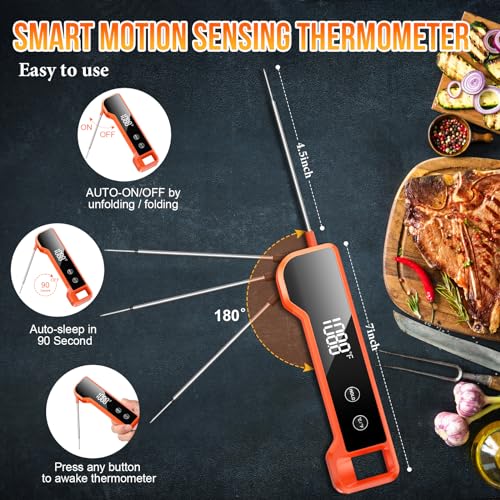
Instant-read (digital) thermometers give a fast reading when you insert the probe, then you remove it. They’re not left in during cooking — you check near the end, take the reading in a few seconds, and pull the probe out. These are the most versatile and popular for most home cooks. Our best meat thermometer guide covers fast, accurate instant-read models.
Leave-in probe thermometers have a probe that stays in the meat throughout cooking, with a wire running to a display outside the oven (or a wireless base). They monitor temperature continuously and often alarm when the target is reached — ideal for roasts and long cooks where you don’t want to open the oven repeatedly.
Dial (analog) thermometers are the older oven-safe type with a needle; they’re slower and less precise than digital, and some are leave-in.
The practical choice: an instant-read digital is the everyday workhorse for checking doneness of steaks, chops, chicken pieces, and burgers. A leave-in probe is better for large roasts and whole birds you’re monitoring over hours. Many cooks own an instant-read first, adding a leave-in probe for roasts.
Where to Insert the Probe
Where* you put the probe is the most common mistake, and it determines whether your reading is accurate. Get this right.
Insert into the thickest part of the meat — the center of the largest muscle, which is the last part to reach temperature. If the thickest part is safe, the whole cut is.
Avoid bone. Bone conducts heat differently and reads hotter than the surrounding meat, giving a falsely high reading — you’ll think it’s done when it isn’t. Keep the probe tip in meat, not touching bone. For bone-in cuts, insert at an angle to reach meat away from the bone.
Avoid fat and gristle. Fat pockets heat differently than muscle and give misleading readings. Aim for lean muscle.
Avoid the pan or bone in the cavity. For a roast in a pan, don’t let the probe touch the pan (it’s much hotter than the meat). For poultry, don’t measure in the cavity or against bone.
Get the tip to the true center. For an instant-read, push the probe in until the tip reaches the center, and if unsure, take readings in a couple of spots (the lowest reading is the one that matters). For thin cuts like burgers, insert from the side to reach the center.
The principle: measure the coldest, thickest, lean-muscle center — that’s the spot that must reach a safe temperature. A reading from the wrong spot is worse than no reading because it gives false confidence.
Safe Internal Temperatures and Carryover
Knowing the target temperatures — and the carryover effect — is what turns a reading into perfectly cooked meat.
Key safe minimum internal temperatures (per common food-safety guidance):
- Poultry (chicken, turkey, whole or ground): 165°F (74°C)
- Ground meat (beef, pork, lamb): 160°F (71°C)
- Whole cuts of beef, pork, lamb, veal (steaks, chops, roasts): 145°F (63°C) followed by a 3-minute rest
- Fish: 145°F (63°C)
These are safety minimums. For preferred doneness, cooks often target ranges — e.g., beef steak: rare ~125°F, medium-rare ~135°F, medium ~145°F — accepting that lower-than-145°F is a personal risk choice for whole cuts.
Carryover cooking is critical: meat keeps cooking after you remove it from heat, because the outer heat continues conducting inward while it rests. The internal temperature typically rises 5-10°F during resting (more for large roasts, less for thin cuts). So pull the meat a few degrees before the target — for a medium-rare steak (135°F), remove it around 128-130°F and let it rest. If you wait until the thermometer hits the exact target on the heat, resting will push it past, overcooking it.
Rest the meat after cooking (5 minutes for steaks, 15-20 for roasts) — this lets carryover finish and juices redistribute. Measuring during the rest confirms it reached the safe/target temperature.
Care, Accuracy, and Best Practices
A few habits keep your thermometer accurate and your readings trustworthy.
Check calibration. A thermometer that reads wrong is worse than none. Test it in ice water (should read 32°F/0°C) or boiling water (212°F/100°C at sea level). Some digital models have a calibration function; if yours is off and can’t be calibrated, replace it. Do this periodically, especially if readings seem suspect.
Clean the probe between uses — wash the probe with hot soapy water after touching raw meat to prevent cross-contamination, especially before using it on another food or checking the same meat again. Don’t submerge digital units past the probe unless they’re waterproof-rated.
Insert at the right time. For instant-reads, check near the end of the expected cook time (not early, which just lets heat escape from the hole and slows cooking). For leave-in probes, insert before cooking and monitor.
Don’t rely on the pop-up timers in some turkeys — they’re often inaccurate and pop late (overcooked). Use a real thermometer.
Account for thickness. Thin cuts reach temperature fast and have little carryover; large roasts have significant carryover and need earlier removal. Adjust your pull temperature accordingly.
Used with correct placement, timing, and carryover awareness, a meat thermometer makes perfectly cooked, safe meat routine. Our best meat thermometer guide covers accurate, fast-reading models.
Frequently Asked Questions
Where do you put a meat thermometer?
Insert the probe into the thickest part of the meat — the center of the largest muscle — avoiding bone, fat, gristle, and the pan, since those give false readings. Bone reads hotter than surrounding meat, and fat heats differently. Push the tip to the true center (the coldest part); for thin cuts like burgers, insert from the side. If unsure, check a couple of spots and trust the lowest reading — that’s the part that must reach a safe temperature.
What temperature should meat be cooked to?
Safe minimum internal temperatures: poultry (chicken, turkey) 165°F, ground meat 160°F, and whole cuts of beef, pork, and lamb 145°F with a 3-minute rest; fish 145°F. These are safety minimums. For doneness preference, beef steaks are often targeted lower — medium-rare around 135°F — which is a personal risk choice for whole cuts. Always measure the thickest part, and remember carryover cooking raises the temperature further during resting.
What is carryover cooking and why does it matter?
Carryover cooking is the continued rise in internal temperature after meat is removed from heat, as outer heat keeps conducting inward during resting — typically 5-10°F (more for large roasts). It matters because if you cook until the thermometer hits your exact target on the heat, resting will push it past, overcooking the meat. Pull meat a few degrees before the target temperature and let carryover finish the job during the rest.
When should I insert an instant-read thermometer?
Check near the end of the expected cooking time, not early. An instant-read isn’t left in during cooking — you insert it briefly to take a reading, then remove it. Checking too early just releases heat and juices through the hole and slows cooking without useful information. For continuous monitoring throughout a long cook (like a roast), use a leave-in probe thermometer instead, which stays in and often alarms at the target temperature.
How do I know if my meat thermometer is accurate?
Test it in ice water, where it should read 32°F (0°C), or in boiling water, where it should read 212°F (100°C) at sea level. If it’s off, some digital models can be recalibrated; if yours can’t and reads wrong, replace it, since an inaccurate thermometer is worse than none. Check calibration periodically and whenever readings seem suspect. Accuracy is the whole point of using a thermometer, so verify it.
Do I need to clean the thermometer between uses?
Yes. Wash the probe with hot soapy water after it touches raw meat, especially before checking a different food or reinserting into the same meat, to prevent cross-contamination from raw-meat bacteria. Don’t submerge a digital unit’s body past the probe unless it’s rated waterproof. Cleaning the probe is a basic food-safety step — a thermometer that spreads bacteria between foods undermines the safety it’s meant to ensure.
Related buying guides: best sous vide, best chef knife for slicing meat, best chef knives on a budget and best coffee machines for home use.
The Bottom Line
A meat thermometer takes the guesswork out of cooking meat safely and perfectly — but placement and timing matter as much as the number. Insert the probe into the thickest part, away from bone, fat, and pan; check near the end of cooking; and pull meat a few degrees early because carryover cooking raises the temperature 5-10°F during resting. Hit the safe minimums (165°F poultry, 160°F ground, 145°F whole cuts with a rest), verify your thermometer’s accuracy, and clean the probe between uses. Done right, it guarantees meat that’s both safe and not overcooked. See our best meat thermometer guide to choose one.







Write Your Review
No reviews yet. Be the first to share your experience!