

HomeWhisk earns commission from qualifying purchases made through links on this page. We research picks from specifications and owner reviews; we do not test products ourselves.
TL;DR — Wash the removable parts (drip tray, pod holder, water reservoir) weekly, and descale the machine every 3-6 months with descaling solution or diluted vinegar to remove mineral buildup. Run cleansing water cycles after descaling, and clean the needle to prevent clogs. Mineral scale is the main cause of slow, weak, or broken pod machines. The HomeWhisk team compiled this from care guidance and aggregated feedback. For picks, see our best keurig coffee maker 2025 guide.
The HomeWhisk editorial team researches kitchen equipment by analyzing manufacturer specifications, cleaning guidance, and aggregated user reviews from major retailers and coffee communities. This guide reflects established pod-machine care principles, not personal testing.

A Keurig (or any pod coffee maker) collects mineral scale and coffee residue that slow it down, weaken the coffee, and eventually clog it. Regular cleaning and descaling keep it working and tasting right. Here’s how. For choosing a machine, see our best keurig coffee maker 2025 guide.
Pros & Cons
Pros
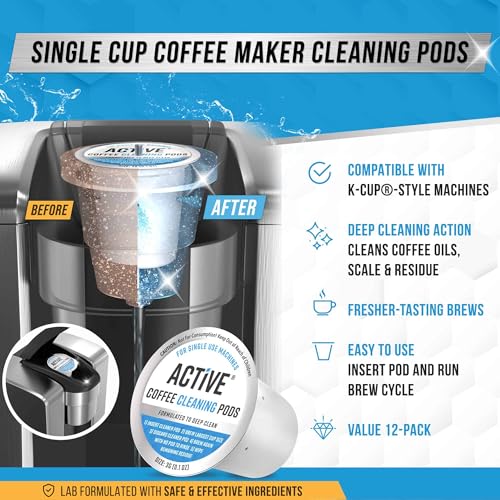
- Compatible with Keurig Classic, 2.0, Mini, Slim and other single-use K-Cup style brewers.
- Fragrance-free ingredients are designed to avoid lingering chemical odors or aftertaste.
- The pod format cleans internal brewing areas without requiring manual access to the chamber or needle.
- A monthly supply schedule makes brewer maintenance easier to track.
Cons
- These pods do not descale mineral buildup, so a separate descaling product is required for complete brewer maintenance.
- They are not compatible with multi-cup coffee makers, Nespresso machines or espresso machines.
Details
These single-use cleaning pods remove coffee oils, grounds and residue that can clog a K-Cup brewer or make drinks taste stale and bitter.
The automatic cleaning foam reaches the brew chamber, K-Cup area and needle, while the pod format works like a normal brewing capsule.
The package contains 12 fragrance-free pods. Specific pod materials, dimensions and weight are not provided, but each is sized for compatible K-Cup style machines.
These pods clean coffee residue but do not remove mineral scale, so buyers still need a separate descaler for full machine care.
Best for Keurig owners who want a simple monthly routine to maintain flavor and reduce internal residue.
Best Uses
Use one pod monthly to remove routine coffee residue and help maintain the brewer’s water flow, heat stability and flavor clarity.
Run a cleaning pod when switching between flavored coffee, tea and cocoa to reduce unwanted taste transfer into the next drink.
Use only in compatible Keurig and single-use K-Cup style brewers, following the cleaner with the recommended rinse cycle before making a beverage.
Why Pod Machines Need Cleaning
Understanding what builds up in a pod machine explains why descaling especially matters.
Mineral scale is the main issue. Every pod machine heats water, and as it does, minerals from the water (calcium, magnesium — “hard water”) precipitate and build up inside the boiler, water lines, and needle over time. This scale:
- Slows the flow (cups take longer, or the machine struggles).
- Weakens and cools the coffee (scale insulates the heater and restricts water).
- Clogs the machine eventually, causing it to under-fill, sputter, or stop working — the leading cause of pod-machine failure.
Coffee residue and grounds also accumulate in the pod holder, exit needle, and drip areas, affecting taste and potentially clogging the needle that pierces pods.
Standing water in the reservoir can develop bacteria, mold, or scale, and the reservoir needs regular cleaning.
So pod-machine care has two parts: descaling (removing mineral scale — the critical periodic task) and washing parts + cleaning the needle (removing residue — regular tasks). Neglect descaling and the machine slows and dies; neglect washing and the coffee tastes off. The good news: both are simple. Our best keurig coffee maker 2025 guide covers machines worth maintaining.
Regular Cleaning (Weekly)
These routine tasks keep residue and standing-water issues at bay.
Wash the removable parts: 1. Unplug the machine. 2. Remove and wash the drip tray (it collects overflow and gets grimy) with warm soapy water; dry and replace. 3. Remove and wash the pod holder/K-cup holder (where the pod sits) — rinse out coffee residue; many are dishwasher-safe (top rack). 4. Wash the water reservoir and lid with warm soapy water (not the dishwasher unless stated), rinse well, and let it air-dry or wipe dry. Do this regularly to prevent scale and biofilm.
Wipe the machine: wipe the exterior and the area around the pod holder with a damp cloth to remove coffee splatter and dust.
Clean the needle (prevents clogs): the entrance and exit needles that pierce the pod can clog with coffee grounds, causing weak brews or sputtering. Clean them periodically — many Keurigs come with a cleaning tool, or use a straightened paperclip to gently clear the needle holes (unplugged, carefully — the needles are sharp). This is a common fix for a machine brewing weakly or partially.
Fresh water: empty and refill the reservoir with fresh water regularly rather than leaving old water sitting, and use filtered water if your tap water is hard (reduces scale).
Weekly washing plus occasional needle cleaning keeps the machine hygienic and flowing. But the most important periodic task is descaling, below.
Descaling (Every 3-6 Months)
Descaling removes the mineral scale that’s the main threat to a pod machine — do it regularly.
How often: every 3-6 months typically, more often with hard water, less with filtered/soft water. Many machines have a descale light/indicator that tells you when it’s due — don’t ignore it.
What to use: a descaling solution (Keurig’s or a generic coffee-machine descaler), or diluted white vinegar (a common DIY option — equal parts water and white vinegar). Descaling solution is formulated for the job; vinegar works but needs thorough rinsing to remove the taste.
How to descale (general steps — follow your machine’s manual): 1. Empty the reservoir and remove any water filter. 2. Fill the reservoir with descaling solution (or the vinegar-water mix). 3. Run brew cycles without a pod, dispensing into a mug and dumping, repeatedly, until the reservoir is nearly empty. Let the solution sit partway through if the instructions say to (some recommend a 30-minute soak to dissolve scale). 4. Rinse thoroughly: refill the reservoir with fresh clean water and run multiple water-only brew cycles (several full reservoirs) to flush out all descaling solution or vinegar — this is important so your coffee doesn’t taste of vinegar/descaler. 5. Reset the descale indicator if your machine has one (per the manual).
After descaling, the machine should flow faster, brew hotter, and taste better. If it was sputtering or under-filling, descaling (plus needle cleaning) usually fixes it.
Prevent scale by using filtered or bottled water instead of hard tap water — this dramatically reduces buildup and how often you need to descale. (Our guide on descaling an electric kettle covers the same scale principles.)
Descaling is the single most important maintenance for a pod machine’s longevity. Our best keurig coffee maker 2025 and best single cup coffee maker guides cover machines worth the upkeep.
Frequently Asked Questions
How do I descale my Keurig?
Empty the reservoir and remove any water filter, then fill it with descaling solution or equal parts water and white vinegar. Run repeated brew cycles without a pod, dispensing into a mug and dumping, until the reservoir is nearly empty (let it sit partway through if instructed). Then refill with fresh water and run several water-only cycles to rinse out all solution or vinegar thoroughly. Reset the descale indicator if your machine has one. Do this every 3-6 months, or when the descale light comes on.
How often should I clean and descale a Keurig?
Wash the removable parts (drip tray, pod holder, reservoir) weekly, and descale every 3-6 months — more often with hard water, less with filtered water. Many machines have a descale indicator light that signals when it’s due; don’t ignore it. Clean the needle periodically to prevent clogs. Regular part-washing keeps the coffee tasting clean, while descaling every few months removes the mineral scale that otherwise slows, weakens, and eventually clogs the machine. Using filtered water reduces how often you need to descale.
Can I use vinegar to descale a Keurig?
Yes, diluted white vinegar (equal parts water and vinegar) is a common DIY descaler that dissolves mineral scale effectively. Run it through brew cycles like descaling solution, but rinse very thoroughly afterward — several water-only cycles with fresh water — to remove the vinegar taste and smell, or your coffee will taste of vinegar. A purpose-made descaling solution is formulated for the job and rinses cleaner, but vinegar is a cheap, accessible alternative that works well when rinsed properly.
Why is my Keurig brewing slowly or not full cups?
Usually mineral scale buildup or a clogged needle. Scale from hard water restricts the water flow and heating, making cups slow, weak, or under-filled — descaling fixes this. The entrance/exit needles that pierce the pod can also clog with coffee grounds, causing weak or partial brews — clean them with the machine’s tool or a straightened paperclip (unplugged, carefully). If your Keurig is sputtering or not filling cups, descale it and clean the needle; that resolves most flow problems.
Do I need to clean the Keurig needle?
Yes, periodically. The needles that pierce the top and bottom of the pod can clog with coffee grounds and residue, causing weak brews, sputtering, or partial cups. Clean them with the cleaning tool many Keurigs include, or gently clear the needle holes with a straightened paperclip while the machine is unplugged (the needles are sharp, so be careful). Cleaning the needle is a common fix for a machine brewing poorly and is worth doing every few weeks or whenever brews weaken.
What water should I use in a Keurig to prevent scale?
Filtered or bottled water, especially if your tap water is hard (high in minerals). Hard water deposits mineral scale much faster, meaning more frequent descaling and quicker clogging. Using filtered water (a pitcher filter, or the machine’s built-in filter if it has one) dramatically reduces scale buildup, so the machine stays fast, hot, and clog-free longer and needs descaling less often. Avoid distilled water in machines that sense water level via minerals (check your manual). Filtered water is the easy preventive step.
Related buying guides: best single serve coffee maker, best coffee maker with grinder and best french press.
The Bottom Line
Cleaning a Keurig or pod machine has two parts: regular washing (drip tray, pod holder, and reservoir weekly, plus periodic needle cleaning to prevent clogs) and descaling (every 3-6 months with descaling solution or diluted vinegar) to remove the mineral scale that’s the main cause of slow, weak, or failing machines. Always rinse thoroughly with several water-only cycles after descaling so coffee doesn’t taste of vinegar or solution. Using filtered water dramatically reduces scale and how often you descale. Regular upkeep keeps the machine flowing fast and the coffee tasting clean. See our best keurig coffee maker 2025 and best single cup coffee maker guides.



Write Your Review
No reviews yet. Be the first to share your experience!