

TL;DR — White vinegar cleans cookware because its acetic acid dissolves mineral deposits, hard-water scale, and light scorching, and it neutralizes odors. Pair it with baking soda for a fizzing lift on stuck-on food. It’s safe and effective on stainless steel; use it sparingly and briefly on cast iron and aluminum, and avoid it on damaged nonstick coatings. The core method is to simmer a water-and-vinegar solution in the pan, then scrub with a baking-soda paste. For picks, see our best cookware sets guide.
The HomeWhisk editorial team researches kitchen equipment by analyzing manufacturer care guidance, material chemistry, and aggregated user reviews from major retailers and cooking communities like Reddit r/Cooking and r/castiron. Our recommendations are based on how materials actually react, not marketing claims.
Vinegar is one of the cheapest and most effective cleaners for cookware, but only if you use it correctly on each material. The same acid that lifts scale off stainless steel can strip seasoning off cast iron or pit aluminum if left too long. This guide gives you the exact steps for each type of pan in your set, plus when to reach for baking soda instead. For related gear, see our best cookware sets and best nonstick cookware guides.
Why Vinegar Works (and What It’s For)
White distilled vinegar is roughly 5% acetic acid in water. That mild acid does three useful things in the kitchen:
- Dissolves mineral deposits and scale — the cloudy white film (calcium and magnesium) that hard water leaves on stainless steel and inside kettles and moka pots.
- Loosens light scorching and residue — the acid softens the bond between burnt-on food and metal, especially when heated.
- Neutralizes odors and cuts grease — it breaks down odor compounds and light oily film.
What vinegar is not is a heavy-duty abrasive. It softens and dissolves; it doesn’t scrub. That’s why the best results come from combining vinegar (chemical action) with baking soda or a non-scratch pad (mechanical action). Baking soda is a mild alkaline abrasive, so it lifts residue and gently neutralizes leftover acid. The two together handle most everyday cookware problems.
What You’ll Need
- White distilled vinegar
- Baking soda
- Warm water
- A soft sponge or non-scratch nylon scrubber
- A wooden or silicone spoon or spatula (for loosening debris)
- Dish soap for the final wash
Skip steel wool and harsh scouring powders on most cookware — they scratch stainless steel, ruin nonstick coatings, and strip cast iron. Keep abrasives for bare, unglazed surfaces only.
How to Clean Stainless Steel Pots and Pans
Stainless steel is the most vinegar-friendly material and shows scale and heat discoloration (rainbow tints, white spots) readily.
1. Rinse and remove loose debris. Empty the pan and wipe out crumbs. 2. Make a vinegar solution. Add a mix of about one part white vinegar to three parts water — enough to cover the stained area. 3. Bring to a gentle simmer for a few minutes. The heat accelerates the acid’s work on scale and discoloration. Then remove from heat and let it cool slightly. 4. Pour out the solution and, while the pan is still damp, sprinkle baking soda over stubborn spots. It will fizz as it reacts with residual vinegar. 5. Scrub with a non-scratch pad in the direction of the steel’s grain. The baking soda paste lifts scorching and polishes. 6. Rinse and wash with dish soap, then dry immediately to prevent new water spots.
This routine also removes the blue-purple “heat tint” and white mineral spots that make stainless look dirty even when it’s clean. A quality tri-ply set responds especially well — see our best cookware sets guide.
How to Clean Burnt Pots and Pans
For serious scorching, the simmer method does most of the work before you ever scrub.
1. Cover the burnt bottom with a shallow layer of water and add about a cup of white vinegar (scale to pan size). 2. Bring it to a boil on the stovetop and let it boil for a minute or two. The acidic steam and heat loosen carbonized food. 3. Remove from heat, pour out the liquid (mind the hot steam), and add two tablespoons of baking soda. Expect vigorous fizzing — that reaction helps lift debris. 4. Let it sit for a few minutes, then scrub with a non-scratch pad. Most burnt residue lifts with minimal effort. 5. For anything remaining, make a baking soda paste (baking soda plus a little water), leave it on the spot for 15-30 minutes, and scrub again. 6. Rinse and wash normally.
If burning is a recurring problem, the pan or the heat setting may be the issue. A heavy, even-heating pan scorches far less — see our best cookware sets and best copper cookware guides, since copper’s superior heat conductivity reduces hot spots.
How to Descale a Moka Pot, Kettle, or Instant Pot
Vinegar’s best use is descaling — removing the hard-water mineral buildup that dulls performance in anything that heats water.
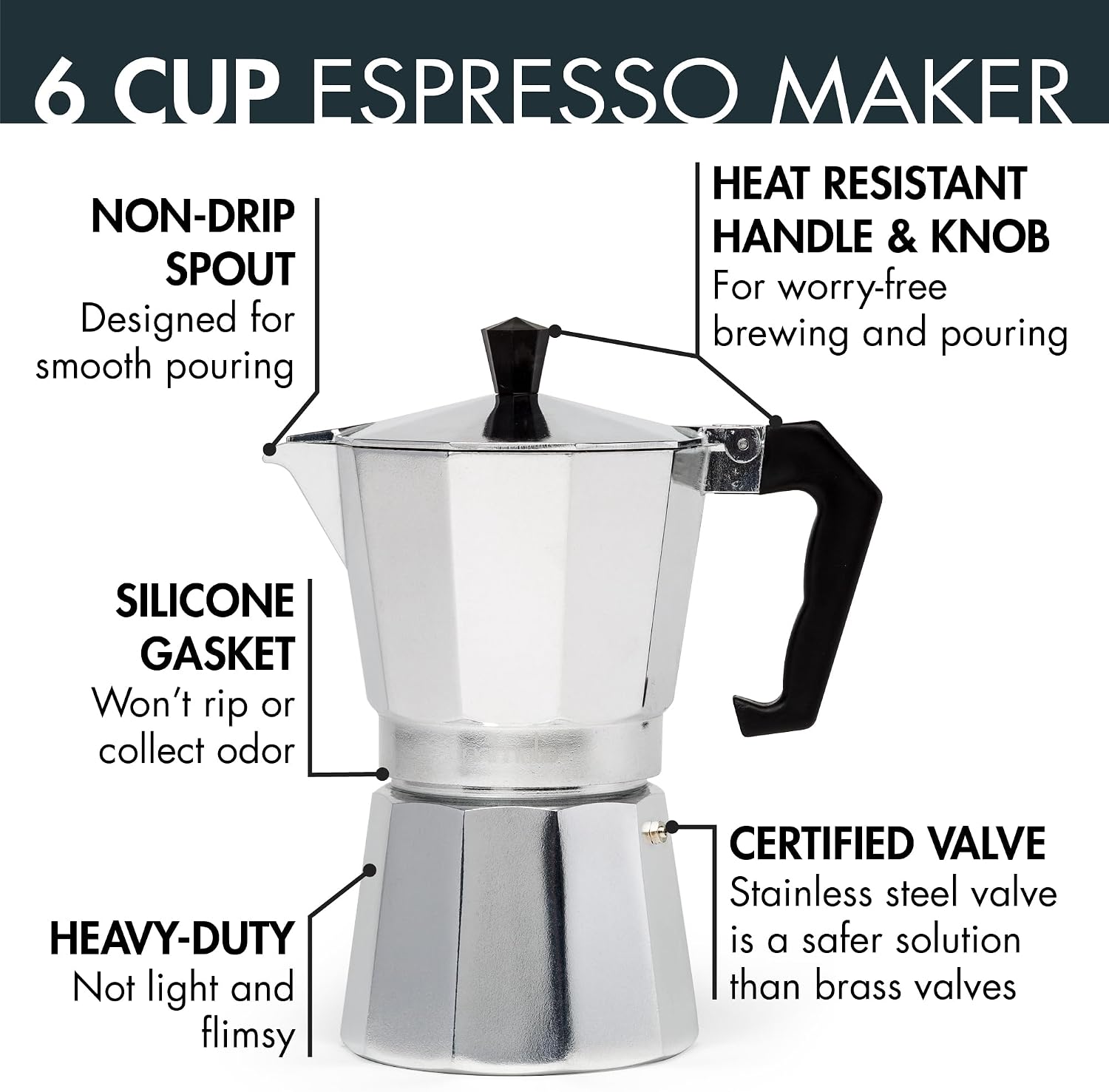
- Moka pot (aluminum): Fill the base with a solution of equal parts water and vinegar, assemble, and run it on the stove as if brewing (no coffee). Discard the output, then run two or three cycles of plain water to rinse thoroughly. Do this occasionally, not routinely — prolonged acid contact can pit aluminum, so keep it brief and always rinse well. See our best moka pot guide.
- Kettles and the inner pot of a pressure cooker: Fill with a 1:1 vinegar-water solution, bring to a simmer, let it sit 15-20 minutes, then scrub any loosened scale and rinse thoroughly. For an best instant pot with a stainless inner pot, you can run a short steam cycle with the vinegar solution to descale, then a plain-water cycle to rinse.
Always finish descaling with plain-water rinses so no vinegar taste carries into your next brew or meal.
Material-by-Material Cautions
Vinegar is safe on most cookware, but a few materials need care:
- Cast iron: Vinegar strips seasoning, so use it only to remove rust on bare iron — a short soak in a 1:1 solution, then scrub, rinse, dry immediately, and re-season. Never leave cast iron soaking in vinegar; prolonged acid exposure corrodes the metal. For routine cleaning, hot water and a brush are enough.
- Aluminum (bare): Brief vinegar contact is fine and even brightens it, but extended soaking can pit and discolor the surface. Keep it short and rinse.
- Nonstick: Diluted vinegar can clean an intact coating, but skip acids and abrasives on any coating that’s scratched or flaking. Use warm soapy water and a soft sponge to protect the coating. See our best nonstick cookware guide.
- Enameled and copper: Vinegar can clean enameled interiors gently; on exterior copper, a vinegar-and-salt paste brightens tarnish, but rinse well since prolonged acid dulls the finish.
- Camping cookware: Anodized and hard-coat finishes tolerate brief vinegar cleaning; avoid long soaks. See our best camping cookware guide.
Frequently Asked Questions
Can you clean pots and pans with white vinegar?
Yes. White distilled vinegar’s acetic acid dissolves mineral scale, loosens light scorching, and neutralizes odors, making it excellent for stainless steel and for descaling kettles, moka pots, and pressure-cooker pots. The most effective method is to simmer a diluted vinegar-and-water solution in the pan, then scrub with baking soda. Use it briefly on aluminum and bare cast iron (it strips seasoning), and avoid acids on damaged nonstick coatings. Always rinse thoroughly afterward so no vinegar taste remains.
How do you clean a burnt pan with baking soda and vinegar?
Cover the burnt area with a thin layer of water, add about a cup of vinegar, and bring it to a boil for a minute or two to loosen the carbonized food. Pour out the hot liquid, sprinkle in about two tablespoons of baking soda, and let it fizz and sit a few minutes. Scrub with a non-scratch pad, then treat any remaining spots with a baking soda paste left on for 15-30 minutes. Rinse and wash normally.
How do you clean a burnt pan in a few minutes?
The fastest method is the boil-and-fizz technique: add water and vinegar to the pan, boil briefly to loosen residue, pour it out, add baking soda, and scrub. The boiling step does most of the work by softening the burnt layer, so scrubbing takes little effort. For very stubborn spots, a baking soda paste needs more sitting time, but light-to-moderate scorching often clears in just a few minutes with the vinegar-boil-then-baking-soda sequence.
Is it better to clean pans with vinegar or baking soda?
They do different jobs and work best together. Vinegar is an acid that dissolves mineral scale, discoloration, and light burns and neutralizes odors. Baking soda is a mild alkaline abrasive that physically lifts residue and gently scours without scratching. Vinegar softens the mess chemically; baking soda removes it mechanically. For scale and stains, start with vinegar; for stuck-on food, follow with baking soda. Combining them (the fizzing reaction) works well for burnt pans, though the fizz itself is mostly mechanical agitation.
Can I use vinegar on nonstick or cast iron pans?
Use caution. On nonstick, diluted vinegar can clean an intact coating, but never use it or abrasives on a scratched or flaking surface — warm soapy water and a soft sponge are safer. On cast iron, vinegar strips the seasoning, so reserve it only for removing rust from bare iron: a short 1:1 soak, then scrub, dry immediately, and re-season. Never leave cast iron soaking in vinegar, as prolonged acid exposure corrodes the metal. For routine cast iron cleaning, skip vinegar entirely.
How do I remove hard water spots from stainless steel cookware?
The white, cloudy film on stainless steel is mineral scale, and vinegar dissolves it easily. Wipe or soak the affected area with a 1:1 vinegar-and-water solution, or simmer the solution in the pan for a few minutes for heavier deposits. Rinse, then buff dry with a soft cloth to prevent new spots from forming. Drying stainless steel immediately after every wash is the best way to keep hard-water spots and streaks from returning in the first place.
The Bottom Line
Vinegar is a genuinely effective cookware cleaner when matched to the material. Its acetic acid dissolves scale, discoloration, and light burns, and paired with baking soda it tackles serious scorching through a simmer-then-scrub routine. It shines on stainless steel and for descaling moka pots, kettles, and pressure cookers, but demands restraint on aluminum, cast iron, and nonstick, where prolonged acid contact does harm. Keep vinegar contact brief, always rinse thoroughly, and dry immediately. Used this way, a bottle of white vinegar and a box of baking soda will keep an entire cookware set looking new. For picks, see our best cookware sets, best nonstick cookware, and best copper cookware guides.

kaqinu
Family Stir-Frying with kaqinu 14-Piece Carbon Steel Wok Set, 12.6-Inch Flat-Bottom Pan
This 12.6-inch carbon steel wok handles stir-frying, searing, deep-frying, braising, and steaming, while its fast heating is the biggest advantage. Families serving three to five people should buy it for the all-stove compatibility and extensive utensil set.
Pros and Cons
Pros
- The flat bottom works across induction, electric, gas, and halogen stovetops.
- Carbon steel heats quickly and can develop natural nonstick properties with use.
- The set includes a lid, multiple utensils, wok ring, drain oil rack, chopsticks, and apron.
- The soup mouth and detachable handle add practical convenience during cooking and storage.
Cons
- Carbon steel requires prompt drying and oiling after cleaning to help prevent rust.
- The product listing does not provide a shipping or assembled weight, which may matter for buyers with limited lifting strength.
The Best Deals This Week*
-
E-far Silicone Cooking Utensils Set
$14.24
($14.99)Save $0.75 -
Family Stir-Frying with kaqinu 14-Piece Carbon
$35.99
($42.99)Save $7.00
*Deals are selected by our commerce team
Rachael Ray Serveware Ceramics EVOO and Ramekin Dipper Set, 4 Piece, Light Sea Salt Gray

Rachael Ray
Serveware Ceramics EVOO and Ramekin Dipper Set, 4 Piece, Light Sea Salt Gray
$39.99 at AmazonEditors' Favorite
Color: Light Sea Salt Gray Size: 24 Ounces Dimensions: 14.92 x 5.98 x 11.89 inches Weight: 3.3 pounds Product Group: Kitchen Binding: Tools & Home Improvement
Shop NowE-far Silicone Cooking Utensils Set, 10-Piece Heat Resistant Kitchen Utensils Set with Wooden Handle for Nonstick Cookware, Kitchen Nonstick Tools Spatula Whisk Tongs Ladle, Non-toxic & Healthy(Khaki)

E-far
Silicone Cooking Utensils Set, 10-Piece Heat Resistant Kitchen Utensils Set with Wooden Handle for Nonstick Cookware, Kitchen Nonstick Tools Spatula Whisk Tongs Ladle, Non-toxic & Healthy(Khaki)
$14.24 at AmazonGreat Value
Color: Khaki Size: 10 Product Group: Kitchen Binding: Kitchen
Shop Nowkaqinu Family Stir-Frying with kaqinu 14-Piece Carbon Steel Wok Set, 12.6-Inch Flat-Bottom Pan
kaqinu
Family Stir-Frying with kaqinu 14-Piece Carbon Steel Wok Set, 12.6-Inch Flat-Bottom Pan
This 12.6-inch carbon steel wok handles stir-frying, searing, deep-frying, braising, and steaming, while its fast heating is the biggest advantage. Families serving three to five people should buy it for the all-stove compatibility and extensive utensil set.
$35.99 at AmazonColor: Black Size: 12.6'' Weight: 4 Pounds Product Group: Kitchen
Shop NowWM Bartleet & Sons 1750 T186 Traditional Porcelain Set of Olive Oil & Vinegar Bottles with Stainless Steel Pourers 34cm– White

WM Bartleet & Sons 1750
T186 Traditional Porcelain Set of Olive Oil & Vinegar Bottles with Stainless Steel Pourers 34cm– White
$34.95 at AmazonColor: White Size: Oil & Vinegar Bottles Dimensions: 2.7559055062441 x 2.7559055062441 x 9.448818880126 inches Product Group: Kitchen Binding: Kitchen
Shop NowYASHE 9Pcs Granite Nonstick Pots and Pans Set, Stackable, Oven Safe

Color: Gray Size: 9Pcs Dimensions: 11.2992125869 x 11.2992125869 x 5.5905511754 Inches Product Group: Kitchen Binding: Kitchen
Shop Now



Write Your Review
No reviews yet. Be the first to share your experience!