

TL;DR — Hand-wash cutting boards with hot soapy water and dry them upright immediately; never soak them or put wood boards in the dishwasher. Oil wood boards monthly with food-grade mineral oil, and replace any board once it has deep, uncleanable grooves. The HomeWhisk team compiled this from care guidance and aggregated owner feedback. Proper care keeps a board hygienic, prevents warping and cracking, and protects your knife edges — and it’s mostly about how you wash and dry.
The HomeWhisk editorial team researches kitchen equipment by analyzing manufacturer specifications, material care guidance, and aggregated user reviews from major retailers and cooking communities. This guide reflects established cutting-board care principles, not personal testing.

A cutting board is one of the hardest-working surfaces in the kitchen, and how you care for it affects hygiene, how long it lasts, and even your knives. Wood and plastic need slightly different care. Here’s how to keep either in good shape. For choosing a board, see our best cutting board guide.
The Universal Rules (Wood or Plastic)
A few care rules apply to every cutting board regardless of material. Get these right and you’ve covered most of it.
Hand-wash after every use with hot, soapy water and a brush or sponge, cleaning both sides even if you only used one (moisture and bacteria transfer). Rinse thoroughly.
Never let a board soak in water or sit wet in the sink. Prolonged water exposure warps and cracks wood, and even plastic can warp over time. Wash promptly, don’t leave it submerged.
Dry immediately and thoroughly. Wipe with a towel, then stand the board upright (on edge, against a wall or in a rack) so air circulates and both faces dry evenly. Drying flat traps moisture underneath and causes warping. This upright-drying habit is the single biggest factor in preventing a warped board.
Use separate boards for raw meat and produce, or wash thoroughly between them, to avoid cross-contamination. Many cooks keep a dedicated board (often plastic) for raw meat and another for vegetables and bread.
Replace a board with deep grooves. Once knife cuts become deep, uncleanable channels, bacteria hide there and the board can’t be sanitized properly. Light surface marks are fine; deep gouges mean it’s time for a new board.
These universals prevent most board problems. The material-specific care below adds to them.
Caring for a Wood Cutting Board
Wood boards are durable and gentle on knives but need a little extra attention to stay hygienic and crack-free.
Never put a wood board in the dishwasher, and never let it soak. The dishwasher’s prolonged water, heat, and detergent will crack, warp, and split wood — this ruins boards fast and is the most common way people destroy them. Hand-wash only.
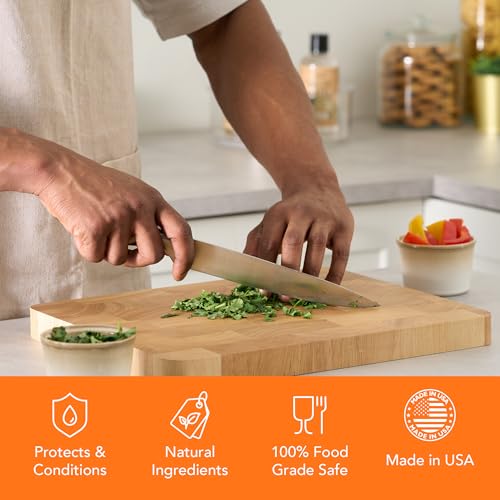
Oil it regularly with food-grade mineral oil (or a board cream of mineral oil and beeswax). Wood dries out over time, and dry wood cracks. Oiling every few weeks — or whenever the wood looks dull or dry — keeps it moisturized, water-resistant, and crack-free. To oil: ensure the board is clean and fully dry, apply a generous coat of mineral oil with a cloth, let it soak in (ideally overnight), then wipe off excess. A well-oiled board beads water.
Never use cooking oils (olive, vegetable) to condition wood — they turn rancid and make the board smell. Use only food-grade mineral oil or purpose-made board conditioner.
Sanitize and deodorize naturally: for a deeper clean, scrub with coarse salt and a cut lemon, or wipe with a diluted vinegar solution, then rinse and dry. This lifts odors (garlic, onion, fish) and freshens the surface without harsh chemicals.
Sand out light damage: minor surface scratches and stains on a wood board can be sanded smooth and re-oiled, extending its life for years. This is a real advantage wood has over plastic.
Caring for a Plastic Cutting Board
Plastic boards are low-maintenance and dishwasher-friendly, but they wear differently than wood.
Dishwasher-safe (usually): most plastic boards can go in the dishwasher, which cleans and sanitizes them with high heat — convenient and hygienic. Check the board is dishwasher-rated first. This is plastic’s main advantage over wood.
They develop grooves faster: plastic is softer than hardwood, so knife cuts accumulate as scratches and grooves more quickly. These grooves harbor bacteria and are hard to clean, which is why plastic boards need replacing more often than a quality wood board.
Sanitizing: because raw meat is often prepped on plastic, sanitize it periodically — the dishwasher’s heat does this, or wipe with a diluted bleach solution (a teaspoon of bleach per quart of water), let sit briefly, then rinse well. This matters most for meat boards.
No oiling needed: plastic doesn’t dry out or crack like wood, so it needs no conditioning — just wash and dry.
Watch for deep gouges: once a plastic board is heavily scored with deep knife channels that trap food and resist cleaning, replace it. Plastic is cheaper than wood, so replacement is easy and expected over time.
Color-code for safety: many cooks use color-coded plastic boards (one for raw meat, one for produce) to prevent cross-contamination — an easy plastic-board habit.
Protecting Your Knives Too
Board care and knife care are connected — the right board and habits protect your knife edges as much as your food safety.
Use wood or soft plastic, never glass, stone, marble, or ceramic. These ultra-hard surfaces look elegant but destroy knife edges on contact — every cut dulls and can chip the blade. A cutting board should be softer than your knife. If you own nice knives (see our best chef knife guide), a wood or quality plastic board protects them; a glass board undoes your sharpening in days.
End-grain wood boards (where the wood fibers face up, like a butcher block) are the gentlest on knives — the fibers part around the edge and self-heal somewhat — and are prized by serious cooks. Edge-grain and flat plastic are also fine. The point is a forgiving surface.
Keep the board stable: a board that slides while you cut is a safety hazard and leads to uneven cuts. Place a damp towel or paper towel underneath to keep it from moving, or choose a board with non-slip feet.
Caring for your board and choosing a knife-friendly surface go hand in hand — both protect the investment in good knives and keep cutting safe.
Frequently Asked Questions
Can you put a wood cutting board in the dishwasher?
No, never. The dishwasher’s prolonged water exposure, high heat, and detergent will crack, warp, and split wood, ruining the board — it’s the most common way people destroy wood boards. Wood boards must be hand-washed with hot soapy water, rinsed, dried immediately, and stood upright to air-dry. Only plastic (and some composite) boards are dishwasher-safe. Treat any wood or bamboo board as hand-wash only.
How often should I oil a wood cutting board?
Every few weeks, or whenever the wood looks dull, dry, or stops beading water. Use food-grade mineral oil or a board cream (mineral oil and beeswax) — never cooking oils like olive or vegetable, which turn rancid. Apply a generous coat to a clean, dry board, let it soak in (ideally overnight), then wipe off excess. Regular oiling keeps wood moisturized and prevents the drying that leads to cracks. New boards benefit from oiling more frequently at first.
How do I sanitize a cutting board after cutting raw meat?
For plastic, the dishwasher’s high heat sanitizes well, or wipe with a diluted bleach solution (about a teaspoon per quart of water), let it sit briefly, and rinse thoroughly. For wood, scrub with hot soapy water, then optionally use coarse salt and lemon or a diluted vinegar wipe to deodorize and freshen, and dry immediately. Ideally, use a separate dedicated board for raw meat to avoid cross-contamination with produce.
When should I replace a cutting board?
Replace any board when it develops deep, uncleanable grooves or gouges where bacteria can hide and cutting becomes uneven — these can’t be properly sanitized. For plastic, that’s when it’s heavily scored; plastic wears faster and is cheap to replace. For wood, light scratches and stains can be sanded and re-oiled to extend its life for years, so wood is replaced only when cracked, split, or deeply damaged beyond sanding. Surface marks alone don’t require replacement.
Is a wood or plastic cutting board more hygienic?
Both are hygienic when cared for properly, and studies are mixed. Plastic can be sanitized in the dishwasher and is easy to bleach, favored for raw meat. Wood has natural antimicrobial properties and, when hand-washed and dried well, resists bacteria too. The bigger hygiene factor is grooves: deeply scored boards of either material harbor bacteria. Keep boards clean, dried upright, and replaced when deeply gouged, and either is safe. Our best cutting board guide covers both.
Why shouldn’t I use a glass cutting board?
Because glass (and stone, marble, ceramic) is harder than your knife blade, so it dulls and can chip the edge with every cut — ruining your knives fast. A cutting board should always be softer than the knife. Wood and quality plastic give slightly, protecting the edge, while glass gives nothing. Glass boards may look elegant, but they’re the worst choice for anyone who cares about their knives. Use wood or plastic to protect your best chef knife.
Related buying guides: best knife sets, best bread knife and best mixing bowls.
The Bottom Line
Caring for a cutting board comes down to washing and drying habits: hand-wash with hot soapy water, never soak, and dry upright immediately to prevent warping. Wood boards also need regular food-grade mineral oil to prevent cracking and should never see a dishwasher; plastic boards are dishwasher-safe but groove faster and need replacing sooner. Whatever the material, use wood or soft plastic (never glass) to protect your knife edges, and replace any board with deep, uncleanable grooves. See our best cutting board and best chef knife guides to choose surfaces that last and protect your blades.






Write Your Review
No reviews yet. Be the first to share your experience!