

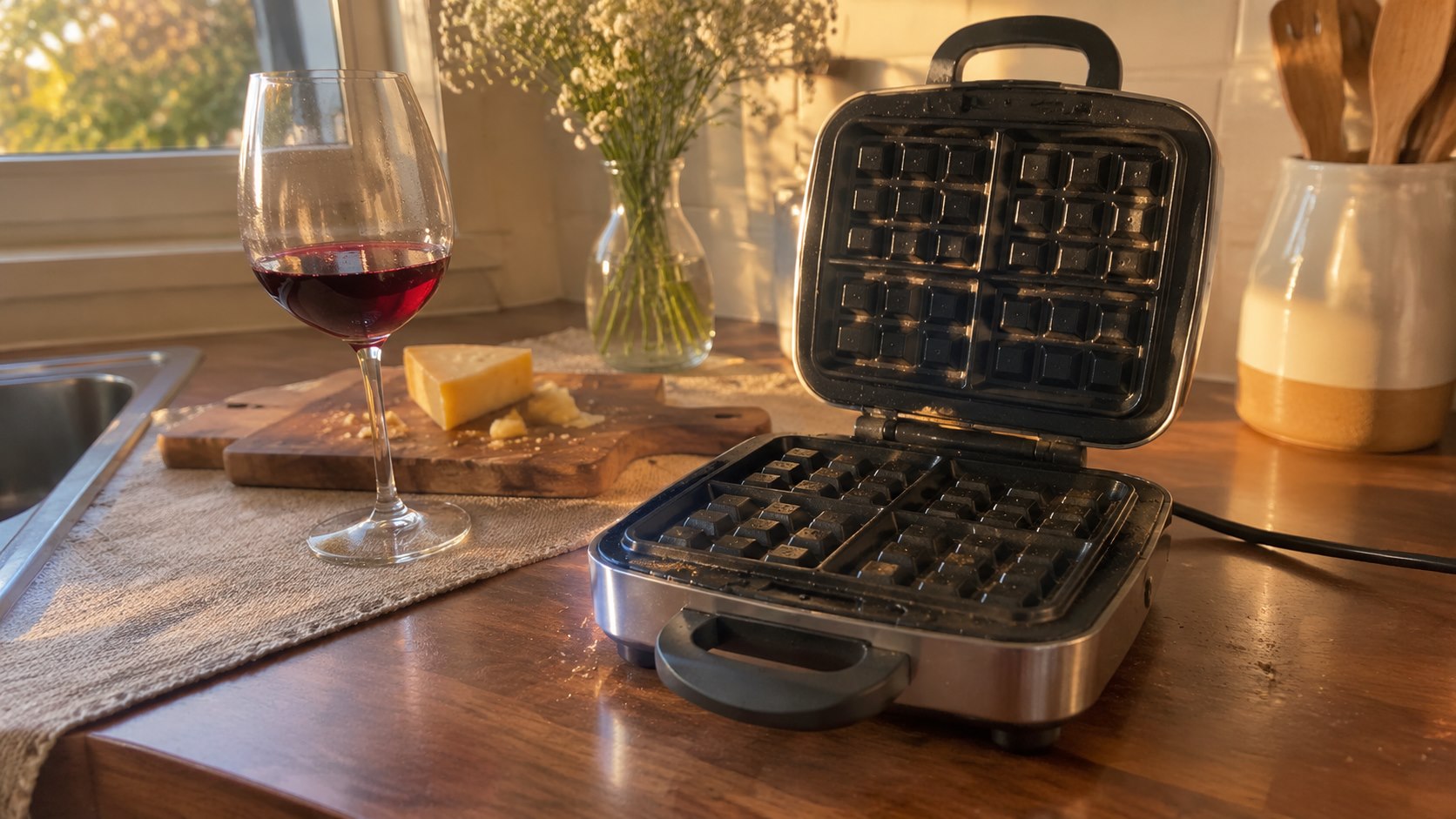
A waffle maker cooks batter between two heated plates. The grids press the pattern into the outside as the batter sets, and steam escapes as moisture heats up. Preheat the plates, add the amount of batter given for your model and watch the first waffle to learn what its ready light and timer actually mean.
Preheat both plates before adding batter
Use the model’s preheat signal. For example, the Dash Mini Waffle Maker uses an indicator light to show when the cooking surface is ready for batter. The light’s purpose depends on the model. Read the instructions before using it as a sign of doneness.
Pour the recommended amount near the center and close the lid as directed. Batter spreads into the grids. Filling all the way to the edge before closing makes it harder to avoid overflow.
Watch steam and check the first waffle
Steam is a clue that moisture is cooking out. Follow the recipe and appliance instructions, and give the waffle time to set before lifting the lid. If the two sides pull away from each other, let the next waffle cook a bit longer before opening, as long as the maker’s timing permits.
Use your first waffle to set the portion and cooking time for the rest of the batch. Change one thing at a time if it overflows, sticks or browns more than you want.
Clean once the appliance is unplugged and cool
Use a soft tool approved for the plate surface. Follow the model instructions for removable plates and keep water out of the controls, hinge and electrical body. For dried batter, read the maker’s cleaning instructions before scraping the grids.
Frequently asked questions
What makes a Belgian waffle maker different?
Belgian-style waffle makers usually have deeper grids. Use the batter amount and recipe for your specific plate so the center and outside cook together.
Why did my waffle stick?
Check that the iron was preheated and that the first waffle had time to set. Review the batter amount and any oiling instructions for the plates.








Write Your Review
No reviews yet. Be the first to share your experience!