

The box for a hand mixer prints the wattage in large type, counts the speeds, and photographs the attachments. None of those numbers explain why one machine whips cream to stiff peaks in ninety seconds while another leaves it soupy and whining. The gap between the printed spec and actual behavior is where buying mistakes live, so it is worth decoding each figure — beginning with the one shoppers trust most and understand least.
Wattage Is the Wrong Number to Compare
Handheld electric mixers land between 150 and 350 watts, and shoppers read that range like a horsepower rating. It is not one. Watts describe electrical draw at peak, not rotational force at the beater tips, and for a hand mixer the governing figure is low-speed torque. The two jobs people buy these machines for sit at opposite ends of the load curve. Whipping a cup of heavy cream asks almost nothing, and a 150 W motor handles it without complaint. Creaming refrigerator-cold butter into granulated sugar, or driving a beater through stiff chocolate chip dough, demands force at low RPM — a gearing problem before it is a power problem.
A 200 W mixer with generous gear reduction out-works a 300 W unit geared for top speed, because reduction trades revolutions for grunt. Gear ratios are almost never published, so you diagnose by ear. Run the mixer into resistance and listen: good gearing holds its pitch and keeps grinding, while an under-geared motor bogs, drops a note, and smells faintly hot within a minute. That pitch drop is the most useful test available to anyone standing over a bowl of cold butter.
Beater Shape Decides What the Machine Can Do
Look at what actually enters the bowl. Traditional wire beaters wrap their wires around a central post, and that post is a trap: dough packs into the middle, stops circulating, and has to be dug out with a spoon between passes. Newer designs delete the post, using flat paddle blades or open wire loops that self-clear as they turn. On the same batter the two geometries feel like different appliances, and none of that difference is power.
A balloon whisk attachment is a third category rather than an upgrade to the other two. Eight to twelve thin wires form a bulbous cage, and the entire design goal is surface area presented to air. Where a flat beater cuts through cream, the whisk drags a great length of wire through it, folding air in on every pass. One cup of cream reaches soft peaks in 60 to 90 seconds on a whisk, against roughly two to three minutes on a flat beater for a denser result that never turns properly airy. The same physics rules it out for stiff work. Push a balloon whisk into cookie dough and those thin wires splay outward and stay splayed; the deformation is permanent, and a bent cage never whips well again.
Speed Count Is Marketing; the Slowest Speed Is Not
Nine speeds sound like more control than five, and on most machines they are not. What separates a usable mixer from an irritating one is where the bottom of the range sits. A genuine slow start lands near 300 to 500 RPM at speed 1, slow enough to add flour to creamed butter and watch it get incorporated rather than ejected. Plenty of mixers open at 900 or 1000 RPM instead, and at that rate dry flour leaves the bowl in a cloud and gets worked into gluten you did not want in a cake crumb.
So the question is not how many detents the switch has but whether the first one is slow enough to use. Nine speeds where the first four are all too fast gives you five real settings and a marketing bullet. Test one dry on speed 1 if you can: if the beaters are already a blur, that machine will throw flour.
Twin Beaters, Rotation, and Why You Still Scrape
Two beaters is standard; the direction they turn is not. Counter-rotating beaters spin toward each other and pull ingredients into the center of the bowl where the wires are densest. Beaters turning the same way push the contents around the bowl wall as a rotating mass that travels slightly ahead of the wires, so mixture and beaters move together and shear falls off. You notice it as a batter that stays almost mixed for far longer than it should.
Shaft spacing is the other half. Beaters set close together sweep a narrow column, and in a wide bowl the outer ring never enters it. Widely spaced shafts cover more diameter but leave the center thinner. Neither arrangement clears a bowl completely, which is the honest reason every recipe tells you to stop and scrape the sides — a geometry limit, not a sign you bought badly.
Shaft Length, Weight, and the Limit Buried in the Manual
Beater shafts commonly run 4 to 5 inches from housing to tip, and that measurement only means something relative to the bowl you own. Drop a 4.5 inch beater into a deep 5-quart bowl and you cannot reach the bottom without sinking the housing and its vents into the batter. In a shallow, wide 3-quart bowl the same shaft has room to spare. Measure your usual bowl before shopping.
Weight belongs on the spec list too, though nobody prints it prominently. These machines run 1.8 to 3.2 pounds, and you hold that mass at arm’s length over a bowl for three to eight minutes at a stretch. Heavier nearly always means more metal in the gear train and therefore more torque, which puts comfort and capability in direct opposition. A meringue is where you feel it: eight to ten minutes of continuous whipping turns a 3-pound mixer into forearm work, while a 1.9-pound unit may lack the gearing to hold speed as the foam stiffens.
Duty cycle is the figure makers hide most thoroughly. Many hand mixers are rated for only 5 to 10 minutes of continuous running before the motor needs to cool, and some enforce it with a thermal cutout that shuts off mid-task. The number sits in the manual, in small print, never on the box.
The Attachment Socket Is the Long-Term Decision
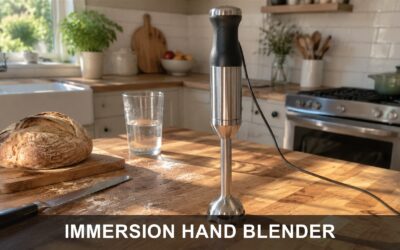
Dough hooks, whisk cages, and on some models an immersion-blender shaft all connect through one drive socket in the base of the housing. Two things about that socket decide whether the accessory lineup is real or decorative. First, whether it is proprietary, which it usually is, meaning nothing from another brand will fit. Second, whether the maker sells individual replacement attachments instead of only bundling them with new mixers. The whisk is the most fragile piece in the set, and if it cannot be replaced cheaply, one dip into stiff dough ends the machine’s whisking for good.
Sorted plainly, the division of labor is short. Flat or open beaters take cake batters, quick breads, and creaming butter with sugar. Dough hooks take yeasted doughs and anything stiff enough to climb a beater. The balloon whisk owns cream, egg whites, thin pourable batters like crepe and popover, and emulsions such as mayonnaise or hollandaise, where you need air and even incorporation rather than force. Between those three, a hand mixer with a good whisk covers nearly everything people buy a stand mixer to do, at a fraction of the price and the counter space. What it cannot do is run unattended, and whether that is worth several hundred dollars depends on how often you bake.
Common Questions
Can I use the balloon whisk attachment for cookie dough?
No, and the damage is usually permanent the first time. The cage is eight to twelve thin wires built to present maximum surface area to air, so they are deliberately flexible and cannot resist sideways load. Cookie dough with cold butter or chocolate chips pushes hard enough to splay those wires outward, and once bent they stay bent. A deformed cage no longer sweeps the bowl evenly and will not return to full volume on cream. Use the flat beaters for dough and keep the whisk for cream, egg whites, thin batters, and emulsions.
Is a 300-watt hand mixer always stronger than a 200-watt one?
Not necessarily, because wattage measures electrical draw rather than force reaching the beaters. Torque at low speed is what drives a beater through cold butter or stiff dough, and torque comes from gear reduction inside the housing. A 200 W motor geared heavily for reduction delivers more usable force at speed 1 than a 300 W motor geared for high RPM, whatever the box implies. Since gear ratios are almost never published, judge by behavior: run the mixer into something dense and listen for whether it holds its pitch or bogs down and drops in tone.
How long can I run a hand mixer continuously?
Most models are rated for 5 to 10 minutes of continuous operation, then want a rest while the motor cools. That figure lives in the instruction manual rather than on the packaging, and some machines enforce it with a thermal cutout that stops mid-recipe without warning. Everyday baking rarely nears the limit, since creaming butter and mixing a batter take two or three minutes. The tasks that do reach it are the long whips: Italian meringue, seven-minute frosting, and big buttercream batches all want eight to ten minutes of uninterrupted running. If those show up in your regular rotation, look up the duty-cycle rating before buying rather than after.

Univen
Whip Egg Whites and Cream Faster: Univen Stainless Steel Pro Whisk for KitchenAid Hand Mixers, Replaces KHMPW
This stainless steel pro whisk snaps into KitchenAid hand mixers in place of standard beaters and drives far more air into egg whites, cream, mousse, and meringue in less time. Buy it if you own a KHM3, KHM5, KHM7, KHM9, KHM512, KHM720, KHM920, or KHM7210 and want aerated results without hauling out a stand mixer.
Pros and Cons
Pros
- Stainless steel construction holds its shape under stiff meringue and thick whipped cream.
- Covers a wide list of KitchenAid hand mixer models, so most owners can order without measuring.
- Aerates light mixtures quickly, cutting the time spent standing over a bowl.
- Solves a common problem cheaply: one missing attachment instead of a whole new mixer.
Cons
- This is an aftermarket Univen part rather than a KitchenAid original, so fit and finish may differ slightly from the factory whisk.
- It only fits the listed KHM series models, and owners of newer or non KitchenAid mixers should confirm compatibility before ordering.
Univen Whip Egg Whites and Cream Faster: Univen Stainless Steel Pro Whisk for KitchenAid Hand Mixers, Replaces KHMPW
Univen
Whip Egg Whites and Cream Faster: Univen Stainless Steel Pro Whisk for KitchenAid Hand Mixers, Replaces KHMPW
This stainless steel pro whisk snaps into KitchenAid hand mixers in place of standard beaters and drives far more air into egg whites, cream, mousse, and meringue in less time. Buy it if you own a KHM3, KHM5, KHM7, KHM9, KHM512, KHM720, KHM920, or KHM7210 and want aerated results without hauling out a stand mixer.
$9.99 at AmazonEditors' Favorite
Color: Stainless Steel Dimensions: 8.75196849501 x 2.49999999745 x 0.0393700787 inches Product Group: Kitchen
Shop Now



Write Your Review
No reviews yet. Be the first to share your experience!