

A grind coffee maker is a machine that grinds whole beans and brews them in one appliance, so you load beans and water and get a pot at the end. If that’s what you’re after, a drip brewer with a built-in grinder is the category to shop, and the De’Longhi TrueBrew is one example with a grinder and an 8 to 24 oz brew range.
This guide explains how a grinder-equipped coffee maker works, what grind size does to the cup, and when a separate grinder or a grounds-only brewer makes more sense. You’ll also find three products from our database that fit different versions of the “grind it fresh” idea.
What a Grind Coffee Maker Actually Does
A grind-and-brew machine holds whole beans in a hopper. When you start a cycle, a built-in grinder crushes the beans into a basket, and hot water then runs through the grounds. That’s the whole trick. One machine, one button, no separate grinder on the counter.
The appeal is freshness. Coffee starts losing aroma soon after grinding, so grinding right before brewing keeps more of what the beans offer. It also cuts a step from the morning routine, which matters if you’re pouring a cup before work.
The trade-off is size and cleanup. A machine with a grinder inside is taller and heavier than a plain drip brewer, and oils and fine dust collect around the grinding path. Plan on regular wiping and brushing.
Whole beans versus pre-ground
Whole beans give you control over grind size and stay fresher in the bag. Pre-ground coffee is convenient but stales faster, and you can’t change the coarseness to match your brewer. Most grind-and-brew machines still let you drop in pre-ground coffee, though you should check the manual for your model.
One drip machine in the brief that pairs a grinder with the brewer is the De’Longhi TrueBrew. Its listing names a built-in grinder and brew sizes from 8 to 24 oz.

De'Longhi
Single-Serve Fresh-Grind Coffee Maker: De'Longhi TrueBrew with Built-In Grinder
The De'Longhi TrueBrew grinds, doses, and brews individual cups from fresh beans, with six sizes and five brew styles as its biggest advantage. It suits coffee drinkers who want one-touch bean-to-cup brewing without measuring grounds for each serving.
Pros and Cons
Pros
- The conical burr grinder handles fresh-bean preparation inside the coffee maker.
- The 8 to 24-ounce range supports both smaller cups and larger individual servings.
- Over Ice and Espresso Style settings add more drink options than standard drip brewing.
- One-touch operation simplifies the process from grinding through brewing.
Cons
- The brew-size range tops out at 24 ounces and does not include a stated carafe capacity.
- Materials, dimensions, and weight are not provided, making counter-space planning difficult.
De'Longhi Single-Serve Fresh-Grind Coffee Maker: De'Longhi TrueBrew with Built-In Grinder
De'Longhi
Single-Serve Fresh-Grind Coffee Maker: De'Longhi TrueBrew with Built-In Grinder
The De'Longhi TrueBrew grinds, doses, and brews individual cups from fresh beans, with six sizes and five brew styles as its biggest advantage. It suits coffee drinkers who want one-touch bean-to-cup brewing without measuring grounds for each serving.
Check price on AmazonEditors' Favorite
The De'Longhi TrueBrew combines a single-serve brewer and conical burr grinder to solve the daily hassle of separately grinding, measuring, and brewing coffee.
Bean Extract Technology automatically grinds, doses, and brews each cup, while one-touch operation keeps the process simple.
It offers six sizes from 8 to 24 ounces, plus a 3-ounce espresso-style cup, but materials, dimensions, and weight are not specified.
Buyers should note that its espresso-style option is listed as a 3-ounce brew, not a stated traditional espresso system.
Verdict: best for bean-to-cup coffee drinkers who want individual servings and multiple brew styles.
How Grind Size Changes the Cup
Grind size controls how fast water pulls flavor out of the coffee. Fine grounds expose more surface and extract quickly, which can turn bitter if the water has too much contact time. Coarse grounds extract slowly and can taste thin or sour if the water rushes past.
Medium grind for drip
Drip brewers generally work best with a medium grind, something like coarse sand. It lets water flow through at a steady pace without clogging the filter. If your coffee tastes harsh, go a touch coarser. If it tastes weak, go a touch finer.
Coarse grind for slow methods
Slow-drip and cold methods need coarse grounds because the water sits with the coffee for a long time. Grind too fine and the bed can clog or over-extract. That’s why cold drip towers ask for a coarser setting than a standard drip pot.
When You Don’t Need a Grinder Inside the Machine
Not everyone wants a combo unit. A separate burr or blade grinder costs less than a grinding coffee maker and is easier to clean and replace. If you already own a grinder, a simpler brewer saves money and counter space.
Single-serve users have another option. Some brewers accept loose grounds directly, so you scoop in your own freshly ground coffee. The Hamilton Beach The Scoop is one: its title calls it a single serve coffee maker and fast grounds brewer for 8 to 14 oz cups, with a 40 oz removable reservoir. It doesn’t grind for you, so you’d pair it with your own grinder or buy a bag of ground coffee.

Hamilton Beach
Single-Serve Ground Coffee Brewing: Hamilton Beach The Scoop 49987 with 40 oz. Reservoir
The Hamilton Beach The Scoop 49987 brews 8 to 14 oz. servings from ground coffee, with a reusable mesh basket that doubles as a scoop for faster preparation. It suits solo coffee drinkers and travel-mug users who want multiple brews from a removable 40 oz. reservoir without pods or paper filters.
Pros and Cons
Pros
- It accepts standard ground coffee, so buyers are not locked into a proprietary pod system.
- The reusable mesh basket serves as both scoop and filter, reducing loose accessories and disposable supplies.
- Its 40 oz. reservoir avoids adding water before every individual cup.
- The adjustable stand supports both standard coffee cups and larger travel mugs.
Cons
- It does not offer pod compatibility, which may not suit households that already use coffee capsules.
- The maximum serving is 14 oz., and travel mugs taller than 7 inches may not fit.
Hamilton Beach Single-Serve Ground Coffee Brewing: Hamilton Beach The Scoop 49987 with 40 oz. Reservoir
Hamilton Beach
Single-Serve Ground Coffee Brewing: Hamilton Beach The Scoop 49987 with 40 oz. Reservoir
The Hamilton Beach The Scoop 49987 brews 8 to 14 oz. servings from ground coffee, with a reusable mesh basket that doubles as a scoop for faster preparation. It suits solo coffee drinkers and travel-mug users who want multiple brews from a removable 40 oz. reservoir without pods or paper filters.
Check price on AmazonEditors' Favorite
The Hamilton Beach The Scoop 49987 is a single-serve brewer for making 8 to 14 oz. coffee servings from loose grounds without disposable pods or paper filters.
Its reusable mesh basket doubles as the grounds scoop, while the 40 oz. removable reservoir supports multiple cups without adding water before each brew.
The flip-up or flip-down stand holds standard cups or travel mugs up to 7 inches tall, and a 14 oz. serving brews in minutes.
The silver stainless steel unit measures 7.6 by 13.5 by 9.75 inches and weighs about 5.67 pounds, so buyers should check counter depth and cabinet clearance.
It is best for solo coffee drinkers who prefer ground coffee, want fewer reservoir refills, and do not need capsule compatibility.
Burr Versus Blade Grinding
Built-in grinders come in two broad styles. Blade grinders chop beans with a spinning blade, which is cheap but produces uneven pieces: some dust, some chunks. Burr grinders crush beans between two surfaces set a fixed distance apart, which gives a more even size and better control. Product titles don’t always say which type is inside, so check the manufacturer’s manual before assuming.
Uneven grounds matter because the dust over-extracts while the chunks under-extract, and you taste both in the same cup. A more consistent grind usually means a rounder, cleaner flavor. If a listing doesn’t tell you the grinder type, treat that as a question to answer before you buy.
Noise and counter space
Grinding is loud. A machine that grinds at 6 a.m. will be heard through the house, so some people prefer to set a timer or accept the noise. Measure your cabinet clearance too, since a hopper on top adds height that can collide with upper shelves.
Common Mistakes With Freshly Ground Coffee
Grinding too far ahead is the first one. Grind just before brewing, not the night before. Second is grinding too fine for a drip basket, which slows the water and pushes bitterness into the pot.
Third is skipping cleaning. Old oils turn rancid and flatten the taste of every batch. Wipe the hopper, brush out the grinder area and rinse removable parts on a schedule. Fourth is ignoring the water amount. Even perfect grounds taste off if the ratio is wrong, so measure rather than eyeball.
Also watch bean storage. Keep beans in an airtight container away from heat and light, and buy amounts you’ll finish in a couple of weeks. Fresh grinding can’t rescue beans that went stale in the cupboard.
Cold Drip as a Different Way to Use Ground Coffee
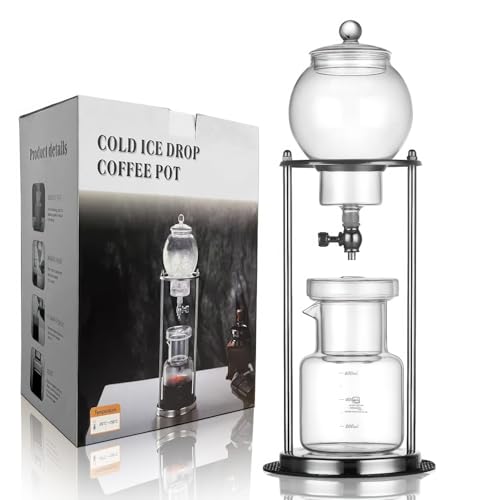
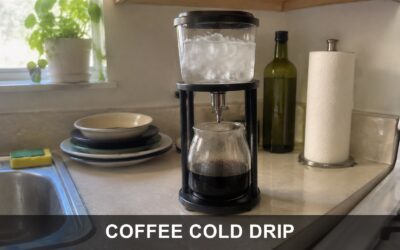
If you like iced coffee, a cold drip tower is another place where grind size matters. These towers drip water over grounds slowly for a smooth, low-acid result. They aren’t grinders and they don’t brew hot coffee. They’re a separate tool for people who plan ahead.
The HANWUDI Cold Drip Coffee Maker is described as a 20 oz slow-drip Japanese-style cold brew tower. It needs coarse grounds that you supply, so a good grinder helps here.
HANWUDI Cold Drip Coffee Maker - 20 oz Cold Brew Coffee Tower, Slow Drip Japanese Cold Brew Maker, Cold Brew Drip, Ice Coffee Tower
HANWUDI
Cold Drip Coffee Maker - 20 oz Cold Brew Coffee Tower, Slow Drip Japanese Cold Brew Maker, Cold Brew Drip, Ice Coffee Tower
Check price on AmazonHow to Choose What Fits Your Kitchen
Start with how you drink coffee. If you want hot pots with minimal effort, a grind-and-brew drip machine is the cleanest fit. Our best coffee grinding coffee maker guide compares options in that category, and the best coffee maker roundup covers the broader field.
If you drink one cup at a time, see our best cup coffee maker page. Iced coffee fans can browse the best iced coffee maker list. For bean choice, the best coffee beans for drip coffee maker guide is a good next read.
Budget matters too. Among the three products above, the listed prices range from about $80 to about $562, and the high end is the one with the built-in grinder. Weigh that against buying a decent standalone grinder plus a simple brewer.
When to Replace or Upgrade
Consider replacing your setup when the coffee starts tasting flat even with fresh beans and a clean machine, when the grinder jams or struggles, or when the brewer leaks or runs slowly. Mineral scale from hard water can also clog internal parts, so descale on the schedule the maker recommends before deciding the machine is done.
Upgrading makes sense if you’ve been using a basic drip pot with pre-ground coffee and want a fresher cup. Compare a combo machine against a standalone grinder first. For a hot-coffee focused list, our best coffee maker for hot coffee page is a useful starting point.
A few habits help whichever setup you pick. Use filtered water if your tap tastes strong, since coffee is mostly water. Preheat the carafe with a splash of hot water on cold mornings. Keep the scoop or scale handy so the coffee-to-water ratio stays the same from day to day. Small things. They add up.
FAQ
Is a coffee maker with a built-in grinder worth it?
It’s worth it if you want fresh-ground coffee with minimal effort and counter clutter. If you’re willing to run two devices, a separate grinder and brewer often cost less and are simpler to repair or replace.
Can I use pre-ground coffee in a grinder coffee maker?
Many models allow it, but you should check your manual. Using pre-ground coffee skips the grinder, which is handy when you want decaf or a flavored blend.
What grind size is best for a drip coffee maker?
A medium grind, similar to coarse sand, is the usual starting point. Adjust finer if the cup tastes weak and coarser if it tastes bitter.
How often should I clean the grinder in a coffee maker?
Wipe out loose grounds after each use and do a deeper brush-and-rinse of removable parts every week or so. Oils build up fast, and a dirty grinder dulls the flavor.
Does grinding right before brewing really matter?
Yes. Ground coffee loses aroma quickly, so grinding just before brewing keeps more flavor in the cup. The difference is easiest to notice with lighter roasts.



Write Your Review
No reviews yet. Be the first to share your experience!