

A grilling frying pan is any heavy skillet you use on the stove to get grill-style browning, and yes, a plain frying pan can do it if you preheat it hard and keep the food dry. You won’t get real smoke or flame, but you can get a deep brown crust and good flavor.
This guide covers which pan material works, how hot to run it, how to cook steak, chicken and vegetables, and the mistakes that leave you with gray, steamed food. We’ll also point to a few pans worth a look.
Can a frying pan really stand in for a grill?
Mostly, yes. Grilling is about intense, dry heat that browns the surface of food. A flat skillet gives you that same browning (the Maillard reaction) across the whole surface, rather than just on grill-bar lines. What it can’t give you is smoke. If that matters, a grill pan with ridges or an outdoor grill is the better tool.
The trade-off is simple. A flat pan browns more evenly. A ridged pan makes the marks. For weeknight cooking, even browning usually wins.
Look for a pan with a thick, flat base, a handle that stays cooler than the pan body, and an oven-safe rating if you like to sear then finish in the oven. Stainless steel is the closest match for high-heat work. Here’s one example with those traits.

Umite Chef
12 Inch 5-Ply Stainless Steel Frying Pan for Searing and Oven Finishing - Umite Chef Professional Skillet
This 12 inch fully clad 5-ply skillet uses dual aluminum cores to heat roughly 30% faster and more evenly than single-core pans, making it a reliable searing and pan-sauce workhorse. Buy it if you want coating-free cooking without PFOA or PTFE and need one pan that moves from induction burner to a 500°F oven.
Pros and Cons
Pros
- Fully clad 5-ply construction spreads heat across the sidewalls, reducing hot spots that scorch garlic and burn fond.
- No coating means the surface will not degrade over time and actually releases food better as a patina builds.
- Rivet-free interior and dishwasher-safe build cut cleanup time after messy sears and braises.
- One pan covers stovetop, oven, and every cooktop type, including induction.
Cons
- Bare stainless is not nonstick out of the box, so eggs and fish need proper preheating and oil until the surface seasons in.
- At 2.5mm thick and 12 inches wide, this is a heavy pan that is awkward for one-handed tossing or wrist-flipping.
Umite Chef 12 Inch 5-Ply Stainless Steel Frying Pan for Searing and Oven Finishing - Umite Chef Professional Skillet
Umite Chef
12 Inch 5-Ply Stainless Steel Frying Pan for Searing and Oven Finishing - Umite Chef Professional Skillet
This 12 inch fully clad 5-ply skillet uses dual aluminum cores to heat roughly 30% faster and more evenly than single-core pans, making it a reliable searing and pan-sauce workhorse. Buy it if you want coating-free cooking without PFOA or PTFE and need one pan that moves from induction burner to a 500°F oven.
$39.99 at AmazonEditors' Favorite
Color: Stainless Steel Size: 12 inch Dimensions: 8.86 x 12.36 x 4.13 inches Product Group: Kitchen
Shop NowPick the right pan material for grill-style cooking
Material decides how hot you can safely go and how much browning you’ll get. Here’s how the common options behave.
Stainless steel for the hardest sear
Multi-ply stainless holds high heat well and builds fond, the brown bits that make a good pan sauce. Food can stick if the pan is cold or wet, so preheat first. It’s the pan most cooks reach for when they want a crust.
Ceramic nonstick for gentler cooking
Ceramic coatings are slick and easy to clean, but they don’t like extreme heat. Keep them at medium to medium-high. They suit eggs, fish, and thin cutlets better than a thick steak. Skip the empty-pan preheat on high.
Step by step: how to get a grilled result on the stove
Follow the same order every time and the results get repeatable.
1. Preheat the pan, not the oil
Set the burner to medium-high and let the dry pan warm for two to three minutes. Flick a few drops of water in. If they skitter and vanish, you’re close. Then add a thin layer of high-smoke-point oil.
2. Dry the food
Pat steak, chicken and vegetables with paper towels. Surface moisture turns to steam, and steam blocks browning. Season right before the food hits the pan.
3. Leave it alone
Resist the urge to nudge it. Food releases from a hot pan on its own once a crust forms. Flip it once, maybe twice.
4. Rest and finish
Move meat to a board for a few minutes before cutting. If the pan is oven safe, you can finish thick cuts in the oven so the outside doesn’t burn before the middle is done.
What to cook: steak, chicken, vegetables and more
Thick steaks and bone-in chicken do best in a stainless pan with an oven finish. Boneless chicken breasts cook more evenly if you pound them to a uniform thickness first. Vegetables like zucchini, peppers and onions brown well cut into flat slices, which put more surface against the metal.
For a set that covers different jobs, from a large skillet to small pans for eggs, a multi-size ceramic set is handy. This one includes three sizes and lids.

Redchef
Ceramic Nonstick Frying Pan Set for Low-Oil Everyday Cooking: Redchef 4-Piece 8", 9.5", 11" Skillets with Universal Lid
This four-piece Redchef set covers eggs, sautes, and family-size sears with a PFAS, PTFE, and PFOA free ceramic coating that releases food using minimal oil or butter. It suits cooks replacing older nonstick pans who want one set that handles induction, gas, and electric cooktops plus oven work up to 842 degrees F.
Pros and Cons
Pros
- Works on induction, gas, and electric cooktops, so the set moves with you if your kitchen changes.
- Wipe-and-rinse cleanup handles most meals, with dishwasher tolerance available when you are short on time.
- The beige and white finish stays presentable enough to bring the pan straight to the table.
- Lightweight forged aluminum construction keeps the larger skillets manageable for one-handed tossing and pouring.
Cons
- The brand recommends hand washing to preserve the coating, which makes the dishwasher rating more of a fallback than a daily habit.
- Ceramic nonstick coatings generally lose slickness faster than traditional PTFE surfaces, so expect a shorter service life than a comparably priced hard-anodized set.
Redchef Ceramic Nonstick Frying Pan Set for Low-Oil Everyday Cooking: Redchef 4-Piece 8", 9.5", 11" Skillets with Universal Lid
Redchef
Ceramic Nonstick Frying Pan Set for Low-Oil Everyday Cooking: Redchef 4-Piece 8", 9.5", 11" Skillets with Universal Lid
This four-piece Redchef set covers eggs, sautes, and family-size sears with a PFAS, PTFE, and PFOA free ceramic coating that releases food using minimal oil or butter. It suits cooks replacing older nonstick pans who want one set that handles induction, gas, and electric cooktops plus oven work up to 842 degrees F.
$89.99 at AmazonEditors' Favorite
Color: Beige Size: 8/9.5/11 inch (4-Piece) Dimensions: 18.8 x 11 x 2.85 inches Weight: 9.10068217536 pounds Product Group: Kitchen
Shop NowIf you’re comparing materials before you buy, our guides to the best frying pan material, best ceramic frying pan go deeper.
Heat control and timing
Timing depends on thickness, so use cues rather than a clock. A steak about an inch thick usually needs a few minutes per side over medium-high heat. Thin chicken cutlets cook faster. Sliced vegetables take a couple of minutes per side. A meat thermometer removes the guesswork, and it’s the one tool we’d call essential for pan-searing meat.
Adjusting when the pan smokes
Some smoke is normal. A lot of it means the oil is past its limit or fond is burning. Lower the heat a notch, wipe out any blackened bits, and add a splash of fresh oil. Turn on the vent fan before you start.
Making a quick pan sauce
After the food comes out, pour off excess fat and add a splash of stock, wine or water. Scrape the brown bits loose and let the liquid reduce by half. Swirl in a small pat of butter. Done in two minutes.
Cleaning and caring for the pan
Let the pan cool a little, then deglaze with warm water while it’s still hot enough to loosen residue. Stainless steel handles a non-abrasive scrubber and a bit of dish soap. Ceramic coatings do best with a soft sponge and hand washing, even when a label says dishwasher safe, because gentle care extends the coating’s life. Dry the pan fully before storing it. If you stack pans, put a paper towel or pan protector between them.
Common mistakes that ruin the crust
Most failures come from a handful of habits. Fix these and your results improve fast.
Crowding the pan
Too much food drops the temperature and releases moisture. Cook in batches. Leave a finger of space between pieces.
Moving food too soon
Food that sticks hasn’t finished browning. Wait. It’ll let go.
Using the wrong heat for the coating
Nonstick and ceramic pans lose their slick finish when run too hot. Match the heat to the pan, and use wooden or silicone tools. If you want to avoid coatings altogether, see our picks for the best non-toxic frying pan.
Small pans for small jobs
Not every grill-style job needs a 12-inch skillet. A single egg, a sliced sandwich, or a few veggie strips fit fine in an 8-inch pan. Smaller pans heat fast and clean up quickly. Here’s a compact ceramic option rated for everyday cooking without PTFE.
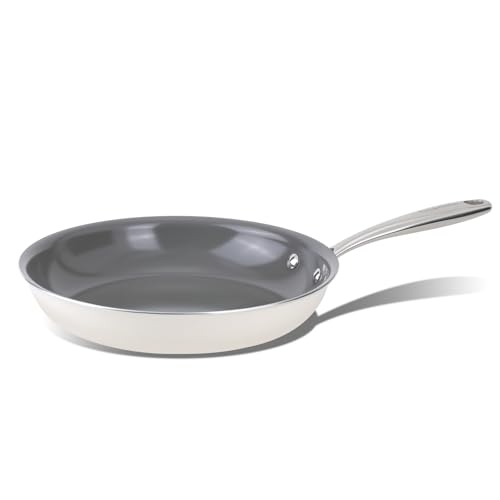
Cookersway
8-Inch Ceramic Nonstick Egg Pan for Single-Serve Breakfasts: Cookersway PTFE-Free Skillet
This 8-inch ceramic skillet cooks eggs, omelets, and pancakes with minimal oil thanks to a PFAS- and PFOA-free coating that releases food without sticking. Buy it if you cook single portions in a small apartment, dorm, or RV and want an induction-ready pan that wipes clean in seconds.
Pros and Cons
Pros
- Free of PFAS, PFOA, lead, and cadmium, with no toxic fumes if the pan overheats.
- Lightweight and balanced enough to flip an omelet one-handed.
- Stay-cool bakelite handle stays grippable through a full breakfast cook.
- Thick aluminum base resists warping on high heat.
Cons
- Hand wash only, since dishwasher cycles degrade the ceramic coating.
- At 8 inches it handles one serving at a time, so it is too small for family breakfasts.
Cookersway 8-Inch Ceramic Nonstick Egg Pan for Single-Serve Breakfasts: Cookersway PTFE-Free Skillet
Cookersway
8-Inch Ceramic Nonstick Egg Pan for Single-Serve Breakfasts: Cookersway PTFE-Free Skillet
This 8-inch ceramic skillet cooks eggs, omelets, and pancakes with minimal oil thanks to a PFAS- and PFOA-free coating that releases food without sticking. Buy it if you cook single portions in a small apartment, dorm, or RV and want an induction-ready pan that wipes clean in seconds.
$29.99 at AmazonEditors' Favorite
Color: Ash Grey Size: 8" Dimensions: 6.2 x 8 x 1.8 inches Weight: 1.5 Pounds Product Group: Kitchen
Shop NowFor more choices at every price, browse the best non-stick frying pan and best frying pan set roundups, or compare names in the best brand of frying pan guide.
Seasoning and flavor tips
Since a pan can’t add smoke, build flavor in other ways. Marinate meat for thirty minutes to a few hours, but wipe off the excess so it browns instead of steaming. Salt steak ahead of time and let it sit uncovered in the fridge, which dries the surface. Finish with fresh herbs, a squeeze of lemon, or a spoonful of the pan sauce. Smoked paprika in a rub is a simple way to hint at a grill. It works.
Fat matters too. A little butter added near the end of cooking gives color and richness, but add it late so it doesn’t burn. Baste the food with the foaming butter for the last minute if you like.
When to replace your pan
A warped base that spins on the burner won’t brown evenly. Flaking or scratched coatings are another sign. A stainless pan can last for years if you clean it well, but a worn nonstick surface is usually time to retire. Don’t wait until food sticks every time.
FAQ
Can you grill in a regular frying pan?
You can get grill-style browning in a regular frying pan. Preheat it, dry the food, and use enough heat for a crust. It won’t add smoke flavor, but it works well indoors.
What is the best frying pan for searing?
Multi-ply stainless steel is the usual choice because it handles high heat and builds a strong crust. Check that the pan has a flat base and an oven-safe rating if you plan to finish in the oven.
Is a grill pan better than a frying pan?
A grill pan gives you the ridged marks, while a flat frying pan browns the whole surface more evenly. If you want the look, pick a grill pan. If you want the crust, a skillet is fine.
What oil should I use for high-heat pan grilling?
Choose an oil with a high smoke point, such as avocado, canola or refined peanut oil. Skip extra virgin olive oil for hard searing, since it smokes sooner.
Can ceramic pans handle grill-style cooking?
Ceramic pans can brown food at medium to medium-high heat. They aren’t meant for very high heat, so keep thick steaks for stainless and use ceramic for eggs, fish and vegetables.



Write Your Review
No reviews yet. Be the first to share your experience!