

The first burger of the night should not taste like a gas station. Yet that is exactly what happens when someone soaks a mound of briquettes in lighter fluid, drops a match, and watches a column of orange flame leap up and singe the hair off their forearm. The fluid burns off fast and loud, the coals underneath barely catch, and the petroleum vapor lingers long enough to flavor the food. Anyone who has grilled more than a handful of times has lived some version of this, standing back with raised eyebrows and a faint chemical smell on their hands.
The usual alternatives carry their own headaches. A chimney starter is a fine tool right up until it is a damp, windy evening and the only paper in the house is a glossy magazine that refuses to stay lit. You crumple sheet after sheet, the flame gutters out in the breeze, and twenty minutes later you are still poking at gray-edged coals that never quite turned over. The electric coil starter works, more or less, provided you own a long extension cord and do not mind running it across wet grass to the outlet while it glows like a hazard nobody asked for.
Starter cubes fix the problem by quietly removing every one of those variables. They do not care about wind, they need no paper or outlet, and they leave nothing behind on the food. For a tool that usually costs less than a sandwich, they are the closest thing charcoal grilling has to a guaranteed light.
How a small wax cube beats a can of fluid
A starter cube is a small block, usually about an inch square, made from paraffin wax or compressed wood fiber soaked in a food-safe accelerant. You touch a plain lighter or a match to one corner and it catches immediately, no coaxing required. From there it burns with a steady, contained flame for roughly eight to twelve minutes, and that duration is the whole point. Lighter fluid flashes off in ninety seconds of drama and leaves you hoping the coals took; a cube gives the charcoal directly above it a long, patient heat source that keeps working long after a fluid fire would have died.
Wind is where the difference becomes obvious. A gust will blow out a match and scatter a loose paper fire, but a cube has already committed to burning and keeps going in a breeze that would kill any open flame. That reliability holds whether you are lighting hardwood lump or standard briquettes. Lump catches faster because of its irregular, airy shape, while briquettes take a few extra minutes, but a cube handles both without any change in method. You are lighting one small object and letting physics do the rest.
Why they add nothing to the taste
The flavor question is the one that keeps people loyal to cubes once they switch. Lighter fluid is a petroleum product, and even when you let the coals burn until they look ready, trace residue clings to the fuel and drifts up into whatever you put on the grate. That faint acrid edge on the first few pieces of food is the fluid, not the smoke. It is the reason a lot of cookouts have an unspoken rule about who gets the first hot dog off the fire.
A cube sidesteps this entirely because of timing. The cube finishes burning in around ten minutes, and the coals themselves are not fully ready until closer to fifteen, once they have ashed over to that even gray coating that tells you the surface is hot. By the time your charcoal is at cooking temperature, the cube is long gone, consumed down to nothing, with no residue left to transfer. There is no waiting period to burn off chemicals because there were never any chemicals to begin with. What reaches the food is heat and, if you added wood, clean smoke, which is exactly what you wanted.
The mistakes that still ruin a light
Cubes are close to foolproof, but people still find ways to defeat them, and the failures are almost always about placement or patience. The most common error is burying the cube under a full load. Someone fills the chimney to the brim, then tucks a cube on top or jams it into the middle of the pile, and the surrounding charcoal smothers the small flame before it can spread. Fire needs air, and a cube crushed under three pounds of briquettes gets none. It flickers and dies, and the verdict back at the grill is that the cube “didn’t work,” when really it was starved.
The second mistake is treating cubes like a booster for coals that are already lit. Dropping a fresh cube onto glowing charcoal does almost nothing useful, because a cube’s job is to start a cold fire, not intensify a warm one. And the third failure is the oldest habit of all: impatience. The cube is burning fine, the coals are five minutes from ready, and someone squirts lighter fluid in anyway, undoing the entire clean-burn advantage with one reckless splash. The cube did not fail there. The person watching it did.
The technique that works every time
The correct method is almost boringly simple, which is its greatest strength. Place two or three cubes on the bottom charcoal grate, or nestle them into the base of an empty chimney starter, then stack your charcoal loosely on top so the cubes sit underneath rather than buried within. The flame rises through the fuel the way heat naturally wants to travel, catching the lowest coals first and spreading upward. Two cubes handle most kettle-grill loads; three is sensible for a packed chimney or a cold, damp night when you want extra margin.
Once the cubes are lit, open your vents so the fire can breathe, and then do the hardest part, which is walking away. Resist the urge to poke, fan, or rearrange anything for the first fifteen minutes. The cubes burn out, the coals ash over, and when you come back to a bed of gray-white charcoal you are ready to cook without ever having touched a can of anything. No newspaper, no cord, no chemical smell, no eyebrow risk. Just a small block doing a steady, predictable job every time you ask it to.
Balconies, storage, and what a tub actually costs
Cubes shine for anyone grilling on an apartment balcony, where many buildings and city ordinances flatly forbid lighter fluid and other open accelerants for fire-safety reasons. A cube produces no volatile vapor cloud, lights with a single small flame, and is odorless while it burns, which keeps both the fire marshal and the neighbor across the railing content. For small balcony grills, one or two cubes are usually plenty.
Storage is another quiet advantage. A can of lighter fluid slowly evaporates and degrades once opened, so the half-full bottle you left in the garage last summer may be weak or useless by spring. Cubes have no such problem. They are stable, dry, and shelf-steady for years as long as you keep them in a sealed container away from moisture, so a tub bought in June still lights the same in the following March. On price, a tub of twenty-four to fifty cubes typically runs eight to fifteen dollars. Since a single light uses two or three cubes, that works out to well under a dollar per fire, which is a small toll for never again serving a burger that tastes faintly of petroleum.
Common questions about grill starter cubes
Do starter cubes leave any taste on the food?
No, and the reason comes down to timing rather than luck. A cube burns out completely in roughly eight to twelve minutes, while the charcoal above it does not reach true cooking temperature until around the fifteen-minute mark, once it has ashed over to an even gray. By the time you are ready to put food on the grate, the cube has been fully consumed and there is nothing left to transfer. This is the opposite of lighter fluid, which leaves petroleum residue on the coals that can taint the first several items you cook. As long as you wait for the coals to ash over before grilling, a cube contributes zero flavor of its own.
How many cubes do I need for a full chimney or a kettle grill?
Two cubes cover most standard kettle-grill loads and a typical chimney starter, and three is the right call for a fully packed chimney, a large charcoal bed, or a cold and windy evening when you want extra insurance. The key is placement rather than quantity. Set the cubes at the very bottom, either on the charcoal grate or in the base of the chimney, and build the fuel loosely on top so the flame can rise through it. Piling on more cubes will not help if they are buried mid-load, because the surrounding charcoal smothers them and starves the flame of air. Position beats volume every time.
Are starter cubes safe to use on an apartment balcony?
They are generally the safest ignition option for balcony grilling, though you should always check your building rules and local codes first, since some cities restrict charcoal grilling on balconies regardless of how you light it. Where charcoal is permitted, cubes are far better suited to tight outdoor spaces than lighter fluid, which many buildings ban outright because of its flammable vapor. A cube lights with one small, contained flame and burns without odor, so it does not send fumes drifting into a neighbor’s open window. Keep a lid or water source nearby as you would with any open fire, place the grill away from railings and walls, and you have a clean, low-drama way to cook over charcoal in a small space.
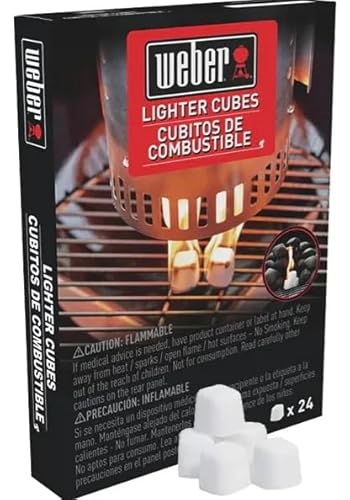
Weber
Charcoal Grill Fire Starter Cubes for Fast Lighting: Weber Lighter Cubes, 24-Count Box (3-Pack, 72 Cubes)
These paraffin wax cubes light a charcoal grill or chimney starter quickly and stay lightable even when wet, so you skip lighter fluid entirely. Buy them if you cook over charcoal regularly and want coals going without the chemical aftertaste fluid leaves behind.
Pros and Cons
Pros
- Lights reliably even when wet, unlike newspaper or cardboard starters.
- No chemical aftertaste transfers to burgers, steaks, or smoked meats.
- Compact cubes store easily beside a chimney starter or in a grill cabinet.
- Buying three boxes at once lowers the cost per cook compared to single boxes.
Cons
- Cubes are single-use, so heavy grillers will burn through a box faster than expected.
- Paraffin wax can soften or stick together if boxes sit in direct summer heat.

Shop Square
Charcoal Grill and Smoker Lighting Without Lighter Fluid: Shop Square Fire Starter Squares, 200 Pack, Odorless and Water Resistant
Compressed paraffin and sawdust squares light charcoal, split wood, or a smoker firebox from a single match, and they burn odorlessly so no fuel taste reaches the food. Worth buying if you grill or smoke weekly and want to retire lighter fluid without babysitting the coals.
Pros and Cons
Pros
- One match ignition holds up in wind and damp conditions, cutting out repeated relights.
- Burns without odor, so nothing transfers to food cooked directly over the fire.
- Burn time is long enough to handle briquettes, lump charcoal, and small wood splits.
- Lightweight and waterproof, so the same pack works for the grill, the wood stove, and backpacking trips.
Cons
- Burn time tops out around eight minutes, so wet logs or large hardwood splits may need a second cube.
- The all-natural labeling is a stretch, since paraffin is a refined petroleum wax rather than a plant material.

RUTLAND PRODUCTS
Fire Starter Cubes for Grills, Charcoal Chimneys and Wood Stoves - Rutland Safe Lite 144-Pack Natural Firestarters
These wax-and-wood cubes light your charcoal chimney, grill, or wood stove without lighter fluid, and each one burns a full 10 minutes so the coals catch on the first try. Buy the 144-pack if you grill or heat with wood regularly and want an odorless starter that will not taint the flavor of your food.
Pros and Cons
Pros
- Reliable single-match ignition replaces lighter fluid and newspaper for charcoal chimneys.
- Steady flame promotes even coal lighting, which translates to consistent grill temperatures.
- Compact 4.6-pound box stores easily on a garage shelf or in a camping bin.
- One product handles indoor fireplaces and wood stoves as well as outdoor grilling.
Cons
- The 144-count pack is more than an occasional griller needs, so the upfront cost is higher than a small starter box.
- Cubes leave a small wax residue in the bottom of a chimney starter or firebox that needs clearing out.
Weber Charcoal Grill Fire Starter Cubes for Fast Lighting: Weber Lighter Cubes, 24-Count Box (3-Pack, 72 Cubes)
Weber
Charcoal Grill Fire Starter Cubes for Fast Lighting: Weber Lighter Cubes, 24-Count Box (3-Pack, 72 Cubes)
These paraffin wax cubes light a charcoal grill or chimney starter quickly and stay lightable even when wet, so you skip lighter fluid entirely. Buy them if you cook over charcoal regularly and want coals going without the chemical aftertaste fluid leaves behind.
$25.83 at AmazonEditors' Favorite
Color: White Dimensions: 6.3 x 5.2 x 8.8 inches Weight: 0.000625 pounds Product Group: Outdoors Binding: Apparel
Shop NowShop Square Charcoal Grill and Smoker Lighting Without Lighter Fluid: Shop Square Fire Starter Squares, 200 Pack, Odorless and Water Resistant
Shop Square
Charcoal Grill and Smoker Lighting Without Lighter Fluid: Shop Square Fire Starter Squares, 200 Pack, Odorless and Water Resistant
Compressed paraffin and sawdust squares light charcoal, split wood, or a smoker firebox from a single match, and they burn odorlessly so no fuel taste reaches the food. Worth buying if you grill or smoke weekly and want to retire lighter fluid without babysitting the coals.
$19.99 at AmazonGreat Value
Color: Brown Size: 200 Squares Product Group: Home
Shop NowRUTLAND PRODUCTS Fire Starter Cubes for Grills, Charcoal Chimneys and Wood Stoves - Rutland Safe Lite 144-Pack Natural Firestarters
RUTLAND PRODUCTS
Fire Starter Cubes for Grills, Charcoal Chimneys and Wood Stoves - Rutland Safe Lite 144-Pack Natural Firestarters
These wax-and-wood cubes light your charcoal chimney, grill, or wood stove without lighter fluid, and each one burns a full 10 minutes so the coals catch on the first try. Buy the 144-pack if you grill or heat with wood regularly and want an odorless starter that will not taint the flavor of your food.
$24.99 at AmazonColor: Natural Size: 144 Count Dimensions: 3 x 7.13 x 9.13 Inches Weight: 1 pounds Product Group: Lawn & Patio Binding: Kitchen
Shop Now








Write Your Review
No reviews yet. Be the first to share your experience!