

The secret to a good glass of iced coffee is not the ice. It is what happens to the coffee before it ever touches a single cube. Pour a normal hot brew over a full glass of ice and you get exactly what physics promises: a pale, thin puddle that tastes like it was rinsed out of yesterday’s pot. A machine worth buying solves that one problem first, and everything else, the frother and the carafe and the pod bin, is secondary.
A true hot-and-iced brewer either pulls a concentrated cycle, running less water against the same dose of grounds, or it meters the coffee against a fixed ice ratio so the eventual melt is accounted for. The cheapest approach skips both, running an ordinary drip cycle and trusting you to pour the result over cubes. Knowing where a machine sits on that line matters more than any spec sheet, and price is a rough but honest guide to which camp you are paying for.
The dilution math nobody prints on the box
Start with the number that quietly governs everything. A glass built for iced coffee usually lands near a 60/40 split, roughly sixty percent liquid coffee to forty percent ice by volume, and that ice is not decoration. It becomes water.
The fix is plain arithmetic. Say a hot cup runs ten ounces of water through a given scoop of grounds. To land at that same intensity over ice, a capable machine brews only six or seven ounces through the same scoop, then lets three or four ounces of melting ice make up the volume. Same grounds, less water, a stronger pour that arrives at normal strength by the time you drink it. Brewers that advertise an over-ice button and actually reduce the water are doing this honest work; the ones that merely push hot coffee out faster or a few degrees hotter are not, whatever the label promises. Keep that ratio in mind as the price climbs, because most of what your money buys is precision over exactly this step.
Tier one, under about sixty dollars: speed with a shrug at strength
The entry level is ruled by pod machines and small single-serve drip units. The Keurig K-Iced class is the obvious example, alongside the basic Mr. Coffee Iced models that pair a hot carafe with a smaller cold pour. What you get here is genuine convenience. Press a button, get a cold drink in under a minute, no measuring and no cleanup beyond a spent pod. For a dorm room or a shared office corner where nobody wants to own the coffee chore, that speed is the whole point.
The compromise sits in concentration control, which at this price is crude. A pod holds a fixed amount of grounds, so the machine cannot add coffee to fight the ice; it can only shrink the water, and even that adjustment is coarse. The K-Iced brews a smaller, hotter shot designed to survive a filled cup, and it does survive, but the flavor lands somewhere around acceptable rather than good.
Then there is the quiet cost. Pods run roughly forty to sixty cents each, so two iced coffees a day is close to thirty dollars a month in consumables, which erases the low sticker price inside a single season. If you drink one cold coffee on hot afternoons and value never thinking about it, tier one is honest value. Drink several a day and you are renting convenience at a steep monthly rate.
Tier two, roughly seventy to one hundred fifty dollars: the drip household’s sweet spot
This is where most kitchens should shop. The Ninja-style dual systems anchor the range, and they earn it by including a dedicated over-ice brew setting that genuinely cuts the water volume against a full basket of grounds. Rather than faking strength, the machine executes the 60/40 arithmetic for you, brewing a concentrated cycle straight over ice so the melt finishes the drink at the right intensity.
The practical additions matter just as much. A fold-away frother tucked into the side handles the milk for a passable iced latte without a second appliance cluttering the counter. A permanent gold-tone or mesh filter kills the ongoing paper cost and, over ice especially, lets a little more body through. Carafes in this bracket are sized for real families, ten to twelve cups on the hot side, with a separate setting for a single tall glass, so you are not brewing a full pot to make one cold cup.
The tradeoffs are modest and mostly about refinement. Brew temperature is competent rather than exact, hovering in a range instead of holding a precise figure, and the grounds-to-water setting is usually a couple of preset strengths rather than a fine slider. For a household that wants hot coffee every morning and iced coffee whenever the weather turns, none of that will bother you.
Tier three, one hundred fifty to two hundred fifty and beyond: engineered rather than bolted on
At the top, iced mode stops being a button added to a drip machine and becomes part of how the brewer was designed. These are frequently SCA-certified units, meaning an independent body has verified the machine holds water in the correct extraction window, near 200 degrees Fahrenheit, through the entire cycle rather than starting hot and fading.
Manual adjustability is the other reason to spend here. Instead of two strength presets, you get real control over the brew ratio, bloom time on some models, and the water volume itself, so you can tune the concentration for your ice, your beans, and how long the drink sits before you finish it. The honest caveat is that this precision is wasted on a casual drinker. If you take your iced coffee sweet and milky, the sugar and cream flatten the very nuances you paid for. Tier three rewards the person who drinks it close to black and treats the morning brew as a small craft, not the one who wants a cold caffeine fix on the way out the door.
Which tier is actually yours
Match the machine to the household rather than the marketing. A dorm room, a single desk, or a break room where each person drinks one cold coffee a day is squarely tier one territory: the pod cost stays low at that volume, and the speed matters more than a perfect pour.
A family kitchen where the pot runs every morning and the iced drinks multiply the second summer arrives belongs in tier two, without much debate. The over-ice setting delivers real strength, the carafe feeds several people, and skipping pods saves the money tier one slowly bleeds away. For most buyers searching for a machine that does both jobs well, this is the correct answer.
Tier three is for the enthusiast who already owns a decent grinder, weighs beans, and can taste the gap between good and very good. If that describes you, the temperature stability and manual control are worth the premium. If it does not, the extra hundred dollars mostly buys features you will never engage, and a tier two machine will make you just as happy for less.
Common questions
Why does my iced coffee always taste watery?
The culprit is almost always brew concentration, not the ice itself. If your machine runs a standard drip cycle and you pour that regular-strength coffee over a full glass of cubes, the melting ice adds three or four ounces of plain water to a drink that was already at normal intensity, and it tastes thin within minutes. The fix is either a dedicated over-ice setting that brews with less water against the same grounds, or a manual workaround: brew a smaller, stronger batch on purpose, using about a third less water than you would for a hot cup. You can also brew directly over the ice so the cubes chill the coffee instantly rather than sitting in it, which slows the melt. Machines built for iced coffee handle this automatically, which is exactly what you are paying the extra money for.
Is a pod machine actually cheaper than a drip model over time?
Only if you drink very little. A pod brewer often costs less up front, sometimes under sixty dollars, but each pod runs forty to sixty cents, so the running cost climbs fast with volume. Two iced coffees a day works out to somewhere near thirty dollars a month in pods alone, which means a full year approaches the price of a good tier two drip machine that uses cheap ground coffee and a permanent filter. A drip model with a reusable filter might cost a few cents per cup in grounds. So a light drinker who makes one cold coffee on the occasional hot afternoon comes out ahead with pods, while anyone brewing daily saves real money by moving to a drip system within the first several months.
Does a hot-and-iced machine make good hot coffee too, or is it a compromise?
A well-chosen dual machine makes hot coffee that is every bit as good as a hot-only unit at the same price, because the iced function is an added brewing mode rather than a subtraction from the hot one. In tier two, the same heating system and carafe that serve your morning pot simply run a different water-to-grounds ratio when you press the iced button, so nothing about the hot side is weakened. In tier three, the temperature stability that makes iced coffee clean also makes the hot brew noticeably better, so you gain on both fronts. The only real compromise appears at the bottom of tier one, where some tiny single-serve units prioritize the cold shot and produce a merely adequate hot cup, which is worth checking before you buy if hot coffee is your daily default.

Horavie
Small-Space Hot and Iced Coffee Maker for K-Pods or Grounds: Horavie Single Serve
The Horavie brews hot or iced coffee from K-Pods or grounds in about 2 minutes, with a strong-brew setting and cup-sized 6 to 12 ounce fills. Buy it if you need customizable coffee in a compact kitchen, dorm, office, RV, or travel setup.
Pros and Cons
Pros
- Supports both K-Pods and ground coffee for flexible daily brewing.
- Offers hot, strong, and over-ice modes in one compact machine.
- Brews directly into cups up to 6.1 inches tall.
- BPA-free, heat-resistant materials suit frequent countertop use.
Cons
- The machine does not accommodate cups taller than 6.1 inches.
- Its single-serve tank empties after each brew, so larger batches require repeated filling.
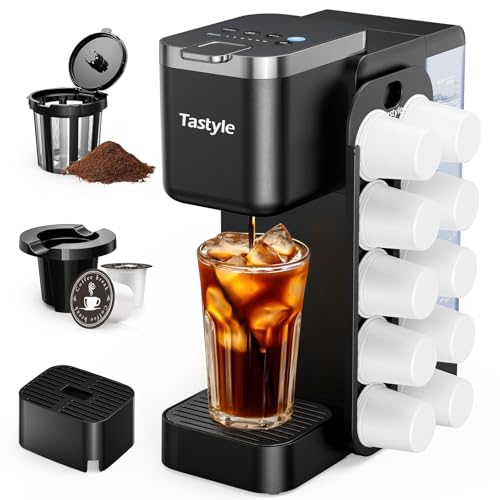
Tastyle
Hot and Iced Single-Serve Coffee at Home: Tastyle Coffee Maker with 40oz Tank and K-Pod Organizer
The Tastyle Hot & Iced Coffee Maker brews K-Cup pods or grounds in six sizes, with its magnetic 10-pod organizer saving valuable counter space. It suits small kitchens, offices, and households that want hot, bold, or over-ice coffee without managing a full-size brewer.
Pros and Cons
Pros
- The magnetic side organizer stores up to 10 pods without occupying separate counter space.
- Six serving sizes cover small cups through 24-ounce drinks.
- Water shortage alerts, dry-boil protection, and automatic shutoff add practical safeguards.
- Its slim design and removable components suit kitchens with limited counter and sink space.
Cons
- Coffee pods are not included, so buyers need to supply compatible pods or grounds.
- The 40-ounce reservoir may need frequent refilling when brewing multiple 16 or 24-ounce servings.
Keurig Iced Essentials Single Serve Coffee Maker, 3 Cup Sizes: 177, 237, and 296 ml

Keurig
Iced Essentials Single Serve Coffee Maker, 3 Cup Sizes: 177, 237, and 296 ml
$69.99 at AmazonEditors' Favorite
Color: Grey Size: small Dimensions: 11.2992125869 x 6.49999999337 x 12.204724397 inches Weight: 4.4 pounds Product Group: Kitchen Binding: Unknown Binding
Shop NowNinja CFP101 DualBrew Hot & Iced Coffee Maker, Black - (Renewed) Bundle with 2 Year Enhanced Protection Pack
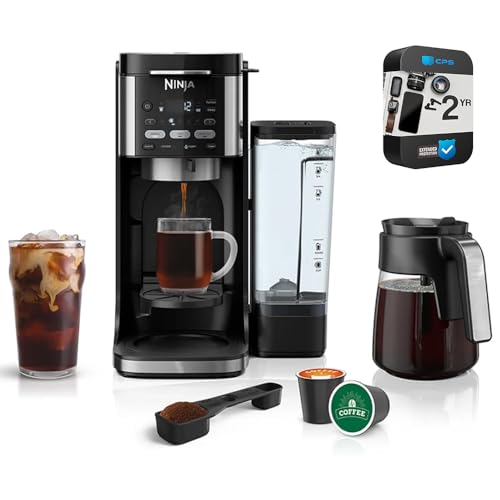
Ninja
CFP101 DualBrew Hot & Iced Coffee Maker, Black - (Renewed) Bundle with 2 Year Enhanced Protection Pack
$89.95 at AmazonGreat Value
Color: Black Size: 12-Cup Dimensions: 11.03 x 9.9 x 15.22 inches Weight: 8.8 Pounds Product Group: Kitchen Binding: Kitchen
Shop NowHoravie Small-Space Hot and Iced Coffee Maker for K-Pods or Grounds: Horavie Single Serve
Horavie
Small-Space Hot and Iced Coffee Maker for K-Pods or Grounds: Horavie Single Serve
The Horavie brews hot or iced coffee from K-Pods or grounds in about 2 minutes, with a strong-brew setting and cup-sized 6 to 12 ounce fills. Buy it if you need customizable coffee in a compact kitchen, dorm, office, RV, or travel setup.
$59.99 at AmazonColor: Black Size: 11.3 Inch Dimensions: 9.96 x 4.72 x 11.3 inches Weight: 3.84 pounds Product Group: Kitchen
Shop NowTastyle Hot and Iced Single-Serve Coffee at Home: Tastyle Coffee Maker with 40oz Tank and K-Pod Organizer
Tastyle
Hot and Iced Single-Serve Coffee at Home: Tastyle Coffee Maker with 40oz Tank and K-Pod Organizer
The Tastyle Hot & Iced Coffee Maker brews K-Cup pods or grounds in six sizes, with its magnetic 10-pod organizer saving valuable counter space. It suits small kitchens, offices, and households that want hot, bold, or over-ice coffee without managing a full-size brewer.
$64.99 at AmazonColor: Black Dimensions: 4.8 x 10.3 x 12 Inches Weight: 4 pounds Product Group: Kitchen Binding: Kitchen
Shop Now



Write Your Review
No reviews yet. Be the first to share your experience!