

HomeWhisk earns commission from qualifying purchases made through links on this page. We research picks from specifications and owner reviews; we do not test products ourselves.
TL;DR — The best skillet for ceramic cooktop is the option that balances reliable construction, realistic capacity, easy cleanup, and a price that matches how often you will use it. HomeWhisk prioritizes documented specifications, material choices, and repeated owner-review patterns rather than marketing claims. If you are still comparing nearby categories, start with best 12 inch nonstick skillet and best affordable cookware before narrowing your final pick.
The HomeWhisk editorial team researches kitchen equipment by comparing manufacturer specifications, material details, dimensions, warranty language, retailer listings, and aggregated owner reviews. For best skillet for ceramic cooktop, we looked for patterns that matter after the return window closes: repeated complaints, praised design details, compatibility limits, and maintenance habits that determine whether a product stays useful.
This is a commercial buying guide, so the goal is practical selection rather than a broad encyclopedia entry. Use this page alongside best affordable cookware set and best affordable non toxic cookware if your purchase overlaps adjacent tools or a larger kitchen setup.
Editor’s Picks
| Category | Pick Type | Why It Makes Sense |
|---|---|---|
| Best Overall | Balanced skillet | Strongest mix of construction, usability, cleanup, and owner satisfaction |
| Best Value | Practical skillet | Keeps the core performance features while avoiding unnecessary upgrades |
| Best for Ceramic Cooktop | Use-case focused option | Prioritizes the size, controls, material, or workflow that matters most for this search |
At a Glance: Comparison Table
| Pick Type | Material | Construction | Best For | Trade-Off |
|---|---|---|---|---|
| Best Overall | Balanced build | Everyday size | Most homes | Not the lowest price |
| Best Value | Core materials | Practical capacity | Budget buyers | Fewer premium details |
| Best Upgrade | Heavier construction | Frequent use | Serious cooks | Higher cost |
| Best Compact | Space-saving design | Smaller batches | Small kitchens | Less capacity |
| Best Specialty | Focused feature set | Niche use | Specific needs | Less universal |
How We Evaluated These Products
We evaluated skillet options by starting with the product job: what the item must do well for ceramic cooktop, what trade-offs buyers usually accept, and which features are often overstated. From there, we compared visible specifications such as materials, dimensions, capacity, heat or power ratings where relevant, included accessories, warranty terms, and care instructions.
Aggregated owner feedback was used to identify repeated patterns rather than isolated anecdotes. A single dramatic review can be misleading, but repeated comments about warping, hot spots, loose handles, coating wear, poor induction contact, staining, confusing care instructions, or difficult cleaning are useful signals. We gave more weight to recent reviews because product lines, coatings, accessories, and manufacturing details can change over time.
We also considered how the product fits into a full kitchen workflow. A Skillet can look excellent on a spec sheet and still be frustrating if it is too large to store, too slow to clean, incompatible with common accessories, or poorly matched to the buyer’s cooking habits. That is why this guide connects the main recommendation to related guides like best 12 inch nonstick skillet, best affordable cookware, and best affordable cookware set.
What Actually Matters:
Material and construction quality
Material and construction quality set the ceiling for how a skillet performs and survives. Look at the core material, thickness, and how parts are joined — riveted or welded handles, encapsulated bases, and solid seams outlast glued or thin-gauge builds. A heavier, well-bonded piece usually earns its price through years of stable, predictable use. For a related option, compare best 12 inch nonstick skillet before you commit.
Heat behavior and cooking control
Heat behavior and cooking control tell you how forgiving the piece is day to day. Even heating and quick recovery matter more than a flashy finish, because hot spots burn food and slow recovery drags out cooking. Check how the material responds to changes on the burner — responsive control is what lets you actually cook rather than react. For a related option, compare best affordable cookware before you commit.
Compatibility with your stove and oven
Compatibility with your stove and oven is a spec people skip and regret. Confirm induction support if you need it, the oven-safe temperature, and whether the handles and lids share that limit. A great skillet that cannot go under the broiler or sit on your cooktop is the wrong one, no matter how well it is made. For a related option, compare best affordable cookware set before you commit.
Cleaning, maintenance, and storage
Cleaning, maintenance, and storage decide how often the piece actually gets used. Weigh dishwasher tolerance against hand-washing, whether the surface traps residue, and how the piece stacks or hangs without damage. Something that is a struggle to clean or store tends to migrate to the back of the cabinet regardless of how well it cooks. For a related option, compare best affordable non toxic cookware before you commit.
Price, warranty, and long-term value
Price, warranty, and long-term value come down to cost per year of real use, not the tag. Weigh the warranty, the availability of replacement parts, and whether the upgrade over a cheaper model changes anything you do weekly. For ceramic cooktop, spend on the fundamentals that show up every time you cook and skip cosmetic extras that fade fast. For a related option, compare best affordable stainless cookware before you commit.
Frequently Asked Questions
What should I look for in the best skillet?
Start with fit for your routine: capacity, materials, cleaning, storage, and compatibility. Then compare owner-review patterns for repeated praise or complaints. For best skillet for ceramic cooktop, avoid buying only by star rating; the right skillet should match ceramic cooktop and the way you actually cook.
Is a more expensive skillet worth it?
It can be, but only when the upgrade improves something you will notice often: durability, control, cleaning, capacity, or comfort. If the higher price only adds accessories or cosmetic finish, a value pick may be smarter. Spend more when the category is used weekly or daily.
What size skillet is best for ceramic cooktop?
The best size is the one that handles your normal use without making storage and cleanup annoying. Product photos can hide scale, so check exterior dimensions as well as usable capacity. For small kitchens or occasional use, a slightly smaller skillet is often the better long-term choice.
How long should a good skillet last?
A good skillet should last long enough to justify its price when cared for according to the manufacturer instructions. Lifespan depends on materials, heat exposure, cleaning habits, moving parts, coatings, and storage. Repeated owner complaints about early failure are more important than one isolated review.
What mistakes should I avoid when buying skillet?
The biggest mistake is buying the most feature-heavy option without checking whether those features solve your actual problem. Also avoid ignoring dimensions, care requirements, replacement parts, and compatibility. If maintenance sounds unrealistic for your household, choose a simpler product.
How does best skillet for ceramic cooktop compare with nearby options?
Nearby options can overlap, so use intent to decide. If your need is broad, start with the main skillet category. If your need is specific, compare related guides such as best affordable stainless steel cookware and best 12 inch nonstick skillet to avoid buying a product that is good generally but wrong for your setup.
Our Top Pick
For most shoppers, the best skillet is the balanced option that gets the fundamentals right before adding extras. Prioritize the product with clear specifications, enough capacity for your normal routine, materials that match your maintenance habits, and repeated owner feedback showing reliable everyday use. The shortcode above contains the product set for this page; use the decision tree below to choose the right type within that set.
- Choose the Best Overall type if you want one safe skillet for regular use.
- Choose the Best Value type if price matters more than premium finish.
- Choose the Best for Ceramic Cooktop type if your use case is specific and frequent.
- Choose an upgrade only if better materials, controls, capacity, or durability will matter every week.
Deeper Dive: Our Top Picks
Our Top Picks
Redchef
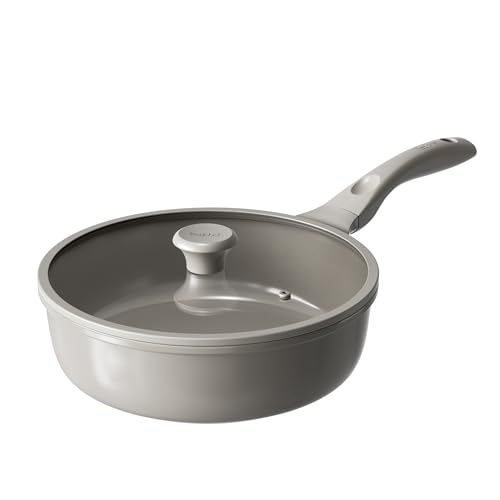
Deep Ceramic Frying Pan with Lid for Searing and Simmering: Redchef 10-Inch 3.7Qt Nonstick Saute Pan
This 10-inch, 3.7-quart ceramic saute pan handles everything from eggs and fish to braises and stir-fries, and its rivet-free nonstick interior releases food cleanly without pooling oil. Buy it if you want one deep pan that covers skillet and saucepan duty on any cooktop, including induction, without PFOA, PFOS, lead, or cadmium in the coating.
Pros and Cons
Pros
- Deep 3.7-quart capacity turns one pan into a skillet, saute pan, and shallow braiser.
- Coating is free of PFOA, PFOS, lead, and cadmium, which matters for anyone cooking daily for a family.
- Stay-cool ergonomic handle makes lifting and pouring a full pan manageable.
- Works on every common cooktop, induction included, with no separate diffuser.
Cons
- Ceramic nonstick coatings lose slickness faster than hard-anodized or PTFE surfaces, especially under high heat or metal utensils.
- The listing does not state whether the pan and glass lid are dishwasher or oven safe, so hand washing and stovetop use are the safe assumptions.

VocVoi
Tri-Ply Stainless Steel Frying Pan for Searing and Sauteing: VocVoi 12 Inch Non-Toxic Skillet, Induction Ready
This 12-inch tri-ply stainless steel skillet delivers fast, even heat across a wide cooking surface without any PFOA or PTFE coating that can chip or degrade. It suits cooks who want a searing and braising pan that will not react with acidic foods and can move from stovetop to oven to dishwasher.
Pros and Cons
Pros
- Twelve inches of cooking area handles four chicken breasts or a full batch of vegetables without crowding.
- Completely coating-free surface stands up to high-heat searing that would ruin ceramic or Teflon pans.
- Ergonomic handle and full stovetop compatibility make it a practical single-pan starter for a new kitchen.
- Multi-layer core fixes the hot-spot problem of single-ply stainless pans during deep frying and braising.
Cons
- Stainless steel is not nonstick, so eggs and fish need proper preheating and enough fat or they will grab the surface.
- Tri-ply pans of this diameter carry real weight, which makes one-handed tossing harder than with a thin aluminum skillet.

YASHE
Eggs and Omelettes Made Easy: YASHE 8-Inch Granite Nonstick Induction Frying Pan
The YASHE 8-inch frying pan cooks eggs, pancakes, and single portions evenly, with a granite nonstick surface that needs minimal oil. It suits solo cooks and small households seeking compact cookware that works on induction, gas, ceramic, electric, and halogen stovetops.
Pros and Cons
Pros
- The PFOA-free, PFOS-free, and PTFE-free granite coating supports low-oil cooking and easy food release.
- The lightweight cast aluminium body heats evenly without making the pan cumbersome to handle.
- The scratch-resistant interior is designed to withstand regular breakfast and single-portion cooking.
- The woodgrain-style handle includes a hanging hole for convenient storage.
Cons
- The 8-inch cooking surface is too small for family-sized portions or meals with several ingredients.
- No lid is listed, which limits covered cooking and splatter control.
Editors' Picks
Redchef Deep Ceramic Frying Pan with Lid for Searing and Simmering: Redchef 10-Inch 3.7Qt Nonstick Saute Pan
Redchef
Deep Ceramic Frying Pan with Lid for Searing and Simmering: Redchef 10-Inch 3.7Qt Nonstick Saute Pan
This 10-inch, 3.7-quart ceramic saute pan handles everything from eggs and fish to braises and stir-fries, and its rivet-free nonstick interior releases food cleanly without pooling oil. Buy it if you want one deep pan that covers skillet and saucepan duty on any cooktop, including induction, without PFOA, PFOS, lead, or cadmium in the coating.
$39.99 at AmazonEditors' Favorite
Color: Gray Size: 10inch Saute Pan With Lid Dimensions: 18.5 x 10 x 3.15 inches Product Group: Kitchen
Shop NowVocVoi Tri-Ply Stainless Steel Frying Pan for Searing and Sauteing: VocVoi 12 Inch Non-Toxic Skillet, Induction Ready
VocVoi
Tri-Ply Stainless Steel Frying Pan for Searing and Sauteing: VocVoi 12 Inch Non-Toxic Skillet, Induction Ready
This 12-inch tri-ply stainless steel skillet delivers fast, even heat across a wide cooking surface without any PFOA or PTFE coating that can chip or degrade. It suits cooks who want a searing and braising pan that will not react with acidic foods and can move from stovetop to oven to dishwasher.
$19.99 at AmazonGreat Value
Color: Stainless Steel Size: 12 inch Dimensions: 12 x 12 x 2 Inches Weight: 2 pounds Product Group: Kitchen
Shop NowYASHE Eggs and Omelettes Made Easy: YASHE 8-Inch Granite Nonstick Induction Frying Pan
YASHE
Eggs and Omelettes Made Easy: YASHE 8-Inch Granite Nonstick Induction Frying Pan
The YASHE 8-inch frying pan cooks eggs, pancakes, and single portions evenly, with a granite nonstick surface that needs minimal oil. It suits solo cooks and small households seeking compact cookware that works on induction, gas, ceramic, electric, and halogen stovetops.
$21.99 at AmazonColor: White Size: 8 Inch Dimensions: 6.299212592 x 7.87401574 x 1.968503935 Inches Weight: 1.212542441 pounds Product Group: Kitchen Binding: Kitchen
Shop Now

Write Your Review
No reviews yet. Be the first to share your experience!