

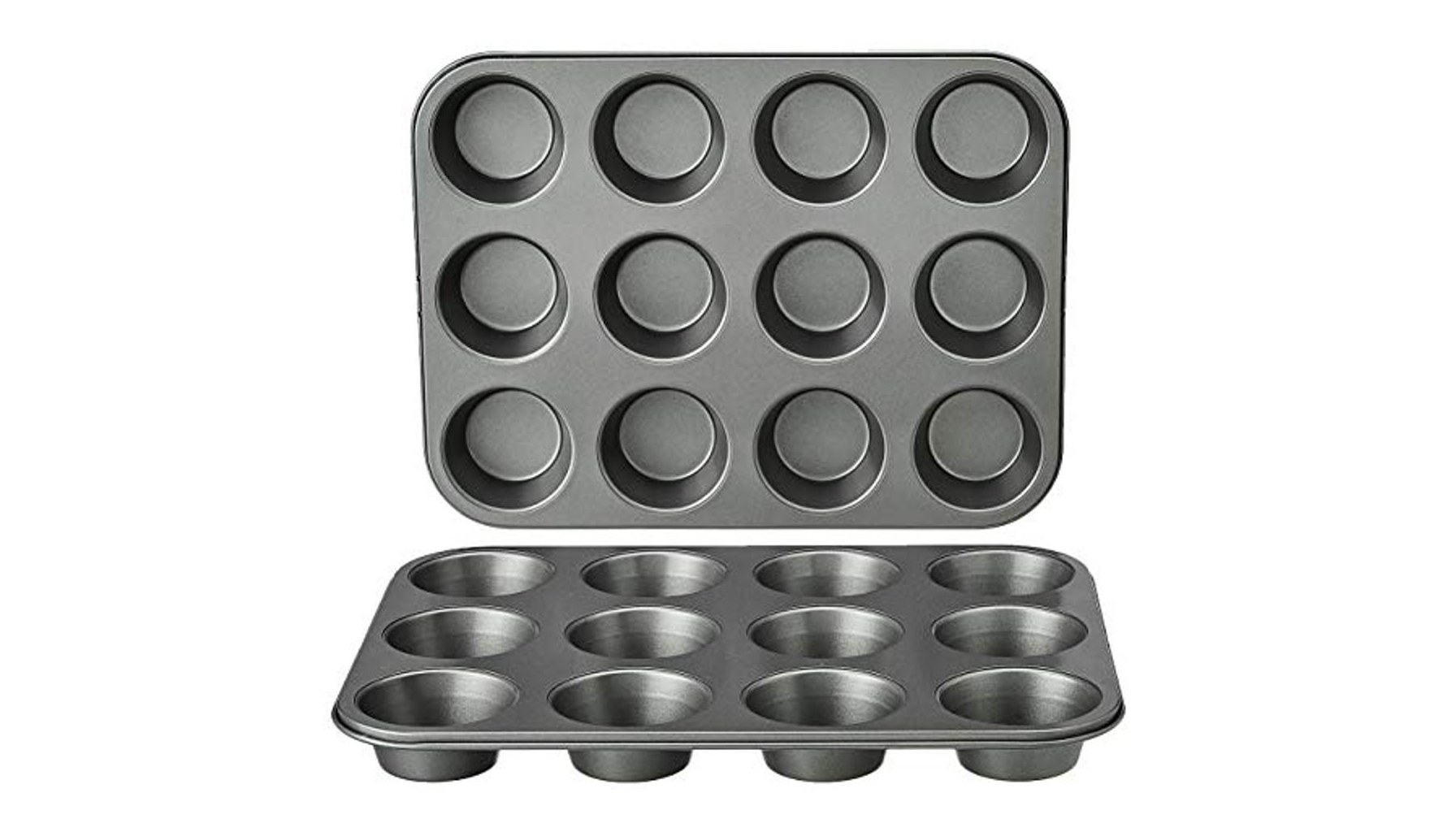
TL;DR — The best muffin pan for most home kitchens is the option that balances reliable construction, realistic capacity, easy cleanup, and a price that matches how often you will use it. HomeWhisk prioritizes documented specifications, material choices, and repeated owner-review patterns rather than marketing claims. If you are still comparing nearby categories, start with best baking sheet and best baking sheet for cookies before narrowing your final pick.
The HomeWhisk editorial team researches kitchen equipment by comparing manufacturer specifications, material details, dimensions, warranty language, retailer listings, and aggregated owner reviews. For best muffin pan, we looked for patterns that matter after the return window closes: repeated complaints, praised design details, compatibility limits, and maintenance habits that determine whether a product stays useful.
This is a commercial buying guide, so the goal is practical selection rather than a broad encyclopedia entry. Use this page alongside best nordic ware baking sheet and best silicone muffin pan if your purchase overlaps adjacent tools or a larger kitchen setup.

Pros & Cons
Pros
- Patented Americoat releases baked goods cleanly without heavy greasing or parchment liners.
- Aluminized steel heats uniformly so all 12 muffins finish baking at the same time.
- Free of PTFE, PFOA, and BPA, meeting safety standards for regular home baking.
Cons
- Hand washing required as dishwasher detergent can degrade the nonstick coating over time.
- Higher price point than basic aluminum pans, though coating durability offsets replacement costs.
Details
This 12-well muffin pan solves uneven browning and stuck batter that plague cheap aluminum pans. Aluminized steel distributes heat uniformly so muffins on the edges bake as evenly as those in the center.
The Americoat silicone coating releases baked goods without greasing. You skip the spray step and muffins slide out intact, leaving minimal residue. Hot water and a sponge handle cleanup in under a minute.
Each well measures 2.75 x 2.13 x 1.38 inches and holds standard paper liners. The aluminized steel construction resists warping at 400°F and the coating stays smooth through repeated baking cycles when hand washed.
The nonstick surface wears faster than uncoated steel if you use abrasive scrubbers or run it through the dishwasher. Hand wash only to preserve performance beyond the first year.
Best for home bakers who make muffins or cupcakes at least twice a month and want consistent results without the cleanup hassle of traditional pans.
Cooking Tips
Preheat the oven fully before inserting the pan. Aluminized steel responds quickly to temperature changes, so starting in a cold oven creates uneven bottoms. Fill empty wells halfway with water to prevent hotspots if baking fewer than 12.
Reduce oven temperature by 25°F from recipes written for dark pans. Aluminized steel conducts heat efficiently and can overbrown exteriors before centers finish. Check doneness two minutes earlier than the recipe states.
Cool muffins in the pan for five minutes before removing. The residual heat finishes the bake while the coating releases its grip. Twist each muffin gently rather than prying with a knife to avoid scratching the silicone surface.

Save $6.43
Pros & Cons
Pros
- The 24-well layout supports efficient batches of bite-size cupcakes and muffins.
- Americoat provides quick release while avoiding PTFE, PFOA, and BPA.
- Aluminized steel construction offers a practical build for repeated baking.
- Made in the USA by a bakeware company with more than 50 years of manufacturing experience.
Cons
- The 0.88-inch-deep wells are designed for mini portions rather than standard-size cupcakes or muffins.
- Care instructions call for gentle hand washing instead of abrasive cleaning.
Details
This 24-well pan solves the need to bake uniform mini cupcakes or muffins in one batch.
Its Americoat silicone coating helps baked goods release quickly and leaves less residue for simpler cleanup.
Aluminized steel provides the pan body, while each well measures 1.88 x 1.25 x 0.88 inches.
The shallow wells only suit mini portions, and cleaning should use hot water, mild soap, and a gentle scrubber.
Best for home bakers who regularly make bite-size cupcakes or muffins.
Cooking Tips
Use the 24 wells for mini cupcakes, muffins, and other bite-size baked goods that need consistent portions.
Let baked goods set briefly before removing them to take advantage of the quick-release coating without damaging delicate edges.
Clean with hot water, mild soap, and a gentle scrub brush or sponge to protect the Americoat surface.

Pros & Cons
Pros
- The nonstick silicone coating supports easy release and quicker cleanup.
- Aluminized steel provides a balance of durability and heat conductivity.
- The six-cup size is practical for toaster ovens and small baking batches.
- Extended edges make the pan easier to transport safely.
Cons
- It makes only six muffins or cupcakes, so it is limited for larger baking batches.
- Toaster oven compatibility depends on the appliance dimensions, which buyers must check before purchasing.
Details
This six-cup pan solves the problem of baking small muffin or cupcake batches in a toaster oven without using a larger oven.
Its proprietary silicone nonstick coating helps muffins release more easily and makes cleanup faster after baking.
Aluminized steel combines steel strength with aluminum heat conductivity. The six-cup format is compact, while extended edges improve handling. Product weight is not provided.
It may not suit larger households or batch baking, and buyers should verify that its dimensions fit their toaster oven.
Verdict: best for toaster-oven users and small-batch bakers who value easy release and durable construction.
Cooking Tips
Confirm the pan fits your toaster oven before baking, including clearance around the edges and heating elements.
Use the six wells for a small batch of muffins or cupcakes, leaving enough space for the batter to rise.
Take advantage of the nonstick coating for easier release, then clean promptly to keep the pan ready for the next batch.

Pros & Cons
Pros
- Non-stick surface releases muffins and cupcakes without torn edges or stuck bottoms.
- Warp-resistant design keeps the pan flat on oven racks for even baking.
- Scratch-resistant coating withstands metal utensils and stacking without damage.
Cons
- Hand washing in soapy water extends non-stick lifespan better than repeated dishwasher cycles.
- No customer reviews available yet to confirm long-term durability claims.
Details
This 12-cup muffin pan solves uneven browning and stuck baked goods with even heat distribution and a PFAS-free non-stick coating.
The coating releases muffins and cupcakes cleanly without oil or liners. The dent-resistant steel construction keeps cup walls straight through repeated use.
Measures 10.5 x 15 x 2 inches with extended handles for secure grip. Oven-safe to 450°F and dishwasher-safe, though hand washing preserves the coating longer.
Standard cup size may run slightly smaller than jumbo muffin pans, limiting oversized bakery-style portions.
Best for home bakers who want reliable non-stick performance and easy cleanup without specialty coatings.
Cooking Tips
Preheat the oven fully before inserting the pan so all cups begin baking at the same temperature. Fill empty cups halfway with water to prevent uneven heating if baking fewer than 12 items.
Allow baked goods to cool in the pan for 3-5 minutes before removing so they firm up and release cleanly. Use silicone or wooden tools to pop out muffins without scratching the non-stick surface.
Avoid cooking sprays with lecithin, which can build up and reduce non-stick performance over time. A light brush of melted butter works better for delicate batters.

Pros & Cons
Pros
- Warp-resistant construction supports dependable use across repeated baking sessions.
- Even heating helps produce more consistent browning across the pan.
- The 12-cup format handles standard batch baking efficiently.
- The 450-degree F oven rating accommodates a broad range of baking recipes.
Cons
- The available product data does not list the pan's weight or dimensions, which may matter for oven fit and storage.
- Its 12-cup format may be limiting for bakers who regularly need larger batches.
Details
This gray Farberware bakeware pan provides 12 cups for baking muffins and cupcakes, while also handling mini quiches and casseroles.
Heavy-duty construction resists warping, and even heating helps reduce hot spots for more uniform browning.
The oven-safe pan reaches 450 degrees F and uses an interior nonstick coating made without intentionally added PFAS, PFOA, lead, or cadmium.
The available specifications do not include weight or dimensions, so confirm storage and oven clearance before buying.
Best for home bakers who need a versatile 12-cup pan for regular muffin, cupcake, and savory baking.
Cooking Tips
Use the 12 cups for one standard batch of muffins or cupcakes, and rely on the even-heating construction to help reduce uneven browning.
Keep the pan within its 450-degree F oven rating when preparing muffins, cupcakes, mini quiches, or casseroles.
Allow the pan to cool before handling and confirm its dimensions if oven space or cabinet storage is limited.
Editor’s Picks
| Category | Pick Type | Why It Makes Sense |
|---|---|---|
| Best Overall | Balanced muffin pan | Strongest mix of construction, usability, cleanup, and owner satisfaction |
| Best Value | Practical muffin pan | Keeps the core performance features while avoiding unnecessary upgrades |
| Best for Most Home Kitchens | Use-case focused option | Prioritizes the size, controls, material, or workflow that matters most for this search |
At a Glance: Comparison Table
| Pick Type | Material | Rim / Surface | Best For | Trade-Off |
|---|---|---|---|---|
| Best Overall | Balanced build | Everyday size | Most homes | Not the lowest price |
| Best Value | Core materials | Practical capacity | Budget buyers | Fewer premium details |
| Best Upgrade | Heavier construction | Frequent use | Serious cooks | Higher cost |
| Best Compact | Space-saving design | Smaller batches | Small kitchens | Less capacity |
| Best Specialty | Focused feature set | Niche use | Specific needs | Less universal |
How We Evaluated These Products
We evaluated muffin pan options by starting with the product job: what the item must do well for most home kitchens, what trade-offs buyers usually accept, and which features are often overstated. From there, we compared visible specifications such as materials, dimensions, capacity, heat or power ratings where relevant, included accessories, warranty terms, and care instructions.
Aggregated owner feedback was used to identify repeated patterns rather than isolated anecdotes. A single dramatic review can be misleading, but repeated comments about warping, uneven browning, coating wear, staining, sharp rims, poor oven fit, or difficult cleanup are useful signals. We gave more weight to recent reviews because product lines, coatings, accessories, and manufacturing details can change over time.
We also considered how the product fits into a full kitchen workflow. A Muffin Pan can look excellent on a spec sheet and still be frustrating if it is too large to store, too slow to clean, incompatible with common accessories, or poorly matched to the buyer’s cooking habits. That is why this guide connects the main recommendation to related guides like best baking sheet, best baking sheet for cookies, and best nordic ware baking sheet.
What Actually Matters:
Material, gauge, and heat transfer
Material and gauge drive how evenly a muffin pan bakes and how long it lasts. Heavier aluminum and steel resist the hot spots and warping that plague thin, flimsy sheets, but they take longer to come up to temperature. Match the gauge to your oven and patience: thick pans reward slow, even bakes, while lighter ones heat fast at the cost of uniformity. For a related option, compare best baking sheet before you commit.
Rim design, flatness, and warping resistance
Rim design and flatness decide whether the pan stays true through hundreds of hot-to-cold cycles. A rolled or encapsulated rim adds rigidity that fights the twist and buckle you hear as a bang in a hot oven. Set the pan on a flat surface and look for a dead-flat base — a rocking or bowed pan browns unevenly and never quite recovers. For a related option, compare best baking sheet for cookies before you commit.
Surface finish and release
Surface finish and release govern the daily annoyance of sticking and scrubbing. Weigh bare aluminum and steel, which brown beautifully but need greasing or liners, against nonstick and ceramic coatings that release easily but wear and dislike metal tools and high heat. The right finish depends on what you bake most and how gentle you are willing to be with it. For a related option, compare best nordic ware baking sheet before you commit.
Size, storage, and oven fit
Size, storage, and oven fit are easy to overlook until the pan does not fit. Measure your oven’s usable width with room for air to circulate, and think about how the pan nests or hangs in your cabinets. For most home kitchens, a slightly smaller pan that fits comfortably and stores without a fight beats an oversized one that bakes poorly against the walls. For a related option, compare best silicone muffin pan before you commit.
Care routine and long-term value
Care routine and long-term value depend on how the muffin pan ages under real use. Coated pans simplify cleanup but have a finite lifespan; bare metal is nearly immortal but wants drying and the occasional scrub to stay rust-free and non-sticky. Choose the maintenance story you will actually follow, because the pan you care for correctly is the one that lasts. For a related option, compare best cake pan before you commit.
Frequently Asked Questions
What should I look for in the best muffin pan?
Start with fit for your routine: capacity, materials, cleaning, storage, and compatibility. Then compare owner-review patterns for repeated praise or complaints. For best muffin pan, avoid buying only by star rating; the right muffin pan should match most home kitchens and the way you actually cook.
Is a more expensive muffin pan worth it?
It can be, but only when the upgrade improves something you will notice often: durability, control, cleaning, capacity, or comfort. If the higher price only adds accessories or cosmetic finish, a value pick may be smarter. Spend more when the category is used weekly or daily.
What size muffin pan is best for most home kitchens?
The best size is the one that handles your normal use without making storage and cleanup annoying. Product photos can hide scale, so check exterior dimensions as well as usable capacity. For small kitchens or occasional use, a slightly smaller muffin pan is often the better long-term choice.
How long should a good muffin pan last?
A good muffin pan should last long enough to justify its price when cared for according to the manufacturer instructions. Lifespan depends on materials, heat exposure, cleaning habits, moving parts, coatings, and storage. Repeated owner complaints about early failure are more important than one isolated review.
What mistakes should I avoid when buying muffin pan?
The biggest mistake is buying the most feature-heavy option without checking whether those features solve your actual problem. Also avoid ignoring dimensions, care requirements, replacement parts, and compatibility. If maintenance sounds unrealistic for your household, choose a simpler product.
How does best muffin pan compare with nearby options?
Nearby options can overlap, so use intent to decide. If your need is broad, start with the main muffin pan category. If your need is specific, compare related guides such as best cake pan and best baking sheet to avoid buying a product that is good generally but wrong for your setup.
Our Top Pick
For most shoppers, the best muffin pan is the balanced option that gets the fundamentals right before adding extras. Prioritize the product with clear specifications, enough capacity for your normal routine, materials that match your maintenance habits, and repeated owner feedback showing reliable everyday use. The shortcode above contains the product set for this page; use the decision tree below to choose the right type within that set.
- Choose the Best Overall type if you want one safe muffin pan for regular use.
- Choose the Best Value type if price matters more than premium finish.
- Choose the Best for Most Home Kitchens type if your use case is specific and frequent.
- Choose an upgrade only if better materials, controls, capacity, or durability will matter every week.



Write Your Review
No reviews yet. Be the first to share your experience!