

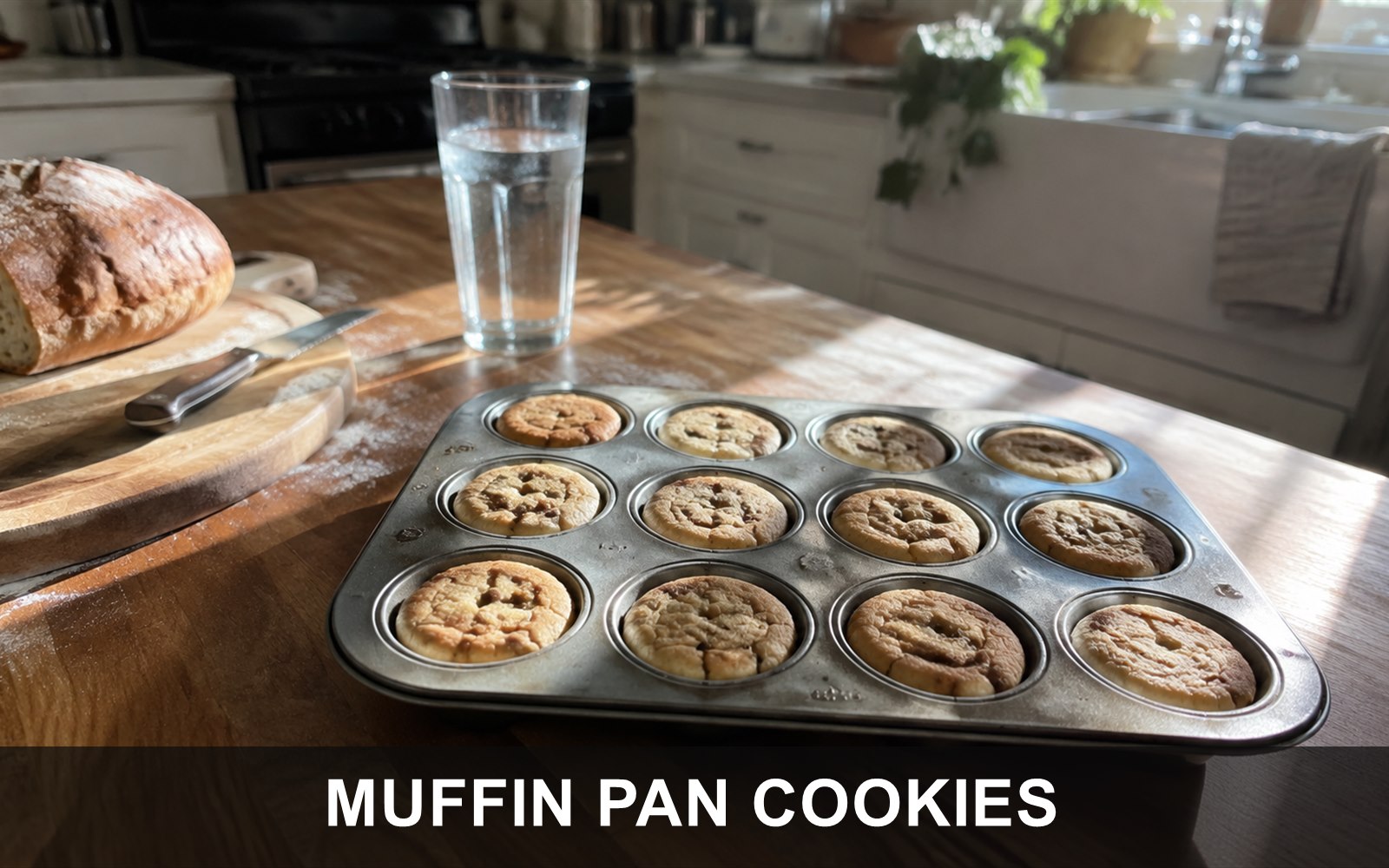
Most people buy a muffin pan expecting it to turn out regular chocolate chip or sugar cookies, then wonder why the results look wrong. The cookies either spread into the neighboring wells, bake unevenly with pale centers and burnt edges, or refuse to release without tearing. A muffin pan is not a drop-in replacement for a cookie sheet, and treating it like one guarantees frustration. The wells, raised walls, and close spacing that make muffins perfect create problems for cookies that need room to spread and even heat from all sides.
This matters because cookies and muffins bake by completely different mechanisms. Cookies rely on radiant heat hitting a flat surface, allowing the dough to spread thin and crisp at the edges while staying soft in the middle. Muffins bake in enclosed cups that trap steam and promote vertical rise. When you drop cookie dough into muffin wells, you trap it in an environment designed for batter, not dough, and the result is a dense, undercooked center surrounded by overbaked walls.
The confusion comes from marketing. Brands sell “muffin top pans” and “cookie pans” that look like muffin tins, and shoppers assume any pan with shallow wells works for any cookie. It does not. A muffin pan works for cookies only when the cookie is designed for a muffin pan: thick, cake-like dough that does not spread, or shaped cookies that need a form to hold their structure. If you are making drop cookies, snickerdoodles, or anything that spreads, a muffin pan will ruin them.
Why Regular Cookies Fail in Muffin Pans
Cookie dough spreads as the butter melts and the leavening activates. On a flat baking sheet, the dough moves outward in a circle, thinning as it goes, and the exposed surface crisps under direct oven heat. In a muffin well, the dough hits the walls and stops spreading horizontally. Instead, it piles up, creating a thick puck that bakes unevenly. The bottom and sides, pressed against metal, overbake and harden. The top and center, insulated by the surrounding dough, stay pale and raw.
Heat circulation is the bigger problem. Cookies need air moving across the top surface to evaporate moisture and create texture. Muffin wells block that airflow. The raised walls shield the dough from radiant heat, so the top never browns properly. Meanwhile, the metal walls conduct heat directly into the sides, creating a hard crust that tastes burnt while the middle remains underdone. You cannot fix this by adjusting temperature or time. Lower heat extends baking without improving evenness, and higher heat just burns the contact points faster.
Release is the third failure point. Cookies baked on parchment or a silicone mat slide off cleanly because they sit flat and cool evenly. Cookies baked in muffin wells stick to the curved sides and bottom, and trying to pry them out breaks them. Greasing helps, but only if the dough is stiff enough not to absorb the fat. Thin, buttery cookie dough soaks up the grease and still sticks, leaving you scraping baked-on residue with a spatula.
The problem is not the pan or the recipe. It is the mismatch. A muffin pan solves problems that cookies do not have, and ignores problems that cookies do. Using it for standard drop cookies is like trying to fry an egg in a waffle iron. The tool works, just not for that job.
When Muffin Pans Actually Work for Cookies
Muffin pans work for cookies when the cookie recipe is written for a muffin pan. Muffin-top cookies, also called whoopie pies or moon pies, are designed to bake in shallow wells. The dough is thick and cake-like, closer to muffin batter than cookie dough, and it rises rather than spreads. The wells provide structure and prevent the edges from running into each other. These cookies come out soft, uniform, and easy to sandwich or frost.
Shaped cookies also benefit from muffin pans. If you are making stuffed cookies or cookies with mix-ins that would fall out, the wells keep everything contained. Press the dough into the well, add the filling, and the pan holds the shape until the dough sets. Shortbread and bar cookies work if you treat the wells like individual molds, pressing firmly into greased wells and cooling before removing.
The common thread is dough that does not spread. If the recipe calls for chilling, creaming until fluffy, or a high ratio of liquid to flour, it will spread, and a muffin pan will trap and ruin it. If the recipe is thick, stiff, or described as “drop by spoonfuls” without spreading, a muffin pan might work, but a flat sheet still works better unless you specifically want the contained shape.
What to Look for in a Muffin Pan for Cookies
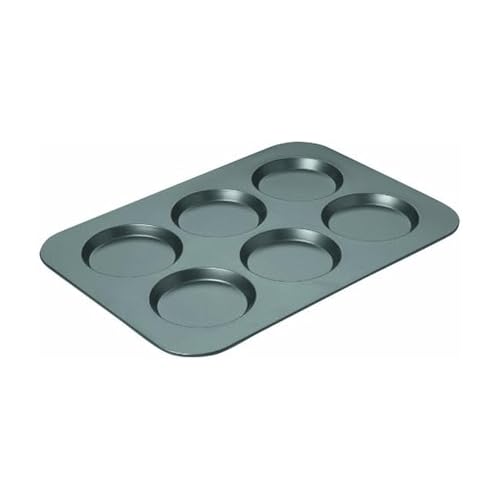
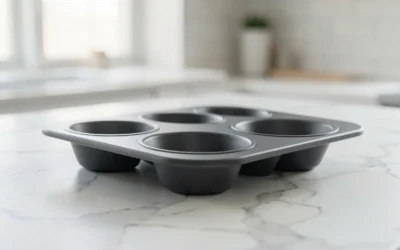
If you are committed to using a muffin pan for cookies, buy a muffin-top pan, not a standard muffin tin. Muffin-top pans have wide, shallow wells with low walls, allowing more surface area to brown and more airflow across the top. The dough still bakes in a contained space, but the shallower wells reduce the risk of undercooked centers and make removal easier. These pans are sold as “whoopie pie pans” or “Yorkshire pudding pans” and cost about the same as regular muffin tins.
Material matters. Heavy-gauge aluminum or aluminized steel distributes heat evenly and resists warping, which prevents hot spots. Thin pans buckle and create uneven baking. Nonstick coatings help with release, but cheap nonstick wears off quickly.
Well size and spacing determine how easily you can remove cookies. Standard muffin tins have deep, narrow wells that trap dough. Look for pans with wells at least 3 inches wide and no more than 1 inch deep. Wider wells give dough room to spread slightly, and shallow wells make removal easier.
What to Do Instead
For regular cookies, use a flat baking sheet. It is faster, easier to clean, and produces better results. Line the sheet with parchment paper or a silicone mat, scoop the dough with consistent spacing, and bake until the edges brown. The cookies spread naturally, bake evenly, and slide off the pan without sticking. You can bake more cookies per batch, and the cleanup is simpler because there are no wells to scrub.
If you already own a muffin pan and want to use it, bake muffins, cupcakes, or recipes specifically designed for muffin tins. Trying to force cookies into a muffin pan because you own one is backward. The pan does not make the recipe work; the recipe has to match the pan. If you want individual cookies with a uniform shape, use a cookie scoop and a flat sheet. The results are better, and the process is faster.
If you are set on baking cookies in wells, buy a muffin-top pan and use recipes written for it. Do not try to adapt drop-cookie recipes. Search for “muffin-top cookies,” “whoopie pies,” or “stuffed cookies in muffin pans,” follow the recipe exactly, and expect a different texture than flat cookies. These recipes account for the enclosed baking environment and produce cookies that are soft, thick, and cake-like rather than crisp and thin.
Frequently Asked Questions
Can you bake chocolate chip cookies in a muffin pan?
You can, but they will not bake like chocolate chip cookies. The dough will spread into the wells, creating thick, uneven pucks with burnt edges and raw centers. Chocolate chip cookies need a flat surface to spread thin and bake evenly. If you want individual portions, use a cookie scoop on a flat baking sheet instead.
What is the difference between a muffin pan and a muffin-top pan?
A muffin pan has deep, narrow wells designed for cupcakes and muffins that rise vertically. A muffin-top pan has wide, shallow wells designed for cookies, whoopie pies, and baked goods that need a flat top and even browning. Muffin-top pans work better for cookies because the shallow wells allow more airflow and reduce the risk of undercooked centers.
Why do my cookies stick to the muffin pan?
Cookies stick because the dough spreads into the curved sides and bottom of the wells, creating contact points that grab the metal as the cookie cools and contracts. Greasing the wells helps, but only if the dough is thick enough not to absorb the fat. Thin, buttery dough soaks up grease and still sticks. Use a muffin-top pan with shallow wells and a good nonstick coating, or line the wells with parchment paper cut to fit.
Yomvzake Muffin Top Pan 2 Pack Baking Pans Whoopie Pie Pan, Nonstick 3 Inch Yorkshire Pudding Pan for Pansuffin, Moon Pie, Cookies, Small Hamburger Bun

Yomvzake
Muffin Top Pan 2 Pack Baking Pans Whoopie Pie Pan, Nonstick 3 Inch Yorkshire Pudding Pan for Pansuffin, Moon Pie, Cookies, Small Hamburger Bun
Check price on AmazonChicago Metallic Professional Non-Stick Muffin Top Pan, 15.75-Inch-by-11-Inch





Write Your Review
No reviews yet. Be the first to share your experience!