


TL;DR — The best mixer for making dough is the option that balances reliable construction, realistic capacity, easy cleanup, and a price that matches how often you will use it. HomeWhisk prioritizes documented specifications, material choices, and repeated owner-review patterns rather than marketing claims. If you are still comparing nearby categories, start with best air fryer and best air fryer budget before narrowing your final pick.
The HomeWhisk editorial team researches kitchen equipment by comparing manufacturer specifications, material details, dimensions, warranty language, retailer listings, and aggregated owner reviews. For best mixer for making dough, we looked for patterns that matter after the return window closes: repeated complaints, praised design details, compatibility limits, and maintenance habits that determine whether a product stays useful.
This is a commercial buying guide, so the goal is practical selection rather than a broad encyclopedia entry. Use this page alongside best air fryer for beginners and best air fryer for family if your purchase overlaps adjacent tools or a larger kitchen setup.
Save $30.02
Pros & Cons
Pros
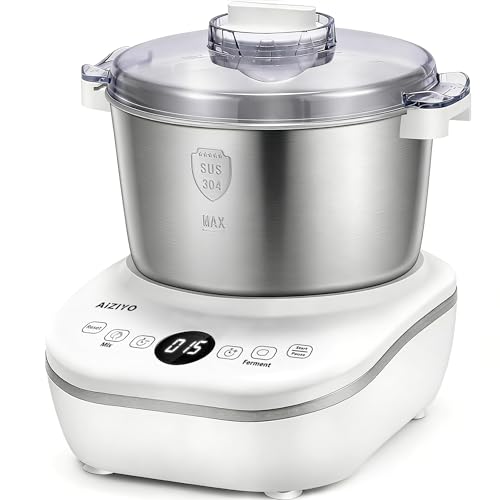
- The 304 stainless steel bowl offers a food-grade, durable mixing surface for frequent bread making.
- Three operating modes provide flexibility for mixing only, proofing only, or completing both steps together.
- The S-shaped removable dough blade and programmed pauses are designed to develop gluten without continuous overmixing.
- Its face-up touch panel keeps controls visible and accessible while ingredients are being added.
Cons
- The supplied product data does not list whisk or beater attachments, so this dough-focused machine may not replace a general-purpose stand mixer.
- Exact dimensions and appliance weight are not provided, making storage and counter-space planning less certain.
Details
The AIZIYO DoughChief is a dedicated dough mixer and proofing appliance that reduces manual kneading and transfers between separate mixing bowls and proofing containers.
Its mix-pause-mix cycle imitates hand kneading, while the 77–100°F ferment mode maintains controlled warmth for a more even rise.
The food-grade 304 stainless steel bowl holds 7.4 quarts for family-size batches. The appliance is described as compact, but exact dimensions and weight are not supplied.
It requires yeast or fermentation powder for proofing, and no whisk or general baking attachments are listed.
Best for home bread and pizza bakers who want automated kneading and temperature-controlled proofing in one machine.
How to Use
Fit the S-shaped dough blade, add recipe ingredients to the stainless steel bowl, secure the lid, and select Mix for kneading without proofing.
Select Ferment after mixing, or choose Mix & Ferment to complete both stages automatically. Use yeast or fermentation powder and select a temperature within the 77–100°F range.
Add small amounts of flour or water through the removable lid when adjustment is needed. After use, detach the blade and bowl for dishwasher-safe cleaning.
Pros & Cons
Pros
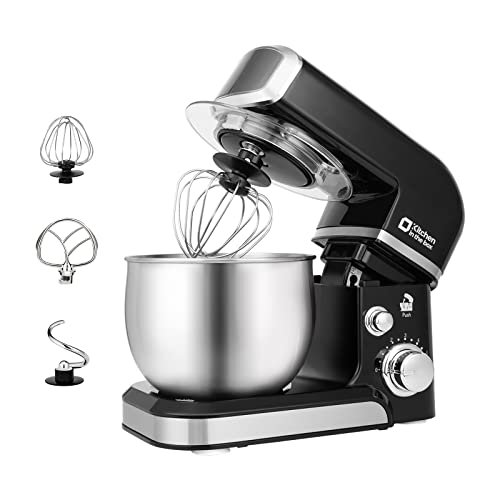
- The included whisk, dough hook, and flat beater cover common baking tasks without separate tool purchases.
- Six speeds accommodate both gentle stirring and higher-speed whipping.
- The stainless steel bowl and upgraded attachments are designed for regular kitchen use.
- A gasket around the attachment joint helps keep food residue out of a difficult-to-clean area.
Cons
- The 3.2-quart bowl is intended for small batches and may be restrictive for large families or bulk baking.
- Its compact format is better matched to everyday recipes than high-volume mixing.
Details
This compact stand mixer automates kneading, beating, stirring, and whipping while taking up less space than a full-size machine.
Six speeds let you match the power to bread dough, thick batter, meringue, cake cream, or delicate mixtures.
It includes a 3.2-quart stainless steel bowl, aluminum dough hook, aluminum flat beater, stainless steel whisk, splash guard, and four suction feet.
The bowl capacity targets small recipes, so frequent large-batch bakers may need a larger mixer.
Best for beginner bakers, couples, apartment kitchens, and one- or two-person households making modest batches.
How to Use
Raise the tilt head, secure the bowl and chosen attachment, add ingredients, then lower the head and position the transparent splash guard.
Begin at a lower speed to reduce splashing, then increase gradually for whipping or thorough mixing; choose the dough hook, flat beater, or whisk according to the recipe.
Turn the mixer off before raising the head or changing attachments, then remove the bowl and accessories for cleaning after use.
Save $30.01
Pros & Cons
Pros
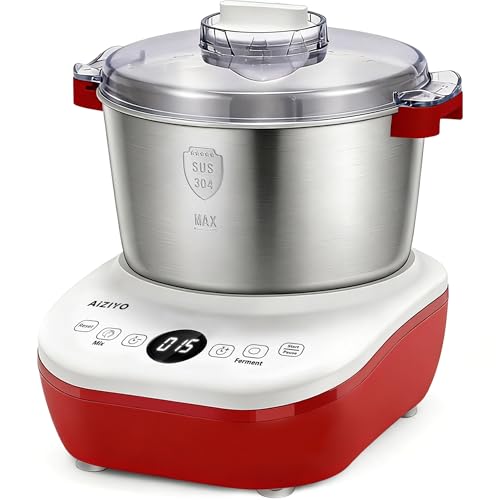
- Kneading and fermentation functions combine two major bread-making stages in one appliance.
- The large 7.4-quart capacity supports batch baking for families or meal preparation.
- Temperature-controlled proofing provides a more stable environment than leaving dough on the counter.
- Removable dough-contact components reduce cleanup effort after sticky or high-hydration recipes.
Cons
- The ferment function still requires yeast or fermentation powder and does not replace a complete bread-baking cycle.
- The listed functions focus on dough, with no whisking, whipping, or general stand-mixer attachments specified.
Details
The AIZIYO DoughChief is a dedicated kneading and proofing appliance that reduces manual work when preparing bread, pizza, pasta, mochi, or sourdough dough.
Its 15-minute kneading cycle uses a mix-pause-mix pattern, while the 77 to 100°F ferment mode supports controlled rising in the same machine.
The 7.4-quart bowl is made from 304 stainless steel, and the removable lid and detachable S-shaped blade improve ingredient access and cleanup; product weight is not specified.
The ferment mode requires yeast or fermentation powder, and the machine is not described as baking finished loaves.
Best for home bakers and families who regularly make large batches of kneaded and proofed dough.
How to Use
Add recipe ingredients to the stainless steel bowl, install the S-shaped blade and lid, then select the mixing program for the 15-minute kneading cycle.
Use the removable lid to add ingredients during mixing without stopping the machine, following recipe ratios to avoid an overly wet or dry dough.
After kneading, add the required yeast or fermentation powder and select ferment mode, using the 77 to 100°F range appropriate for the recipe.

Pros & Cons
Pros
- The belt-driven transmission maintains consistent speed and torque even when kneading stiff whole grain dough, which burns out direct-drive motors in cheaper mixers.
- Its compact footprint and built-in cord storage fit tight countertops, yet the motor handles the same dough capacity as bulkier tilt-head mixers twice its weight.
- The triple-whip action aerates egg whites and cream faster than single beaters, and the same whips mash 10 pounds of potatoes or shred cooked chicken without switching tools.
Cons
- The plastic bowl is durable but scratches more easily than stainless steel and may stain from turmeric or beet-based doughs over time.
- The learning curve is steeper than tilt-head mixers because ingredients go in from the top while the motor runs, requiring you to stop and lift the arm for thick additions.
Details
The Bosch Universal Plus is a bottom-drive stand mixer engineered for bakers who knead heavy dough daily and need one machine that scales from single servings to bulk batches.
Its 500-watt belt-driven motor sits below a 6.5-quart bowl, delivering torque directly into dough without the top-heavy wobble of planetary mixers. The dual wire whips create triple whipping action by spinning independently while orbiting the bowl, cutting whip time and building stable peaks even with small volumes like one egg white.
The mixer weighs 12.75 pounds with a plastic BPA-free bowl, removable drive shaft, and four suction feet that anchor it during high-torque kneading. The bowl, whips, dough hook, and splash ring are dishwasher safe.
The motor handles 14 one-pound loaves of bread dough but adds ingredients from the top while running, which takes practice if you are used to tilt-head access.
Best for serious bread bakers and home cooks who batch-prep dough, whip large meringues, or want a single mixer that replaces multiple appliances through add-on attachments.
How to Use
Insert the drive shaft into the bowl center, then twist the bowl clockwise onto the base until it locks. Attach the dough hook or wire whips to the drive shaft, add ingredients, and turn the speed dial to start mixing. For thick dough, begin on low speed to incorporate flour before increasing torque.
Use the included dough hook extender for batches under 6 cups of flour so the hook reaches smaller volumes. The extender clips onto the standard hook and drops it lower into the bowl. Remove it for full-capacity batches to prevent overcrowding.
Add liquids or soft ingredients while the mixer runs by pouring through the center opening. Stop the motor to add thick items like butter chunks or nuts. After mixing, twist the bowl counterclockwise to release, then lift the drive shaft and attachments straight up for cleaning.
Pros & Cons
Pros
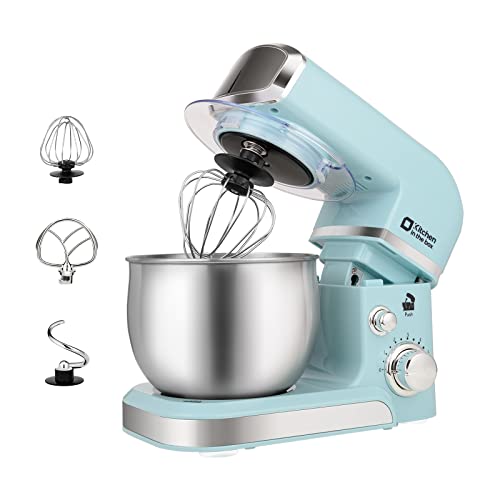
- Its 12.9-by-7-by-10.2-inch body and under-7-pound weight make storage and repositioning easier in compact kitchens.
- Six speeds accommodate recipes ranging from gently stirred mixtures to whipped cream and bread dough.
- The stainless steel bowl and upgraded attachments provide a useful setup for everyday small-batch baking.
- A splash guard and joint gasket help keep ingredients contained for more convenient cleanup.
Cons
- The 3.2-quart bowl is intended for smaller recipes and may be restrictive for families or large baking batches.
- The dough hook and flat beater are aluminum rather than stainless steel.
Details
This compact electric stand mixer automates whisking, beating, stirring, and dough mixing for small recipes, reducing the effort required for routine baking prep.
Six speeds let users adjust power for bread dough, thick batter, meringue, whipped cream, and delicate mixtures, while four suction feet help stabilize the base.
It includes a 3.2-quart stainless steel bowl, aluminum dough hook, aluminum flat beater, and stainless steel whisk in a body measuring 12.9 by 7 by 10.2 inches and weighing under 7 pounds.
The small bowl is better suited to one-to-two-person portions than large batches, so frequent family-size bakers may need more capacity.
Best for new bakers, couples, apartment residents, and anyone who values compact storage over large-batch output.
How to Use
Fit the bowl and selected attachment with the tilt head raised, add ingredients, lower the head, and position the transparent splash lid before starting.
Begin at a lower speed to reduce splashing, then increase gradually based on the recipe and attachment being used.
After mixing, switch off the appliance, raise the tilt head, remove the attachment and bowl, and clean residue around the gasket and joint.
Editor’s Picks
| Category | Pick Type | Why It Makes Sense |
|---|---|---|
| Best Overall | Balanced mixer | Strongest mix of construction, usability, cleanup, and owner satisfaction |
| Best Value | Practical mixer | Keeps the core performance features while avoiding unnecessary upgrades |
| Best for Making Dough | Use-case focused option | Prioritizes the size, controls, material, or workflow that matters most for this search |
At a Glance: Comparison Table
| Pick Type | Capacity | Controls | Best For | Trade-Off |
|---|---|---|---|---|
| Best Overall | Balanced build | Everyday size | Most homes | Not the lowest price |
| Best Value | Core materials | Practical capacity | Budget buyers | Fewer premium details |
| Best Upgrade | Heavier construction | Frequent use | Serious cooks | Higher cost |
| Best Compact | Space-saving design | Smaller batches | Small kitchens | Less capacity |
| Best Specialty | Focused feature set | Niche use | Specific needs | Less universal |
How We Evaluated These Products
We evaluated mixer options by starting with the product job: what the item must do well for making dough, what trade-offs buyers usually accept, and which features are often overstated. From there, we compared visible specifications such as materials, dimensions, capacity, heat or power ratings where relevant, included accessories, warranty terms, and care instructions.
Aggregated owner feedback was used to identify repeated patterns rather than isolated anecdotes. A single dramatic review can be misleading, but repeated comments about weak motors, noisy operation, cracked plastic, confusing controls, awkward cleaning, overheating, or capacity claims that feel inflated are useful signals. We gave more weight to recent reviews because product lines, coatings, accessories, and manufacturing details can change over time.
We also considered how the product fits into a full kitchen workflow. A Mixer can look excellent on a spec sheet and still be frustrating if it is too large to store, too slow to clean, incompatible with common accessories, or poorly matched to the buyer’s cooking habits. That is why this guide connects the main recommendation to related guides like best air fryer, best air fryer budget, and best air fryer for beginners.
What Actually Matters:
Capacity, wattage, and real counter footprint
Usable capacity and footprint rarely match the marketing number, so read the real dimensions. A model rated for a large batch can still cook unevenly if the basket or bowl is cramped, and a “compact” unit can still hog the counter once you account for lid clearance and cord. For making dough, compare interior usable space and the space it claims when open, not just the headline quarts or watts. For a related option, compare best air fryer before you commit.
Controls, presets, and repeatability
Controls and repeatability separate an appliance you trust from one you fight. Check whether presets map to things you actually cook, whether the dial or panel gives fine control, and whether it remembers or resets between uses. A machine that hits the same result every time is worth more than one with a long feature list you set once and never touch again. For a related option, compare best air fryer budget before you commit.
Cleaning design and removable parts
Cleaning design makes or breaks how often the mixer earns its counter space. Look for removable, dishwasher-safe parts, smooth interiors without food traps, and a lid or basket that rinses without disassembly gymnastics. A powerful appliance that is a chore to wash gets used less, so treat easy teardown as a core spec rather than a bonus. For a related option, compare best air fryer for beginners before you commit.
Noise, heat, and everyday usability
Noise, heat, and everyday usability are the frictions you only notice after purchase. A loud motor or a unit that vents heat across the counter changes when and where you are willing to run it. Check cord length, how far controls sit from a wall, and whether the exterior stays touch-safe — small ergonomics decide whether a mixer lives on the counter or in a cupboard. For a related option, compare best air fryer for family before you commit.
Durability, warranty, and value
Durability and value show up in the parts you cannot see on the box. Weigh the warranty length, the reputation of the motor or heating element, and whether replacement baskets and seals are sold at all. For making dough, the better buy is often the model with a proven track record and available parts over a cheaper one that fails just past the return window. For a related option, compare best air fryer for family of 4 before you commit.
Frequently Asked Questions
What should I look for in the best mixer?
Start with fit for your routine: capacity, materials, cleaning, storage, and compatibility. Then compare owner-review patterns for repeated praise or complaints. For best mixer for making dough, avoid buying only by star rating; the right mixer should match making dough and the way you actually cook.
Is a more expensive mixer worth it?
It can be, but only when the upgrade improves something you will notice often: durability, control, cleaning, capacity, or comfort. If the higher price only adds accessories or cosmetic finish, a value pick may be smarter. Spend more when the category is used weekly or daily.
What size mixer is best for making dough?
The best size is the one that handles your normal use without making storage and cleanup annoying. Product photos can hide scale, so check exterior dimensions as well as usable capacity. For small kitchens or occasional use, a slightly smaller mixer is often the better long-term choice.
How long should a good mixer last?
A good mixer should last long enough to justify its price when cared for according to the manufacturer instructions. Lifespan depends on materials, heat exposure, cleaning habits, moving parts, coatings, and storage. Repeated owner complaints about early failure are more important than one isolated review.
What mistakes should I avoid when buying mixer?
The biggest mistake is buying the most feature-heavy option without checking whether those features solve your actual problem. Also avoid ignoring dimensions, care requirements, replacement parts, and compatibility. If maintenance sounds unrealistic for your household, choose a simpler product.
How does best mixer for making dough compare with nearby options?
Nearby options can overlap, so use intent to decide. If your need is broad, start with the main mixer category. If your need is specific, compare related guides such as best air fryer for large family and best air fryer to avoid buying a product that is good generally but wrong for your setup.
Our Top Pick
For most shoppers, the best mixer is the balanced option that gets the fundamentals right before adding extras. Prioritize the product with clear specifications, enough capacity for your normal routine, materials that match your maintenance habits, and repeated owner feedback showing reliable everyday use. The shortcode above contains the product set for this page; use the decision tree below to choose the right type within that set.
- Choose the Best Overall type if you want one safe mixer for regular use.
- Choose the Best Value type if price matters more than premium finish.
- Choose the Best for Making Dough type if your use case is specific and frequent.
- Choose an upgrade only if better materials, controls, capacity, or durability will matter every week.




Write Your Review
No reviews yet. Be the first to share your experience!